





The Complete Guide to Six Sigma Green Belt Training
Six Sigma is a globally recognised methodology for improving business processes, reducing errors, and enhancing overall operational efficiency. Often paired with Lean principles, the combined Lean Six Sigma approach enables organisations to optimise processes, improve quality, and reduce costs.
Whether you’re a professional aiming to boost your career or a business seeking process improvement, understanding how to train as a Six Sigma Green Belt, the different belt levels, and the tools involved is crucial. This guide covers everything from six sigma methodology to green belt training, providing UK-focused insights for 2025–2026. You’ll learn about principles, project orientation, belt levels, training formats, costs, and pathways to Six Sigma Black Belt certification.
Key Takeaways:
- Six Sigma Definition: A Methodology to reduce defects and improve processes.
- Green Belt Focus: Skills, tools, and project leadership essentials.
- Belt Levels: White, Yellow, Green, Black, explained.
- Training Options: Online, in-person, and blended learning.
- Career Pathways: Certification opens doors to managerial and operational roles.
Table of Contents
What Is Six Sigma? (Core Definitions & Methodology)
Six Sigma is a structured, data-driven methodology designed to improve business processes, enhance operational efficiency, and reduce defects. Its primary goal is to achieve near-perfection in processes by identifying sources of errors and implementing targeted improvements. Widely adopted across industries, Six Sigma ensures that processes consistently meet or exceed customer expectations while optimising resource utilisation and reducing costs.
The six sigma methodology relies on statistical analysis and quantitative measurement to drive improvements. Organisations implementing Six Sigma use robust data to define process variations, identify root causes of defects, and implement controls to prevent recurrence. By systematically addressing errors, businesses can improve product quality, increase customer satisfaction, and achieve measurable performance gains.
For those asking “what is 6 sigma?” it refers to a methodology where the variation in process outputs is limited to a maximum of 3.4 defects per million opportunities. This demonstrates a high level of precision and consistency in operations. The term sigma meaning in Six Sigma is derived from statistical terminology, representing standard deviation—a measure of variation in a process.
Six Sigma Definition & Meaning
- Six Sigma Definition: A structured, data-driven approach focused on improving processes and reducing defects through continuous improvement.
- Six Sigma Methodology / Six Sigma Meaning: In practice, Six Sigma uses DMAIC (Define, Measure, Analyse, Improve, Control) for existing processes and DMADV (Define, Measure, Analyse, Design, Verify) for creating new processes. These frameworks provide a step-by-step, disciplined approach to achieving operational excellence.
- Six Sigma Principles: Emphasises meeting customer requirements, making data-driven decisions, and following a structured problem-solving methodology to ensure sustainable improvements.
Variants such as six sigma 6, sixth sigma, and 6 6 sigma are occasionally searched by learners, but all refer to the same methodology aimed at reducing errors, improving process reliability, and driving measurable business outcomes.
By understanding what Six Sigma is and its methodology, organisations and professionals can implement a systematic approach that transforms processes, drives quality improvements, and ensures measurable success.
Lean vs Six Sigma: Understanding the Differences
In process improvement, understanding the difference between Lean and Six Sigma is essential for organisations and professionals looking to implement Lean Six Sigma effectively. While both methodologies aim to optimise operations, they approach problem-solving and efficiency from distinct perspectives.
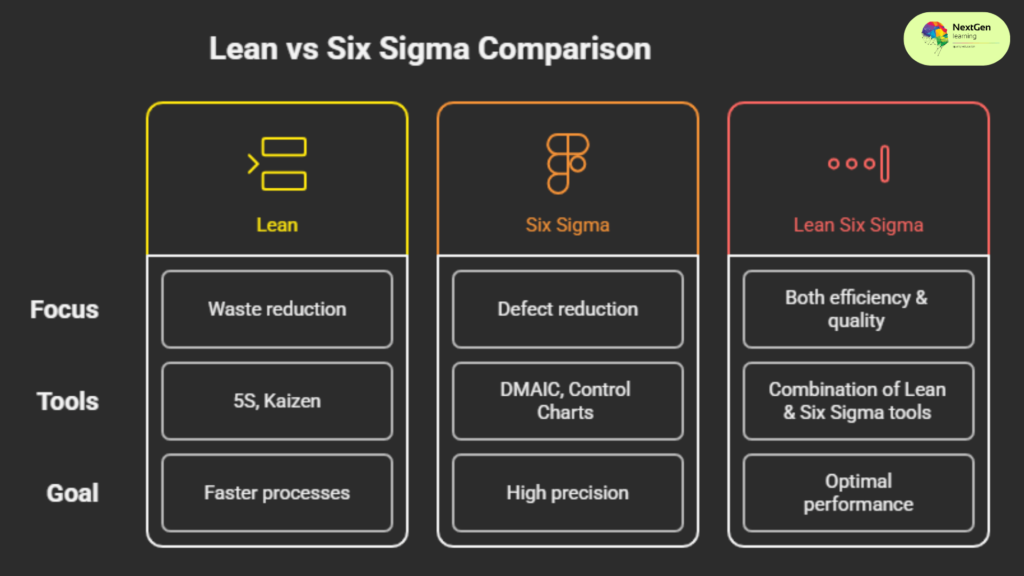
Lean vs Six Sigma
Lean focuses primarily on eliminating waste, improving workflow, and ensuring that processes operate as efficiently as possible. Its main objective is to reduce non-value-adding activities, increase productivity, and streamline operations.
In contrast, Six Sigma concentrates on reducing variation and defects in processes. It uses statistical tools and structured frameworks to identify errors, analyse root causes, and implement controls to ensure consistent quality.
Lean Six Sigma combines the best of both approaches, targeting process efficiency and defect reduction simultaneously. Organisations adopting Lean Six Sigma achieve faster throughput while maintaining high-quality outputs, which leads to cost savings, better customer satisfaction, and measurable performance improvements.
lean six sigma vs Six Sigma
The lean six sigma vs 6 Sigma approach integrates Lean thinking into the traditional Six Sigma methodology. While Six Sigma alone addresses variation and defect reduction, incorporating Lean principles enables teams to streamline workflows and remove inefficiencies, creating a faster and more responsive process improvement strategy.
6 Sigma vs Lean
6 Sigma vs Lean highlights the contrast between quality-focused and speed-focused approaches. Six Sigma is aimed at achieving high precision and minimal defects, whereas Lean emphasises faster processes by eliminating waste. Understanding this distinction helps organisations apply the right methodology depending on their improvement goals.
Lean Sigma vs Six Sigma
The Lean Sigma methodology applies Lean thinking to Six Sigma frameworks, balancing efficiency and quality. By integrating both methods, organisations can simultaneously reduce process variation, improve speed, and achieve sustainable improvements.
Understanding these distinctions and overlaps ensures that businesses and professionals choose the right tools and methodologies for their specific operational challenges. For UK-based learners or organisations, integrating lean sigma methodology and lean six sigma methodology into projects can lead to measurable results in quality, efficiency, and overall performance.
Six Sigma Principles & Project Orientation
Six Sigma principles provide a structured framework that guides organisations in achieving consistent process improvements, enhancing quality, and reducing defects. By following these principles, businesses can make informed, data-driven decisions and foster a culture of continuous improvement. Understanding and applying these principles is essential for anyone pursuing Six Sigma Green Belt training, as they form the foundation for successful project execution and measurable results.
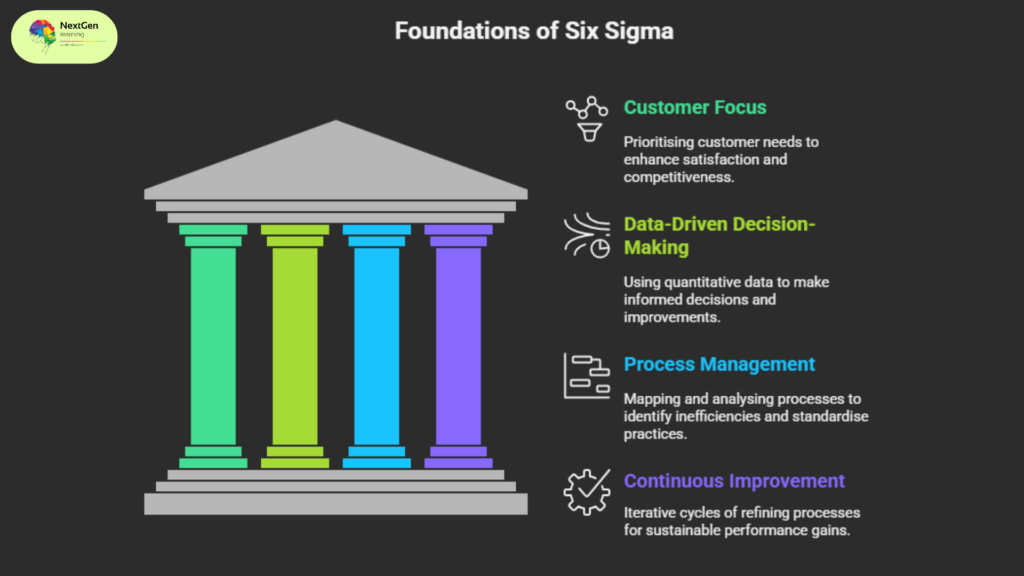
- Customer Focus: One of the core Six Sigma principles is prioritising both internal and external customer requirements. By understanding what customers value most, businesses can align their processes to deliver higher quality outcomes, increase satisfaction, and maintain a competitive edge.
- Data-Driven Decision-Making: A hallmark of 6 Sigma principles is relying on quantitative data rather than assumptions. By measuring process performance using statistical tools and metrics, organisations can identify variations, uncover root causes of defects, and implement targeted improvements with confidence.
- Process Management: Effective Six Sigma project methodology emphasises mapping, measuring, and analysing processes to understand how each step contributes to overall performance. By documenting workflows and using tools like process flowcharts and value stream mapping, teams can identify inefficiencies and standardise best practices.
- Continuous Improvement: Lean Six Sigma principles support iterative cycles of improvement, such as the DMAIC methodology, enabling organisations to refine processes continuously. Regularly reviewing, monitoring, and adjusting processes ensures sustainable performance gains and long-term quality enhancement.
These principles are not limited to manufacturing; they are applicable across service industries, healthcare, and business operations. Integrating six sigma and lean manufacturing principles allows professionals to optimise workflows, reduce variability, and improve customer satisfaction in any context.
Six Sigma Project Management
Six Sigma project management is the practical application of these principles through structured projects that follow the DMAIC framework (Define, Measure, Analyse, Improve, Control). Each phase focuses on clear objectives:
- Define: Identify project goals, scope, and customer requirements.
- Measure: Collect and quantify data to establish baseline performance.
- Analyse: Determine root causes of defects or inefficiencies.
- Improve: Implement solutions to optimise processes and reduce errors.
- Control: Monitor outcomes to ensure changes are sustainable and effective.
Effective 6 sigma project management ensures that projects deliver measurable outcomes, improve process efficiency, and reduce operational errors. Applying these techniques consistently allows Green Belts and project teams to drive impactful changes and support organisational goals.
By mastering six sigma principles and understanding six sigma project methodology, professionals can confidently lead projects, apply data-driven strategies, and achieve tangible business improvements in both manufacturing and service sectors.
Six Sigma Belt Levels: From White to Black
Six Sigma belts represent the different levels of expertise and responsibility within Six Sigma methodology. Each belt level equips professionals with specific skills, enabling them to contribute effectively to process improvement projects. Understanding six sigma belt levels is essential for anyone planning a career in Lean Six Sigma, as it helps define learning paths and project responsibilities.
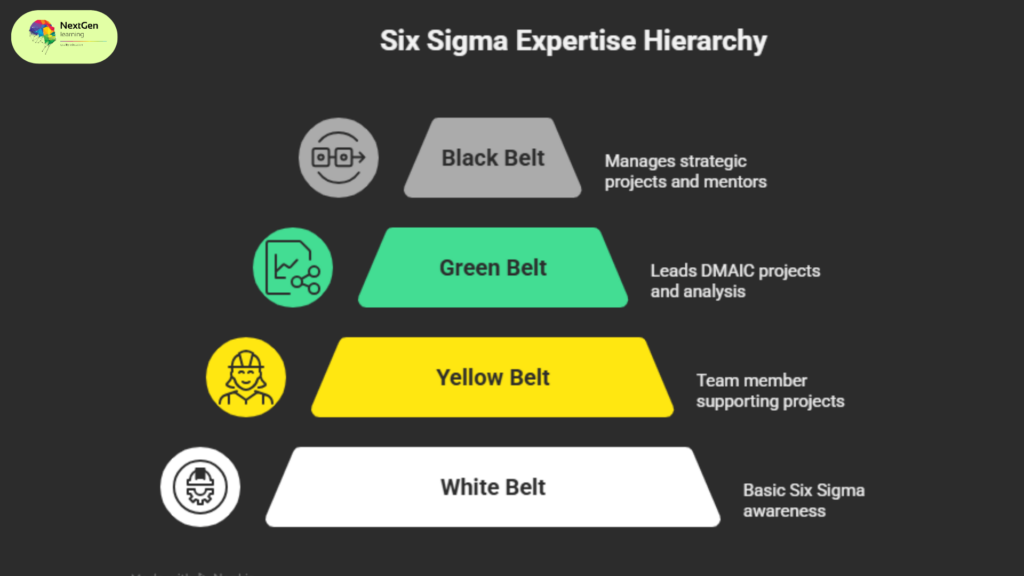
White Belt | Introductory understanding of Six Sigma concepts. Provides awareness of process improvement principles without leading projects. |
Yellow Belt | Acts as a team member supporting projects. Understands the basics of Six Sigma tools and participates in DMAIC projects under guidance. |
Green Belt | Leads DMAIC projects and applies six sigma tools. Focuses on data analysis, process optimisation, and team leadership within project scopes. |
Black Belt | Expert practitioner managing strategic projects. Mentors Green and Yellow Belts, oversees complex initiatives, and drives organisational process improvement. |
Green Belt Focus
The Six Sigma Green Belt is a pivotal level in the hierarchy, bridging team-level involvement and full project leadership. Green Belts are trained to lead projects, apply statistical tools, and drive measurable improvements.
Lean Six Sigma Green Belt: Integrates Lean principles with Six Sigma methodology to optimise both process efficiency and quality. Green Belts apply Lean Six Sigma tools like value stream mapping and process flow analysis to streamline operations.
Green Belt Training: Provides in-depth learning on project management, process mapping, and the practical application of tools such as Pareto charts, cause-and-effect diagrams, and FMEA (Failure Modes and Effects Analysis). Training prepares Green Belts to independently identify issues, analyse data, and implement solutions.

By progressing through the lean six sigma belts, professionals gain a structured understanding of process improvement. Mastery of each belt level—from six sigma white belt to six sigma black belt—ensures organisations have a pipeline of skilled practitioners capable of leading initiatives, mentoring colleagues, and sustaining long-term quality improvements.
Variants such as lean sigma belts, 6 sigma belts, and lean six sigma belts are also widely used across industries and training programmes, reflecting slight naming differences but equivalent levels of expertise.
Tools & Techniques You’ll Use as a Green Belt
As a Six Sigma Green Belt, mastering the right tools and techniques is crucial for successfully leading process improvement projects. These tools allow Green Belts to systematically analyse processes, identify inefficiencies, and implement improvements that deliver measurable outcomes.
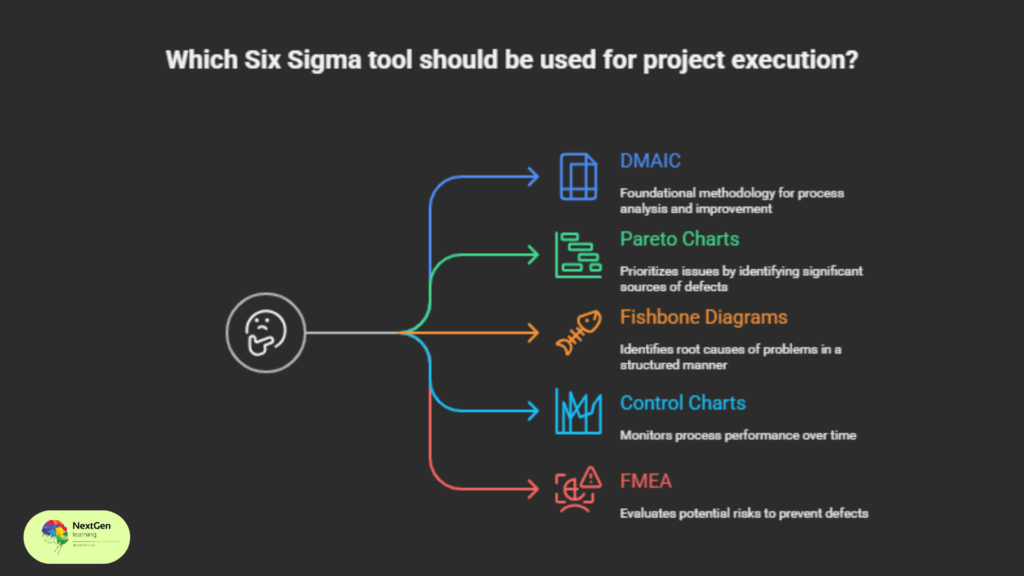
Six Sigma Tools
Green Belts frequently use a variety of six sigma tools to guide project execution:
- DMAIC (Define, Measure, Analyse, Improve, Control): The foundational methodology for analysing existing processes, identifying defects, and implementing improvements.
- Pareto Charts: Helps prioritise issues by identifying the most significant sources of defects or inefficiencies.
- Fishbone (Cause-and-Effect) Diagrams: Provides a structured approach to identify root causes of problems.
- Control Charts: Monitor process performance over time, highlighting variation and trends that need attention.
FMEA (Failure Modes & Effects Analysis): Evaluates potential risks in processes to prevent defects and improve reliability.
Lean Six Sigma Principles
In addition to these tools, lean six sigma principles guide Green Belts to combine efficiency with quality. By integrating Lean methodology, Green Belts learn to streamline workflows, reduce waste, and maintain high-quality outputs simultaneously. Applying these principles ensures that improvements are not only effective but also sustainable.
Six Sigma Methodology in Practice
The six sigma methodology provides a structured approach to tackling complex business problems. Green Belts apply these methods to real-world projects, from manufacturing to service industries, ensuring process optimisation, increased efficiency, and improved customer satisfaction. Familiarity with both Six Sigma tools and Lean Six Sigma principles allows Green Belts to implement data-driven, measurable solutions that create lasting impact.
Training & Courses: Formats, Providers, and What to Expect
For professionals aspiring to become a six sigma green belt, the right training is essential. Training equips learners with the theoretical knowledge, practical skills, and hands-on experience required to lead projects effectively.
Training Formats
- Online Courses: Flexible and self-paced, allowing learners to study from anywhere in the UK.
- In-Person Classes: Provide hands-on workshops, group exercises, and direct interaction with instructors for a deeper learning experience.
Blended Learning: Combines online theory with practical classroom sessions, offering the benefits of both formats.
Courses Available
There is a variety of courses available to meet different learning needs:
- Six Sigma Course / 6 Sigma Course: Provides foundational knowledge and practical tools for process improvement.
- Six Sigma Green Belt Course: Focused on equipping learners with the skills to lead DMAIC projects and apply six sigma tools.
- Lean Six Sigma Training / lean six sigma Course / Lean Sigma Training / Lean Manufacturing Six Sigma Training: Combines Lean principles with Six Sigma methodology for enhanced efficiency and quality improvement.
- Lean Six Training: A variant sometimes used in course listings to capture broader search traffic.
Expectations from Training
During green belt training, learners can expect to:
- Understand the six sigma methodology in depth.
- Gain practical experience using six sigma tools like Pareto charts, FMEA, and control charts.
- Learn to integrate lean six sigma principles for process efficiency.
- Apply theoretical knowledge to real-world projects, ensuring measurable improvements.
Providers
Training is offered by accredited UK institutions and private online platforms, ensuring that learners meet the standards required for certification. Completing a six sigma green belt course equips professionals to take on project leadership roles, mentor team members, and drive continuous improvement within their organisations.
Cost & Budgeting for Certification
Understanding the lean six sigma certification cost is an important step for professionals planning to enrol in a Six Sigma Green Belt course. Certification fees can vary widely depending on the format, provider, and the depth of training included. Typically, the cost of Lean Six Sigma training in the UK ranges from £300 to £1,500. Online courses often fall at the lower end of this range, offering flexibility and self-paced learning, while in-person or classroom-based courses tend to be higher priced due to hands-on workshops, practical projects, and direct instructor support.
When budgeting, it’s also useful to consider the pricing for six sigma classes offered by different providers. Some courses may include additional resources such as project simulation tools, exam fees, and post-training support, which can slightly increase the overall cost but enhance learning outcomes.
Investing in accredited Lean Six Sigma training not only equips learners with essential process improvement skills but also provides long-term career benefits. Professionals who complete these courses are often eligible for higher-paying roles in project management, operations, and quality assurance. By understanding the cost of Lean Six Sigma training and evaluating course formats, learners can make informed decisions that balance affordability with the quality of education and practical experience.
Pathway to Six Sigma Black Belt: After Your Green Belt
Completing a Six Sigma Green Belt is an important milestone, but it also opens the door to advanced career opportunities through the Six Sigma Black Belt pathway. A six sigma black belt is a highly skilled professional who leads cross-functional projects, mentors Green Belt holders, and oversees strategic process improvement initiatives across an organisation.
Certification and Career Progression of a Six Sigma Black Belt Holder
To become a Black Belt, professionals typically pursue a Six Sigma Black Belt certification or a 6 sigma black belt course, which provides advanced training in statistical analysis, project management, and leadership techniques. Certification demonstrates mastery of six sigma belts and is often a requirement for senior management positions, project leadership roles, and strategic improvement assignments.
After achieving a Green Belt, progression generally follows a structured ladder: Green Belt → Black Belt → Master Black Belt. Each level enhances leadership responsibilities, expands project scope, and increases influence on organisational strategy. A lean six sigma black belt applies Lean principles alongside Six Sigma methods, enabling optimisation of both efficiency and quality at an enterprise level.
Professionals with a Black Belt are well-positioned to guide complex projects, mentor multiple Green and Yellow Belts, and contribute to high-level operational decision-making. Achieving this level also opens opportunities in consultancy, quality management, and cross-industry process improvement roles.
Lean, Kaizen & Manufacturing Context (Why It Matters for GBs)
Understanding Lean, Kaizen, and Six Sigma in manufacturing is crucial for Green Belts aiming to implement effective process improvements.
- Kaizen Lean Manufacturing: Kaizen focuses on continuous incremental improvement, encouraging small, ongoing changes that enhance quality and efficiency. Green Belts trained in Kaizen learn to identify waste, optimise processes, and support long-term improvements in operational performance.
- Lean Six Sigma: This methodology combines defect reduction from Six Sigma with waste elimination from Lean, enabling organisations to achieve high-quality results while maintaining efficient workflows. Applying 6 sigma and lean manufacturing principles ensures measurable process improvements and cost savings.
- Sigma Lean Management: A strategic decision-making framework that helps organisations optimise resources, manage risks, and align process improvements with business objectives. Understanding lean six sigma methodology allows Green Belts to bridge the gap between process analysis and actionable business outcomes.
By integrating lean and kaizen with Six Sigma techniques, Green Belts gain the skills necessary to lead projects that improve efficiency, reduce variation, and deliver tangible business value. Knowledge of six sigma and lean manufacturing also equips professionals to communicate effectively with cross-functional teams, implement best practices, and ensure that improvements are both sustainable and scalable.
For UK-based learners, this combined expertise in Lean, Kaizen, and Six Sigma is particularly valuable in manufacturing, logistics, healthcare, and service sectors where efficiency and quality are critical.


FAQs
Six Sigma is a data-driven methodology focused on reducing defects, optimising processes, and improving quality in business operations. It uses statistical analysis and structured approaches to achieve measurable results. Variants like 6 Sigma, six sigma 6, and sixth sigma are sometimes searched, but they all refer to the same methodology aimed at consistent process improvement.
Roles in process improvement, project management, manufacturing, operations, and healthcare value Six Sigma certification. Completing a Green Belt equips professionals to lead projects, mentor team members, and contribute to organisational efficiency and quality.
Six Sigma belts indicate expertise and responsibility. The main six sigma belt levels include:
- White Belt: Introductory awareness of Six Sigma concepts.
- Yellow Belt: Team member, supporting projects.
- Green Belt: Leads DMAIC projects, applies six sigma tools.
Black Belt: Expert, manages strategic initiatives, mentors Green Belts.
Six Sigma tools include DMAIC, Pareto charts, Fishbone diagrams, FMEA, and Control charts. These tools help professionals analyse processes, identify root causes, and implement improvements effectively, aligning with both six sigma methodology and lean six sigma principles.
A six sigma course is structured learning offered in classroom or online formats, focusing on theory, methodology, and concepts. Six Sigma training emphasises hands-on, practical application, teaching learners to apply six sigma tools and green belt training techniques in real projects. Both are essential for becoming an effective six sigma green belt.
Yes, many accredited UK providers offer flexible six sigma green belt courses online. These courses combine theoretical instruction with practical exercises to prepare learners for Green Belt certification.
The correct term is Six Sigma. The term “Sixth Sigma” is a common misnomer often seen in search queries, but it refers to the same methodology.
Yes, Lean Six Sigma integrates Lean principles to improve efficiency alongside Six Sigma’s focus on defect reduction, creating processes that are both faster and higher quality.

0 responses on "The Complete Guide to Six Sigma Green Belt Training"