




Professional Skills: 21 Essential Skills for Career Success in 2026
In today’s fast-changing job market, having a degree alone is no longer enough to build a successful career. Employers increasingly look for professional skills that demonstrate how effectively a person can communicate, collaborate, solve problems and adapt to new challenges. As workplaces continue to evolve with technology, remote work and global collaboration, professionals must constantly develop these skills to remain competitive.
Professional skills are the abilities that help individuals perform effectively in a workplace environment. They include both soft skills, such as communication and teamwork and hard skills, such as data analysis, digital literacy and project management. While technical knowledge may help you qualify for a job, professional skills often determine how well you succeed, grow and lead within an organisation.
Moreover, companies now prioritise candidates who can demonstrate strong workplace competencies. Recruiters look for individuals who can manage time efficiently, think critically, communicate clearly and contribute positively to team performance. Therefore, developing professional skills is not just beneficial—it is essential for long-term career success.
In this guide, you will learn what professional skills are, why they matter in modern workplaces and the top 21 professional skills employers value in 2026. Additionally, you will discover practical strategies to develop these skills and apply them effectively in your career.
Table of Contents
What Are Professional Skills?
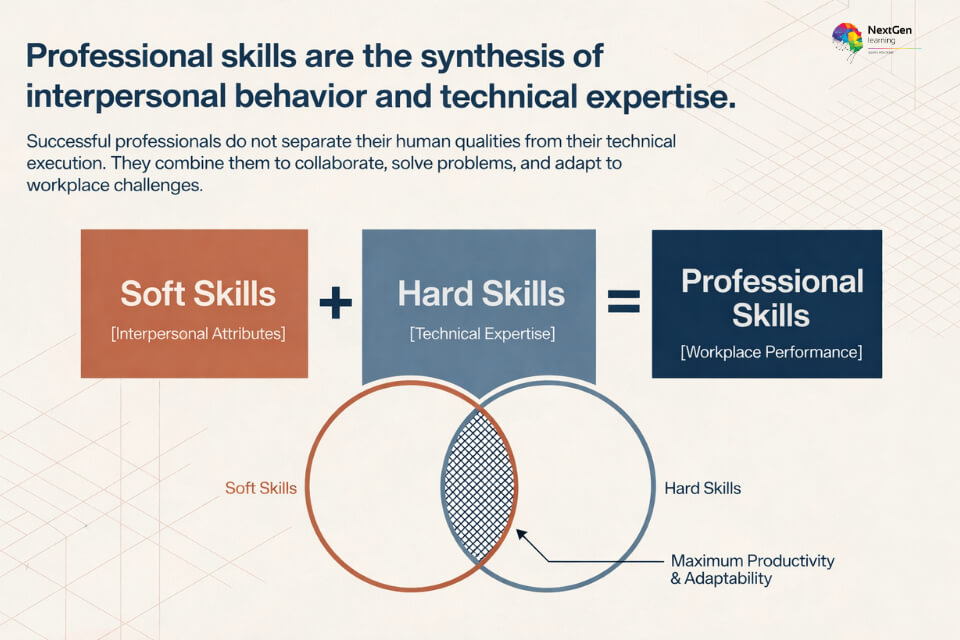
Professional skills are the abilities and competencies that help individuals perform effectively in a workplace environment. These skills enable professionals to complete tasks efficiently, communicate with colleagues, manage responsibilities and contribute to organisational goals. While academic qualifications provide knowledge, professional skills determine how effectively individuals apply that knowledge in real work situations.
In modern workplaces, professional skills include both soft skills and hard skills. Soft skills relate to personal attributes and interpersonal behaviour, such as communication and teamwork. Hard skills involve technical knowledge and job-specific expertise gained through education, training, or experience. Together, these skills help professionals collaborate, solve problems and adapt to workplace challenges.
Importantly, professional skills are transferable across many industries and job roles. For example, communication skills are valuable in fields such as marketing, healthcare, education and business management. Similarly, time management and problem-solving abilities are essential in nearly every profession.
Common examples of professional skills include:
● Communication skills – Expressing ideas clearly and listening effectively.
● Teamwork and collaboration – Working with colleagues to achieve shared goals.
● Time management – Organising tasks and meeting deadlines efficiently.
● Problem-solving skills – Analysing challenges and developing solutions.
● Leadership skills – Guiding teams and managing responsibilities.
● Technical and digital skills – Using modern tools and technologies in the workplace.
These skills make professionals more productive, adaptable and valuable to employers. As industries continue to evolve, organisations increasingly seek candidates who demonstrate strong professional skills alongside academic qualifications.
Why Professional Skills Are Important in the Workplace

Professional skills play an essential role in helping individuals succeed in modern workplaces. While technical knowledge helps employees perform specific tasks, professional skills enable them to communicate effectively, work efficiently and adapt to changing workplace demands. As a result, employers increasingly prioritise candidates who demonstrate strong workplace abilities alongside their academic qualifications.
Moreover, today’s workplaces are more collaborative and dynamic than ever before. Teams often work across departments, locations and digital platforms. Therefore, professionals need skills that allow them to manage responsibilities, solve problems and contribute positively to organisational goals. Developing strong professional skills not only improves job performance but also supports long-term career growth.
Professional skills benefit employees and organisations in several ways:
●Improve workplace communication – Communication skills help employees share ideas clearly and avoid misunderstandings.
● Increase productivity and efficiency – Time management and organisational skills help professionals prioritise tasks and meet deadlines.
● Enhance teamwork and collaboration – Teamwork skills support effective cooperation among colleagues.
● Support problem-solving and decision-making – Analytical thinking helps professionals identify challenges and develop practical solutions.
● Strengthen leadership abilities – Leadership skills allow professionals to guide teams and manage projects effectively.
● Improve adaptability – Professional skills help individuals adjust to new technologies and workplace changes.
Professionals who continuously develop their skills are more likely to advance in their careers. Employers often promote individuals who demonstrate strong communication, leadership and organisational abilities.
Therefore, building professional skills is essential for improving workplace performance and achieving sustainable career success in a competitive job market.
Professional Skills vs Soft Skills vs Hard Skills
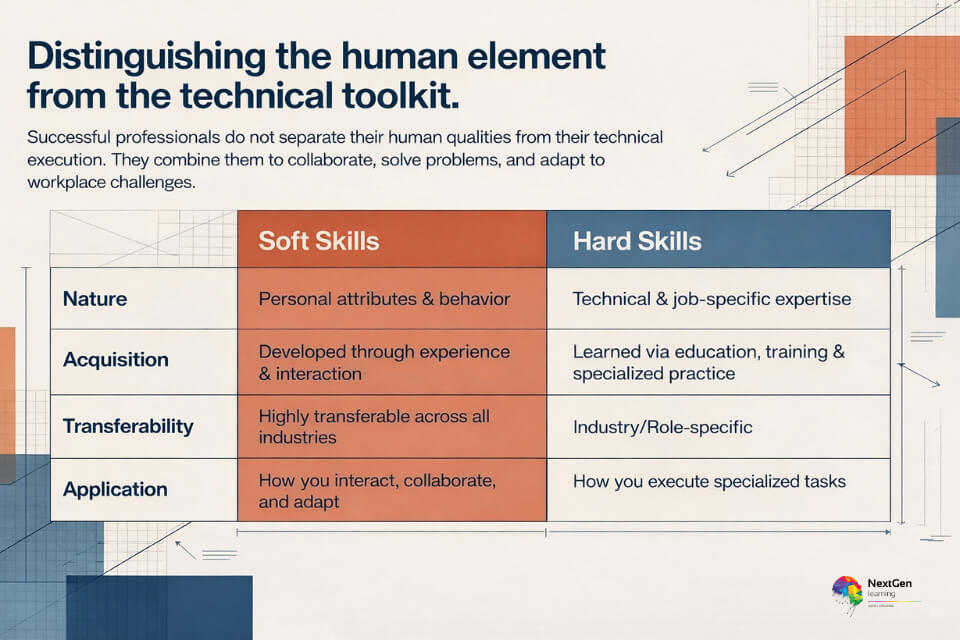
Many people often confuse professional skills, soft skills and hard skills, although these terms are closely connected. Understanding the differences helps professionals identify which abilities they need to develop for career growth. In practice, successful professionals usually combine all three types of skills to perform effectively in the workplace.
- Professional skills refer to the overall abilities that help individuals succeed in a work environment. These skills include both interpersonal qualities and technical competencies. In simple terms, professional skills combine soft skills and hard skills to support workplace performance.
- Soft skills focus on personal attributes and interpersonal behaviour that influence how people interact with colleagues, clients and teams. These skills help professionals communicate effectively, collaborate with others and adapt to workplace situations.
- Hard skills, on the other hand, are technical or job-specific abilities that professionals learn through education, training, or practical experience. These skills enable individuals to perform specialised tasks required in their roles.
Examples of these skills include:
- Soft skills – Communication, teamwork, leadership, adaptability, emotional intelligence and problem-solving.
- Hard skills – Data analysis, programming, accounting, graphic design, digital marketing and project management.
Another key difference is how these skills are developed. Soft skills are usually transferable across industries and often develop through experience and interaction. Hard skills are industry-specific and require technical training, education, or specialised practice.
In modern workplaces, employers look for professionals who can combine both skill sets effectively. For example, a project manager may rely on hard skills such as project planning and budgeting, while also using soft skills like communication, leadership and teamwork to manage projects successfully.
Therefore, developing both soft and hard skills is essential for building strong professional skills and achieving long-term career success.
Top 21 Professional Skills Employers Value in 2026
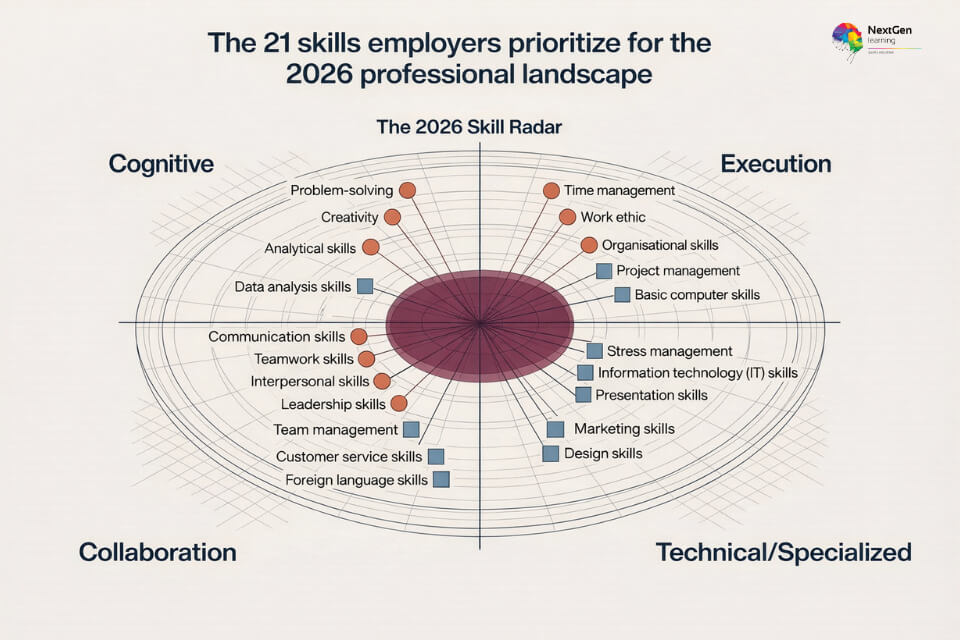
The modern workplace is evolving rapidly due to digital transformation, automation and global collaboration. As a result, employers increasingly seek professionals who combine technical expertise, communication ability and problem-solving skills. Developing strong professional skills helps individuals adapt to workplace challenges, improve productivity and contribute effectively to organisational success.
While technical knowledge may help someone qualify for a job, professional skills determine how effectively they collaborate, manage responsibilities and perform in real workplace situations.
Below are 21 essential professional skills for career success in 2026:
● Communication skills – Express ideas clearly and listen effectively.
● Teamwork skills – Collaborate with colleagues to achieve goals.
● Time management – Organise tasks and meet deadlines.
● Problem-solving skills – Analyse challenges and develop solutions.
● Creativity – Generate innovative ideas and approaches.
● Work ethic – Demonstrate reliability and professionalism.
● Interpersonal skills – Build positive workplace relationships.
● Leadership skills – Motivate teams and guide projects.
● Stress management – Maintain productivity under pressure.
● Organisational skills – Manage tasks and resources efficiently.
● Analytical skills – Evaluate information and make informed decisions.
● Information technology skills – Use digital tools and systems.
● Basic computer skills – Work with essential productivity software.
● Customer service skills – Support and assist customers effectively.
● Presentation skills – Deliver ideas clearly to audiences.
● Marketing skills – Promote products or services effectively.
● Team management – Coordinate and supervise teams.
● Project management – Plan and manage projects successfully.
● Foreign language skills – Communicate in global environments.
● Design skills – Create visual and digital content.
● Data analysis skills – Interpret data to support decisions.
These skills are valuable across many industries and help professionals advance in their careers.
Essential Soft Professional Skills

Soft professional skills form the foundation of success in almost every workplace. While technical knowledge allows professionals to perform specific tasks, soft skills determine how effectively individuals communicate, collaborate and adapt within a professional environment. Employers across industries consistently prioritise candidates who demonstrate strong interpersonal abilities alongside their technical expertise.
Moreover, soft professional skills support teamwork, leadership and decision-making. They allow professionals to manage workplace relationships, respond to challenges calmly and contribute positively to organisational goals. Because modern workplaces rely heavily on collaboration and communication, developing strong soft skills is essential for long-term career growth.
Below are some of the most important soft professional skills employers value in the workplace.
Communication Skills
Communication skills are among the most essential professional skills in any workplace. They enable individuals to share ideas clearly, listen actively and understand information effectively during conversations, meetings and presentations. Strong communication also helps prevent misunderstandings and supports productive collaboration within teams.
Professionals use communication skills in many daily workplace situations. For example, employees communicate when explaining ideas, providing feedback, presenting reports, or resolving conflicts with colleagues. Therefore, developing strong communication skills improves both personal productivity and organisational effectiveness.
Communication in professional environments generally takes several forms:
- Verbal communication – Speaking clearly and confidently during meetings, discussions and presentations.
- Written communication – Conveying information through emails, reports, documents and digital messaging platforms.
- Non-verbal communication – Using body language, facial expressions and tone of voice to support verbal messages.
- Visual communication – Presenting information through charts, diagrams, infographics and presentation slides.
Professionals can improve communication skills by practising active listening, organising their ideas before speaking and seeking constructive feedback from colleagues or mentors. Additionally, participating in communication workshops or professional training courses can significantly enhance these abilities.
Teamwork Skills
Teamwork skills allow professionals to collaborate effectively with colleagues and contribute to shared workplace goals. In most organisations, employees work together on projects, solve problems collectively and support each other’s responsibilities. Therefore, the ability to function well within a team environment is highly valued by employers.
Strong teamwork involves communication, cooperation, accountability and mutual respect among team members. Professionals who demonstrate these qualities help create productive and supportive work environments where ideas can be exchanged freely.
Key qualities that support effective teamwork include:
- Active listening – Understanding colleagues’ ideas and perspectives during discussions.
- Collaboration – Working together to achieve project goals and organisational objectives.
- Responsibility – Completing assigned tasks reliably and supporting team outcomes.
- Respect and openness – Accepting diverse perspectives and valuing team contributions.
Professionals can strengthen their teamwork skills by participating in collaborative projects, learning from experienced colleagues and focusing on building positive workplace relationships.
Time Management
Time management is the ability to organise tasks, prioritise responsibilities and complete work efficiently within deadlines. In modern workplaces, professionals often manage multiple responsibilities simultaneously. Therefore, strong time management skills help individuals stay productive while maintaining high-quality performance.
Effective time management allows professionals to work smarter rather than harder. By organising tasks strategically, individuals can complete assignments efficiently while also creating time for planning, problem-solving and professional development.
Important time management abilities include:
- Prioritisation – Identifying which tasks are most important and addressing them first.
- Goal setting – Defining clear objectives that guide daily work activities.
- Planning and scheduling – Organising tasks using calendars, planners, or digital productivity tools.
- Delegation – Assigning appropriate tasks to team members when working in leadership roles.
Professionals can improve their time management skills by creating daily task lists, setting realistic deadlines and minimising workplace distractions. Over time, these practices significantly improve productivity and job performance.
Problem-Solving Skills
Problem-solving skills help professionals identify challenges, analyse situations and develop effective solutions. In most workplaces, employees encounter unexpected issues such as operational problems, customer concerns, or project delays. Strong problem-solving abilities enable professionals to address these challenges efficiently.
Problem solving often involves analysing information, considering multiple perspectives and selecting the most practical solution. Therefore, professionals who demonstrate strong analytical thinking and decision-making abilities are highly valued by employers.
Some important abilities that support problem solving include:
- Critical thinking – Evaluating information carefully before making decisions.
- Research and analysis – Gathering relevant data to understand problems fully.
- Creative thinking – Generating innovative ideas to address complex challenges.
- Decision-making – Selecting practical solutions and implementing them effectively.
Professionals can develop stronger problem-solving skills by practising analytical thinking, seeking feedback from experienced colleagues and learning from real workplace challenges.
Creativity
Creativity refers to the ability to generate innovative ideas and approach problems from unique perspectives. In many industries, creative thinking helps organisations develop new products, improve services and discover more efficient ways of completing tasks.
Creative professionals often identify patterns and opportunities that others may overlook. By exploring different viewpoints and experimenting with new ideas, they can contribute valuable solutions to complex workplace challenges.
Common behaviours associated with creativity include:
- Curiosity and questioning – Exploring new ideas and asking thoughtful questions.
- Observation – Identifying patterns, trends and opportunities within workplace situations.
- Experimentation – Testing new approaches and refining solutions over time.
- Networking and idea sharing – Collaborating with colleagues to develop innovative concepts.
Professionals can enhance creativity by exposing themselves to new experiences, learning from diverse perspectives and continuously seeking opportunities to experiment with ideas.
Work Ethic
Work ethic reflects the values and behaviours that professionals bring to their responsibilities. Employees with a strong work ethic consistently demonstrate reliability, discipline and commitment to completing their tasks effectively. As a result, employers often trust these individuals with important responsibilities and leadership opportunities.
Moreover, a strong work ethic helps professionals maintain high performance even in demanding situations. Individuals who approach their work with dedication are more likely to meet deadlines, support their colleagues and contribute positively to the workplace environment.
Key characteristics associated with a strong work ethic include:
- Reliability – Completing tasks consistently and meeting workplace expectations.
- Responsibility – Taking ownership of work and being accountable for results.
- Professionalism – Demonstrating respect, integrity and appropriate behaviour in professional settings.
- Dedication – Maintaining focus and effort even when tasks become challenging.
Professionals can strengthen their work ethic by setting clear goals, maintaining discipline in daily tasks and continuously seeking opportunities for professional development.
Interpersonal Skills
Interpersonal skills refer to the abilities professionals use when interacting with colleagues, clients and stakeholders. These skills support effective communication, relationship building and collaboration within workplace environments. Because most modern workplaces rely on teamwork, strong interpersonal skills are highly valuable.
Employees with strong interpersonal abilities often create positive work environments. They communicate respectfully, listen carefully to others and respond thoughtfully during discussions or conflicts. Consequently, they build strong professional relationships that support productivity and collaboration.
Examples of important interpersonal skills include:
- Active listening – Paying attention to others’ ideas and responding thoughtfully.
- Empathy – Understanding the feelings and perspectives of colleagues and clients.
- Flexibility – Adapting communication styles to suit different personalities and situations.
- Motivation and encouragement – Supporting team members and fostering positive collaboration.
Professionals can improve interpersonal skills by practising effective communication, developing emotional intelligence and learning from positive workplace interactions.
Leadership Skills
Leadership skills enable professionals to guide teams, manage responsibilities and inspire colleagues to achieve shared goals. Although leadership is often associated with management positions, professionals at all levels can demonstrate leadership through initiative, responsibility and collaboration.
Strong leaders motivate others, provide constructive feedback and create environments where team members can perform effectively. As organisations continue to emphasise teamwork and innovation, leadership skills become increasingly important for career advancement.
Common leadership abilities include:
- Motivating team members – Encouraging colleagues to achieve shared goals.
- Providing constructive feedback – Helping others improve performance through supportive guidance.
- Decision-making – Evaluating situations and selecting effective solutions.
- Team coordination – Organising team activities and ensuring projects progress smoothly.
Professionals can develop leadership skills by taking initiative during projects, mentoring colleagues and learning from experienced managers.
Stress Management
Stress management refers to the ability to remain calm and productive while handling workplace pressure. In many professional environments, employees face tight deadlines, complex projects and demanding responsibilities. Therefore, learning to manage stress effectively is essential for maintaining performance and wellbeing.
Professionals who manage stress well can remain focused even during challenging situations. They maintain a positive attitude, communicate effectively with colleagues and approach problems with clear thinking rather than frustration.
Some effective stress management strategies include:
- Identifying sources of stress – Understanding which tasks or situations create pressure.
- Developing healthy coping strategies – Practising activities such as exercise, relaxation, or mindfulness.
- Setting boundaries – Maintaining a balance between professional responsibilities and personal wellbeing.
- Seeking support – Communicating with colleagues, supervisors, or mentors when challenges arise.
Developing strong stress management abilities allows professionals to remain productive and maintain a healthy work-life balance.
Organisational Skills
Organisational skills help professionals manage tasks, resources and responsibilities effectively. In fast-paced work environments, employees often handle multiple assignments simultaneously. Therefore, staying organised is essential for maintaining productivity and meeting deadlines.
Professionals with strong organisational abilities structure their tasks efficiently and keep track of important details. They can manage their workspace, schedule activities and coordinate projects without confusion or delays.
Important organisational abilities include:
- Task planning – Structuring tasks to ensure work progresses efficiently.
- Scheduling and time tracking – Managing deadlines using calendars and productivity tools.
- Attention to detail – Ensuring accuracy in documents, reports and project activities.
- Resource management – Using available resources efficiently to complete tasks.
Professionals can improve organisational skills by maintaining structured workflows, using digital planning tools and regularly reviewing project progress.
Analytical Skills
Analytical skills allow professionals to examine information carefully, identify patterns and make informed decisions. In many industries, organisations rely on data and evidence to guide strategies and improve performance. Therefore, employees with strong analytical abilities are highly valuable.
Analytical thinking helps professionals evaluate complex problems and identify practical solutions. It also enables individuals to interpret data, assess risks and understand trends that influence business decisions.
Key abilities that support analytical thinking include:
- Data evaluation – Analysing information to identify trends and patterns.
- Critical thinking – Assessing situations logically before making decisions.
- Research skills – Gathering accurate information to support conclusions.
- Strategic thinking – Understanding how individual tasks contribute to broader organisational goals.
Professionals can develop stronger analytical skills by studying data, asking thoughtful questions and practising logical problem-solving.
Essential Hard Professional Skills
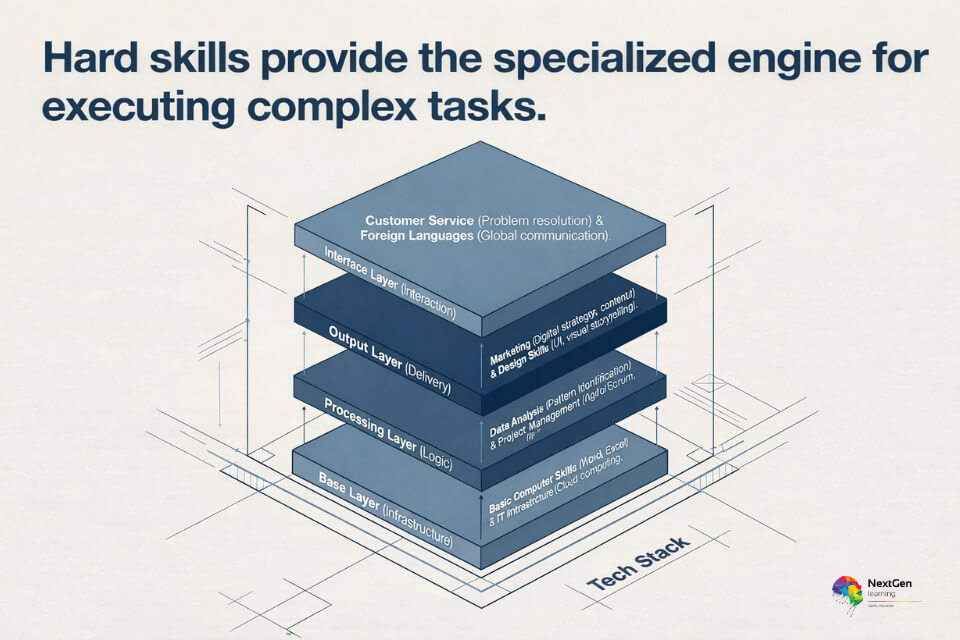
While soft skills help professionals communicate, collaborate and manage workplace relationships, hard professional skills focus on technical knowledge and practical abilities required to perform specific job tasks. These skills are typically learned through formal education, professional training, or hands-on experience.
Moreover, hard skills play a critical role in improving productivity and enabling professionals to use modern tools, technologies and systems effectively. As workplaces become increasingly digital, employees with strong technical abilities are highly valued across industries such as business, healthcare, marketing, technology and finance.
Below are some of the most important hard professional skills that support workplace success.
Information Technology Skills
Information technology (IT) skills are technical abilities that allow professionals to work with computer systems, software applications and digital infrastructure. In today’s technology-driven world, most organisations rely heavily on digital tools to manage operations, store data and communicate with clients. Therefore, IT skills have become essential for many job roles.
Professionals with strong IT knowledge can work more efficiently with modern technology and adapt quickly to new digital systems. These skills are particularly valuable in industries such as business, marketing, finance and information technology.
Some important IT skills include:
- Software development knowledge – Understanding programming languages and software development processes.
- Cloud computing – Using cloud-based systems to store, manage and access organisational data.
- Cybersecurity awareness – Protecting digital systems and sensitive information from cyber threats.
- Automation tools – Using technology to streamline repetitive tasks and improve efficiency.
Developing IT skills helps professionals stay competitive in a digital workplace where technology continues to evolve rapidly.
Basic Computer Skills
Basic computer skills are fundamental abilities required to use everyday digital tools in professional environments. Almost every modern job requires employees to use computers for communication, data management and document preparation.
Professionals who possess strong computer skills can work efficiently with workplace software and digital platforms. These skills also allow employees to adapt quickly to new tools introduced within organisations.
Common computer skills include:
- Word processing software – Creating and editing documents using tools such as Microsoft Word or Google Docs.
- Spreadsheet software – Managing data and performing calculations using programs like Microsoft Excel.
- Presentation tools – Designing visual presentations using software such as PowerPoint or Google Slides.
- Email communication tools – Managing professional communication through email platforms.
Developing these skills helps professionals perform routine workplace tasks more effectively.
Customer Service Skills
Customer service skills involve the ability to interact with clients professionally and address their concerns effectively. These skills are particularly important in roles that require direct interaction with customers, such as retail, hospitality and service industries.
Professionals with strong customer service abilities focus on understanding customer needs and providing helpful solutions. This approach helps organisations maintain positive relationships with clients and improve overall satisfaction.
Important customer service abilities include:
- Clear communication – Explaining solutions and responding to customer questions effectively.
- Empathy and understanding – Recognising customer concerns and responding with patience.
- Problem resolution – Addressing complaints and resolving issues quickly.
- Product knowledge – Understanding products or services in order to assist customers accurately.
Employees who demonstrate strong customer service skills often contribute significantly to customer loyalty and brand reputation.
Presentation Skills
Presentation skills allow professionals to communicate information clearly and confidently to an audience. In many workplaces, employees must present reports, explain ideas, or share project updates during meetings or conferences.
Effective presentations require strong organisation, clear communication and the ability to engage an audience. Professionals who deliver presentations effectively can influence decisions, share insights and support team collaboration.
Key presentation abilities include:
- Structuring information clearly – Organising ideas in a logical and understandable way.
- Audience engagement – Maintaining attention through clear explanations and visual aids.
- Confident speaking – Delivering messages clearly and professionally.
- Visual communication – Using charts, graphs and slides to support explanations.
Professionals can improve presentation skills through practice, preparation and feedback from colleagues or mentors.
Marketing Skills
Marketing skills involve the ability to promote products, services, or ideas to a target audience. In modern business environments, marketing professionals use both creative and analytical skills to attract customers and build brand awareness.
As businesses increasingly rely on digital platforms, marketing skills have become valuable across many industries.
Important marketing abilities include:
- Digital marketing strategies – Promoting products through search engines, social media and online advertising.
- Content creation – Developing engaging written, visual, or video content for marketing campaigns.
- Market analysis – Studying consumer behaviour and industry trends.
- Brand development – Building a strong brand identity that attracts customers.
Professionals with strong marketing skills can help organisations expand their market reach and improve customer engagement.
Team Management
Team management is the ability to lead, organise and support a group of people in achieving shared goals. In many organisations, professionals are required to coordinate tasks, monitor progress and ensure that team members work efficiently together. Therefore, strong team management skills are essential for supervisors, managers and professionals responsible for collaborative projects.
Effective team management involves guiding employees, resolving conflicts and maintaining motivation within the group. Managers who understand their team members’ strengths can allocate responsibilities more effectively and create a productive work environment.
Key abilities that support successful team management include:
- Task coordination – Assigning responsibilities clearly so that team members understand their roles.
- Communication and feedback – Providing guidance and constructive feedback to help team members improve performance.
- Motivation and support – Encouraging team members to stay engaged and focused on project goals.
- Conflict resolution – Addressing disagreements professionally to maintain positive teamwork.
Professionals can strengthen team management skills by learning leadership techniques, gaining experience in collaborative projects and observing effective managers in their workplace.
Project Management
Project management is the ability to plan, organise and execute projects successfully while managing resources, timelines and potential risks. Many organisations rely on structured project management processes to ensure that tasks are completed efficiently and objectives are achieved.
Project managers coordinate multiple activities and ensure that every team member contributes to the overall success of a project. Because projects often involve complex tasks and deadlines, professionals with strong project management skills are highly valued in industries such as business, construction, technology and marketing.
Important project management abilities include:
- Project planning – Defining project goals, tasks and timelines.
- Resource management – Allocating resources such as team members, budgets and tools effectively.
- Risk assessment – Identifying potential challenges and preparing solutions in advance.
- Progress monitoring – Tracking project performance and ensuring deadlines are met.
Professionals can develop project management skills through practical experience, formal training programmes and learning structured frameworks such as Agile or Scrum.
Foreign Language Skills
Foreign language skills enable professionals to communicate with people from different cultural and linguistic backgrounds. As global business continues to expand, organisations increasingly value employees who can interact with international clients, partners and markets.
Being able to speak multiple languages improves cross-cultural communication and opens opportunities in international industries such as trade, tourism, diplomacy and global marketing. Additionally, language skills help professionals understand cultural differences and build stronger relationships with international stakeholders.
Some benefits of foreign language skills include:
- Improved global communication – Communicating effectively with international clients and partners.
- Expanded career opportunities – Accessing jobs in multinational organisations and international markets.
- Cross-cultural understanding – Building relationships with people from diverse cultural backgrounds.
- Competitive advantage – Standing out in job applications where international communication is required.
Learning widely spoken languages such as Spanish, French, German, Mandarin, or Arabic can significantly enhance career opportunities in global industries.
Design Skills
Design skills involve the ability to create visual content that communicates ideas clearly and attractively. In modern workplaces, visual communication plays a crucial role in marketing, branding and digital media. As a result, professionals who possess design abilities can contribute significantly to creative and communication projects.
Design skills allow professionals to transform ideas into visual formats that are easy to understand and engaging for audiences. These abilities are particularly valuable in industries such as marketing, advertising, digital media and product development.
Examples of useful design skills include:
- Graphic design – Creating visual materials such as posters, advertisements and social media graphics.
- User interface (UI) design – Designing digital interfaces that improve user experience.
- Animation and motion design – Developing animated content for marketing or educational purposes.
- Visual storytelling – Communicating ideas effectively through images, layouts and visual composition.
Professionals can develop design skills through training courses, creative projects and continuous practice using design software tools.
Data Analysis Skills
Data analysis skills involve collecting, organising and interpreting information to support decision-making. In modern organisations, data plays a vital role in improving efficiency, identifying trends and guiding business strategies. Therefore, professionals who can analyse and interpret data are highly valuable across industries.
Data analysts examine patterns within information and use their findings to provide insights that help organisations improve operations and performance. These skills are useful in fields such as business management, finance, marketing, healthcare and technology.
Important data analysis abilities include:
- Data collection and organisation – Gathering relevant information from various sources.
- Pattern identification – Recognising trends and relationships within data sets.
- Report creation – Presenting findings through clear reports, charts, or dashboards.
- Strategic insights – Using data to support informed decision-making and organisational planning.
Professionals can strengthen data analysis skills by learning analytical tools, practising data interpretation and studying statistics or data management techniques.
How to Develop Professional Skills for Career Growth
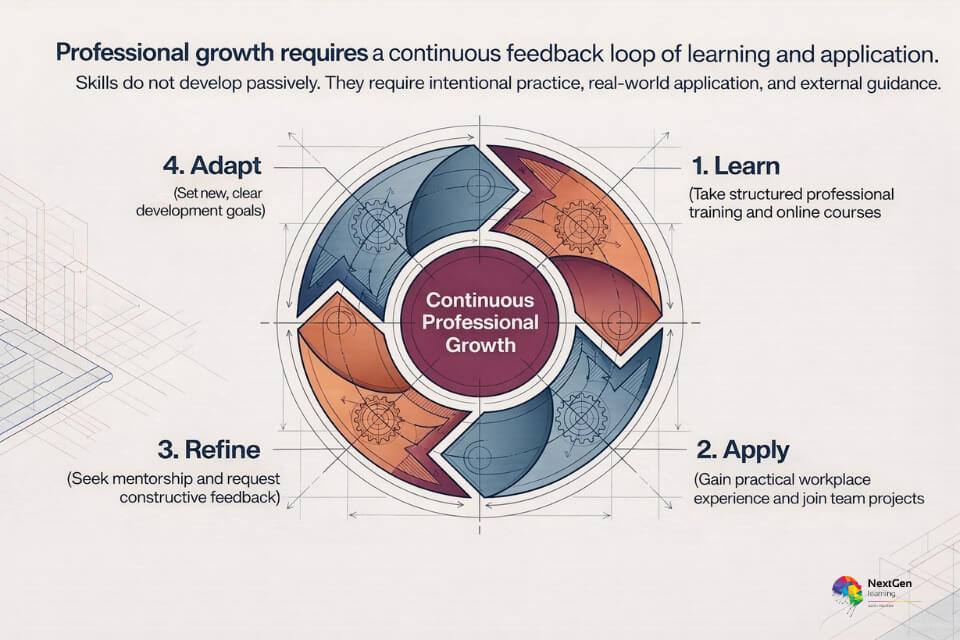
Developing strong professional skills requires continuous learning, practice and real-world experience. While some skills develop naturally over time, most professionals improve through structured training and practical application. As industries evolve and workplace expectations change, individuals must actively invest in skill development to remain competitive in the job market.
Moreover, professional growth takes consistent effort. By learning new concepts, refining existing abilities and applying knowledge in real situations, professionals can improve performance, increase career opportunities and prepare for leadership roles.
Below are some effective ways to develop professional skills for long-term career success:
- Take professional training courses – Structured courses help individuals develop skills such as communication, leadership, project management and digital competencies.
- Gain practical workplace experience – Participating in projects and collaborating with colleagues helps strengthen real-world skills.
- Seek mentorship and guidance – Experienced mentors can provide valuable insights, advice and feedback to support professional growth.
- Practice continuous learning – Reading industry resources, attending workshops and learning new technologies help professionals stay updated.
- Request constructive feedback – Feedback from managers and colleagues helps identify strengths and areas for improvement.
- Participate in team projects – Collaborative work improves communication, teamwork and problem-solving abilities.
- Set clear development goals – Defining learning objectives helps track progress and focus on skill improvement.
Developing professional skills is a lifelong process. Professionals who continuously learn and adapt are more likely to achieve long-term career success.
How to Showcase Professional Skills on Your CV

Having strong professional skills is important, but presenting them effectively on your CV is equally essential. Recruiters often review many applications and typically spend only a few seconds scanning each CV. Therefore, clearly highlighting your professional skills can significantly improve your chances of attracting an employer’s attention.
Moreover, employers prefer to see how your skills create real workplace value. Instead of simply listing abilities, it is more effective to show how you applied those skills in practical situations, such as previous jobs, internships, or academic projects. This demonstrates that you can perform effectively in a professional environment.
The following strategies can help you showcase your professional skills more effectively on your CV:
● Create a dedicated skills section – Include a section titled “Professional Skills” or “Key Skills” near the top of your CV.
● Use job-relevant keywords – Match your skills with the requirements mentioned in the job description to improve ATS compatibility.
● Highlight both soft and hard skills – Include interpersonal skills like communication and teamwork alongside technical abilities.
● Provide achievement-based examples – Show how you used your skills to complete projects or solve problems.
● Keep language clear and concise – Use simple, direct statements to explain your capabilities.
● Include measurable results when possible – For example, mention improved productivity, increased sales, or successful project outcomes.
For example:
Communication and presentation skills – Delivered project presentations to senior management and collaborated with cross-functional teams on business reports.
Presenting your skills with clear examples and measurable outcomes makes your CV more persuasive and highlights your professional value to employers.
Online Courses to Improve Professional Skills
Continuous learning is one of the most effective ways to develop strong professional skills. While workplace experience helps refine abilities over time, structured training courses provide focused learning that can accelerate professional growth. Online courses have become particularly popular because they allow learners to study new skills at their own pace while balancing work and personal commitments.
Moreover, professional development courses provide practical knowledge that can be applied directly in the workplace. Many programmes focus on real-world scenarios, interactive learning and skill-based training designed to improve workplace performance. As a result, professionals who participate in training programmes often gain confidence, improve productivity and increase their career opportunities.
Some of the most valuable courses for developing professional skills include:
- Communication Skills Training – Courses that help individuals improve verbal communication, active listening and professional presentation abilities.
- Leadership and Management Courses – Programmes that teach leadership techniques, team management strategies and decision-making skills.
- Project Management Training – Courses that focus on planning, organising and managing projects using professional frameworks.
- Personal Development Courses – Training designed to improve time management, confidence, emotional intelligence and workplace productivity.
- Digital and Technical Skills Courses – Programmes that teach essential digital tools such as data analysis software, marketing platforms and productivity systems.
- Customer Service Training – Courses that develop communication techniques and problem-solving strategies for interacting with clients and customers.
Online learning platforms make professional education accessible to people worldwide. By investing time in structured training programmes, professionals can strengthen their skills and remain competitive in a rapidly changing job market.
Frequently Asked Questions
Professional skills help individuals perform effectively in the workplace. Common examples include:
● Communication skills – Express ideas clearly and listen actively.
● Teamwork skills – Collaborate with colleagues to achieve goals.
● Time management – Organise tasks and meet deadlines.
● Leadership skills – Guide and motivate teams.
● Problem-solving skills – Identify and solve challenges.
Professional skills help employees communicate, collaborate and solve problems effectively at work. These abilities improve productivity, strengthen teamwork, and support career growth. Employers value candidates who demonstrate strong professional skills in real workplace situations.
Professional skills are workplace abilities such as communication, leadership and project management. Employability skills are broader qualities that help individuals secure and maintain jobs, including adaptability, reliability and problem-solving.
You can improve professional skills by gaining practical experience, taking professional training courses, seeking feedback from mentors, participating in workplace projects and continuously learning through books, workshops and online resources.
Employers value skills such as communication, teamwork, time management, problem-solving, leadership and digital literacy. These abilities help employees work effectively, collaborate with teams and adapt to changing workplace demands.
Final Thoughts
Professional skills play a vital role in achieving success in today’s competitive workplace. In fact, while academic qualifications provide essential knowledge, professional skills determine how effectively individuals apply that knowledge in real work environments. For example, these abilities support communication, teamwork, problem-solving, leadership and many other aspects of workplace performance.
Moreover, as industries continue to evolve, professionals must remain committed to continuous learning and skill development. Therefore, the most successful individuals are those who actively improve their abilities, adapt to new challenges and seek opportunities to grow throughout their careers. In addition, by developing both soft skills and hard skills, professionals can increase their productivity, build strong relationships and contribute meaningfully to organisational success.
Ultimately, investing in professional skills is an investment in long-term career growth. For instance, whether through workplace experience, mentorship, or structured training programmes, improving these abilities helps individuals become more confident, capable and valuable in any professional environment. As a result, professionals who prioritise skill development are better prepared to succeed in the modern workforce. In conclusion, continuous learning remains the foundation of sustainable career success.


0 responses on "Professional Skills: 21 Essential Skills for Career Success in 2026"