







A Day in the Life of a Teaching Assistant in the UK
A Teaching Assistant plays a crucial role in the daily functioning of primary schools across the UK. Although the job title is widely recognised, many people still wonder what the TA role actually involves on a day-to-day basis. In reality, a day in the life of a Teaching Assistant is varied, structured, and highly impactful. From classroom preparation to direct pupil support, the Teaching Assistant job requires flexibility, patience, and strong communication skills.
Moreover, the role goes far beyond general classroom help. Teaching Assistant duties include supporting learning, managing behaviour, delivering interventions, and safeguarding pupils. At the same time, Teaching Assistant responsibilities change throughout the school day, depending on pupil needs, lesson plans, and school routines. Therefore, understanding the full scope of the Teaching Assistant role is essential for anyone considering this career or already working in education.
This guide provides a realistic and informative overview of a day in the life of a TA Assistant in a UK primary school. It explains the structure of the day, highlights key Teaching Assistant duties, and explores how the support staff job supports both teachers and pupils effectively.
Table of Contents
A Day in the Life of a Teaching Assistant (Primary School)
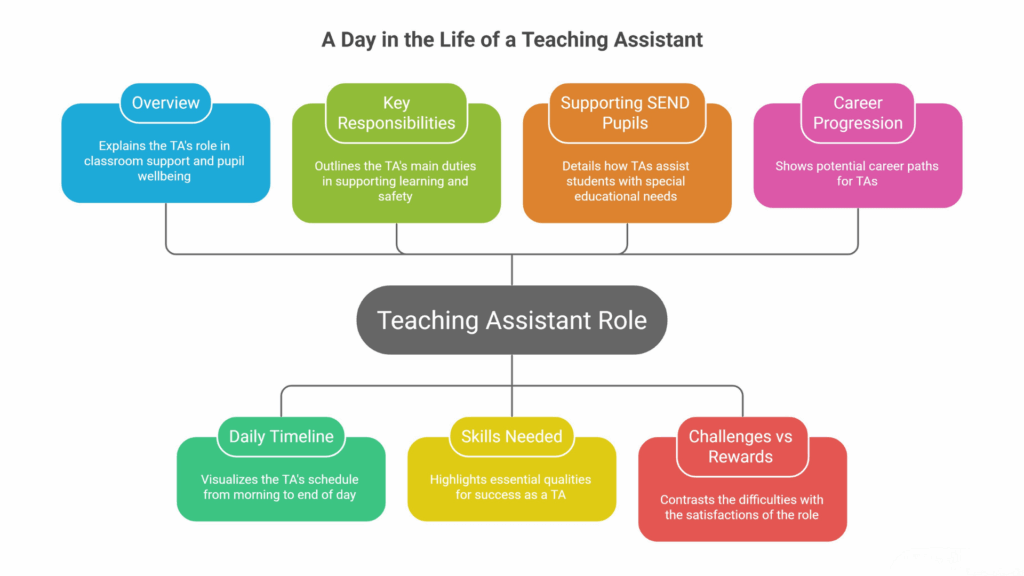
A typical day in the life of a Teaching Assistant begins before pupils arrive at school. While start times vary, most TA jobs begin between 8:15 am and 8:30 am. During this time, the TA role focuses on preparation and communication with the class teacher.
Although routines exist, no two days are identical. For example, some mornings may involve calm classroom preparation, while others require immediate emotional support for pupils. Therefore, adaptability is a key part of the TA job. Additionally, the TA must respond quickly to changing priorities throughout the day.
As lessons begin, the TA role becomes more pupil-focused. Supporting learning, reinforcing instructions, and maintaining engagement are central Teaching Assistant duties. Consequently, the day in the life is both fast-paced and rewarding.
Typical School Day Timeline: From Morning Prep to Home Time
The structure of a primary school day helps define Teaching Assistant responsibilities clearly. In the morning, the Teaching Assistant prepares learning resources, displays visual aids, and supports pupils as they enter the classroom. Meanwhile, communication with the teacher ensures lessons run smoothly.
During teaching sessions, Teaching Assistant duties include working with individuals or small groups, managing behaviour, and encouraging participation. At breaktimes, the TA job extends to playground supervision and safeguarding.
Finally, at the end of the school day, TA responsibilities often involve tidying learning spaces, sharing feedback with teachers, and preparing materials for the next day. Therefore, the TA role continues even after pupils leave.
Morning Responsibilities: Classroom Preparation and Pupil Support
As the school day officially begins, Teaching Assistant responsibilities become more visible and hands-on. During the morning session, a support staff focuses on ensuring the classroom is organised, welcoming, and ready for learning. For example, this may involve setting up books, learning resources, or visual timetables. Consequently, good preparation directly supports lesson flow and pupil confidence.
In addition, greeting pupils as they arrive is an important part of the TA role. Many children need reassurance, encouragement, or emotional support before lessons begin. Therefore, the TA job often includes helping pupils settle, managing minor concerns, and promoting positive behaviour from the outset.
Moreover, morning routines allow the TA to observe pupils closely. These observations help identify learning needs or emotional challenges early in the day. As a result, TA in the morning are essential for creating a calm and productive learning environment.
Supporting Learning During Lessons: Literacy, Numeracy and Behaviour
This image reflects a typical day in the life of a teaching assistant supporting pupils in a UK primary school.

Once lessons are underway, the TA role shifts towards active classroom support. While the teacher delivers instruction, the TA works alongside pupils who need additional guidance. For instance, this may involve explaining tasks in simpler terms, reinforcing key concepts, or encouraging reluctant learners.
In literacy lessons, Teaching Assistant duties often include supporting reading groups, phonics practice, and writing activities. Similarly, during numeracy sessions, the support staff job may involve helping pupils understand mathematical concepts through practical examples. Therefore, subject knowledge and adaptability are key support staff responsibilities.
Behaviour support is also a major part of the day in the life of a support staff. When pupils struggle to remain focused, the support staff role involves using positive strategies to maintain engagement. Consequently, strong communication and patience are essential qualities for success in the TA job.
Small-Group and One-to-One Interventions Explained
A significant part of the TA job involves delivering small-group or one-to-one interventions. These targeted sessions support pupils who require extra help with reading, maths, or emotional development. Therefore, interventions play a vital role in closing learning gaps.
Typically, Teaching Assistant during interventions include following structured programmes, monitoring progress, and providing feedback to the teacher. As a result, the support staff role directly contributes to improved learning outcomes. Furthermore, consistency and confidence are crucial when delivering these sessions.
How Professional Training Strengthens Intervention Skills
Because intervention work requires specific skills, many Teaching Assistants benefit from formal training. For example, a Teaching Assistant Level 1, 2 & 3 Diploma (CPD Accredited) helps build confidence in classroom support, behaviour strategies, and intervention delivery. Consequently, training enhances support staff responsibilities and supports long-term development within the TA role.
Moreover, structured training helps ensure that interventions are delivered effectively and consistently. Therefore, professional development strengthens both the TA job experience and pupil outcomes.
Breaktime and Lunchtime Duties: Safeguarding and Supervision
Beyond classroom learning, the Teaching Assistant job also involves supervision during breaktimes and lunchtimes. Although this part of the day is sometimes underestimated, it forms a critical part of TA responsibilities. During these periods, a support staff ensures pupils are safe, engaged, and behaving appropriately.
For example, playground supervision requires constant awareness and quick decision-making. The support staff role includes encouraging positive play, resolving minor conflicts, and supporting pupils who may feel overwhelmed. Therefore, safeguarding is a key aspect of support staff duties throughout the school day.
Moreover, lunchtime duties often involve supporting pupils in the dining hall. Consequently, the day in the life of a support staff extends well beyond academic support and into pastoral care.
Supporting SEND Pupils in a Primary School Setting
Supporting pupils with SEND is a central Teaching Assistant responsibility in many UK primary schools. In fact, the support staff role often includes working closely with pupils who have autism, ADHD, speech and language difficulties, or learning disabilities.
During lessons, Teaching Assistant duties may involve adapting resources, providing sensory breaks, or using visual supports. Therefore, flexibility and understanding are essential qualities for anyone working in the TA job. Additionally, collaboration with teachers and SENCOs ensures consistent support for pupils.
As inclusion continues to be a priority in schools, SEND support remains a defining feature of the modern support staff role.
Building Specialist SEND Skills Through Advanced Training
Because SEND support requires deeper understanding, many TA choose to develop specialist knowledge. For instance, a Complete Teaching Assistant Diploma Level 3 (TA, SEN, Autism, ADHD & Dyslexia) supports those working closely with SEND pupils. Consequently, this training strengthens confidence, improves outcomes, and enhances progression within the TA job.
Furthermore, specialist training allows TA to meet the growing demands of inclusive education more effectively.
Challenges of the Teaching Assistant Job
Although rewarding, the Teaching Assistant job comes with challenges. Managing behaviour, supporting emotional needs, and balancing multiple responsibilities can be demanding. Therefore, resilience and self-awareness are essential for maintaining wellbeing.
At times, the Teaching Assistant role requires managing difficult situations calmly and professionally. However, understanding these challenges helps set realistic expectations and supports long-term success in the support staff job.
What Makes Being a Teaching Assistant Rewarding?
Despite challenges, many people find the Teaching Assistant job deeply fulfilling. Supporting pupil progress, building positive relationships, and contributing to a supportive learning environment bring genuine satisfaction.
Moreover, seeing pupils gain confidence reinforces the value of the TA role. Consequently, the day in the life of a support staff often feels meaningful and purposeful.
Skills Needed to Succeed as a Teaching Assistant
To succeed in the Teaching Assistant role, strong communication, patience, and adaptability are essential. Additionally, understanding safeguarding, behaviour management, and inclusive practices strengthens support staff responsibilities.
As expectations evolve, developing skills through experience and training enhances effectiveness within the TA job. Therefore, ongoing learning supports both professional growth and classroom success.
Teaching Assistant Career Progression and Opportunities
A Teaching Assistant job can offer more progression than many people initially expect. While some individuals remain in the role long term, others use the assistant role as a stepping stone into specialist or leadership positions within education.
For example, experienced TA may progress to HLTA roles, where responsibilities increase and lesson delivery becomes more independent. Additionally, SEND-focused roles allow TA to specialise further, particularly in autism or behavioural support. Therefore, the TA job provides flexible career pathways depending on individual goals.
Moreover, some professionals choose to move into teacher training, using their experience in the support staff role as a strong foundation. Consequently, long-term development is a realistic and achievable outcome for committed individuals.For accurate information on pay, working hours, and progression, it’s worth reviewing official guidance from the National Careers Service.
Conclusion: Is the Teaching Assistant Role Right for You?
A Teaching Assistant plays a vital role in supporting pupils, teachers, and the wider school community. As this guide has shown, a day in the life of a Teaching Assistant involves far more than classroom help alone. From safeguarding and behaviour support to targeted interventions and SEND provision, the TA role is varied and impactful.
Although the support staff job can be demanding, it is also deeply rewarding. For those who value helping children succeed and want a meaningful career in education, the the assistant role offers purpose, progression, and personal fulfilment.
If you are asking what a TA do in a primary school day, the answer is clear: they support learning, wellbeing, and inclusion at every stage of the school day.
Frequently Asked Questions About Teaching Assistants
A Teaching Assistant supports learning throughout the school day by preparing classrooms, assisting pupils during lessons, delivering small-group or one-to-one interventions, supervising breaktimes, and supporting behaviour and wellbeing. A typical day in life also includes working closely with teachers and supporting SEND pupils.
TA duties and TA responsibilities include supporting classroom learning, managing behaviour, preparing resources, supervising pupils, delivering interventions, and safeguarding children. The Teaching Assistant role may also involve supporting SEND pupils and providing feedback to teachers to help improve learning outcomes.
Yes, many TA jobs involve working one-to-one with pupils or leading small-group interventions. These sessions often focus on literacy, numeracy, behaviour, or SEND support. Delivering interventions is a key part of the Teaching Assistant role and helps pupils make targeted progress.
You do not always need formal qualifications to start a TA job in the UK. However, training and recognised diplomas significantly improve confidence, skills, and employability. Qualifications also help Teaching Assistants progress into specialist roles or higher-level positions within schools.
A Teaching Assistant supports learning under teacher guidance, while an HLTA (Higher Level Teaching Assistant) has greater responsibility. HLTAs may lead lessons, cover classes, and plan learning activities. Progression from a TA role to HLTA usually requires experience and additional training.
Categories
All Courses
Personal Development
645
Employability
404
Health & Care
320
Management
300
IT & Software
284
Business
266
Quality Licence Scheme Endorsed
257
Safety & First Aid
217
Teaching & Education
163
Accounting & Finance
146
Design & Technology
121
Construction & Engineering
117
Mental Health & Counselling
117
Sales & Marketing
111
Compliance & Law
97
Food & Nutrition
83
Science
71
Sports & Fitness
54
Language
50
Animal Care
41
Photography & Lifestyle
35
Cybersecurity
28
Makeup & Beauty
24
Programming & Coding
20
Business Communication
15
Job Ready Programme
14
Career Bundle
13
Development
10
Data & Analytics
10
Organizational Development
9
Leadership Development
8
Risk Management
6
Car Maintainence
2

0 responses on "A Day in the Life of a Teaching Assistant in the UK"