





AI will not replace healthcare workers in the UK. Instead, it will enhance their roles by automating routine tasks, reducing paperwork, and providing data-driven insights. AI in healthcare allows professionals to focus on hands-on patient care and complex decision-making, strengthening the overall workforce.
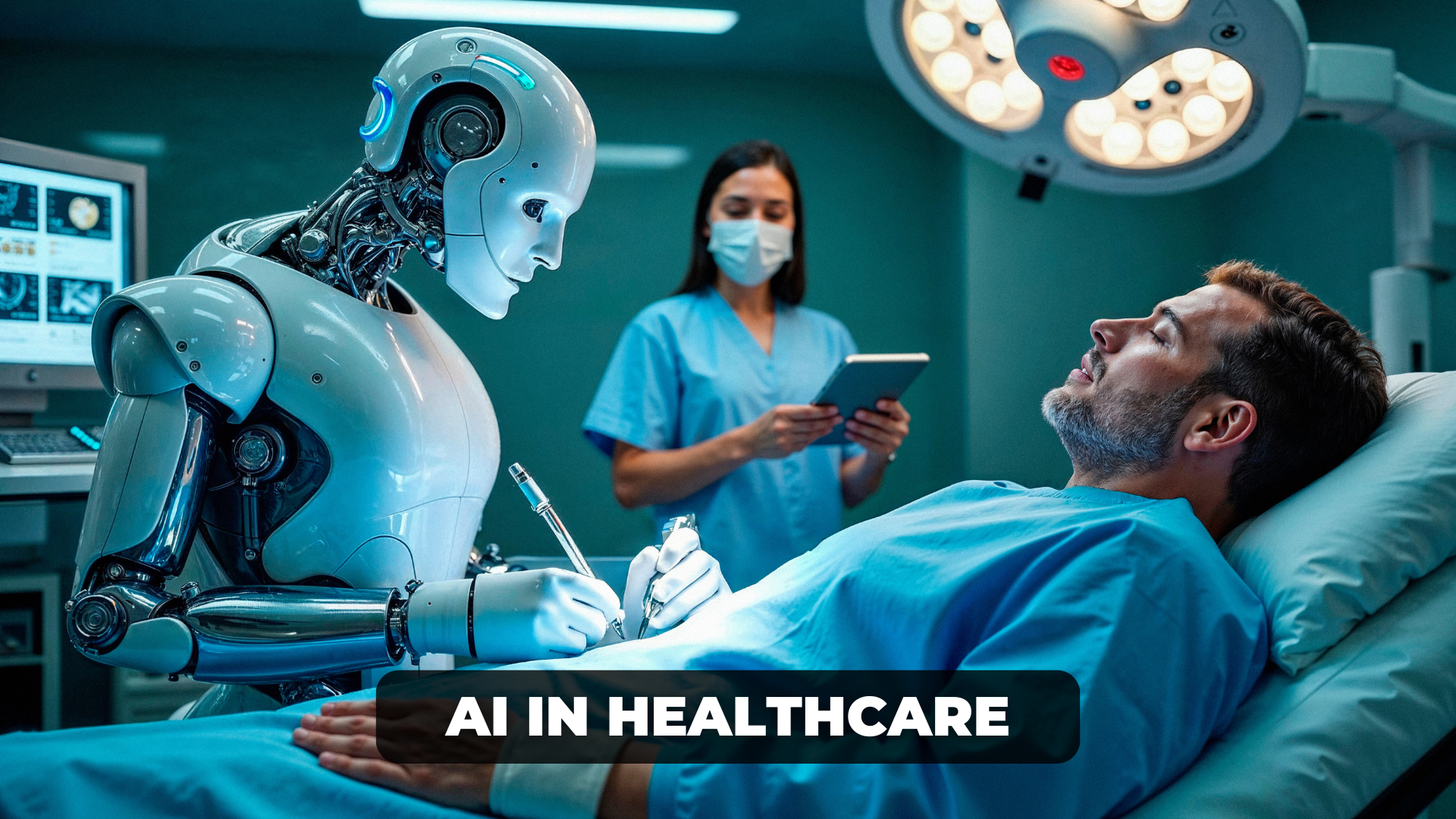
AI in Healthcare
AI in healthcare is becoming one of the most powerful forces driving innovation across the United Kingdom. As NHS services continue to evolve, artificial intelligence in healthcare improves diagnostic accuracy, treatment planning, patient experience, and overall efficiency. Moreover, healthcare AI helps hospitals and clinics reduce waiting times and streamline administrative tasks. It also supports clinical decision-making.
Because demand for digital transformation continues to grow, interest in how is AI used in healthcare has increased significantly. This trend has captured the attention of professionals, students, and patients alike.
In addition, AI medical diagnosis tools and Machine Learning in Healthcare systems are accelerating the future of British medicine. These technologies are no longer distant concepts; instead, they are actively shaping the healthcare industry today. With this in mind, let’s explore how AI in healthcare works, why it matters, and how it will transform the UK.

Table of Contents
What Is Artificial Intelligence in Healthcare? A UK Perspective
clinicians in making better and faster decisions. Because these tools analyse large amounts of data, they help identify patterns that are too complex or time-consuming to spot manually. As a result, healthcare AI helps practitioners diagnose diseases earlier. It also supports more accurate symptom monitoring and improved treatment recommendations.
Furthermore, the integration of Machine Learning in Healthcare allows these systems to improve continuously. The more data the technology receives, the smarter it becomes. Consequently, artificial intelligence in healthcare is now used across NHS hospitals, research institutions, GP practices, and private health facilities throughout the UK.
How Is AI Used in Healthcare Across the NHS?
Many people today want to understand how AI is used in healthcare and how it benefits patients across Britain. Although the NHS faces ongoing challenges, AI in healthcare helps reduce workloads. It also improves efficiency and enhances overall performance.
To begin with, healthcare AI assists with early disease detection. For example, AI medical diagnosis tools can analyse scans, blood tests, and patient histories much faster than manual methods. Since early diagnosis often leads to better outcomes, these systems are invaluable in radiology, oncology, and cardiology.
In addition, artificial intelligence in healthcare supports triage systems that sort patients based on urgency. Because NHS facilities face extremely high demand, these systems help ensure that patients receive the right care at the right time. Furthermore, Machine Learning in Healthcare helps hospitals predict future demand and allocate resources effectively.
Another major use involves personalised treatment. Healthcare AI reviews thousands of similar cases to recommend specific medicines or therapies. This not only improves treatment accuracy but also enhances patient safety.
AI in Healthcare and the UK Healthcare Industry
AI in healthcare is rapidly reshaping the wider healthcare industry. As pressures rise due to growing population needs and workforce shortages, artificial intelligence in healthcare is becoming essential for long-term sustainability. NHS managers, policymakers, and private healthcare providers now invest heavily in healthcare AI solutions to improve operations.
Because the healthcare industry depends on efficiency, AI medical diagnosis and Machine Learning in Healthcare support faster decision-making. They also help improve patient flow. Additionally, healthcare AI reduces administrative burdens, such as appointment scheduling, document processing, and predictive planning. This shift allows clinicians to spend more time on direct patient care.
Moreover, artificial intelligence in healthcare supports strategic planning. It can forecast staffing needs, identify operational bottlenecks, and predict seasonal health trends. As a result, the healthcare industry is experiencing a digital transformation that will continue to expand over the coming years.
Build a Strong Future in Health and Social Care
As AI transforms both health and social care across the United Kingdom, the need for skilled and compassionate professionals continues to grow. Modern care environments now combine human support with digital tools. This makes strong foundational training more important than ever. If you’re considering a career in this rewarding sector, now is the ideal time to gain a recognised qualification.
The Level 3 Diploma in Health and Social Care provides essential skills in safeguarding, communication, person-centred care, and risk management. It also prepares you for roles in care homes, supported living, and community services. These areas continue to grow due to the rise of intelligent care technologies.
Completing this qualification can improve your confidence, employability, and long-term career prospects within the evolving social care landscape.
AI and the Modern Healthcare Facility
Healthcare facilities across the UK are embracing AI-driven systems to improve service quality and patient outcomes. Hospitals, clinics, private practices, and even community health centres now incorporate healthcare AI to enhance workflow efficiency.
For example, AI medical diagnosis tools used in imaging departments help radiologists detect abnormalities quickly and accurately. Furthermore, many facilities use artificial intelligence in healthcare to manage electronic health records, monitor infection control, and allocate hospital beds based on real-time demand.
Machine Learning in Healthcare also plays a crucial role in automating routine processes, reducing errors, and ensuring patient safety. Because healthcare facilities rely on accuracy and speed, the use of AI in healthcare is becoming increasingly common across the entire UK health network.
AI in Health and Social Care Across the United Kingdom
AI in healthcare is extending its impact beyond hospitals and medical facilities into the broader health and social care sector. This area plays a vital role in supporting vulnerable individuals, including older adults, those with disabilities, and people requiring long-term care. Because of rising demand and limited resources, artificial intelligence in healthcare and social care is helping providers deliver more responsive and personalised support.
In care homes, supported living environments, and home-care settings, healthcare AI is being used to monitor individuals, detect early health changes, and alert carers before conditions worsen. Additionally, Machine Learning in Healthcare helps predict risks such as falls, infections, and behavioural changes, allowing care teams to intervene sooner.
Moreover, artificial intelligence in healthcare assists social workers by automating paperwork, identifying priority cases, and analysing patterns in complex family or care situations. This enables professionals to spend more time with individuals who need direct support. As a result, AI in healthcare and social care is improving outcomes, strengthening community support, and easing pressures on local authorities and the NHS.
Because the UK government aims to modernise adult social care, integrating AI in healthcare and social care has become essential for long-term sustainability.
AI Medical Diagnosis and Early Detection Technology
AI medical diagnosis systems have transformed how clinicians detect diseases. These tools analyse medical images with extraordinary precision, often identifying details that may be difficult for the human eye to see. Since early detection is vital for conditions such as cancer, heart disease, and neurological disorders, AI in healthcare offers invaluable support.
Moreover, AI medical diagnosis helps reduce diagnostic delays, especially during periods of high demand within the NHS. Because artificial intelligence in healthcare processes data quickly, patients receive timely results and appropriate treatment.
Additionally, Machine Learning in Healthcare ensures diagnostic systems grow smarter as they learn from new data. This level of accuracy is reshaping the standard of care across the UK.
Machine Learning in Healthcare – How It Supports UK Clinicians
Machine Learning in Healthcare is the technological engine behind many AI-driven medical systems. These algorithms learn from patient data, identifying patterns that would otherwise be missed. As a result, Machine Learning in Healthcare helps predict disease risks, recommend treatments, and improve patient outcomes.
Furthermore, this technology assists with managing patient records, predicting equipment failure, and supporting automated triage systems. Since healthcare AI evolves constantly, clinicians benefit from increasingly accurate tools that complement their expertise.
Because Machine Learning in Healthcare can adapt quickly, it is becoming essential for both clinical and operational roles across the UK.
Careers in AI and Healthcare: New Opportunities for UK Professionals
As AI in healthcare continues to expand, the demand for skilled professionals is increasing rapidly. Students, graduates, and experienced clinicians are exploring new career paths that combine healthcare knowledge with digital innovation.
Some emerging careers include:
- AI clinical analysts
- Healthcare data scientists
- Machine Learning in Healthcare engineers
- Digital health consultants
- Clinical informatics specialists
- AI medical diagnosis experts
Because artificial intelligence in healthcare continues to advance, these careers offer strong job security and growth potential. Furthermore, the NHS is actively supporting digital upskilling initiatives, making healthcare AI careers more accessible than ever before.
The Future of AI in Healthcare in the United Kingdom
The future of the UK healthcare system is deeply connected to the development of AI in healthcare. Over the next decade, artificial intelligence in healthcare will become even more integrated into clinical practice, supporting personalised medicine, digital diagnostics, and automated decision-making.
We are already seeing AI medical diagnosis systems detecting cancers earlier, predicting emergency department demand, and improving long-term care management. Additionally, Machine Learning in Healthcare will help develop targeted treatments and more accurate forecasting tools.
Because national investment continues to increase, healthcare AI will soon become part of every major NHS digital strategy. Ultimately, the question is no longer how AI is used in healthcare, but how quickly it will reshape the entire system.
AI in healthcare is not just a technological advancement — it is the future foundation of British medicine.
Take the Next Step Toward a Rewarding Career in Nursing Support
If the future of AI in healthcare inspires you to pursue a meaningful role within the medical sector, this is the perfect opportunity to begin your journey. As hospitals and clinical environments across the UK adopt more digital tools and smarter systems, well-trained nursing assistants are becoming increasingly essential to high-quality patient care.
The Level 3 Diploma in Nursing Assistant Complete Training equips you with the practical and professional skills needed to thrive in hospital wards, outpatient clinics, and community health services. From bedside support to safe practice and healthcare team collaboration, this accredited qualification offers a comprehensive pathway into one of the UK’s most respected entry-level healthcare careers.
By completing this diploma, you’ll strengthen your employability, gain valuable confidence, and position yourself for success in a rapidly evolving healthcare system.
Frequently Asked Questions Of AI in Healthcare
AI in healthcare is used across the UK to support clinical diagnosis, improve patient monitoring, and streamline NHS workflows. It helps analyse scans, predict risks, prioritise urgent cases, and automate administrative tasks. AI medical diagnosis tools and Machine Learning in Healthcare also assist with early detection and personalised treatment planning.
Artificial intelligence in healthcare improves accuracy, speeds up diagnosis, reduces waiting times, and enhances patient safety. Healthcare AI systems support clinicians by identifying patterns in data, predicting complications, and recommending tailored treatments. These benefits lead to a more efficient and modern UK healthcare system.
Yes. AI medical diagnosis systems are highly reliable when used alongside clinical expertise. They analyse medical images and test results with exceptional precision, often spotting abnormalities earlier than traditional methods. This supports faster, more accurate decision-making across NHS hospitals and private healthcare facilities.
The future of AI in the UK healthcare system includes smarter triage, personalised medicine, predictive analytics, and improved support for health and social care. As Machine Learning in Healthcare advances, the NHS will see more efficient services, earlier diagnosis, and a fully modernised care experience.

All Courses
Personal Development
643
Employability
404
Health & Care
321
Management
301
IT & Software
273
Business
262
Quality Licence Scheme Endorsed
257
Safety & First Aid
216
Teaching & Education
163
Accounting & Finance
146
Design & Technology
121
Mental Health & Counselling
117
Construction & Engineering
116
Sales & Marketing
111
Compliance & Law
97
Food & Nutrition
83
Science
71
Sports & Fitness
55
Language
50
Animal Care
41
Photography & Lifestyle
37
Makeup & Beauty
26
Programming & Coding
20
Cybersecurity
17
Business Communication
15
Career Bundle
14
Job Ready Programme
14
Development
10
Data & Analytics
10
Organizational Development
9
Leadership Development
8
Risk Management
6
Car Maintainence
1

0 responses on "AI in Healthcare"