





Signs Your Car Battery Is Dying: Symptoms, Costs & When to Replace It
Is your car struggling to start on cold mornings, or are your headlights suddenly dimmer than usual? These are often early car battery symptoms drivers experience before a complete breakdown.
Your car battery is one of the most critical components of your vehicle. It powers everything from the ignition system to your lights, dashboard, and infotainment system. Yet, many drivers overlook the warning signs until it is too late, often resulting in unexpected breakdowns and costly repairs.
In the UK, where colder temperatures and short journeys are common, battery problems can appear sooner than expected. According to the RAC, battery-related issues remain one of the most common causes of roadside assistance callouts. This highlights how important it is to recognise signs of a failing car battery that drivers frequently face.
In this guide, you will learn how to identify early warning signs, understand the difference between battery and alternator problems, and know when to replace your battery before it fails completely.
Table of Contents
What Does a Car Battery Do?
Before diving into the warning signs, it is important to understand what your car battery actually does.
Your car battery acts as the main power source for your vehicle when the engine is off and plays a key role when starting the engine. It supplies electricity to essential systems such as:
- Starter motor
- Ignition system
- Headlights and interior lights
- Dashboard electronics
- Infotainment and navigation systems
Once your engine starts, the alternator takes over and keeps the battery charged while powering electrical systems.
This relationship between the battery and alternator is crucial. If either fails, your vehicle can experience serious electrical issues. Halfords explains that modern vehicles rely heavily on electrical systems, meaning even a slight drop in battery performance can affect multiple components at once.
Understanding this basic function helps you recognise car battery problems early and avoid being stranded.
10 Signs Your Car Battery Is Dying

Recognising early car battery warning signs can save you from unexpected breakdowns and expensive repairs. Below are the most common symptoms of a bad car battery every UK driver should know.
Difficulty Starting the Engine
One of the most obvious battery problems encountered is a slow or struggling engine start.
If your engine takes longer than usual to turn over, your battery may not be delivering enough power. You might notice a sluggish cranking sound, especially in colder weather when battery efficiency drops. Ignoring this sign can quickly lead to a completely dead battery.
Clicking Sound When Turning the Key
If you hear a rapid clicking noise when trying to start your car, it usually means your battery does not have enough charge to power the starter motor.
This is one of the clearest warning signs of car battery failure and often indicates that your battery is close to dying.
Dim or Flickering Headlights
Your headlights rely on a stable electrical supply. When your battery weakens, they may appear dim or flicker unexpectedly.
This is a classic dim headlights battery problem, especially noticeable at night or when using multiple electrical systems simultaneously.
Dashboard Battery Warning Light
Modern vehicles are equipped with warning systems that alert you to potential issues.
If your battery light appears on the dashboard, it could indicate:
- A failing battery
- A problem with the charging system
- Issues with the alternator
According to the AA, drivers should never ignore dashboard warning lights, as they often signal underlying electrical faults.
Loss of Electrical Power
A weak battery affects more than just starting your car. You may notice:
- Slow electric windows
- Weak air conditioning performance
- Unresponsive infotainment systems
- Flickering dashboard lights
This is one of the most common car electrical problems battery symptoms, showing that your battery cannot maintain a consistent power supply.
Unusual Smell (Sulfur or Rotten Egg)
If you notice a rotten egg smell coming from your engine bay, it could indicate a leaking battery. This smell is caused by sulphuric acid escaping, which is a serious issue that requires immediate attention.
Swollen or Damaged Battery Case
Extreme temperatures or overcharging can cause your battery case to swell or crack. A visibly damaged battery is a strong indicator that replacement is necessary.
Frequent Need for Jump Starts
If you find yourself repeatedly jump-starting your car, your battery is likely no longer holding a charge effectively. This is one of the strongest signs of a failing car battery UK drivers should never ignore.
Electrical Malfunctions
Modern vehicles depend on complex electronics. A weak battery can cause systems such as alarms, sensors, and onboard computers to behave unpredictably. Even minor voltage drops can trigger multiple warning lights and system errors.
Old Battery (3–5 Years or More)
Most car batteries last between 3 and 5 years. If your battery is within this range, it is already at higher risk of failure.
Environmental factors such as cold UK winters can reduce lifespan further, making regular checks essential.
Bad Battery vs Alternator: How to Tell the Difference
Many drivers struggle to identify whether their issue is caused by the battery or the alternator. Understanding the difference is crucial for accurate diagnosis.
Battery Role
- Starts the engine
- Provides initial electrical power
Alternator Role
- Charges the battery while driving
- Powers electrical systems once the engine is running
Key Differences in Symptoms
Battery Issues:
- Car struggles to start
- Clicking sound when turning the key
- Electrical systems weak before engine starts
Alternator Issues:
- Car starts but then stalls
- Battery warning light stays on while driving
- Lights become brighter or dimmer inconsistently
This comparison helps you understand bad battery vs alternator symptoms explained clearly and avoid unnecessary replacements.
Simple Test You Can Try
One of the easiest ways to diagnose the issue is by jump-starting your car:
- If the car starts and continues running, your battery is likely the problem
- If the car stops shortly after, your alternator may be faulty
If you are unsure, it is always best to consult professionals or refer to guidance from the National Careers Service, which highlights the importance of basic vehicle diagnostics skills in automotive roles.
How Long Do Car Batteries Last
On average, car batteries last between 3 and 5 years. However, several factors influence their lifespan:
- Driving habits
- Climate conditions
- Frequency of short trips
- Vehicle type and electrical demand
In many countries, colder weather significantly impacts battery performance. Low temperatures slow down chemical reactions inside the battery, reducing its ability to hold charge.
Short journeys, which are common in urban areas, also prevent the alternator from fully recharging the battery. Over time, this leads to gradual degradation.
Understanding these factors can help you better predict how long car batteries last in a cold climate conditions and take preventive measures.
Car Battery Replacement Cost (Fitted Guide)
One of the most common concerns for drivers is the cost of replacing a car battery.
In the UK, the car battery replacement cost UK fitted typically ranges from:
- £50 to £120 for standard vehicles
- £120 to £250+ for premium or advanced batteries
Factors affecting the cost include:
- Battery type and size
- Vehicle make and model
- Labour and fitting service
- Location and service provider
Mobile fitting services are becoming increasingly popular, allowing technicians to replace your battery at home or work.
While it may be tempting to delay replacement, ignoring car battery problems symptoms can lead to more expensive repairs involving the alternator or electrical systems.
Why Learning Basic Car Maintenance Matters
Understanding how your vehicle works is no longer just for mechanics. Today, even basic knowledge can help you:
- Avoid unnecessary repair costs
- Identify issues early
- Communicate effectively with technicians
- Improve vehicle safety and reliability
For those who want to go beyond basic awareness, structured learning can make a significant difference. For example, gaining practical insights through a professionally designed programme like the Car Mechanic and Repair Training Diploma can help you understand vehicle systems in detail, including diagnosing battery and electrical faults.
Similarly, if you are looking for a more beginner-friendly approach to everyday vehicle care, the Car Maintenance Course provides essential knowledge that can help you confidently handle common issues such as battery checks and maintenance.
These types of learning opportunities are especially valuable as the demand for automotive knowledge continues to grow across the UK.
What to Do If Your Car Battery Is Dead
If your car battery fails completely, it can be frustrating and inconvenient. However, knowing what to do can make the situation much easier to handle.
Immediate Steps:
- Try jump-starting the vehicle
- Check for loose or corroded terminals
- Turn off all electrical components
If the car starts, drive for at least 20–30 minutes to allow the alternator to recharge the battery.
However, if the problem persists, it is likely time for a replacement.
How to Maintain Your Car Battery and Extend Its Life
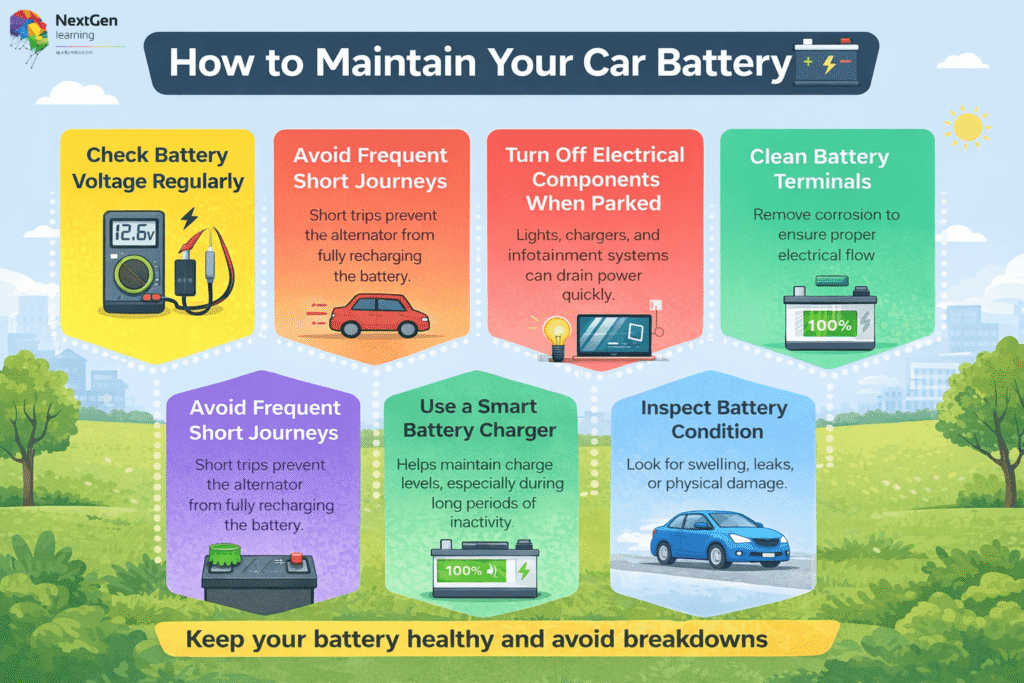
Preventing battery failure is far easier and cheaper than replacing it, and adopting a few simple habits can significantly extend your battery’s lifespan while reducing the risk of unexpected breakdowns. Regularly checking your battery voltage using a multimeter helps you identify early warning signs before they turn into serious problems. Avoiding frequent short journeys is also important, as these trips do not give the alternator enough time to fully recharge the battery. When your car is parked, make sure all electrical components such as lights, chargers, and infotainment systems are switched off, as they can quickly drain power. Keeping your battery terminals clean is equally essential, as removing corrosion ensures a smooth and reliable electrical flow. Using a smart battery charger can further help maintain optimal charge levels, especially if your vehicle is not used often.
In addition, regularly inspecting the battery for signs of swelling, leaks, or physical damage allows you to act early and prevent failure. Finally, driving your vehicle consistently helps keep the battery active and prevents it from discharging over time. Following these car battery maintenance tips UK drivers can rely on will help you avoid costly repairs and keep your vehicle running efficiently.
Common Causes of Car Battery Failure
Understanding why batteries fail can help you prevent problems before they occur. Many car battery symptoms are the result of avoidable factors.
●Cold weather conditions: Low temperatures reduce battery efficiency and performance
● Old battery age: Most batteries degrade after 3 to 5 years
● Faulty alternator: Prevents proper charging and drains the battery
● Leaving lights or electronics on: Causes unnecessary battery drain
● Corroded or loose terminals: Interrupts power flow
● Frequent short trips: Limits proper recharging
● Long periods without driving: Leads to gradual discharge
● Faulty wiring or charging system: Causes an inconsistent power supply
According to guidance from the RAC, many battery-related breakdowns are preventable with regular checks and maintenance.
When Should You Replace Your Car Battery?
Knowing when to replace your battery is essential to avoid sudden breakdowns.
You should consider replacement if:
● Your battery is over 3 to 5 years old: Natural wear reduces efficiency
● You experience repeated starting issues: Indicates declining performance
● Electrical systems behave inconsistently: Signals unstable voltage
● You rely on frequent jump-starts: Shows the battery cannot hold charge
● Physical damage is visible: Swelling or leaks require immediate replacement
If you are unsure, most garages offer battery testing services. The AA recommends regular battery checks, especially before winter, to reduce the risk of failure.
Can You Drive With a Weak Car Battery?
Driving with a weak battery is risky and not recommended. While your car may still start, a failing battery can:
- Cause your vehicle to stall unexpectedly
- Lead to failure of essential systems such as lights and indicators
- Put extra strain on the alternator
- Increase the risk of complete breakdown
If your battery fails while driving, your car will eventually stop once the electrical system loses power. This can be dangerous, particularly on busy roads or motorways.
Why Car Battery Knowledge Is a Valuable Skill
As vehicles become more advanced, understanding basic automotive systems is increasingly important.
Battery-related issues are among the most common problems drivers face, yet many people rely entirely on mechanics for even simple diagnostics. Developing basic knowledge can help you:
- Identify problems early before they become serious
- Save money on unnecessary repairs
- Improve vehicle safety and reliability
- Build confidence in handling car-related issues
If you are interested in gaining deeper knowledge, structured learning can provide a clear advantage. For instance, understanding how electrical systems work through the Car Mechanic and Repair Training Diploma allows learners to confidently diagnose issues such as battery failure, alternator faults, and wiring problems.
For everyday drivers, learning practical skills through the Car Maintenance Course can make a noticeable difference in managing routine vehicle care and avoiding unexpected costs.
These skills are not only useful for personal use but are also increasingly valuable in the UK job market, where demand for automotive knowledge continues to grow.
Conclusion
Recognising early car battery symptoms can save you from unexpected breakdowns, expensive repairs, and unnecessary stress. From slow engine starts to dim headlights and warning lights, these signs should never be ignored.
Understanding the difference between battery and alternator issues, maintaining your battery properly, and replacing it at the right time are essential steps in keeping your vehicle running smoothly.
At the same time, developing even basic automotive knowledge can make a significant difference in how you manage your vehicle. Whether you want to handle minor issues yourself or simply make more informed decisions, learning these skills offers long-term value.
FAQs: Car Battery Symptoms Drivers Commonly Ask
One of the most common car battery symptoms UK drivers notice is difficulty starting the engine. You may also hear a clicking sound, see dim headlights, or experience electrical issues. These signs indicate that the battery is losing its ability to hold charge and may need replacing soon.
Several factors can drain a battery quickly, including leaving lights on, frequent short trips, and extreme temperatures. Faulty alternators and corroded terminals can also prevent proper charging. Understanding these causes helps reduce the risk of car battery problems symptoms appearing suddenly.
To identify bad battery vs alternator symptoms explained, try jump-starting your car. If it starts and continues running, the battery is likely the issue. If the car stops shortly after, the alternator may not be charging the battery properly.
If your car struggles to start, requires frequent jump-starts, or shows warning lights, it is likely time for a replacement. These are common signs of a failing car battery UK drivers should not ignore.
Most car batteries last between 3 and 5 years. However, UK weather conditions, driving habits, and maintenance can affect lifespan. Regular checks help ensure your battery performs reliably.
Repeated battery failure can be caused by a faulty alternator, short trips, electrical drain, or an ageing battery. Identifying the root cause is essential to prevent ongoing issues and additional repair costs.


Car Mechanic and Repair Training Diploma

0 responses on "Signs Your Car Battery Is Dying: Symptoms, Costs & When to Replace It"