

Popular Courses

Brand
Awarding body image

An Introduction to Discrete Maths – Online Course UK

Overview of Introduction to Discrete Maths | CPD Accredited Course

Are you looking to learn a discrete mathematics course and build strong logical and problem-solving skills for computer science? Then, this Introduction to Discrete Maths course is designed to help you understand the core concepts that power programming, algorithms, and data science. As technology continues to grow rapidly, studies show that mathematical and computational thinking skills are among the most in-demand abilities in the UK tech sector. Therefore, learning discrete mathematics is no longer optional—it is essential for anyone entering modern digital careers.

Moreover, this discrete maths for computer science course provides a clear and structured pathway for beginners to understand topics such as logic, sets, functions, and graph theory. You will explore key areas like Boolean algebra, combinatorics, and algorithms, while also learning how these concepts are applied in real-world computing problems. In addition, the course simplifies complex mathematical ideas into easy lessons, so you can build confidence step by step.

Furthermore, this online discrete mathematics course focuses on practical understanding rather than memorisation. As a result, you will develop strong analytical thinking, logical reasoning, and problem-solving abilities. Ultimately, this course prepares you for careers in software engineering, data science, and programming by helping you think mathematically and solve computational problems efficiently.

Exclusive Course Glimpse

What You Will Learn in Introduction to Discrete Maths

This discrete mathematics course for beginners is designed to build strong foundational knowledge first, and then gradually introduce advanced concepts used in computer science and algorithms. Therefore, you can learn with clarity, even without prior experience.

By the end of this course, you will be able to:

  • Understand discrete mathematics fundamentals: Learn core concepts like sets, logic, and mathematical structures
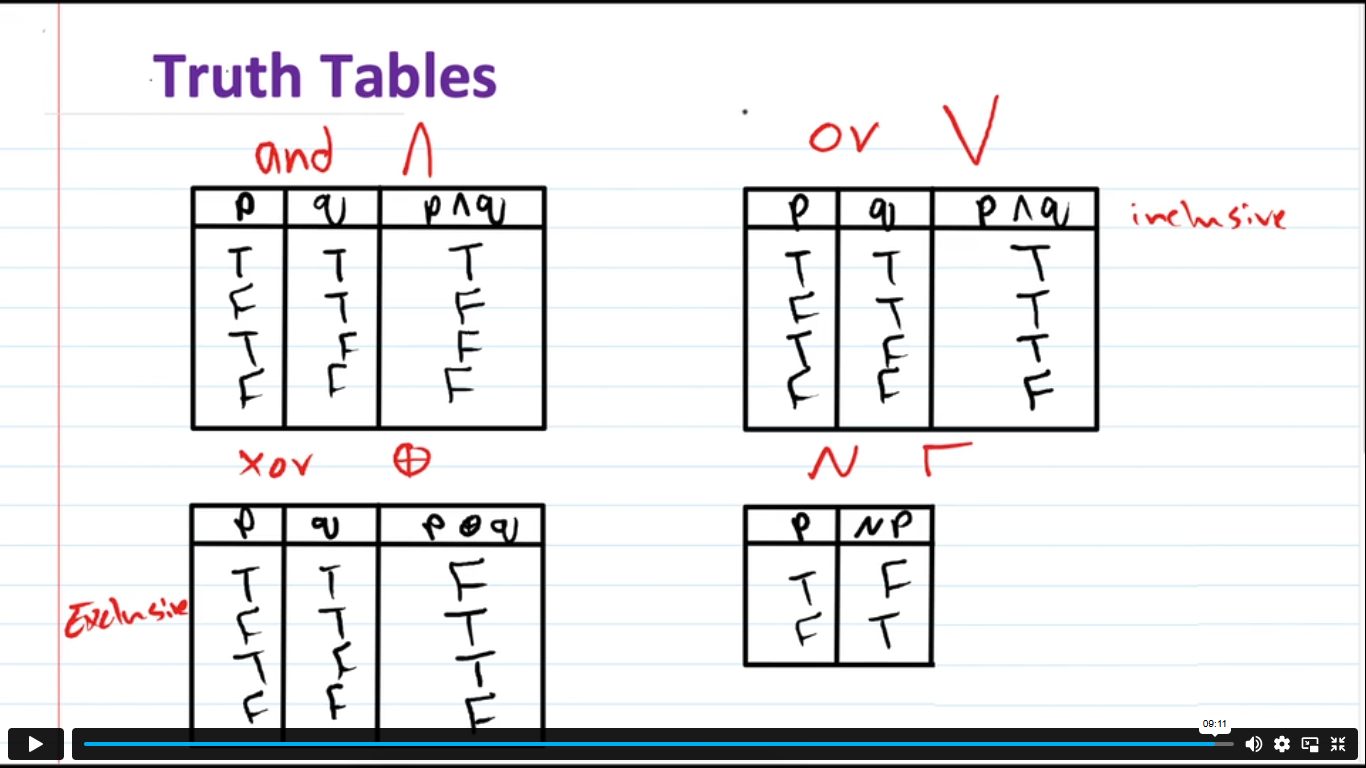
  • Apply logical reasoning: Build and evaluate statements, truth tables, and logical equivalences
  • Solve mathematical problems: Work with counting, combinatorics, and recurrence relations
  • Use proof techniques: Apply induction, contradiction, and direct proofs confidently
  • Analyse algorithms: Understand efficiency, optimisation, and computational thinking
  • Work with graph theory: Interpret graphs, paths, circuits, and real-world applications
  • Understand functions and relations: Explore mappings, domains, ranges, and properties
  • Apply statistics basics: Learn mean, variance, and data interpretation techniques

In addition, you will improve your ability to think critically and solve complex computational problems. Furthermore, you will learn how mathematical concepts are directly applied in programming, machine learning, and cybersecurity. Therefore, this course builds both theoretical knowledge and practical skills for real-world applications.

Why Choose Us?​

Many learners search for the best discrete mathematics course online, but not all provide structured and beginner-friendly learning. Therefore, this course focuses on clarity, simplicity, and real-world relevance.

In addition, this course offers key benefits:

  • Affordable Learning: Structured lessons for smooth progress
  • CPD-Certified: Strengthen your CV with recognised credentials
  • Lifetime Access: Learn anytime at your own pace
  • Instant Certificate: Receive certification upon completion
  • Flexible Scheduling: Study around your work or studies
  • Transparent Pricing: No hidden costs
  • Quick Assessments: Monitor your progress easily
  • 24/7 Support: Assistance via chat or email

Thus, this online discrete maths course UK supports both learning and career growth.

Course Curriculum

Introduction to Discrete Maths – 

Sets – Learn foundational concepts including sets, subsets, operations, and Venn diagrams

Logic – Understand statements, truth tables, Boolean algebra, and logical equivalences

Number Theory – Explore divisibility, prime numbers, and mathematical properties

Proof – Learn direct proofs, contradiction, induction, and reasoning techniques

Functions – Study mappings, graphs, domains, ranges, and compositions

Relations – Understand relations, equivalence classes, and properties

Graph Theory – Analyse graphs, paths, circuits, and algorithms

Statistics – Learn data measures such as mean, variance, and standard deviation

Combinatorics – Study counting principles, permutations, and combinations

Sequence and Series – Understand sequences, patterns, and summations

Assignment – Complete assessment to validate your knowledge

Certificate of Achievement

Nextgen Certificate

After completing this discrete mathematics course online UK, you will receive a CPD-accredited certificate to confirm your learning professionally.

You can typically choose:

  • PDF Certificate 
  • Hardcopy Certificate 

Moreover, certification helps learners:

📄 Strengthen your CV: Add a recognised mathematics certification
🎓 Demonstrate skills: Showcase logical reasoning and problem-solving abilities
📈 Boost employability: Stand out in tech and data roles
Prove learning: Validate your professional development

Who Is This Course For?​

This discrete maths for computer science course is suitable for anyone interested in mathematics, programming, and problem-solving.

This course is ideal for:

  • Beginners: Start learning discrete mathematics from scratch
  • Computer science students: Build strong mathematical foundations
  • Programmers: Improve logical thinking and algorithm design
  • Data science learners: Understand mathematical concepts behind models
  • IT professionals: Strengthen analytical and computational skills
  • Career changers: Enter tech roles with confidence

Furthermore, this course is designed to be flexible and easy to follow. As a result, learners can progress at their own pace while balancing other commitments. Therefore, even without prior experience, you can start learning discrete mathematics confidently.

Students learning discrete mathematics concepts including graphs, logic and problem solving

Requirements​

There are no formal requirements for this discrete mathematics course in the UK.

However, learners should have:

  • Basic English skills: To understand course materials
  • Device access: Computer, tablet, or smartphone
  • Internet connection: For online learning

Because this course is fully online, you can learn anytime and revisit lessons whenever needed.

Career Path of Introduction to Discrete Maths

Completing this discrete mathematics course can open doors to multiple tech and analytical careers.

Common career paths include:

  • Software Engineer: £30,000 to £80,000+
    Develop software using algorithms and logical structures
  • Data Analyst: £28,000 to £60,000
    Analyse data using mathematical and statistical techniques
  • Cybersecurity Analyst: £35,000 to £75,000
    Apply logic and cryptography to secure systems
  • Machine Learning Engineer: £40,000 to £90,000
    Build intelligent models using mathematical foundations
  • Algorithm Engineer: £45,000 to £95,000
    Design efficient algorithms for complex problems
  • Research Analyst: £30,000 to £65,000
    Apply discrete mathematics in scientific and technical research

However, salaries may vary depending on experience, industry, and location.

Order Your Certificate

To order your Certificate, we kindly invite you to visit the following link

Frequently Asked Questions -

A discrete mathematics course focuses on mathematical concepts used in computer science, such as logic, graphs, and algorithms. It is important because it builds the foundation for programming and problem-solving. Moreover, it helps learners think logically and analyse complex systems effectively.

Yes, this course is designed specifically for beginners. It starts with basic concepts like sets and logic, and then gradually introduces advanced topics. Therefore, even learners with no prior knowledge can follow along easily.

Discrete mathematics is widely used in algorithms, data structures, cryptography, and machine learning. For example, graph theory helps in networking, while logic is used in programming and circuit design. As a result, it is essential for most tech careers.

Yes, online learning allows flexible and structured study. This course includes step-by-step lessons, quizzes, and practical examples. Therefore, learners can understand concepts at their own pace and revisit topics anytime.

You will gain logical reasoning, problem-solving, and analytical thinking skills. In addition, you will learn algorithms, proofs, and graph theory. These skills are highly valuable in programming and data science roles.

Course Curriculum

Sets
Introduction to Sets 00:01:00
Definition of Set 00:09:00
Number Sets 00:10:00
Set Equality 00:09:00
Set-Builder Notation 00:10:00
Types of Sets 00:12:00
Subsets 00:10:00
Power Set 00:05:00
Ordered Pairs 00:05:00
Cartesian Products 00:14:00
Cartesian Plane 00:04:00
Venn Diagrams 00:03:00
Set Operations (Union, Intersection) 00:15:00
Properties of Union and Intersection 00:10:00
Set Operations (Difference, Complement) 00:12:00
Properties of Difference and Complement 00:07:00
De Morgan’s Law 00:08:00
Partition of Sets 00:16:00
Logic
Introduction 00:01:00
Statements 00:07:00
Compound Statements 00:13:00
Truth Tables 00:09:00
Examples 00:13:00
Logical Equivalences 00:07:00
Tautologies and Contradictions 00:06:00
De Morgan’s Laws in Logic 00:12:00
Logical Equivalence Laws 00:03:00
Conditional Statements 00:13:00
Negation of Conditional Statements 00:10:00
Converse and Inverse 00:07:00
Biconditional Statements 00:09:00
Examples 00:12:00
Digital Logic Circuits 00:13:00
Black Boxes and Gates 00:15:00
Boolean Expressions 00:06:00
Truth Tables and Circuits 00:09:00
Equivalent Circuits 00:07:00
NAND and NOR Gates 00:07:00
Quantified Statements – ALL 00:08:00
Quantified Statements – THERE EXISTS 00:07:00
Negations of Quantified Statements 00:08:00
Number Theory
Introduction 00:01:00
Parity 00:13:00
Divisibility 00:11:00
Prime Numbers 00:08:00
Prime Factorisation 00:09:00
GCD & LCM 00:17:00
Proof
Intro 00:06:00
Terminologies 00:08:00
Direct Proofs 00:09:00
Proofs by Contrapositive 00:11:00
Proofs by Contradiction 00:17:00
Exhaustion Proofs 00:14:00
Existence & Uniqueness Proofs 00:16:00
Proofs by Induction 00:12:00
Examples 00:19:00
Functions
Intro 00:01:00
Functions 00:15:00
Evaluating a Function 00:13:00
Domains 00:16:00
Range 00:05:00
Graphs 00:16:00
Graphing Calculator 00:06:00
Extracting Info from a Graph 00:12:00
Domain & Range from a Graph 00:08:00
Function Composition 00:10:00
Function Combination 00:09:00
Even and Odd Functions 00:08:00
One to One (Injective) Functions 00:09:00
Onto (Surjective) Functions 00:07:00
Inverse Functions 00:10:00
Long Division 00:16:00
Relations
Intro 00:01:00
The Language of Relations 00:10:00
Relations on Sets 00:13:00
The Inverse of a Relation 00:06:00
Reflexivity, Symmetry and Transitivity 00:13:00
Examples 00:08:00
Properties of Equality & Less Than 00:08:00
Equivalence Relation 00:07:00
Equivalence Class 00:07:00
Graph Theory
Intro 00:01:00
Graphs 00:11:00
Subgraphs 00:09:00
Degree 00:10:00
Sum of Degrees of Vertices Theorem 00:23:00
Adjacency and Incidence 00:09:00
Adjacency Matrix 00:16:00
Incidence Matrix 00:08:00
Isomorphism 00:08:00
Walks, Trails, Paths, and Circuits 00:13:00
Examples 00:10:00
Eccentricity, Diameter, and Radius 00:07:00
Connectedness 00:20:00
Euler Trails and Circuits 00:18:00
Fleury’s Algorithm 00:10:00
Hamiltonian Paths and Circuits 00:06:00
Ore’s Theorem 00:14:00
The Shortest Path Problem 00:13:00
Statistics
Intro 00:01:00
Terminologies 00:03:00
Mean 00:04:00
Median 00:03:00
Mode 00:03:00
Range 00:08:00
Outlier 00:04:00
Variance 00:09:00
Standard Deviation 00:04:00
Combinatorics
Intro 00:03:00
Factorials 00:08:00
The Fundamental Counting Principle 00:13:00
Permutations 00:13:00
Combinations 00:12:00
Pigeonhole Principle 00:06:00
Pascal’s Triangle 00:08:00
Sequence and Series
Intro 00:01:00
Sequence 00:07:00
Arithmetic Sequences 00:12:00
Geometric Sequences 00:09:00
Partial Sums of Arithmetic Sequences 00:12:00
Partial Sums of Geometric Sequences 00:07:00
Series 00:13:00
Assignment
Assignment – An Introduction to Discrete Maths 00:00:00

Related Courses

A product of

© 2026 NextGen Learning. All rights reserved

Select your currency
GBP Pound sterling