

Popular Courses

Brand
Awarding body image

Overview​ Of Cybersecurity Awareness for Employees Course

In today’s digital workplace, cyber incidents rarely happen because employees lack ability or intent. Instead, most security breaches occur because people are expected to spot threats without clear, practical guidance. As a result, even skilled employees can put organisations at risk through everyday actions. These include clicking unsafe links, reusing passwords, or handling data incorrectly. Therefore, cybersecurity awareness training helps close this knowledge gap and supports safer decisions at work.

Over time, cyber threats have become more advanced and more targeted. Consequently, employees are no longer just system users but a key part of workplace security. However, without clear employee training that explains how threats work, people often make choices based on guesswork. In practice, this leads to higher risk, lower confidence and weaker security across the organisation.

Moreover, limited awareness affects more than IT teams. For example, poor cybersecurity knowledge can harm job performance and increase compliance risks. In addition, it can cause stress when employees are unsure how to respond to suspicious activity. Ultimately, this Cybersecurity Awareness for Employees course offers a clear, practical solution. It focuses on real workplace situations, safer behaviour and confident decision-making rather than technical detail.

How this course helps you develop practical cyber awareness

  • Understand how common cyber threats target employees in real workplace situations

  • Recognise phishing, social engineering and manipulation tactics with confidence

  • Apply secure authentication and access control practices consistently

  • Use devices, networks and the internet more safely at work and remotely

  • Handle data responsibly in line with organisational and regulatory expectations

  • Respond appropriately to incidents using clear, practical steps

The outcomes you can expect

By completing this cybersecurity awareness training, learners develop greater confidence, clearer judgement and safer digital habits. As a result, employees become more aware, more responsible and more prepared to protect both organisational systems and sensitive information. Ultimately, this employee training supports stronger security culture and everyday resilience.

What You Will Learn

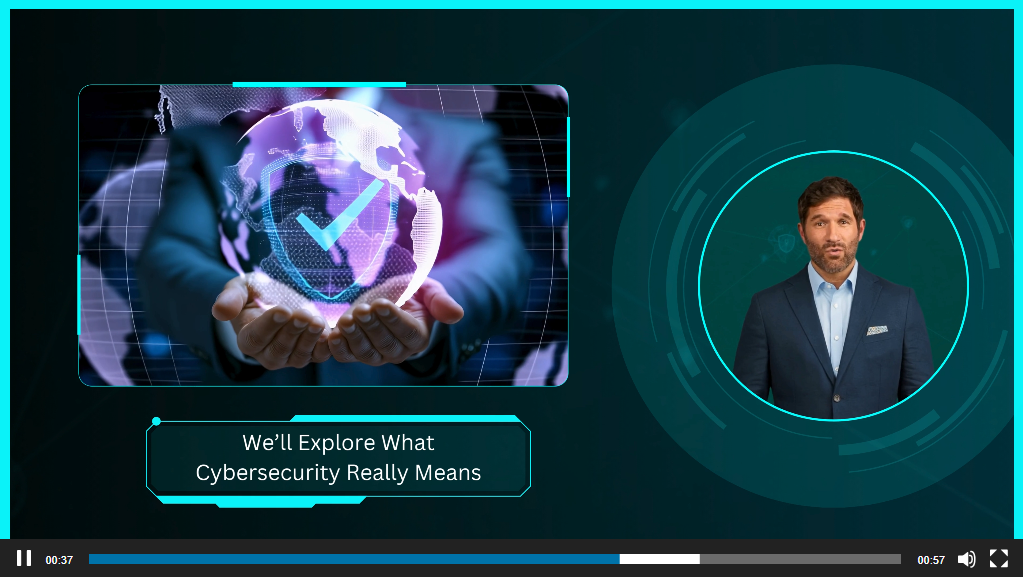
This course is designed to help employees understand cybersecurity from a practical, behavioural perspective. Therefore, learning focuses on awareness, prevention and response rather than technical detail. In doing so, the course supports clearer understanding of everyday risks. Throughout, learners gain clarity on how cyber risks arise and how individual actions influence security outcomes. As a result, employees develop more confident and responsible digital habits.

By the end of this cybersecurity awareness training, learners will be able to:

  • Firstly, identify common cyber threats encountered in daily work

  • Secondly, recognise suspicious behaviour and deceptive communication

  • Additionally, apply secure access and authentication practices

  • Moreover, protect devices, networks and online activity

  • Likewise, handle personal and organisational data responsibly

  • Finally, respond calmly and correctly to potential security incidents

Course Curriculum

Module 01: Cyber Threat Fundamentals

This module explains the most common cyber threats, including malware, ransomware and unauthorised access. Importantly, it helps learners understand how threats develop and why employees are often targeted first.

Module 02: Phishing and Social Engineering Tactics

Learners explore how attackers use emails, messages and social interaction to manipulate behaviour. Consequently, employees learn how to recognise warning signs and avoid common traps.

Module 03: Secure Authentication and Access Control

This module focuses on passwords, multi-factor authentication and access management. As a result, learners understand how to protect accounts and reduce unauthorised access.

Module 04: Device, Network & Internet Security

Employees learn how to use work devices, networks and online tools securely. In addition, the module addresses safe remote working and public network risks.

Module 05: Data Privacy, Protection & Policy Compliance

This section explains responsible data handling, confidentiality and compliance expectations. Therefore, learners understand their role in protecting personal and organisational data.

Module 06: Incident Response and Real-World Awareness

Learners gain clarity on how to respond to suspected incidents. As a result, employees know when to report, what actions to avoid and how to minimise impact.

Certification

Upon successful completion, learners receive a certificate of completion. This certificate demonstrates participation in structured cybersecurity awareness training and commitment to responsible workplace behaviour.

Nextgen Certificate

Entry Requirements

There are no formal entry requirements for this course. It is suitable for learners from a wide range of professional backgrounds, with all concepts explained clearly and progressively.

  • No prior cybersecurity or technical knowledge required
  • Suitable for employees at all levels, including new starters
  • Accessible for non-technical roles and remote, hybrid, or on-site workers

Who Is This Course For?​

This cybersecurity awareness training is suitable for:

  • Employees at all levels and departments
  • Office-based and remote workers
  • New starters and existing staff
  • Non-technical professionals
  • Organisations seeking consistent employee training
Cybersecurity awareness training for employees showing secure data protection, threat prevention and safe workplace practices

Why Cybersecurity Awareness Is Important

Cybersecurity is no longer solely an IT concern. Instead, employees play a critical role in preventing incidents before they occur. As a result, without proper employee training, even small mistakes can have significant consequences. Consequently, organisations must prioritise awareness at every level.

Furthermore, awareness training supports:

  • Firstly, better decision-making in daily tasks
  • Secondly, reduced likelihood of human-error incidents
  • Additionally, improved confidence when handling digital systems
  • Moreover, stronger compliance and accountability
  • Ultimately, a more resilient organisational culture

Career Benefits and Professional Outcomes

While this course is not a technical qualification, it builds essential workplace skills. Employees who complete this cybersecurity awareness training develop stronger digital responsibility, clearer judgement and greater confidence when working with systems and data.

Key benefits include:

  • Improved professional credibility and accountability
  • Safer decision-making in day-to-day work
  • Greater confidence when handling data and digital tools
  • Stronger awareness of workplace cyber risks
  • Alignment with modern organisational security expectations

Relevant job roles:

  • Office Administrator
  • Customer Service Executive
  • HR Assistant
  • Operations Coordinator
  • Project Support Officer

Order Your Certificate

To order your Certificate, we kindly invite you to visit the following link

FAQs – Cybersecurity Awareness for Employees

It helps employees identify threats and avoid costly mistakes. This course teaches practical, everyday cyber safety skills.

Change, Compliance, Cost, Continuity and Coverage—key areas explained simply in this course.

A training program that teaches staff how to recognise and prevent cyber threats. Covered fully in this course.

Through regular, practical training. This course provides simple, real-world guidance.

Use strong passwords, spot phishing, update systems, secure devices, protect data and report threats—learn all in this course.

Confidentiality, Integrity, Availability, Risk, Compliance, Awareness and Response—clearly explained in this course.

Clarity, Consistency, Culture, Compliance and Continuous learning—built into this course design.

Most incidents come from a few common mistakes. This course focuses on preventing them.

Confidentiality, Integrity, Availability, Authentication and Accountability—covered in this course.

To reduce cyber risks by changing employee behaviour. This course makes staff your first defence.

Course Curriculum

Introduction
Introduction 00:01:00
Module 01: Cyber Threat Fundamentals
1.1. Cyber Threat Fundamentals 00:01:00
1.1.1. What is Cybersecurity and Why It Matters 00:01:00
1.1.2. Definitions Threats, Vulnerabilities, Risks, and Exploits 00:01:00
1.1.3. Common Cyber Threats Malware, Phishing, Ransomware 00:01:00
1.1.4. Insider Threats and Their Impact 00:01:00
1.1.5. Understanding IPS, IDS, and Firewalls 00:01:00
1.1.6. Case Studies Real U.S. Cyber Incidents 00:01:00
Quiz – Section 01 00:10:00
Module 02: Phishing and Social Engineering Tactics
2.1. Phishing and Social Engineering Tactics 00:01:00
2.1.1. Types of Phishing Standard, Spear Phishing, Smishing, W-2 Phishing 00:01:00
2.1.2. Whaling and CEO Fraud Explained 00:01:00
2.1.3. Social Engineering Techniques Pretexting, Baiting, Tailgating 00:01:00
2.1.4. VOIP and Communication-Based Attacks 00:01:00
2.1.5. Simulation Activity Identifying Legitimate vs. Fake Websites 00:01:00
2.1.6. Reporting Suspicious Activity 00:01:00
Quiz – Section 2 – CAE 00:10:00
Module 03: Secure Authentication and Access Control
3.1. Secure Authentication and Access Control 00:01:00
3.1.1. Password Management and Common Risks 00:01:00
3.1.2. Password Guidelines and Best Practices (NIST-Aligned) 00:01:00
3.1.3. Two-Factor (2FA) and Multi-Factor Authentication (MFA) 00:01:00
3.1.4. Using Password Managers Securely 00:01:00
3.1.5. Real-World Consequences of Weak Authentication 00:01:00
Quiz – Section 3- CAE 00:10:00
Module 04: Device, Network & Internet Security
4.1. Device, Network & Internet Security 00:01:00
4.1.1. Secure Internet Usage and Safe Browsing Habits 00:01:00
4.1.2. Internet Security Basics HTTPS, Pop-Ups, Suspicious Links 00:01:00
4.1.3. Cloud Security Awareness and Safe File Sharing 00:01:00
4.1.4. Email Security Attachments, Embedded Links, Red Flags 00:01:00
4.1.5. Physical Security Workstation Setup, Clean Desk Policy, Secure Access 00:01:00
Quiz – Section 4 -CAE 00:10:00
Module 05: Data Privacy, Protection & Policy Compliance
5.1. Data Privacy, Protection & Policy Compliance 00:01:00
5.1.1. What is Sensitive Data PII, PHI, Financial Information 00:01:00
5.1.2. Overview of U.S. Data Privacy Laws HIPAA, CCPA, FERPA, GLBA 00:01:00
5.1.3. Safe Data Handling Storage, Transfer, Disposal 00:01:00
5.1.4. Organizational Policies Compliance and Acceptable Use 00:01:00
5.1.5. Social Media Risks and Oversharing 00:01:00
5.1.6. BYOD Policies and Mobile Device Security 00:01:00
Quiz – Section 5- CAE 00:10:00
Module 06: Incident Response and Real-World Awareness
6.1. Incident Response and Real-World Awareness 00:01:00
6.1.1. What to Report Breaches, Phishing, LostStolen Devices 00:01:00
6.1.2. How to Report Incidents Internally 00:01:00
6.1.3. Role-Based Risks HR, Finance, Executives, IT 00:01:00
6.1.4. Importance of Timely Response and Escalation 00:01:00
6.1.5. Optional Simulation Exercise PhishingEmail Incident Response 00:01:00
Quiz – Section 6- CAE 00:10:00
Conclusion
Conclusion 00:01:00
Final Quiz – CAE
Final Quiz – CAE 00:10:00
Order Your Certificate
Order Your Certificate 00:00:00

Related Courses

A product of

© 2026 NextGen Learning. All rights reserved

Home Search Cart Offers
Select your currency
GBP Pound sterling