





When to Replace Wiper Blades: Signs, Lifespan & DIY Replacement Guide
Are your windscreen wipers quietly putting your safety at risk without you even noticing? Many drivers overlook this small but essential component, yet it plays a critical role in maintaining clear visibility in all weather conditions.
From heavy rain and winter frost to road grime and pollution, your wiper blades work constantly to keep your windscreen clear. However, like any car component, they wear out over time. Ignoring the early signs wiper blades need replacing can reduce visibility, increase driving risk, and even lead to MOT issues.
In this guide, you will learn when to change wiper blades, how long they last, the warning signs to look out for, and how to replace wiper blades step by step. Whether you are a beginner or someone interested in learning practical vehicle maintenance, understanding these basics is a valuable skill that forms the foundation of automotive knowledge.
Table of Contents
Why Windscreen Wipers Are Critical for Vehicle Safety
Visibility Risks and Road Safety
Windscreen wipers are not just a convenience feature, they are a vital safety component. Poor visibility is one of the leading causes of accidents, especially during adverse weather conditions.
According to the UK Department for Transport, reduced visibility significantly contributes to road incidents, particularly during rain and fog. If your wipers fail to clear your windscreen effectively, your reaction time is reduced, putting both you and other road users at risk.
Worn wiper blades can leave streaks, smears, or patches of water on the glass, making it harder to see pedestrians, road signs, or sudden hazards.
MOT Requirements and Legal Implications
In the UK, windscreen wipers are part of the MOT inspection. According to the Driver and Vehicle Standards Agency, wipers must clear the windscreen effectively without obstruction.
If your wipers are damaged or fail to clean properly, your vehicle could fail its MOT. This makes windscreen wiper replacement in the UK not just a maintenance task, but a legal and safety requirement.
How Long Do Wiper Blades Last?
If you are wondering how long do wiper blades last, the answer depends on several factors, including weather conditions, driving habits, and blade quality.
On average, wiper blades last between 6 to 12 months. However,frequent rain, frost, and dirt exposure can shorten their lifespan.
Key factors that affect lifespan include:
- Weather exposure: UV rays, ice, and rain degrade rubber over time
- Usage frequency: More use leads to faster wear
- Environmental conditions: Dust, debris, and pollution damage the blade edge
- Maintenance habits: Regular cleaning can extend lifespan
In general, experts recommend how often to replace wiper blades at least once a year, even if no obvious issues are visible.
For a detailed maintenance overview, you can refer to the RAC guide on car maintenance, which highlights regular checks as essential for safety.
7 Clear Signs Your Wiper Blades Need Replacing

Recognising the early worn wiper blades symptoms can prevent reduced visibility and potential safety risks.
1. Streaking on the Windscreen
If your wipers leave streaks across the glass, it usually means the rubber edge is worn or damaged. This is one of the most common signs wiper blades need replacing.
2. Smearing and Blurred Vision
Smearing creates a hazy film on the windscreen, making it difficult to see clearly, especially at night or during heavy rain.
3. Squeaking or Noisy Wipers
If you are asking, “why are my wipers squeaking?”, the answer is often worn rubber or improper contact with the glass.
4. Skipping or Juddering Movement
Wipers that skip across the windscreen instead of moving smoothly may have lost flexibility or become misshapen.
5. Cracked or Split Rubber
Inspect your blades closely. If you notice cracks, splits, or peeling, it is time for immediate replacement.
6. Poor Clearing Performance
If water remains on the windscreen after wiping, your blades are no longer effective.
7. Reduced Visibility During Rain
This is the most serious warning sign. If visibility drops significantly even when wipers are in use, replacement should not be delayed.
How to Check Your Wiper Blades Condition (Quick Inspection Guide)
Regular inspection is a key part of car maintenance checks drivers should follow.
Here is a simple method to check your wipers:
- Lift the wiper blades: Check for cracks or stiffness in the rubber
- Run your finger along the edge: Feel for uneven or rough surfaces
- Check contact with the glass: Ensure the blade sits evenly
- Test with washer fluid: Observe how well they clear water
This quick check takes less than two minutes but can significantly improve your driving safety.
How to Replace Wiper Blades Step by Step (DIY Guide)
Learning how to change windscreen wipers is one of the easiest and most useful car maintenance skills.
Tools You Need
Most vehicles require no tools at all. You only need
- New wiper blades
- A clean cloth (optional)
Step-by-Step Process
- Lift the wiper arm away from the windscreen
- Locate the release clip and remove the old blade
- Align the new blade with the connector
- Push until you hear a click
- Gently lower the arm back onto the glass
- Test using washer fluid
This process usually takes less than five minutes and can save you money on garage services.
Developing confidence in simple repairs like this is often the first step into deeper automotive knowledge. If you are interested in building these skills further, structured learning such as the Car Mechanic and Repair Training Diploma can help you understand not just how to replace parts, but how entire vehicle systems work together.
Choosing the Right Wiper Blades for Your Car
Selecting the correct blades is essential for performance and safety.
Understanding Wiper Blade Sizes
Different vehicles require different blade lengths for
- Driver side
- Passenger side
- Rear windscreen
Always check your vehicle handbook or use an online tool to find the correct car wiper blade sizes UK.
Types of Wiper Blades
There are several types available:
Conventional frame blades: Affordable and widely used
Flat blades: Better performance and durability
Hybrid blades: Combination of both designs
Choosing the best wiper blades for cars depends on your driving conditions and budget.
How to Make Your Wiper Blades Last Longer
While replacement is inevitable, proper care can extend their lifespan.
- Keep your windscreen clean: Dirt increases wear
- Avoid using wipers on a dry screen: Always use washer fluid
- Remove ice before use: Prevents tearing of rubber
- Park in shaded areas: Reduces UV damage
- Clean blades regularly: Improves performance
Following these wiper blade maintenance tips can help you get the most value from your blades while maintaining clear visibility.
Common Wiper Blade Problems and Fixes
Even before replacement, some issues can be resolved with simple fixes.
Wiper Blades Skipping on Windscreen
This usually happens due to uneven pressure or hardened rubber. Cleaning the blades or adjusting the arm may help.
Noisy Windscreen Wipers Causes
Noise can result from dirt, worn rubber, or incorrect installation.
Smearing Issues
Often caused by contamination on the blade or windscreen. Cleaning both surfaces can temporarily fix the problem.
However, if these issues persist, replacement is the safest option.
When Should You Replace Wiper Blades? (Seasonal Guide)
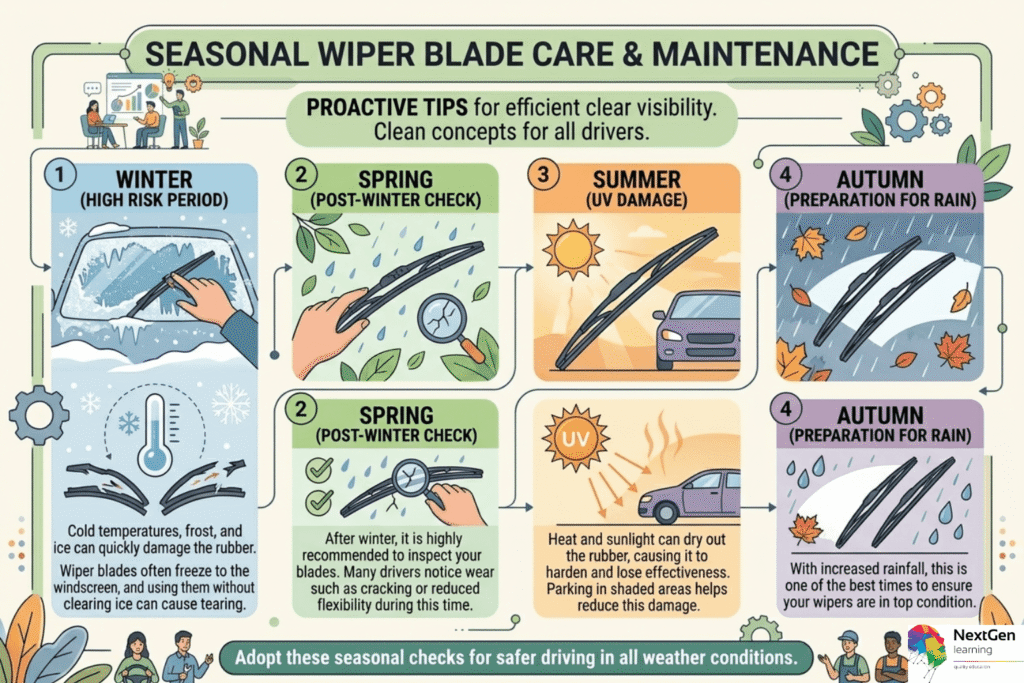
Understanding when to change wiper blades is not just about time, but also about seasonal conditions. During winter, cold temperatures, frost, and ice can quickly damage the rubber, and wiper blades may freeze to the windscreen. Using them without clearing ice can cause tearing and permanent damage. In spring, it is important to carry out a post-winter check, as many drivers begin to notice wear such as cracking or reduced flexibility after months of harsh conditions. Summer brings a different challenge, as heat and prolonged sun exposure can dry out the rubber, causing it to harden and lose effectiveness, although parking in shaded areas can help minimise this damage. In autumn, with increased rainfall and unpredictable weather, it becomes essential to ensure your wipers are in top condition for safe driving. For most drivers, replacing wiper blades every 6 to 12 months is the best way to maintain optimal performance and clear visibility throughout the year.
Cost of Wiper Blade Replacement in the UK
If you are considering windscreen wiper replacement UK, cost is usually not a major barrier.
Average Costs
- Basic wiper blades: £10–£20 per pair
- Premium blades: £20–£40 per pair
- Professional fitting: Often free or up to £10
Compared to the safety benefits, this is a small investment that can prevent serious risks.
DIY vs Garage Replacement Costs
Replacing blades yourself is free and takes minutes, while garage services may charge a small fee. Many drivers prefer DIY once they understand how to replace wiper blades step by step.
DIY vs Professional Replacement – Which Is Better?
Choosing between DIY and professional replacement depends on your confidence and experience.
DIY Replacement Benefits
- Saves money
- Quick and convenient
- Builds basic car maintenance skills
Professional Replacement Benefits
- Ensures correct fitting
- Helpful for beginners
- Suitable for complex blade types
For most drivers, DIY replacement is simple enough. However, gaining a deeper understanding of vehicle systems can make a big difference in long-term maintenance.
That is where structured learning, such as the Car Mechanic Interactive Online Training, can help you go beyond basic tasks and develop confidence in handling real-world vehicle issues.
Why Learning Basic Car Maintenance Skills Matters
Knowing how to change windscreen wipers is just one small part of car maintenance. However, it opens the door to understanding more complex systems.
When you learn how different components work together, you can:
- Identify issues early
- Reduce repair costs
- Improve vehicle safety
- Build practical, job-ready skills
If you are interested in progressing from basic maintenance to professional-level understanding, learning through structured training can provide a clear path. For example, the Car Mechanic and Repair Training Diploma offers step-by-step guidance on vehicle systems, diagnostics, and repairs in a beginner-friendly format.
This approach allows you to move from simple tasks like replacing wiper blades to confidently understanding engines, braking systems, and more.
Final Thoughts: Don’t Ignore Your Wiper Blades
Wiper blades may seem like a small part of your vehicle, but their impact on safety is significant.
Ignoring worn blades can lead to reduced visibility, higher accident risk, and even MOT failure. On the other hand, replacing them is quick, affordable, and easy to do.
By understanding when to replace wiper blades, recognising warning signs, and learning how to change them yourself, you can keep your vehicle safe and roadworthy all year round.
More importantly, these small maintenance habits build the foundation for greater automotive knowledge and confidence.
FAQs About Wiper Blades
You can tell your wiper blades need replacing if they leave streaks, smears, or patches of water on the windscreen. Other signs include squeaking noises, skipping movement, or visible cracks in the rubber. These are common signs wiper blades need replacing and should not be ignored. Replacing them early ensures clear visibility and safer driving.
Wiper blades typically last between 6 to 12 months, not several years. Their lifespan depends on usage, weather exposure, and maintenance. In the UK, frequent rain and seasonal changes can shorten their durability. Regular checks help determine how often to replace wiper blades.
Common signs include streaking, smearing, squeaking, and skipping across the windscreen. You may also notice reduced visibility during rain or uneven clearing. These worn wiper blades symptoms indicate that replacement is needed. Ignoring them can compromise safety.
Common issues include noisy operation, skipping movement, and smearing. These problems are often caused by worn rubber, dirt buildup, or incorrect installation. Regular cleaning and inspection can help prevent these issues. However, persistent problems usually mean the blades need replacing.
Yes, worn or ineffective wiper blades can lead to an MOT failure. If they do not clear the windscreen properly or are visibly damaged, your vehicle may not pass inspection. Maintaining good wiper condition is part of essential car maintenance checks for UK drivers. So, replacing them is a quick and affordable fix.


Car Mechanic and Repair Training Diploma

0 responses on "When to Replace Wiper Blades: Signs, Lifespan & DIY Replacement Guide"