





3 Categories of Fire Evacuation
Fire can spread quickly, so every workplace, care setting, and shared building needs a clear evacuation strategy. However, not every fire emergency requires the same response. That is why understanding the 3 categories of fire evacuation is essential for safer planning, quicker decisions, and better protection for everyone inside the building.
In simple terms, the main categories are vertical or horizontal evacuation, full evacuation, and simultaneous evacuation. Each one works differently. Therefore, the right choice depends on the building layout, the fire risk, the alarm system, and the people who may need extra support.
This guide explains each fire evacuation category in clear language. Moreover, it shows when each method is used, what to include in a fire evacuation plan, and how responsible people can improve workplace fire safety with better preparation.
Table of Contents
What Is Fire Evacuation?
Fire evacuation is the process of moving people safely away from danger during a fire emergency. It includes planned escape routes, alarm systems, assembly points, and clear procedures that help occupants leave a building quickly and safely.
A proper fire evacuation procedure does more than guide people to exits. It also reduces panic, improves communication, and helps emergency services respond faster. As a result, businesses, schools, hospitals, warehouses, and residential buildings all need evacuation plans that match their specific risks and layouts.
Importantly, fire evacuation planning should consider everyone inside the building, including:
- Employees and visitors: Ensure all occupants know escape routes and assembly points
- People with disabilities: Provide Personal Emergency Evacuation Plans (PEEPs) where necessary
- Contractors and temporary staff: Include them in drills and safety briefings
- Patients or vulnerable residents: Use suitable evacuation methods for care environments
- Children or elderly occupants: Prepare additional support during emergencies
In the UK, fire safety responsibilities often fall on the “responsible person,” such as an employer, landlord, or building owner. Therefore, they must assess fire risks, maintain emergency exits, and ensure evacuation procedures remain effective and up to date.
An effective fire evacuation plan usually includes:
- Fire alarm systems: Alert occupants immediately during emergencies
- Emergency escape routes: Provide clear and accessible exit paths
- Assembly points: Help confirm everyone has evacuated safely
- Fire wardens or marshals: Coordinate evacuation procedures
- Regular fire drills: Improve response times and reduce confusion
- Emergency lighting and signage: Support safe evacuation in poor visibility
Without a structured evacuation plan, even a small fire can quickly become dangerous. However, with proper preparation, training, and regular testing, organisations can significantly reduce risks and improve overall fire safety.
What Are the 3 Categories of Fire Evacuation?
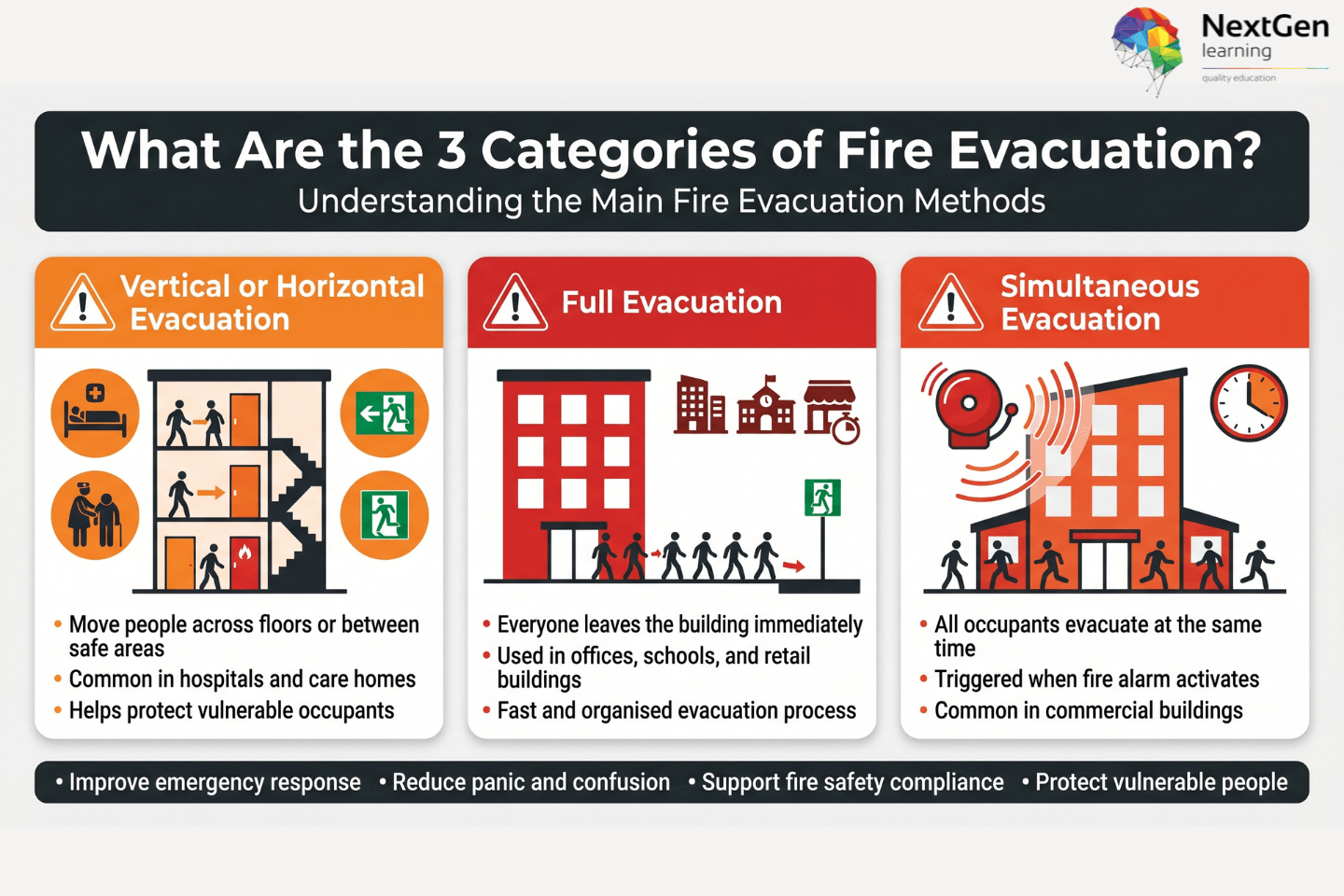
The 3 categories of fire evacuation are different methods used to move people to safety during a fire emergency. Each evacuation type suits different buildings, occupancy levels, and fire risks. Therefore, choosing the correct evacuation strategy is essential for protecting lives and reducing confusion during emergencies.
The three main categories are:
- Vertical or horizontal evacuation: Moves people either between floors or across the same floor
- Full evacuation: Requires everyone to leave the building immediately
- Simultaneous evacuation: Evacuates all occupants at the same time once the alarm activates
Although these evacuation methods share the same goal, they work differently depending on the situation. For example, hospitals often use horizontal evacuation first, while offices and retail buildings commonly use simultaneous evacuation.
Understanding these evacuation categories helps businesses:
- Improve emergency response: Reduce delays and confusion during fires
- Protect vulnerable occupants: Support people who need evacuation assistance
- Meet fire safety obligations: Strengthen workplace compliance and preparedness
- Reduce panic: Give occupants clear instructions and safer escape routes
- Support fire wardens and emergency teams: Create organised evacuation procedures
Importantly, some buildings may use more than one evacuation strategy. A large care home, for instance, may begin with horizontal evacuation before moving occupants vertically if the fire spreads.
The right evacuation method depends on several factors, including:
- Building layout and height: Multi-storey buildings often need different procedures
- Occupant mobility: Vulnerable individuals may require assisted evacuation
- Fire alarm and detection systems: Early warning systems influence evacuation speed
- Fire compartmentation: Some buildings safely isolate fire and smoke temporarily
- Nature of the workplace: Hospitals, factories, offices, and schools all have different risks
In the next sections, we will break down each evacuation category in detail, explain when it is used, and show how it improves fire safety in real-world environments.
1. Vertical or Horizontal Evacuation
Vertical and horizontal evacuation are two closely related fire evacuation methods. However, they move people in different directions depending on the building layout and the level of danger.
Vertical evacuation moves occupants between floors, usually through protected stairways. In contrast, horizontal evacuation moves people away from danger on the same floor into a safer area or fire compartment.
These evacuation methods are commonly used in hospitals, care homes, hotels, large offices, and multi-storey buildings because some occupants may not be able to evacuate immediately through staircases.
What Is Vertical Evacuation?
Vertical evacuation involves moving people either downward toward exits or upward away from immediate danger using stairways. This method is most common in office buildings, apartment blocks, schools, and commercial premises.
Importantly, lifts should usually not be used during a fire unless the building has approved evacuation lifts specifically designed for emergencies.
Vertical evacuation works best when:
- Occupants can move independently: Most people can safely use stairs
- The fire affects a limited area: Escape routes remain accessible
- The building has protected stairwells: Smoke-resistant routes improve safety
- Fire alarms activate early: Occupants have enough time to evacuate safely
However, vertical evacuation can become difficult for:
- People with mobility impairments: They may need assisted evacuation equipment
- Hospital patients: Some patients cannot move quickly or independently
- Elderly occupants: Stairs may create additional risks during emergencies
- Large crowds: Congestion can slow evacuation significantly
What Is Horizontal Evacuation?
Horizontal evacuation moves occupants from a dangerous area to a safer compartment on the same floor. Instead of leaving the building immediately, people relocate behind fire-resistant walls and doors until emergency teams assess the situation.
This method is especially important in healthcare and care environments where moving patients downstairs quickly may increase risks.
Horizontal evacuation is commonly used in:
- Hospitals: Protect patients who require medical equipment or beds
- Care homes: Support residents with limited mobility
- Large commercial buildings: Move occupants away from smoke or fire zones
- Secure facilities: Allow controlled evacuation procedures
A successful horizontal evacuation plan depends on:
- Fire compartmentation: Fire-resistant barriers slow smoke and fire spread
- Clear evacuation zones: Staff must know safe relocation areas
- Trained fire wardens: Teams should coordinate movement efficiently
- Effective communication systems: Occupants need clear instructions quickly
Vertical vs Horizontal Evacuation
Although both methods improve emergency safety, they serve different purposes.
| Evacuation Type | Main Direction | Common Locations | Best For |
|---|---|---|---|
| Vertical Evacuation | Between floors | Offices, flats, schools | Fast building exit |
| Horizontal Evacuation | Same floor | Hospitals, care homes | Vulnerable occupants |
In many modern buildings, both strategies work together. For example, occupants may first move horizontally into a protected area before completing a vertical evacuation if conditions worsen.
2. Full Evacuation
A full evacuation requires everyone inside a building to leave immediately once a fire emergency is identified. This evacuation method is used when the fire presents a serious risk and remaining inside the building is no longer safe.
In most workplaces, a full evacuation begins when the fire alarm activates. However, trained emergency personnel, fire wardens, or the responsible person may also order a full evacuation if they believe the situation could escalate quickly.
Full evacuation is commonly used in:
- Office buildings: Ensure staff and visitors exit rapidly
- Retail stores and shopping centres: Move large crowds to safety
- Schools and universities: Protect students, staff, and visitors
- Factories and warehouses: Reduce exposure to smoke, chemicals, or explosions
- Entertainment venues: Prevent overcrowding and panic during emergencies
Unlike horizontal evacuation, a full evacuation focuses on clearing the entire building rather than relocating people internally.
When Is Full Evacuation Necessary?
A full evacuation becomes necessary when the fire cannot be safely controlled or contained. Therefore, everyone must follow evacuation procedures immediately without waiting for additional instructions.
Situations that often require full evacuation include:
- Rapid fire spread: Flames or smoke move quickly through the building
- Severe smoke production: Smoke blocks escape routes or reduces visibility
- Alarm system activation: Automatic systems detect dangerous conditions
- Explosion or hazardous material risks: Immediate evacuation reduces injuries
- Failure of containment measures: Fire compartments or suppression systems fail
Importantly, delaying evacuation can increase injuries and create panic. As a result, businesses should train employees to respond immediately whenever the alarm sounds.
Key Elements of an Effective Full Evacuation
A successful full evacuation depends on preparation, communication, and regular practice. Without these elements, evacuation delays can place occupants at serious risk.
An effective full evacuation plan should include:
- Clearly marked escape routes: Help occupants leave quickly and safely
- Multiple emergency exits: Reduce overcrowding during evacuation
- Designated assembly points: Allow roll calls and accountability checks
- Fire wardens or marshals: Coordinate safe evacuation procedures
- Emergency lighting: Improve visibility during smoke or power failure
- Routine fire drills: Build confidence and improve reaction times
Businesses should also ensure that emergency exits remain unobstructed at all times. Even small obstacles can slow evacuation and increase confusion during emergencies.
Common Mistakes During Full Evacuation
Many evacuation problems happen because people panic or ignore procedures. Therefore, regular training and realistic drills are essential.
Common mistakes include:
- Ignoring the alarm: People assume it is a false alarm
- Returning for personal belongings: This wastes critical time
- Using lifts during evacuation: Lifts may fail or trap occupants
- Blocking exits or corridors: Clutter can delay escape
- Failing to assist vulnerable individuals: Everyone must follow assigned responsibilities
A well-managed full evacuation reduces panic, improves organisation, and helps emergency services respond more effectively.
3. Simultaneous Evacuation
Simultaneous evacuation is a fire evacuation strategy where all occupants leave the building immediately once the fire alarm activates. It is one of the most common evacuation methods because it provides a fast and straightforward response during emergencies.
Unlike phased or delayed evacuation strategies, simultaneous evacuation does not require people to wait for additional instructions. Instead, everyone evacuates at the same time and moves directly to a designated assembly point.
This evacuation method is widely used in:
- Small and medium-sized offices: Allow quick building clearance
- Schools and colleges: Help evacuate large groups efficiently
- Retail premises: Support rapid public evacuation
- Hotels and public venues: Reduce confusion during emergencies
- Residential buildings: Protect occupants through immediate response
Because the process is simple, simultaneous evacuation is often easier for occupants to understand and follow during stressful situations.
How Simultaneous Evacuation Works
When smoke detectors, heat detectors, or manual call points trigger the fire alarm system, everyone in the building receives the same evacuation warning at the same time.
Occupants should then:
- Stop work immediately: Avoid delaying evacuation
- Follow the nearest escape route: Use clearly marked exits
- Avoid lifts: Use stairways whenever possible
- Move calmly to assembly points: Prevent crowd congestion
- Wait for further instructions: Re-enter only after official clearance
Fire wardens or marshals usually assist by checking rooms, directing occupants, and confirming that evacuation procedures are followed correctly.
Advantages of Simultaneous Evacuation
Simultaneous evacuation offers several important safety benefits, especially in buildings with straightforward layouts and manageable occupancy levels.
Key advantages include:
- Simple instructions: Everyone follows the same evacuation procedure
- Fast emergency response: Occupants leave the building quickly
- Reduced confusion: No phased movement between zones
- Improved staff awareness: Easier training and drill implementation
- Stronger alarm effectiveness: Immediate action reduces delays
Additionally, this strategy works well in buildings where evacuation routes remain easily accessible and occupants can leave independently.
Challenges of Simultaneous Evacuation
Although simultaneous evacuation is effective in many situations, it may not suit every building type. Large or complex buildings sometimes require phased evacuation to prevent overcrowding.
Potential challenges include:
- Congested stairways and exits: Large crowds may slow movement
- Panic during alarms: Poor training can increase confusion
- Difficulty assisting vulnerable occupants: Extra support may be needed
- False alarms: Frequent unnecessary alarms reduce urgency over time
For this reason, businesses should combine simultaneous evacuation with regular fire drills, clear signage, and effective communication systems.
Simultaneous Evacuation vs Full Evacuation
Many people confuse simultaneous evacuation with full evacuation because both involve leaving the building. However, there is a small difference between them.
| Strategy | Main Focus | Trigger Method | Typical Use |
|---|---|---|---|
| Full Evacuation | Clear the entire building during serious danger | Ordered manually or automatically | Higher-risk emergencies |
| Simultaneous Evacuation | Everyone evacuates at the same time | Fire alarm activates | Standard building evacuation |
In practice, many workplaces use simultaneous evacuation as part of their full evacuation procedure.
Fire Evacuation Categories Compared
Each fire evacuation category serves a different purpose. Therefore, businesses and building managers must choose the strategy that best matches their building layout, occupancy type, and fire risks.
Some evacuation methods focus on moving people quickly outside the building, while others prioritise relocating vulnerable occupants to safer internal areas first. As a result, understanding the differences between these evacuation strategies helps organisations improve emergency planning and reduce evacuation delays.
Comparison of the 3 Categories of Fire Evacuation
| Evacuation Category | How It Works | Common Building Types | Main Advantage | Main Challenge |
|---|---|---|---|---|
| Vertical or Horizontal Evacuation | Moves occupants between floors or across the same floor | Hospitals, care homes, multi-storey buildings | Supports vulnerable occupants safely | Requires strong coordination and compartmentation |
| Full Evacuation | Clears the entire building immediately | Offices, schools, warehouses | Fast removal from danger | Can create congestion in large buildings |
| Simultaneous Evacuation | Everyone evacuates at the same time once the alarm sounds | Retail spaces, public buildings, hotels | Simple and easy to follow | Crowding may occur during peak occupancy |
Although each evacuation strategy differs, they all rely on effective planning, staff training, and reliable fire safety systems.
Key Factors That Influence Evacuation Strategy
Choosing the right fire evacuation category depends on several important factors. Therefore, responsible persons should evaluate the building carefully before finalising emergency procedures.
Key considerations include:
- Building height and layout: Multi-storey premises may require phased movement
- Occupant mobility: Vulnerable individuals may need assisted evacuation
- Occupancy numbers: Large crowds increase evacuation complexity
- Fire compartmentation: Protected zones support horizontal evacuation
- Escape route availability: Clear exits improve evacuation speed
- Fire detection systems: Early warning systems reduce response delays
For example, a small office may safely use simultaneous evacuation, while a hospital often needs horizontal evacuation first because patients cannot move quickly downstairs.
Why Comparing Evacuation Methods Matters
Many businesses create evacuation plans without fully understanding how each evacuation type works. However, choosing the wrong strategy can increase confusion, delay emergency response, and place occupants at greater risk.
Comparing evacuation categories helps organisations:
- Improve fire safety planning: Match procedures to actual building risks
- Protect vulnerable occupants better: Provide safer evacuation support
- Reduce evacuation delays: Improve movement during emergencies
- Strengthen legal compliance: Support workplace fire safety responsibilities
- Improve emergency training: Help staff understand their roles clearly
Importantly, some buildings combine multiple evacuation methods within the same emergency plan. For instance, a hospital may begin with horizontal evacuation before initiating vertical or full evacuation if conditions worsen.
A well-planned strategy creates a safer environment, improves emergency coordination, and helps occupants react more confidently during a fire emergency.
How to Choose the Right Fire Evacuation Strategy
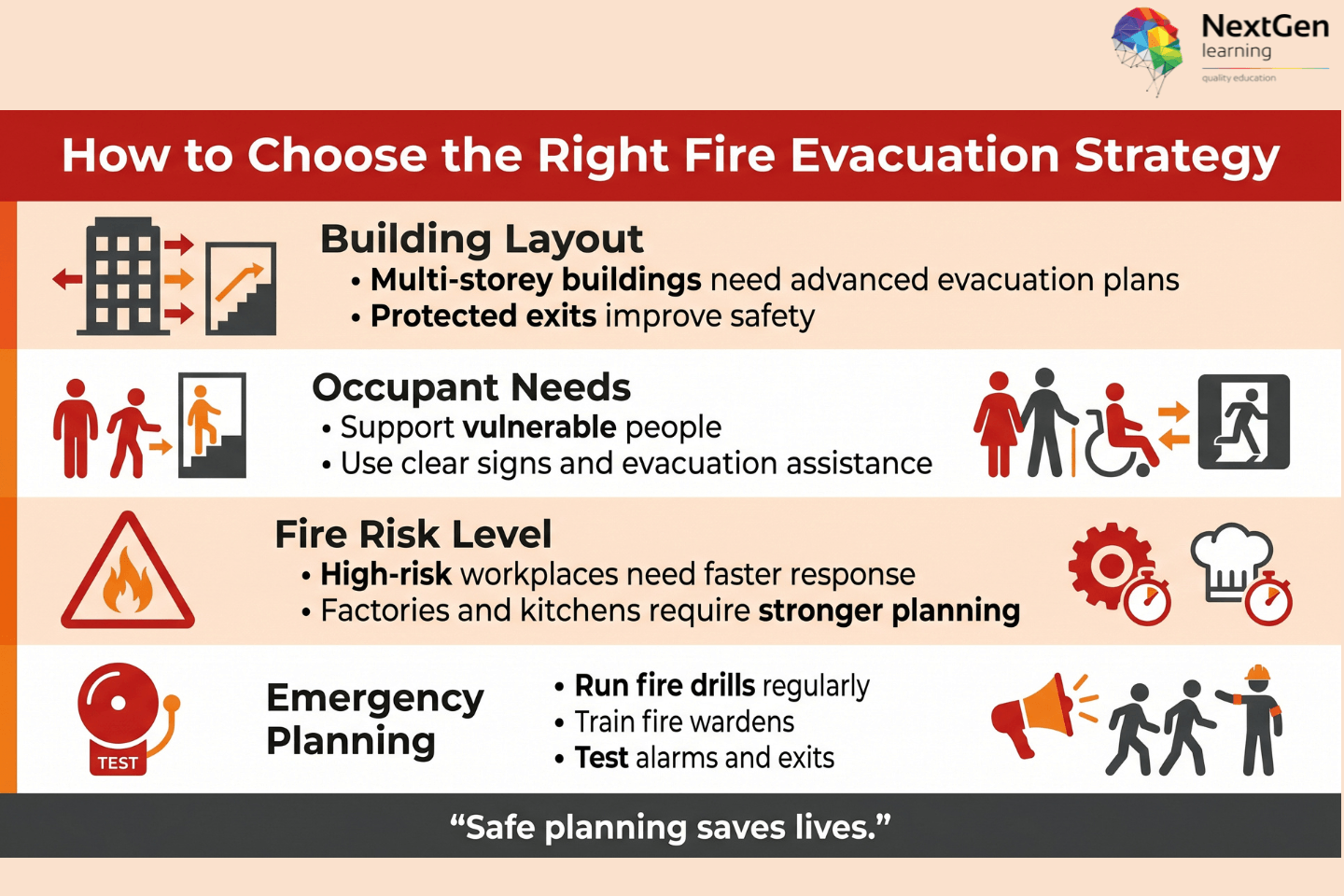
Choosing the right fire evacuation strategy is one of the most important parts of workplace fire safety. However, there is no single evacuation method that works for every building. The safest approach depends on the building structure, occupancy type, fire risks, and the ability of occupants to evacuate quickly.
A small office with two exits may only require a simple simultaneous evacuation procedure. In contrast, a hospital or care home may need a phased approach that combines horizontal and vertical evacuation methods.
Therefore, businesses should carry out a detailed fire risk assessment before finalising evacuation procedures.
Key Factors to Consider
Several factors influence which fire evacuation category will work best. Responsible persons should review these carefully to reduce risks and improve emergency response.
Building Layout and Height
The size and structure of the building strongly affect evacuation planning.
For example:
- Single-storey buildings: Usually support faster simultaneous evacuation
- Multi-storey premises: Often require protected stairwells and phased movement
- Large complexes: May need compartment-based evacuation procedures
- Underground areas: Require additional smoke control and escape planning
Buildings with long corridors, multiple compartments, or limited exits may require more advanced evacuation strategies.
Type of Occupants
Occupant needs are one of the most important considerations during evacuation planning.
Some people may evacuate independently, while others need assistance.
This includes:
- People with mobility impairments: May require evacuation chairs or assisted exits
- Hospital patients: Often need beds, wheelchairs, or medical support
- Children or elderly occupants: May require additional supervision
- Visitors unfamiliar with the building: Need clear signage and guidance
As a result, businesses should create PEEPs (Personal Emergency Evacuation Plans) for individuals who need additional support.
Fire Risk Level
Higher-risk environments may require faster or more controlled evacuation procedures.
Common high-risk workplaces include:
- Factories using flammable materials: Fires may spread rapidly
- Commercial kitchens: Cooking equipment increases fire risks
- Warehouses: Stored goods may intensify smoke and heat
- Healthcare facilities: Vulnerable occupants complicate evacuation
The greater the fire risk, the more detailed and responsive the evacuation strategy should become.
Questions to Ask Before Choosing an Evacuation Strategy
Before implementing a fire evacuation plan, responsible persons should ask practical questions about the building and its occupants.
Important questions include:
- Can everyone evacuate safely without assistance?
- Are escape routes protected from smoke and fire?
- Will simultaneous evacuation create overcrowding?
- Does the building have fire compartments?
- Are fire alarms and emergency lighting reliable?
- Do staff understand evacuation procedures clearly?
These questions help identify weaknesses before an emergency occurs.
Best Practice for Fire Evacuation Planning
An effective evacuation strategy should remain practical, realistic, and regularly updated. Therefore, businesses should not rely on written procedures alone.
Best practices include:
- Conduct regular fire drills: Improve staff confidence and reaction times
- Train fire wardens thoroughly: Strengthen emergency coordination
- Inspect escape routes regularly: Keep exits clear and accessible
- Review fire risk assessments frequently: Update plans when risks change
- Test alarm systems consistently: Ensure early warning systems function properly
Importantly, evacuation planning should evolve as buildings, occupancy levels, or workplace risks change over time.
A well-designed evacuation strategy protects lives, improves emergency response, and helps organisations meet their fire safety responsibilities more effectively.
What to Include in a Fire Evacuation Plan

A fire evacuation plan provides clear instructions that help occupants leave a building safely during an emergency. Without a structured plan, people may panic, delay evacuation, or use unsafe escape routes. Therefore, every workplace and public building should maintain a detailed and regularly updated evacuation procedure.
An effective fire evacuation plan should remain simple, practical, and easy to follow under pressure. Moreover, it should address both routine evacuation procedures and high-risk emergency scenarios.
Essential Elements of a Fire Evacuation Plan
Every evacuation plan should contain key safety measures that support fast and organised evacuation.
Clear Emergency Escape Routes
Escape routes should guide occupants quickly toward safe exits without confusion.
A good evacuation route should:
- Remain unobstructed at all times: Prevent delays during emergencies
- Use clear signage: Help occupants locate exits quickly
- Provide alternative exits: Support evacuation if one route becomes blocked
- Include emergency lighting: Improve visibility during smoke or power failure
Importantly, evacuation routes should remain suitable for all building occupants, including vulnerable individuals.
Fire Alarm and Communication Systems
Early warning systems play a critical role in reducing evacuation delays. Therefore, businesses should install reliable alarm systems and test them regularly.
An effective alarm system should:
- Alert all occupants immediately: Reduce response time during emergencies
- Provide clear audible signals: Ensure alarms are recognisable
- Support visual alerts where necessary: Help hearing-impaired occupants
- Integrate with emergency communication systems: Improve coordination
Some large premises may also use public address systems to provide additional evacuation instructions.
Designated Assembly Points
Assembly points help emergency teams confirm that occupants evacuated safely. Additionally, they reduce confusion outside the building.
A suitable assembly point should:
- Remain a safe distance from the building: Avoid smoke and falling debris
- Stay clearly identified: Help occupants gather quickly
- Provide enough space for all occupants: Prevent overcrowding
- Allow roll-call procedures: Confirm missing persons efficiently
Businesses should clearly communicate assembly point locations during inductions and fire drills.
Roles and Responsibilities
Every evacuation plan should assign responsibilities clearly. Without proper leadership, evacuation procedures may become disorganised.
Common responsibilities include:
- Fire wardens or marshals: Coordinate evacuation and check escape routes
- Responsible persons: Oversee fire safety compliance and planning
- First aiders: Support injured occupants where safe to do so
- Managers or supervisors: Help direct staff and visitors during evacuation
Clearly defined roles improve accountability and emergency response efficiency.
Additional Features That Improve Fire Safety
Beyond the basic requirements, several additional measures strengthen evacuation planning and improve overall workplace safety.
Recommended additions include:
- Regular fire drills: Build confidence and improve reaction times
- PEEPs for vulnerable individuals: Support assisted evacuation procedures
- Fire extinguisher training: Help staff respond safely to small fires
- Emergency contact procedures: Improve communication with emergency services
- Evacuation maps: Help visitors understand escape routes quickly
Importantly, businesses should review evacuation plans whenever building layouts, occupancy levels, or workplace risks change.
Common Mistakes to Avoid in Evacuation Plans
Many evacuation plans fail because they become outdated or overly complicated. Therefore, organisations should keep procedures realistic and easy to understand.
Common mistakes include:
- Failing to update plans regularly: Changes in layout may create unsafe routes
- Ignoring vulnerable occupants: Some individuals require additional assistance
- Providing insufficient training: Staff may panic without preparation
- Blocking emergency exits: Obstructions slow evacuation significantly
- Skipping fire drills: Occupants may forget procedures during real emergencies
A well-maintained fire evacuation plan improves safety, strengthens legal compliance, and helps occupants respond calmly during emergencies.
Fire Evacuation for Vulnerable People and PEEPs
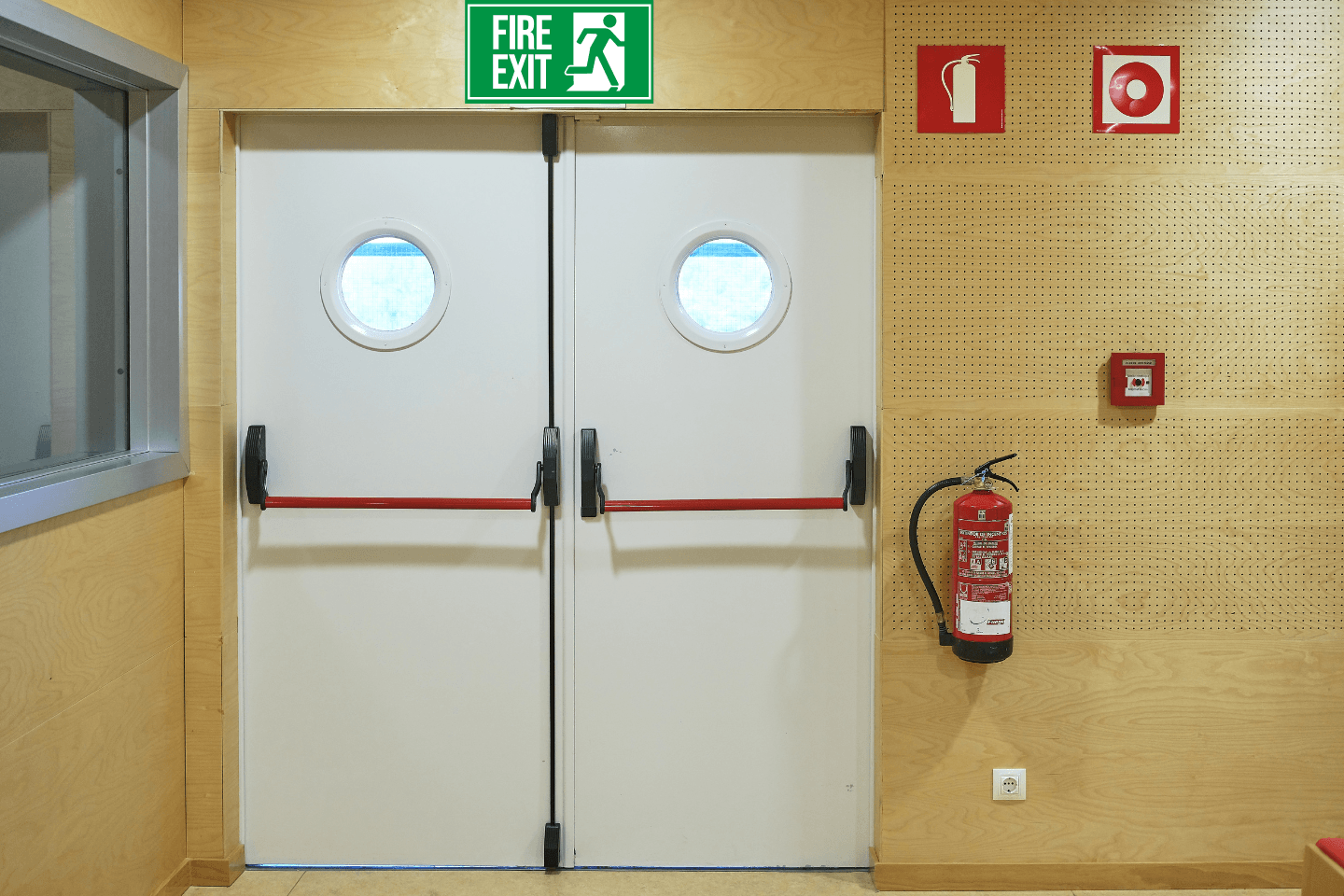
Not everyone can evacuate a building quickly or independently during a fire emergency. Therefore, businesses and building managers must consider the needs of vulnerable individuals when creating fire evacuation procedures.
Vulnerable occupants may include people with mobility impairments, hearing or visual impairments, medical conditions, learning difficulties, temporary injuries, or age-related limitations. Without proper planning, these individuals may face greater risks during emergencies.
That is why many workplaces use PEEPs, also known as Personal Emergency Evacuation Plans.
What Is a PEEP in Fire Safety?
A Personal Emergency Evacuation Plan (PEEP) is a documented plan that explains how a person who needs assistance will evacuate safely during an emergency.
A PEEP helps ensure that evacuation procedures remain clear, organised, and suitable for the individual’s needs. Additionally, it gives staff confidence during emergencies because responsibilities and support arrangements are already planned in advance.
A PEEP may include:
- Evacuation routes: Identify the safest available exits
- Required assistance: Explain who will provide support
- Special equipment: Include evacuation chairs or communication aids
- Safe refuge areas: Identify protected waiting locations if necessary
- Communication methods: Support hearing or visual impairments
Importantly, PEEPs should remain personalised rather than using a one-size-fits-all approach.
Where a PEEP is maintained as a PDF, authorised staff may need to edit the PDF in browser when an individual’s circumstances, route or refuge arrangements change. Organisations should ensure any online document tool they use complies with their own data-protection and information-security policies.
Who May Need a PEEP?
Some people require additional support temporarily, while others may always need evacuation assistance.
Individuals who may require a PEEP include:
- Wheelchair users: May need assisted evacuation from upper floors
- People with visual impairments: Require guided evacuation support
- People with hearing impairments: May need visual alarm systems
- Pregnant employees: May require additional evacuation assistance
- People recovering from injuries: Temporary conditions may affect mobility
- Hospital patients or care home residents: Often need medical or physical support
Businesses should identify these needs during risk assessments and workplace inductions.
How to Improve Evacuation Safety for Vulnerable Occupants
A fire evacuation strategy should support everyone equally. Therefore, organisations must combine planning, training, and equipment to improve safety for vulnerable individuals.
Key safety measures include:
- Provide evacuation chairs where necessary: Support stair evacuation safely
- Train staff regularly: Ensure helpers understand emergency procedures
- Install visual and audible alarms: Improve communication during emergencies
- Keep refuge areas protected: Reduce exposure to smoke and fire
- Review PEEPs frequently: Update plans when needs or layouts change
Additionally, businesses should involve vulnerable occupants directly when creating evacuation plans. This helps ensure procedures remain realistic and practical.
Common Mistakes Businesses Make
Many organisations unintentionally overlook vulnerable individuals during evacuation planning. However, these gaps can create serious safety risks during emergencies.
Common mistakes include:
- Creating generic PEEPs: Individual needs may differ significantly
- Failing to review plans regularly: Health conditions and workplace layouts change
- Ignoring temporary disabilities: Short-term injuries still affect evacuation ability
- Providing insufficient training: Staff may not know how to assist safely
- Blocking refuge areas or escape routes: Obstructions increase evacuation risks
A well-designed PEEP improves inclusivity, strengthens fire safety compliance, and helps vulnerable occupants evacuate more safely and confidently during emergencies.
Common Fire Evacuation Mistakes to Avoid
Even the best fire evacuation plan can fail if people ignore procedures or make avoidable mistakes during an emergency. Therefore, businesses should identify common evacuation problems early and address them through training, planning, and regular safety checks.
Many evacuation mistakes happen because occupants panic, delay action, or assume someone else will take responsibility. However, clear procedures and regular fire drills can significantly reduce these risks.
Ignoring Fire Alarms
One of the most dangerous mistakes is ignoring or delaying response to a fire alarm. Unfortunately, repeated false alarms sometimes cause occupants to react slowly during real emergencies.
People may:
- Continue working: Lose valuable evacuation time
- Assume the alarm is false: Delay safe evacuation unnecessarily
- Wait for confirmation: Increase exposure to smoke and fire
Every alarm should be treated seriously unless authorised personnel confirm otherwise.
Blocking Emergency Escape Routes
Blocked escape routes can create severe dangers during evacuation. Even small obstructions may slow movement, increase panic, and prevent people from reaching safety quickly.
Common obstructions include:
- Stored equipment or boxes: Narrow evacuation pathways
- Locked emergency exits: Delay evacuation significantly
- Cluttered corridors: Create trip hazards during emergencies
- Poorly maintained doors: Reduce access to safe exits
Businesses should inspect escape routes regularly to ensure they remain clear and fully functional.
Using Lifts During Evacuation
Many occupants instinctively use lifts because they seem faster. However, lifts can fail during fires due to smoke, heat, or electrical issues.
Using lifts may:
- Trap occupants inside: Increase danger during power failure
- Expose people to smoke: Lift shafts can spread smoke rapidly
- Delay emergency responders: Firefighters may need lift access
Unless the building has approved evacuation lifts, occupants should always use protected stairways during evacuation.
Failing to Assist Vulnerable Occupants
Some emergencies become more dangerous because vulnerable individuals do not receive proper support. Therefore, staff must understand their responsibilities before an incident occurs.
Common failures include:
- Ignoring PEEPs: Leave vulnerable occupants without assistance
- Providing unclear instructions: Increase confusion during evacuation
- Failing to assign helpers: Delay assisted evacuation procedures
Regular staff training helps ensure vulnerable occupants receive safe and organised support.
Returning to the Building Too Early
After evacuating safely, some people attempt to re-enter the building for personal belongings, equipment, or unfinished work. However, conditions inside may change rapidly without warning.
Returning too early may:
- Expose occupants to smoke inhalation: Even small fires produce dangerous smoke
- Interfere with firefighters: Emergency responders need clear access
- Increase risk of injury or death: Fire conditions can worsen quickly
Occupants should only re-enter once emergency services or authorised personnel declare the building safe.
Why Fire Drills Matter
Many evacuation mistakes happen because occupants are unfamiliar with emergency procedures. Therefore, realistic fire drills remain one of the most effective ways to improve evacuation performance.
Regular drills help organisations:
- Improve evacuation speed: Build confidence through practice
- Identify weaknesses in procedures: Reveal blocked routes or communication issues
- Reduce panic during emergencies: Familiarity improves decision-making
- Strengthen staff responsibilities: Clarify evacuation roles clearly
A proactive approach to fire safety helps organisations reduce confusion, improve response times, and protect lives more effectively during emergencies.
FAQs About the 3 Categories of Fire Evacuation
The 3 categories of fire evacuation are vertical or horizontal evacuation, full evacuation, and simultaneous evacuation. Each method is designed for different building layouts, fire risks, and occupant needs. For example, hospitals often use horizontal evacuation first, while offices commonly use simultaneous evacuation. Choosing the correct evacuation strategy helps improve safety, reduce panic, and support faster emergency response.
Full evacuation means everyone must leave the building immediately because the fire risk has become dangerous or uncontrollable. Simultaneous evacuation, however, specifically refers to all occupants evacuating at the same time once the alarm sounds. In many workplaces, simultaneous evacuation forms part of the full evacuation process. Both methods aim to move people to safety quickly, but the trigger and emergency severity may differ.
Hospitals usually use horizontal evacuation because many patients cannot safely use stairways or evacuate independently. Staff first move patients into safer fire compartments on the same floor before considering vertical evacuation if conditions worsen. This method helps protect vulnerable individuals while reducing panic and movement risks. Additionally, hospitals rely heavily on trained staff, compartmentation, and detailed evacuation planning.
A PEEP, or Personal Emergency Evacuation Plan, is a personalised plan created for individuals who need additional support during emergencies. It explains how a person will evacuate safely, who will assist them, and what equipment may be required. PEEPs are especially important for people with mobility impairments, hearing difficulties, visual impairments, or medical conditions. A well-designed PEEP improves inclusivity and strengthens overall fire safety procedures.
The responsible person is usually in charge of fire evacuation planning and workplace fire safety. This may include employers, landlords, building owners, or facilities managers depending on the premises. Their responsibilities include carrying out fire risk assessments, maintaining emergency exits, organising fire drills, and ensuring staff understand evacuation procedures. Regular reviews are also essential to keep evacuation plans effective and up to date.
Regular fire drills help occupants become familiar with evacuation routes, alarm sounds, and emergency procedures. As a result, people can respond more quickly and confidently during real emergencies. Fire drills also help organisations identify weaknesses in evacuation plans, blocked exits, or communication issues before an actual fire occurs. Consistent practice significantly improves emergency preparedness and workplace safety.
In most situations, lifts should not be used during a fire evacuation because smoke, heat, or power failure may cause them to stop working. Occupants should instead use protected stairways and follow clearly marked emergency escape routes. However, some modern buildings have specially designed evacuation lifts that emergency personnel may use under controlled conditions. Staff should always follow the building’s official fire evacuation procedures.
A fire evacuation plan should clearly explain how occupants can leave the building safely during an emergency. It should include emergency escape routes, fire alarm procedures, assembly points, staff responsibilities, and evacuation arrangements for vulnerable individuals. Additionally, businesses should include fire drill schedules, emergency contact procedures, and clear signage throughout the building. A detailed evacuation plan improves organisation, reduces panic, and supports faster emergency response.


0 responses on "3 Categories of Fire Evacuation"