


Popular Courses

Brand
Awarding body image

Spatial Data Visualization and Machine Learning in Python – Online Course

Overview of Spatial Data Visualization and Machine Learning in Python

Did you know that over 80% of all data generated today has a location-based component, and the global geospatial analytics market is projected to exceed £100 billion by 2030? Therefore, learning spatial data visualization and machine learning in Python is no longer optional—it is a high-value skill for modern data professionals. This spatial data visualization Python course is designed to help you understand how geospatial data works, while also teaching you how to apply machine learning techniques to uncover meaningful patterns and insights.

Moreover, this machine learning Python course provides a clear and structured pathway for beginners, students, and professionals who want to build expertise in geospatial data analysis and GIS using Python. You will explore how spatial datasets are created, processed, and visualised using powerful Python libraries. In addition, you will learn how machine learning models can be applied to spatial data for tasks such as classification, regression, and clustering. As a result, you will gradually build confidence in handling real-world spatial datasets and performing advanced analysis.

Furthermore, this course focuses on practical understanding and real-world applications, so you can connect theory with industry needs. You will learn how to create interactive maps, dashboards, and predictive models using tools like Folium, Plotly, and Bokeh. Consequently, you will develop the ability to transform complex geospatial data into clear, actionable insights. Ultimately, this spatial data analysis and machine learning course equips you with in-demand skills in Python data science, helping you enhance your career opportunities in GIS, analytics, and machine learning fields.

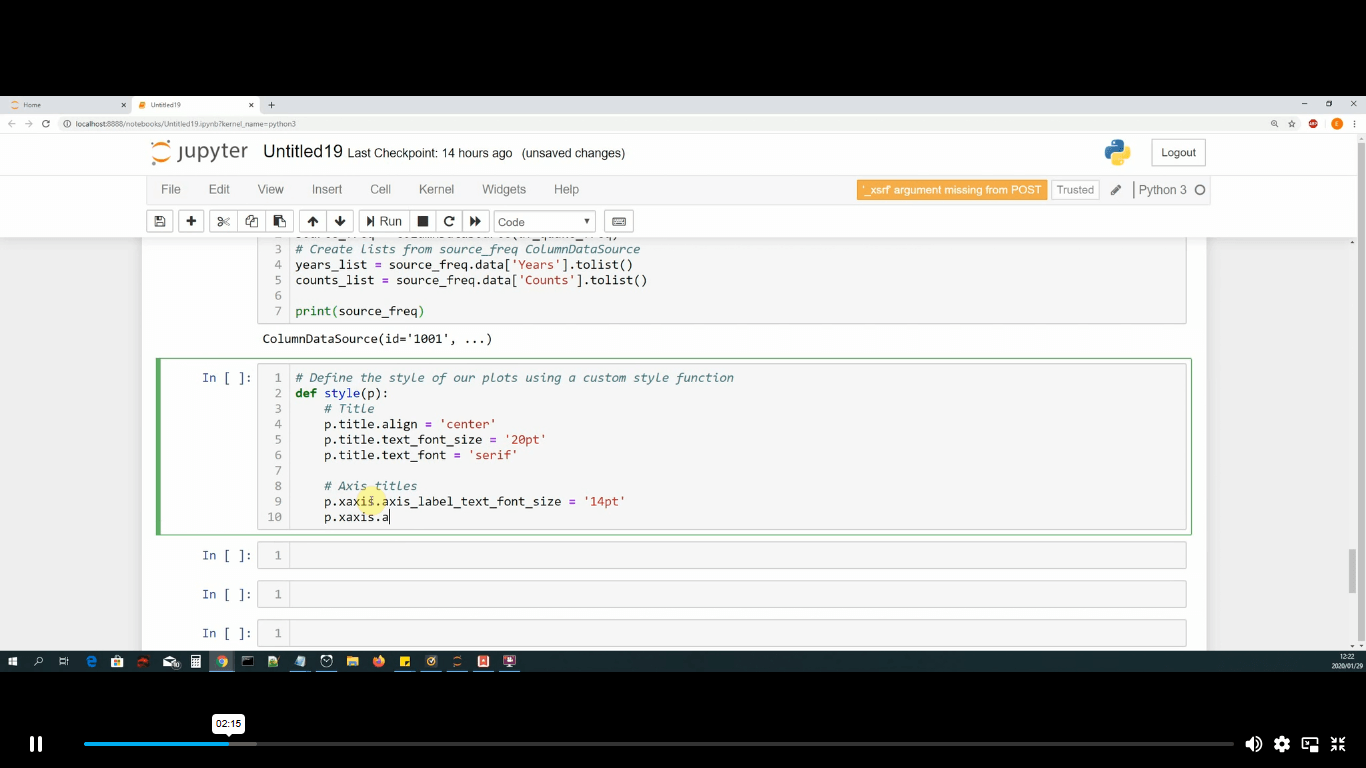
Exclusive Course Glimpse

What You Will Learn in Spatial Data Visualization and Machine Learning in Python

This spatial data visualization Python course is designed to build your skills step by step. Moreover, it starts with the fundamentals and gradually introduces advanced machine learning techniques for geospatial data.

By the end of this course, you will be able to:

  • Understand spatial data fundamentals: Learn core concepts of geospatial data structures and representation
  • Work with Python libraries: Explore tools for spatial data analysis and visualisation
  • Analyse geospatial datasets: Process and manage large-scale spatial datasets effectively
  • Apply machine learning models: Use classification and regression techniques for spatial data
  • Perform spatial clustering: Identify patterns and anomalies in geospatial datasets
  • Create data visualisations: Build charts, maps, and interactive dashboards
  • Use mapping tools: Work with Folium, Plotly, and Bokeh for dynamic visualisation
  • Develop predictive models: Build and evaluate machine learning models for spatial analysis

In addition, you will improve your ability to combine GIS data analysis, Python programming, and machine learning into a structured workflow. Therefore, you will gain confidence in solving real-world data problems.

Why Choose Us?​

Many learners search for the best geospatial analysis course UK, but not all provide practical and beginner-friendly training. Therefore, this course is designed to simplify complex concepts while maintaining real-world relevance.

In addition, this course offers key benefits:

  • Affordable Learning: Structured lessons for smooth progress
  • CPD-Certified: Strengthen your CV with recognised credentials
  • Lifetime Access: Learn anytime at your own pace
  • Instant Certificate: Receive certification upon completion
  • Flexible Scheduling: Study around your work or studies
  • Transparent Pricing: No hidden costs
  • Quick Assessments: Monitor your progress easily
  • 24/7 Support: Assistance via chat or email

Thus, this machine learning Python course online supports both learning and career growth.

Course Curriculum

Spatial Data Visualization and Machine Learning in Python – 

Introduction – Overview of spatial data visualization and machine learning concepts
Setup and Installations – Python installation and Bokeh setup
Data Preparation – Prepare and structure spatial datasets for analysis
Data Visualization – Create charts, maps, and interactive plots using Python
Machine Learning – Apply predictive models and data pre-processing techniques
Building the Dashboard – Integrate data and visualisations into dashboards
Dashboard Server – Build and run server-based applications
Project Resources – Access source code and practical learning materials

Certificate of Achievement

Nextgen Certificate

After completing this spatial data visualization Python course, you will receive a CPD-accredited certificate to confirm your learning professionally.

You can typically choose:

  • PDF Certificate 
  • Hardcopy Certificate 

Moreover, certification helps learners:

📄 Strengthen your CV: Add a recognised data science certification
🎓 Demonstrate skills: Showcase your geospatial and machine learning abilities
📈 Boost employability: Stand out in data science and GIS roles
Prove learning: Validate your professional development

Therefore, if you are looking for a certified Python GIS course UK, this is a strong choice.

Who Is This Course For?​

This spatial data analysis course UK is suitable for anyone interested in data science, GIS, and machine learning. Moreover, it is designed for both beginners and professionals who want to upgrade their skills.

In addition, this course is ideal for:

  • Beginners: Start learning spatial data and Python from scratch
  • Data science students: Build strong foundations in geospatial analysis
  • Python enthusiasts: Expand skills into GIS and machine learning
  • Analysts: Improve data visualisation and modelling techniques
  • Researchers: Explore geospatial patterns and data insights
  • Career changers: Enter data science and GIS roles confidently

Furthermore, this course is flexible and easy to follow. As a result, you can learn at your own pace without pressure.

Professionals working on spatial data visualization and machine learning using Python

Requirements​

There are no formal requirements for this machine learning Python course UK.

However, learners should have:

  • Basic English skills: To understand course materials
  • Device access: Computer, tablet, or smartphone
  • Internet connection: For online learning

Because this course is fully online, you can study anytime. Therefore, you can revisit lessons whenever needed.

Career Path of Spatial Data Visualization and Machine Learning in Python

Completing this geospatial data analysis course can open doors to multiple career opportunities.

Common career paths include:

  • Data Analyst: £28,000 to £60,000
    Analyse datasets and generate actionable insights
  • GIS Analyst: £30,000 to £55,000
    Work with geographic data and mapping systems
  • Data Scientist: £35,000 to £80,000
    Build machine learning models and predictive systems
  • Machine Learning Engineer: £40,000 to £90,000
    Develop and deploy intelligent data solutions
  • Geospatial Analyst: £30,000 to £65,000
    Interpret spatial data for business and research
  • Business Intelligence Analyst: £32,000 to £70,000
    Use data to support strategic decisions

However, salaries may vary depending on experience, industry, and location.

Order Your Certificate

To order your Certificate, we kindly invite you to visit the following link

Frequently Asked Questions -

Spatial data in Python refers to geographic or location-based data that can be analysed using libraries like GeoPandas and Shapely. It includes coordinates, maps, and spatial relationships. Moreover, Python allows you to process and visualise this data efficiently. As a result, it is widely used in GIS and data science.

Yes, Python is widely used in GIS for automating workflows, analysing spatial data, and building custom tools. In addition, libraries like GeoPandas and Folium make GIS tasks easier. Therefore, Python has become a key skill for modern GIS professionals.

Yes, Python is one of the most popular tools for data visualisation. It supports libraries like Matplotlib, Plotly, and Bokeh for creating charts and dashboards. Moreover, it allows interactive and dynamic visualisations. As a result, it is widely used in data science.

Python and Tableau serve different purposes. Python is more flexible and powerful for data analysis and machine learning. However, Tableau is easier for quick visualisation and reporting. Therefore, many professionals use both together.

GIS can be easy to start but may become complex with advanced topics. However, with structured learning and practice, it becomes manageable. Moreover, tools like Python simplify many GIS tasks. Therefore, beginners can learn GIS step by step.

Course Curriculum

Section 01: Introduction
Introduction 00:14:00
Section 02: Setup and Installations
Python Installation 00:03:00
Installing Bokeh 00:04:00
Section 03: Data Preparation
Data Preparation 00:24:00
Section 04: Data Visualization
Creating a Bar Chart 00:18:00
Creating a Line Chart 00:12:00
Creating a Doughnut Chart 00:22:00
Creating a Magnitude Plot 00:31:00
Creating a Geo Map Plot 00:20:00
Creating a Grid Plot 00:12:00
Section 05: Machine Learning
Data Pre-processing 00:21:00
Building a Predictive Model 00:21:00
Building a Prediction Dataset 00:07:00
Section 06: Building the Dashboard
Adding predicted data to our plots – Part 1 00:13:00
Adding predicted data to our plots – Part 2 00:14:00
Adding predicted data to our plots – Part 3 00:15:00
Adding the Grid Plot 00:08:00
Section 07: Creating the Dashboard Server
Installing Visual Studio Code 00:01:00
Creating the Project and Virtual Environment 00:08:00
Building and Running the Server 00:12:00
Section 08: Project Source Code
Resources 00:00:00
Order Your Certificate
Order Your Certificate 00:00:00

Related Courses

A product of

© 2026 NextGen Learning. All rights reserved

Select your currency
GBP Pound sterling