





From Nursing Assistant to Registered Nurse: Career Pathways in the NHS
A nursing career is one of the most respected and secure career choices in the UK. Every year, thousands of people begin their journey in health and social care, often starting as a nursing assistant or healthcare assistant, before progressing further. Over time, this experience can lead to becoming a registered nurse, particularly through the wide range of NHS jobs available nationwide. At the same time, the growing demand for nursing jobs makes this career pathway more accessible than ever.
Importantly, this guide explains how a nursing career can develop step by step, starting from assistant-level roles and moving towards professional nursing. Moreover, it highlights how nursing assistant and healthcare assistant roles create strong foundations, while also exploring education routes, training options, and long-term opportunities within NHS jobs and wider nursing jobs.
Table of Contents
Nursing Career Opportunities in the UK
A nursing career offers stability, progression, and purpose. Because healthcare services are essential, demand for qualified professionals remains consistently high. As a result, nursing jobs are available across hospitals, community services, and social care environments.
Furthermore, the UK healthcare system provides structured pathways that allow individuals to grow professionally. Consequently, a nursing career is not limited to a single role or setting. Instead, professionals can move between positions as their skills develop. Additionally, many people view NHS jobs as particularly attractive due to long-term security and clear progression routes.
Understanding Nursing Assistant and Healthcare Assistant Roles
For many people, a nursing career begins with hands-on care roles. A nursing assistant or healthcare assistant supports patients with daily activities, personal care, and emotional wellbeing. Although these roles differ from that of a registered nurse, they are essential to delivering safe and compassionate care.
Moreover, nursing assistant and healthcare assistant roles are widely available across hospitals, care homes, and community services. Because these positions involve direct patient contact, they allow individuals to build confidence quickly. Therefore, they are often seen as the most practical entry point into a long-term nursing career and future nursing jobs.
Why Assistant Roles Are the Ideal Starting Point
Starting as a healthcare assistant or nursing assistant provides valuable real-world experience. Firstly, it helps individuals understand how care teams operate. Secondly, it builds essential skills such as communication, teamwork, and time management.
As a result, assistant roles prepare individuals for further study and responsibility. Additionally, experience gained through NHS jobs strengthens applications for nursing education. Consequently, many people who start as assistants find progression to registered nurse roles more achievable and less overwhelming.
Nursing Assistant to Registered Nurse: How Progression Works
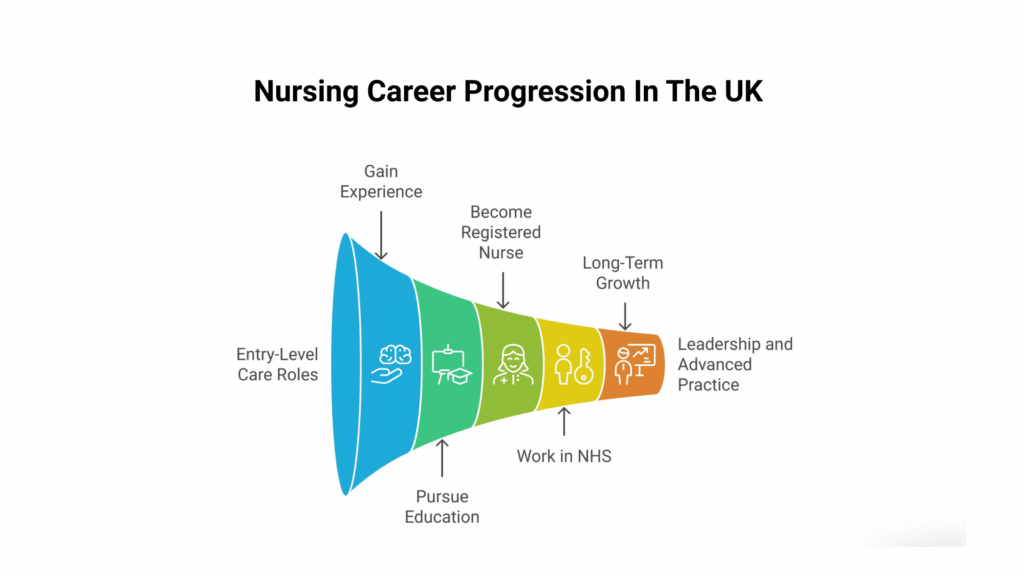
Progressing from nursing assistant to registered nurse is a well-established route. In fact, many nurses across the UK began their nursing career in assistant roles. Over time, practical experience builds confidence and clinical awareness.
Furthermore, working as a healthcare assistant helps individuals decide whether nursing is the right long-term choice. Because assistant roles reflect real care environments, they provide a realistic view of nursing jobs. As a result, those who progress are often better prepared for the demands of becoming a registered nurse.
How to Become a Registered Nurse in the UK
To become a registered nurse, individuals must complete an approved nursing qualification. Usually, this involves studying for a nursing degree. However, those with experience as a nursing assistant or healthcare assistant often adapt more easily to academic and clinical requirements.
Moreover, training combines theory with practical placements. Importantly, many placements are supported through NHS jobs, allowing learners to gain experience in real healthcare settings. Therefore, assistant roles play a crucial role in supporting progression within a nursing career.
Nursing Degree and Training Routes
There are multiple routes into a nursing career. Traditional university degrees remain popular. However, degree apprenticeships now allow individuals to earn while they learn. As a result, many healthcare assistant and nursing assistant staff choose this pathway.
Additionally, apprenticeships are often linked to NHS jobs, providing financial support and structured training. Consequently, learners can progress without leaving employment. Ultimately, these routes increase access to nursing jobs and support long-term career growth.
NHS Jobs for Registered Nurses
Once qualified, opportunities for registered nurse roles are extensive. In fact, NHS jobs are available across nearly every healthcare specialty. Because demand continues to rise, job security remains strong.Many newly qualified nurses choose to explore careers in the NHS, which offer structured development, stability, and long-term progression
Furthermore, newly qualified nurses often receive structured support programmes. Therefore, the transition from nursing assistant or healthcare assistant to registered nurse is smoother. Over time, this support strengthens professional confidence and long-term commitment to a nursing career within the National Health Service.
Nursing Jobs and Long-Term Career Progression
A nursing career does not end at qualification. Instead, there are many nursing jobs available in specialisms such as adult nursing, mental health, learning disabilities, and community care. Consequently, career development remains continuous.
Moreover, experienced nurses can progress into leadership, education, or specialist roles. As a result, individuals who begin as a healthcare assistant or nursing assistant can build long-term, fulfilling careers. Each step strengthens employability and professional standing within NHS jobs and beyond.
Registered Nurse Salary and Benefits
Salary is an important consideration when choosing a nursing career. Registered nurse pay within NHS jobs follows national pay bands, which increase with experience. Therefore, progression is transparent and predictable.
In addition to salary, NHS jobs offer pensions, paid leave, and job security. As a result, a nursing career provides both financial stability and professional respect. Furthermore, senior nursing jobs offer enhanced earning potential.
Skills and Experience Needed for Progression
Progression from nursing assistant or healthcare assistant to registered nurse requires commitment. Key skills include empathy, organisation, resilience, and communication. Fortunately, assistant roles naturally develop these qualities.
Additionally, consistent experience in NHS jobs strengthens applications for further training. Therefore, assistant roles are not just entry-level positions but stepping stones within a broader nursing career and future nursing jobs.
Build Strong Foundations with the Level 3 Diploma in Nursing Assistant Complete Training
For those starting their nursing career, gaining the right skills early is essential. The Level 3 Diploma in Nursing Assistant Complete Training provides practical knowledge in patient care, safe practice, and teamwork. Moreover, this qualification supports progression into nursing assistant roles and strengthens applications for NHS jobs by demonstrating recognised, job-ready training.
Gaining the Right Qualifications for a Nursing Career
Education plays a crucial role in career progression. A Level 3 Diploma in Health and Social Care provides essential knowledge for those entering healthcare assistant and nursing assistant roles. It builds confidence and understanding of care standards.
Similarly, the Level 3 Diploma in Nursing Assistant Complete Training equips learners with practical, job-ready skills. These qualifications support access to NHS jobs and prepare individuals for long-term progression towards becoming a registered nurse.
Building a Secure Future in Nursing
A nursing career offers long-term security, progression, and purpose. From entry-level nursing assistant roles to advanced registered nurse positions, the pathway is structured and achievable. Moreover, demand for nursing jobs remains strong across the UK.
Because NHS jobs value experience and qualifications, individuals who invest in training benefit the most. Ultimately, starting as a healthcare assistant can lead to a respected and rewarding nursing career that makes a genuine difference every day.
If you are beginning your nursing career or planning to move into healthcare assistant roles, the Level 3 Diploma in Health and Social Care offers a flexible and recognised starting point. In addition, it builds essential knowledge in communication, safeguarding, and person-centred care. As a result, learners gain the confidence and understanding needed to progress into nursing assistant roles and future nursing jobs.
Final Thoughts
In summary, progressing from a nursing assistant or healthcare assistant to a registered nurse is a realistic, well-established pathway within the UK healthcare system. A nursing career offers far more than just job security; it provides long-term professional growth, personal fulfilment, and the opportunity to make a meaningful difference in people’s lives every day. With continued demand for nursing jobs across a wide range of care settings, this career path remains both relevant and sustainable.
Importantly, starting in assistant-level roles allows individuals to build confidence, practical skills, and a clear understanding of patient care before taking on greater responsibility. This hands-on experience, combined with the right education and training, creates a strong foundation for long-term success. Many NHS jobs actively support this progression, making it possible to combine work, learning, and career development in a structured way.
Ultimately, a nursing career is not a single step but a journey. By gaining recognised qualifications, developing experience in health and social care, and committing to continuous learning, individuals can progress steadily from entry-level roles to registered nurse positions and beyond. For those seeking a stable, respected, and rewarding profession, nursing continues to be one of the most valuable career choices in the UK.
Frequently Asked Questions
Nursing career progression in the UK typically begins with nursing assistant or healthcare assistant roles. After gaining experience, individuals complete an approved nursing degree or degree apprenticeship, leading to registration as a registered nurse. This progression pathway is widely recognised across NHS jobs and health and social care services.
To qualify as a registered nurse, an approved nursing degree or degree apprenticeship is required. While prior experience as a nursing assistant or healthcare assistant is not mandatory, it is highly valued, as it provides practical care experience and familiarity with clinical environments.
Nursing jobs remain in sustained high demand across the NHS. Workforce needs in hospitals, community services, and specialist care settings mean NHS jobs offer strong job security, clear progression routes, and long-term career stability within the UK healthcare system.
A nursing assistant supports patients with daily care tasks under supervision. In contrast, a registered nurse holds a professional qualification and is responsible for clinical assessments, care planning, medication administration, and patient management within regulated healthcare settings.
Nursing career progression timelines vary depending on education routes and prior experience. Typically, after working in assistant roles, completing a nursing degree or apprenticeship takes around three years, with many NHS pathways supporting combined work and study.



0 responses on "From Nursing Assistant to Registered Nurse: Career Pathways in the NHS"