





Can You Reheat Prawns Safely? Food Safety Guide (74°C Rule)
Prawns are delicious, versatile, and packed with lean protein. However, because seafood spoils quickly, many people hesitate before reheating leftovers. So, can you reheat prawns safely, or does doing so increase the risk of food poisoning?
The short answer is yes, you can reheat cooked prawns safely — but only if you follow strict food safety rules. Importantly, prawns must be stored properly in the fridge within two hours of cooking and reheated to an internal temperature of 74°C (165°F). In addition, they should only be reheated once to reduce bacterial risk.
Because prawns are delicate and low in fat, they can also turn rubbery if overheated. Therefore, safe reheating is not just about killing bacteria — it is also about protecting texture and flavour. In this complete guide, you will learn the safest reheating methods, how to avoid common mistakes and how to keep your prawns tender while staying fully compliant with food safety guidelines.
Table of Contents
Can You Reheat Prawns Safely?
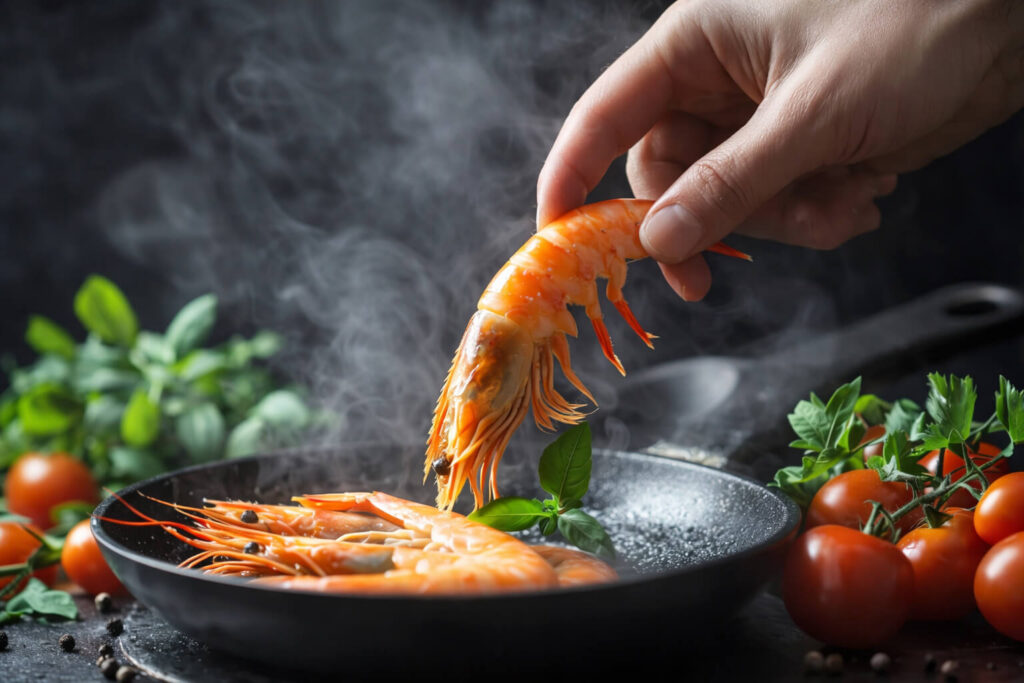
Yes, you can reheat prawns safely if they were stored correctly and reheated to the proper temperature. Cooked prawns must be refrigerated within two hours of cooking and heated to an internal temperature of 74°C (165°F) before eating. In addition, you should only reheat prawns once to reduce the risk of bacterial growth.
However, safety depends on three critical factors:
- Store prawns below 4°C in an airtight container
- Reheat until they reach 74°C throughout
- Avoid reheating more than once
Because seafood is highly perishable, prawns can enter the temperature “danger zone” quickly. This range — between 5°C and 60°C — allows bacteria to multiply rapidly. Therefore, proper storage and controlled reheating are essential.
Importantly, reheating prawns correctly does not just protect you from food poisoning. It also helps preserve their texture. Since prawns cook quickly, overheating them can make them tough and rubbery. As a result, gentle, controlled heat works best.
Why Is Reheating Prawns a Food Safety Concern?
Reheating prawns can be safe. However, it becomes risky when storage or temperature control is poor. Because seafood is highly perishable, bacteria can grow quickly if prawns are left at room temperature or reheated incorrectly.
Unlike red meat, prawns have a high moisture content and delicate protein structure. Therefore, they provide an ideal environment for harmful bacteria if not handled properly. The real danger is not the reheating itself — it is the time prawns spend in unsafe temperature ranges.
The Temperature Danger Zone Explained
Food safety authorities define the temperature danger zone as between 5°C and 60°C (41°F–140°F). Within this range, bacteria multiply rapidly. As a result, even a short period at room temperature can increase contamination risk.
Here is why this matters:
- Bacteria such as Vibrio and Salmonella thrive in warm conditions
- Bacterial numbers can double in as little as 20 minutes
- Repeated cooling and reheating increases exposure time
- Some bacteria produce toxins that reheating cannot destroy
Therefore, storing prawns promptly after cooking is just as important as reheating them properly. If they were left out too long initially, reheating may not fully eliminate the risk.
What Happens If You Reheat Prawns Twice?
Reheating prawns more than once significantly increases food safety risks. Each cooling and reheating cycle pushes the prawns back into the danger zone. Consequently, bacteria have more opportunities to multiply.
Key reasons to avoid reheating twice:
- Temperature fluctuations allow bacterial regrowth
- Texture deteriorates with each heat cycle
- Moisture loss increases dryness and toughness
- Food safety guidelines recommend single reheating only
Even if prawns appear fine, bacteria are invisible. Therefore, it is always safer to portion leftovers before reheating. Heat only what you plan to eat.
How to Store Cooked Prawns Safely Before Reheating
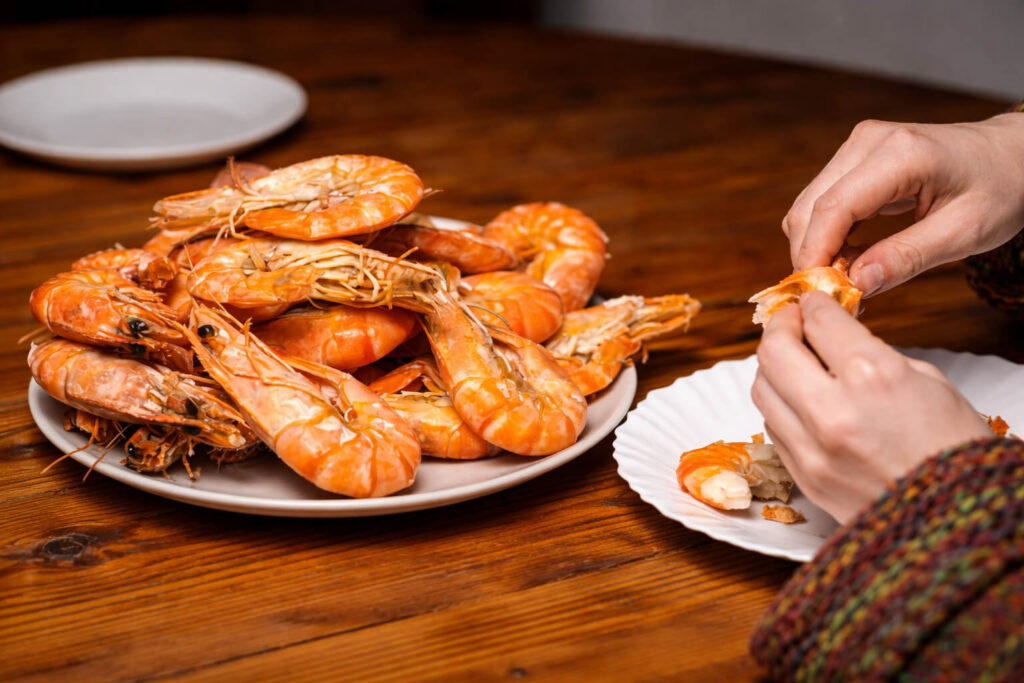
Safe reheating always starts with proper storage. If prawns are stored incorrectly after cooking, reheating them later will not fully remove the risk. Therefore, understanding how long cooked prawns last and how to store them correctly is essential.
Because seafood spoils faster than most proteins, you must cool and refrigerate prawns promptly. The sooner you control temperature, the lower the bacterial risk.
Refrigeration Guidelines
Cooked prawns should be refrigerated within two hours of cooking. If the room temperature is particularly warm, you should refrigerate them even sooner. This reduces the time they spend in the temperature danger zone.
Follow these storage rules:
- Place prawns in an airtight container
- Store them below 4°C (40°F)
- Keep them in the coldest part of the fridge
- Consume within 2–3 days
- Label leftovers with the date
Importantly, avoid leaving prawns uncovered in the fridge. Exposure to air increases moisture loss and can affect both safety and texture.
Freezing and Thawing Rules
If you do not plan to eat cooked prawns within three days, freezing is the safest option. Freezing slows bacterial growth significantly. However, proper packaging is critical.
When freezing prawns:
- Use freezer-safe airtight bags or containers
- Remove as much air as possible
- Freeze promptly after cooling
- Use within 3 months for best quality
When thawing, always choose safe methods:
- Thaw overnight in the refrigerator (best method)
- Use cold water thawing in a sealed bag
- Never thaw at room temperature
Room temperature thawing increases bacterial growth risk. Therefore, controlled thawing protects both safety and flavour.
Proper storage creates the foundation for safe reheating. Next, we will examine the best way to reheat prawns, including which method works best depending on the dish and prawn type.
What Is the Best Way to Reheat Prawns?
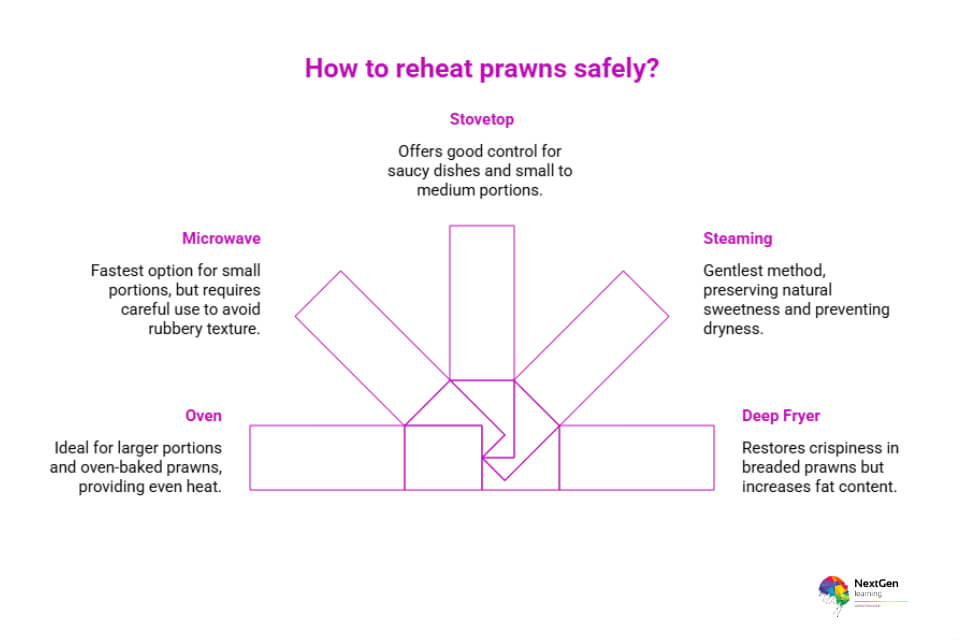
The best way to reheat prawns depends on how they were originally cooked and what dish they are part of. However, the safest approach always remains the same: use controlled heat, avoid overcooking and ensure the internal temperature reaches 74°C (165°F).
Because prawns cook quickly, aggressive reheating can dry them out. Therefore, gentle and even heat produces the best results. Below are the safest reheating methods, along with when to use each one.
Reheating Prawns in the Oven
The oven provides even heat, which makes it ideal for grilled, baked, or roasted prawns. Moreover, it works well for larger portions.
When to use this method:
- Reheating a full tray of prawns
- Grilled or oven-baked prawns
- Prawns served with sauce or marinade
How to do it safely:
- Preheat oven to 180°C (350°F)
- Place prawns on a baking tray
- Cover loosely with foil to retain moisture
- Heat for 8–12 minutes
- Check they reach 74°C internally
Because the oven heats gradually, it reduces the risk of sudden overcooking. However, you must avoid leaving them in too long.
Reheating Prawns in the Microwave
The microwave is the fastest option. However, it carries the highest risk of uneven heating and rubbery texture. Therefore, you must use reduced power settings.
When to use this method:
- Small portions
- Quick meals
- Prawns mixed into rice or pasta
How to reheat safely:
- Place prawns in a microwave-safe dish
- Cover with a damp paper towel
- Use 50% power
- Heat in 30-second intervals
- Stir between intervals
Because microwaves heat unevenly, always check the centre temperature before eating.
Reheating Prawns on the Stovetop
The stovetop offers better control than a microwave. As a result, it works particularly well for saucy dishes such as curries, stir-fries, or pasta.
When to use this method:
- Prawns in sauce
- Stir-fry leftovers
- Small to medium portions
Safe reheating steps:
- Heat sauce or oil first
- Add prawns last
- Stir gently over medium heat
- Heat for 3–5 minutes only
Adding prawns at the end prevents prolonged exposure to heat. Consequently, texture remains softer.
Steaming Prawns
Steaming is one of the gentlest reheating methods. Because it uses moist heat, it helps retain natural sweetness and prevents dryness.
When to use this method:
- Plain boiled prawns
- Prawns served with dips
- Maintaining natural texture
How to steam safely:
- Bring water to a gentle simmer
- Place prawns in a steamer basket
- Cover with lid
- Steam for 5–7 minutes
- Confirm internal temperature reaches 74°C
Steaming closely mimics fresh cooking. Therefore, it is often the best method for preserving tenderness.
Deep Fryer (Breaded Prawns Only)
Deep frying restores crispiness in battered or breaded prawns. However, it is not suitable for plain prawns.
When to use this method:
- Breaded prawns
- Prawn toast
- Crispy seafood dishes
Safe reheating steps:
- Preheat oil to 175°C (350°F)
- Fry in small batches
- Heat for 2–3 minutes
- Drain excess oil
Although this method restores crunch, it increases fat content. Therefore, use it selectively.
How to Reheat Different Types of Prawns Safely

Not all prawns reheat the same way. Because preparation methods vary, reheating must be adjusted accordingly. Therefore, understanding how to handle frozen, boiled, or grilled prawns reduces both safety risks and texture damage.
Reheating Frozen Prawns
Frozen prawns require careful thawing before reheating. Cooking them straight from frozen often causes uneven heating. As a result, the outside may overcook while the centre remains cold.
Safe thawing methods:
- Thaw overnight in the refrigerator
- Submerge sealed prawns in cold water for 30–45 minutes
- Avoid thawing at room temperature
Once thawed, reheat using oven, stovetop, or steaming methods. Importantly, always confirm the internal temperature reaches 74°C (165°F).
Never refreeze prawns after thawing and reheating. Doing so increases bacterial risk and damages texture.
Reheating Boiled Prawns
Boiled prawns are delicate. Therefore, they require gentle heat to avoid toughness.
Best methods:
- Steaming (preferred)
- Gentle stovetop reheating
To steam:
- Place prawns in a steamer basket
- Steam for 5 minutes
- Serve immediately
To use stovetop:
- Heat butter, broth, or oil first
- Add prawns briefly
- Heat for 3–4 minutes only
Because boiled prawns already have a soft texture, minimal reheating preserves their natural sweetness.
Reheating Grilled Prawns
Grilled prawns often have charred edges and smoky flavour. However, dry heat can quickly make them rubbery. Therefore, moisture retention becomes essential.
Oven method (best for grilled):
- Preheat to 180°C
- Lightly brush with olive oil or butter
- Cover loosely with foil
- Heat for 8–10 minutes
Stovetop method:
- Heat a skillet with a splash of oil
- Add prawns
- Heat for 3–4 minutes
- Flip once for even warming
Adding lemon juice or garlic butter after reheating helps restore moisture and flavour.
Reheating Prawns in Pasta, Curry, or Rice
When prawns are part of a finished dish, the safest strategy changes. Instead of reheating the prawns directly, focus on reheating the base first.
Safer reheating approach:
- Heat sauce, rice, or broth first
- Add prawns at the end
- Stir gently for 2–3 minutes
- Remove once fully heated
Because prawns need very little reheating time, adding them last prevents overexposure to heat. Consequently, they remain tender rather than chewy.
Why Do Prawns Go Rubbery When Reheated?
Many people worry about food safety when reheating seafood. However, texture is often the bigger complaint. If you have ever reheated prawns and found them tough or chewy, protein science explains why.
Prawns are made primarily of water and lean protein. When exposed to heat, these proteins begin to tighten and contract. Therefore, the more heat applied — or the longer the cooking time — the firmer and drier the prawns become.
The Science Behind Overcooked Prawns
When prawns cook, their muscle fibres denature. This means the protein structure changes shape under heat. Initially, this process makes prawns firm and opaque. However, excessive reheating forces the proteins to contract further. As a result, moisture gets squeezed out.
Here is what happens during overcooking:
- Protein fibres tighten excessively
- Internal moisture escapes
- Texture becomes dense and chewy
- Surface may appear shrivelled
Because prawns cook quickly, they need very little reheating time. Even one extra minute can significantly change texture.
How to Stop Prawns from Going Rubbery
Fortunately, you can protect texture with the right approach. The key is controlled heat and moisture retention.
Follow these expert tips:
- Use medium or low heat instead of high heat
- Cover prawns when using dry heat methods
- Add sauce, broth, or butter for moisture
- Reheat for the shortest time necessary
- Check temperature early rather than late
Importantly, think of reheating as warming — not recooking. Once prawns are fully cooked, your goal is simply to bring them back to serving temperature safely.
Common Mistakes When Reheating Prawns

Reheating prawns safely is simple. However, small mistakes can quickly lead to food poisoning risk or poor texture. Therefore, knowing what to avoid is just as important as knowing the correct method.
Because seafood is sensitive to temperature changes, even minor handling errors can increase bacterial growth. Moreover, improper reheating often results in rubbery or dry prawns.
Below are the most common mistakes — and how to prevent them.
1. Leaving Prawns at Room Temperature Too Long
Many people leave leftovers out before reheating. However, this is one of the biggest safety risks.
Avoid this by:
- Refrigerating within two hours of cooking
- Returning leftovers to the fridge immediately after serving
- Minimising time on the counter before reheating
The longer prawns sit in the temperature danger zone, the higher the bacterial risk.
2. Reheating More Than Once
Although it may seem harmless, reheating prawns multiple times increases risk significantly. Each cooling and reheating cycle creates another opportunity for bacteria to multiply.
To stay safe:
- Portion leftovers before reheating
- Heat only what you plan to eat
- Discard leftovers after reheating
Food safety guidelines strongly recommend reheating seafood only once.
3. Using High Heat
High heat may seem faster. However, it often causes uneven warming and texture damage.
Instead:
- Use medium heat settings
- Reheat gradually
- Monitor closely
Gentle reheating protects both safety and tenderness.
4. Not Checking Internal Temperature
Guessing is risky. Although prawns may feel hot externally, the centre may remain below safe levels.
For better safety:
- Use a food thermometer
- Confirm temperature reaches 74°C (165°F)
- Check the thickest part
Accurate temperature control ensures bacteria are destroyed.
5. Thawing at Room Temperature
Improper thawing allows bacteria to grow before reheating even begins.
Avoid this mistake by:
- Thawing in the refrigerator
- Using cold water thawing in a sealed bag
- Never leaving frozen prawns on the counter
Safe thawing reduces contamination risk significantly.
Signs of Food Poisoning After Eating Prawns
Even when you follow food safety rules, it is important to recognise the symptoms of seafood-related food poisoning. Because prawns are highly perishable, contamination can occur if storage or reheating guidelines are ignored.
Foodborne illness from seafood is commonly linked to bacteria such as Vibrio, Salmonella, or Listeria. Symptoms can appear within a few hours, although sometimes they develop later. Therefore, early recognition is essential.
Common Symptoms to Watch For
If prawns were improperly stored or reheated, the following symptoms may occur:
- Nausea
- Vomiting
- Diarrhoea
- Abdominal cramps
- Fever or chills
- Headache
- Weakness or dizziness
In most mild cases, symptoms resolve within 24–48 hours. However, severe dehydration or persistent symptoms require medical attention.
When Should You Seek Medical Help?
Although most food poisoning cases are mild, certain warning signs indicate the need for urgent care.
Seek medical help if:
- Symptoms last longer than 48 hours
- You experience high fever
- There is blood in stool
- You cannot keep fluids down
- You feel signs of severe dehydration
Children, older adults and people with weakened immune systems are at higher risk. Therefore, they should seek medical advice sooner if symptoms develop.
Importantly, proper storage and single reheating significantly reduce these risks. Most food poisoning cases linked to seafood occur because food was left in the temperature danger zone for too long.
Frequently Asked Questions About Reheating Prawns
No, you should not reheat prawns twice. Each reheating cycle increases the time they spend in the temperature danger zone, which raises bacterial growth risk. Therefore, always reheat prawns once only and discard leftovers after reheating.
Yes, it is safe if done properly. However, you must use medium power, heat in short intervals and ensure the internal temperature reaches 74°C (165°F). In addition, covering prawns with a damp paper towel helps prevent them from drying out.
Cooked prawns typically last 2–3 days when stored below 4°C in an airtight container. After that, bacterial risk increases. Therefore, if in doubt, it is safer to discard them.
Yes, seafood including prawns can be reheated the next day if stored correctly in the refrigerator. However, it must be reheated thoroughly to a safe internal temperature and consumed immediately.
No, you should not refreeze prawns after reheating. Refreezing increases food safety risks and significantly damages texture. Instead, portion food before reheating to avoid waste.
Final Verdict – Can You Reheat Prawns Safely?
Yes, you can reheat prawns safely. However, safety depends entirely on how they were stored and reheated. If you control temperature properly and follow food hygiene rules, reheated prawns can be just as safe as freshly cooked ones.
The golden rule is simple: store quickly, reheat once and heat thoroughly.
To summarise:
- Refrigerate prawns within two hours of cooking
- Store below 4°C in an airtight container
- Consume within 2–3 days
- Reheat to at least 74°C (165°F)
- Reheat only once
- Avoid prolonged exposure to room temperature
Because prawns are delicate, reheating should be gentle. In addition, adding moisture and avoiding high heat helps maintain texture. Think of reheating as warming, not recooking.
When handled correctly, reheating prawns is safe. However, if you are ever unsure about storage time or smell, it is safer to discard them. Food safety always outweighs waste.

0 responses on "Can You Reheat Prawns Safely? Food Safety Guide (74°C Rule)"