





Can You Reheat Rice Safely? Avoid Food Poisoning Guide
Yes, you can reheat rice safely — however, only if you store it correctly and heat it properly. The real risk does not come from reheating itself. Instead, it comes from how the rice was cooled and stored after cooking. If rice sits at room temperature for too long, bacteria called Bacillus cereus can multiply and produce toxins that reheating may not destroy.
Importantly, reheated rice food poisoning is preventable. When you cool rice within one hour, store it below 4°C (40°F) and reheat it to at least 74°C (165°F) until steaming hot throughout, it is generally safe to eat. However, if rice was left out overnight or stored improperly, reheating it can increase your risk of illness.
Because rice is a high-carbohydrate food, it creates an ideal environment for bacterial growth when mishandled. Therefore, understanding proper rice storage safety is essential. In this guide, you will learn why reheating rice can sometimes be dangerous, what symptoms to watch for and exactly how to reheat rice safely without risking food poisoning.
Table of Contents
Why Reheating Rice Can Be Dangerous (The Science Explained)

Although many people assume reheating kills all bacteria, that is not always true. The danger linked to reheated rice is not simply about bacteria surviving heat. Instead, it involves a spore-forming bacterium called Bacillus cereus, which behaves differently from most common foodborne pathogens.
Understanding the science behind this helps you see why proper storage matters more than reheating itself. Therefore, before looking at reheating methods, it is important to understand what actually causes rice food poisoning.
What Is Bacillus cereus?
Bacillus cereus is a naturally occurring bacterium found in soil. Because rice grows in soil, it can carry bacterial spores even before cooking. Importantly, these spores are extremely heat resistant.
Here is what makes this bacterium different:
- It forms protective spores that survive normal cooking temperatures
- It becomes active when cooked rice cools slowly
- It multiplies rapidly at room temperature
- It produces toxins that can cause food poisoning
While cooking rice destroys most active bacteria, it does not always destroy the spores. As a result, once the rice cools and sits within the temperature danger zone (between 4°C and 60°C), those spores can reactivate and multiply.
Why Cooking Does Not Fully Remove the Risk
Many people believe, “If I reheat it thoroughly, I’ll kill everything.” However, this is only partially true.
Reheating rice to 74°C (165°F) will kill active bacteria. Nevertheless, it may not destroy the toxins already produced. This is the key issue.
There are two important stages in rice contamination:
- Spore survival during cooking
- Toxin production during improper storage
Once toxins form, reheating cannot reliably eliminate them. Therefore, the real risk happens before reheating — when rice is left out too long.
This explains why food safety experts emphasise rapid cooling and refrigeration over repeated reheating.
Two Types of Rice-Related Food Poisoning
Bacillus cereus causes two distinct illness patterns. Understanding this helps identify symptoms quickly.
1️⃣ Vomiting (Emetic) Syndrome
- Symptoms begin within 1–6 hours
- Nausea and repeated vomiting
- Sometimes mild stomach cramps
- Usually no fever
This type often occurs after eating rice that sat at room temperature for several hours.
2️⃣ Diarrhoeal Syndrome
- Symptoms begin within 8–16 hours
- Abdominal cramps
- Watery diarrhoea
- Mild nausea
Although most cases resolve within 24 hours, vulnerable individuals including elderly people, young children, pregnant women and immunocompromised individuals may experience more severe effects.
Why Rice Is Especially Risky
Rice creates a higher risk compared to many other foods because:
- It is moist and carbohydrate-rich
- It is often cooked in large batches
- It cools slowly when left in pots
- It is commonly left at room temperature during meal prep
- It is frequently reheated multiple times
As a result, improperly stored leftover rice becomes one of the most common sources of Bacillus cereus food poisoning worldwide.
However, it is important to stress that reheated rice itself is not inherently dangerous. The danger comes from improper handling before reheating. Therefore, when rice is cooled quickly, stored correctly and reheated safely, the risk becomes extremely low.
Symptoms of Food Poisoning from Reheated Rice
If rice has been stored improperly and contaminated with Bacillus cereus, symptoms can appear surprisingly fast. However, the type and timing of symptoms depend on which toxin was produced. Therefore, recognising the warning signs early can help you respond appropriately.
In most healthy adults, symptoms are short-lived and mild. Nevertheless, certain groups including young children, older adults, pregnant women and people with weakened immune systems may experience stronger reactions.
Early-Onset Vomiting Syndrome (1–6 Hours)
This type develops quickly. In fact, symptoms can begin within just one to five hours after eating contaminated rice. Because the toxin forms in the food before you eat it, reheating does not remove this risk.
Common symptoms include:
- Sudden nausea
- Repeated vomiting
- Stomach cramps
- Mild weakness
Importantly, fever is usually absent. Although symptoms can feel intense, they often resolve within 12–24 hours. However, dehydration can occur if vomiting is frequent.
Diarrhoeal Syndrome (8–16 Hours)
The second type appears later. Typically, symptoms begin between eight and sixteen hours after eating contaminated rice. This version resembles other common foodborne illnesses.
Symptoms may include:
- Watery diarrhoea
- Abdominal cramps
- Mild nausea
- Occasional low-grade fever
Because this form develops inside the intestines, it tends to last slightly longer. Nevertheless, most cases improve within one day without medical treatment.
When to Seek Medical Help
Although most rice-related food poisoning cases are mild, you should seek medical advice if:
- Symptoms last longer than 24–48 hours
- Severe dehydration develops
- Vomiting prevents fluid intake
- There is blood in stool
- A child, elderly person, or immunocompromised individual is affected
Therefore, while reheated rice food poisoning is rarely life-threatening, it should never be ignored if symptoms worsen.
How Long After Eating Bad Rice Do You Get Sick?
For clarity, here is a simple timeline:
- 1–6 hours: Vomiting syndrome
- 8–16 hours: Diarrhoeal syndrome
Because symptoms can appear quickly, many people incorrectly assume the most recent meal caused illness. However, the issue may stem from improperly stored rice eaten earlier in the day.
When Is It Safe to Reheat Rice?
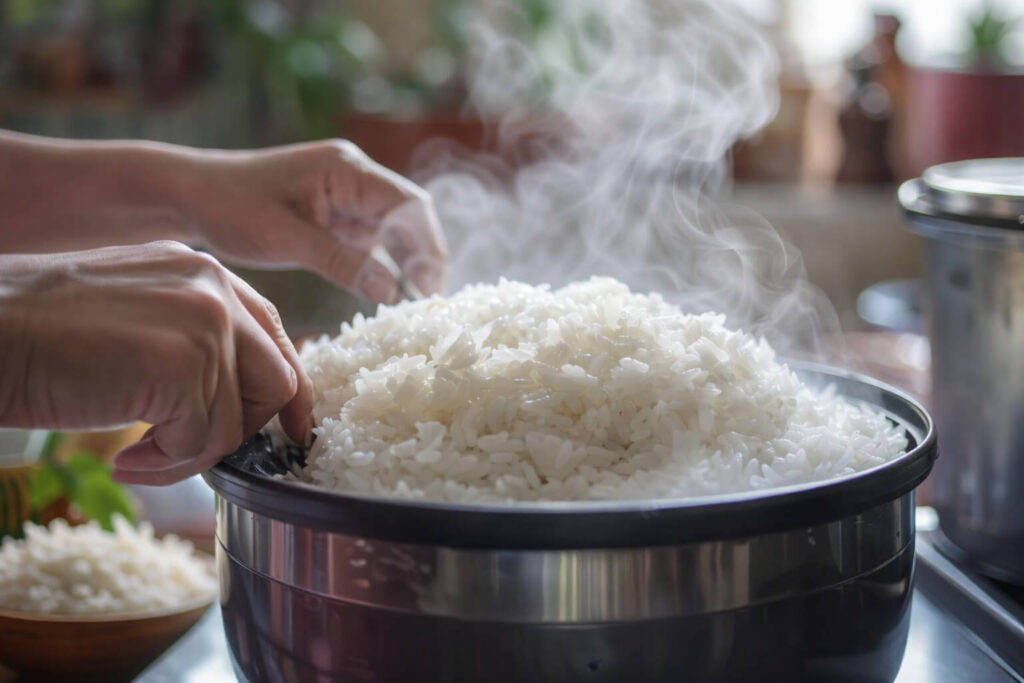
Reheating rice is safe only if it was handled correctly from the start. In other words, safety depends more on cooling and storage than on the reheating method itself. Therefore, before you even think about putting rice in the microwave or on the stove, you must confirm that it followed proper food safety rules.
If the rice was cooled quickly, refrigerated promptly and kept cold consistently, reheating it thoroughly makes it safe to eat. However, if it sat out too long, reheating cannot reliably undo the damage.
Let’s break down the three essential safety rules.
The 1-Hour Cooling Rule
Once rice finishes cooking, the clock starts ticking. Because warm rice sits in the temperature danger zone (4°C–60°C), bacteria can multiply rapidly.
To reduce risk:
- Cool rice within one hour of cooking
- Spread rice in a shallow tray to speed cooling
- Divide large portions into smaller containers
- Avoid leaving rice in a hot pot on the stove
Importantly, rice should never sit at room temperature for more than two hours. If it does, it is safest to discard it.
The 4-Day Fridge Rule
After cooling, store rice in an airtight container in the refrigerator at or below 4°C (40°F). When stored properly, cooked rice generally lasts:
- 3–4 days in the fridge
- Up to 1 month in the freezer
However, if rice smells sour, feels slimy, or shows discoloration, you should throw it away immediately. Even if it looks normal, do not exceed the four-day limit.
The 74°C (165°F) Reheating Rule
When reheating rice, temperature matters. The rice must reach at least 74°C (165°F) and be steaming hot all the way through.
To ensure safe reheating:
- Stir rice halfway through heating
- Check for cold spots
- Heat evenly throughout
- Reheat only once
- Eat immediately after reheating
Although reheating kills active bacteria, it may not eliminate toxins formed earlier. Therefore, safe storage remains the most critical step.
Quick Safety Checklist
Before reheating rice, ask yourself:
- Was it refrigerated within one hour?
- Has it been stored for fewer than four days?
- Was it kept below 4°C consistently?
- Does it look and smell normal?
If the answer to any of these is “no,” it is safer not to eat it.
When You Should NOT Reheat Rice
Although reheating rice can be safe, there are clear situations where you should not take the risk. In fact, many cases of rice-related food poisoning happen because people assume reheating will “fix” improper storage. However, once toxins form, reheating cannot reliably make the rice safe again.
Therefore, if any of the following apply, it is better to discard the rice.
🚫 Rice Was Left Out Overnight
If rice was left at room temperature overnight, do not reheat it. Because the temperature danger zone allows bacteria to multiply rapidly, toxin production may already have occurred.
Even if the rice looks and smells normal:
- Reheating may kill bacteria
- Reheating may not destroy toxins
- The risk of vomiting syndrome increases
When in doubt, throw it out.
🚫 Rice Sat Out for More Than 2 Hours
Food safety guidelines recommend discarding perishable foods left out longer than two hours. If the room was particularly warm, that window becomes even shorter.
Do not reheat rice if:
- It sat on the counter during meal prep
- It was left in a rice cooker on “warm” for several hours
- It was forgotten in a takeaway container
Because rice cools slowly, the internal temperature can stay in the danger zone for longer than you realise.
🚫 The Rice Smells or Looks Off
Spoiled rice may show warning signs. However, not all contaminated rice smells bad. Still, you should discard rice if you notice:
- Sour or unusual odour
- Slimy or sticky texture
- Visible mould
- Discolouration
Importantly, lack of smell does not guarantee safety. Therefore, storage time and temperature matter more than appearance.
🚫 It Has Already Been Reheated Once
Every reheating cycle increases the risk of bacterial growth. Moreover, repeated temperature changes allow surviving spores to multiply.
Avoid reheating rice multiple times. Instead:
- Portion rice before storing
- Reheat only what you plan to eat
- Consume immediately
This reduces both safety risks and texture loss.
The Golden Rule
If you cannot confirm:
- How long the rice was left out
- Whether it was cooled quickly
- Whether it stayed refrigerated consistently
Then it is safer not to eat it.
Although throwing food away feels wasteful, food poisoning is far worse. Therefore, prioritising safety over convenience is always the smarter choice.
How to Reheat Rice Safely (Step-by-Step Methods)

Once you confirm that your rice was cooled and stored correctly, you can reheat it safely. However, the goal is always the same: heat the rice evenly to at least 74°C (165°F) until it is steaming hot throughout.
Because uneven heating leaves cold spots where bacteria can survive, stirring and moisture control are essential. Below are the safest and most effective reheating methods.
Microwave Method (Fastest Option)
The microwave is the most convenient method. However, without moisture, rice can dry out or heat unevenly.
Follow these steps:
- Place rice in a microwave-safe dish
- Break up clumps with a fork
- Add 1–2 tablespoons of water per cup of rice
- Cover with a microwave-safe lid or damp paper towel
- Heat on high for 1–3 minutes
- Stir halfway through
- Ensure it is steaming hot before eating
Because steam helps distribute heat evenly, covering the dish is crucial. If the rice is not fully hot, heat it again briefly and stir thoroughly.
Stovetop Method (Best for Fluffy Texture)
If you prefer softer rice, the stovetop works well. Moreover, it allows better temperature control.
To reheat on the stove:
- Add rice to a saucepan
- Sprinkle a small amount of water or broth
- Cover with a tight-fitting lid
- Heat on low to medium heat
- Stir occasionally to prevent sticking
- Continue until fully heated through
This method restores moisture effectively and works well for larger portions.
Steaming Method (Most Even Heating)
Steaming provides gentle, even reheating. Therefore, it is ideal for jasmine, basmati, or sticky rice.
To steam rice safely:
- Bring water to a simmer in a pot
- Place rice in a heat-safe bowl or steamer basket
- Cover tightly with a lid or foil
- Steam for 5–10 minutes
- Stir once or twice for even heating
- Check that rice is steaming throughout
Although this method takes slightly longer, it produces excellent texture without drying.
Air Fryer Method (For Crispy Texture)
While not traditional, the air fryer works well if you want crispy edges. However, this method is better suited for stir-fried or drier rice.
To use an air fryer:
- Preheat to 160°C (320°F)
- Lightly coat rice with a small amount of oil
- Place rice in foil or an air fryer-safe dish
- Heat for 6–8 minutes
- Stir or shake halfway through
- Ensure it is heated evenly
Because air fryers circulate dry heat, adding a little oil prevents excessive dryness.
Stir-Fry Method (Best for Day-Old Rice)
Day-old rice works particularly well in stir-fries because it is less moist. In fact, many chefs prefer slightly dry rice for frying.
To stir-fry safely:
- Break up cold rice thoroughly
- Heat oil in a wok or large skillet
- Add garlic, onion, or other aromatics first
- Add rice and stir constantly
- Cook for 5–7 minutes
- Ensure rice is hot throughout before serving
This method not only reheats rice but also transforms it into a complete dish.
Important Reheating Rules
Regardless of the method you choose:
- Always heat to at least 74°C (165°F)
- Stir to eliminate cold spots
- Reheat only once
- Eat immediately after reheating
Although reheating kills active bacteria, it cannot reliably remove toxins formed during improper storage. Therefore, safe handling before reheating remains the most important factor.
Can You Reheat Rice Twice?
Technically, yes — you can reheat rice twice. However, food safety experts strongly discourage it. Each time rice cools and reheats, it passes again through the temperature danger zone. As a result, the opportunity for bacterial growth increases.
Although reheating kills active bacteria, repeated temperature changes create risk. Therefore, reheating rice more than once is not considered best practice.
Why Reheating Twice Increases Risk
Every reheating cycle introduces several problems:
- Rice cools slowly, allowing bacteria to multiply
- Temperature changes encourage spore activation
- Even heating becomes harder to achieve
- Texture deteriorates, making cold spots more likely
Because Bacillus cereus spores can survive cooking, improper cooling between reheats increases the chance of toxin production.
In other words, the danger does not come from the second reheating itself. Instead, it comes from repeated exposure to unsafe temperatures.
When It Might Still Be Acceptable
If rice was:
- Refrigerated immediately after each use
- Stored below 4°C consistently
- Reheated quickly and thoroughly each time
- Never left at room temperature
Then the risk is lower. However, it is still safer to avoid multiple reheating cycles.
The Safer Alternative
Instead of reheating rice twice, you should:
- Divide rice into single-serving portions before storing
- Reheat only what you plan to eat
- Discard leftovers after reheating
- Freeze extra portions instead of reheating repeatedly
This approach reduces temperature fluctuations and lowers contamination risk.
The Bottom Line
While you can reheat rice twice under strict storage control, it is not recommended. Therefore, for both safety and quality, reheating rice once is the safest practice.
How Long Does Cooked Rice Last?
Cooked rice does not last as long as many people assume. Although it may look and smell normal after several days, bacterial growth can still occur silently. Therefore, strict storage timelines are essential for preventing food poisoning.
If you cooled and stored the rice correctly, it can remain safe for a limited period. However, exceeding recommended timeframes increases risk significantly.
Refrigerator Storage (Below 4°C / 40°F)
When stored in an airtight container and kept consistently cold, cooked rice typically lasts:
- Up to 3–4 days in the fridge
- Safe only if refrigerated within one hour of cooking
- Must remain below 4°C at all times
Because refrigerators can vary in temperature, avoid placing rice in the door, where temperatures fluctuate more frequently.
Moreover, even within the four-day window, you should check for signs of spoilage before reheating.
Freezer Storage (0°C / 32°F or Below)
Freezing extends shelf life significantly. Therefore, it is the safest option for long-term storage.
- Safe for up to 1 month
- Store in sealed freezer bags or airtight containers
- Flatten bags for faster freezing and easier stacking
- Label with date before freezing
When ready to use, thaw rice in the refrigerator before reheating. Alternatively, you can reheat directly from frozen, as long as it reaches 74°C (165°F) throughout.
Signs That Cooked Rice Has Gone Bad
Although time guidelines are important, you should also watch for visible warning signs. Discard rice immediately if you notice:
- Sour or unusual smell
- Slimy or sticky texture
- Visible mould
- Discolouration
However, remember that Bacillus cereus toxins may not change the smell or appearance. Therefore, storage time and temperature control remain more reliable safety indicators than sensory checks alone.
Quick Storage Reference
For clarity:
- Room temperature: Maximum 1–2 hours
- Refrigerator: 3–4 days maximum
- Freezer: Up to 1 month
If you are unsure how long the rice has been stored, it is safer not to eat it.
Myth vs Fact About Reheating Rice
There is a lot of confusion around reheating rice. In fact, many people either fear it unnecessarily or underestimate the real risk. Therefore, separating myths from facts helps you make safer decisions in the kitchen.
Below are the most common misconceptions — clarified.
Myth 1: Reheating Rice Is Always Dangerous
Fact: Reheating rice is not inherently dangerous. The real risk comes from improper cooling and storage.
If you:
- Refrigerate rice within one hour
- Store it below 4°C (40°F)
- Reheat it to 74°C (165°F)
Then reheating is generally safe. The danger begins when rice sits in the temperature danger zone too long.
Myth 2: If It Smells Fine, It’s Safe to Eat
Fact: Harmful toxins may not change the smell, taste, or appearance of rice.
Although spoiled food often smells sour, Bacillus cereus toxins can form without obvious warning signs. Therefore, relying only on smell is not a safe method.
Storage time and temperature control matter more than sensory checks.
Myth 3: Reheating Kills All Bacteria and Toxins
Fact: Reheating kills active bacteria but may not destroy toxins already formed.
This is the most important distinction. Once toxins develop during improper storage, reheating cannot reliably eliminate them. As a result, safe cooling is more critical than reheating temperature alone.
Myth 4: Rice Left Out Overnight Is Safe If You Reheat It Thoroughly
Fact: Rice left at room temperature overnight should be discarded.
Even if you heat it until steaming hot, toxins may already be present. Therefore, reheating cannot make overnight rice safe again.
Myth 5: You Can Reheat Rice as Many Times as You Want
Fact: Reheating multiple times increases risk.
Each cooling and reheating cycle exposes rice to temperature changes that encourage bacterial growth. For safety, reheat rice only once and consume it immediately.
The Takeaway
The fear around reheated rice is partly exaggerated. However, the safety rules are non-negotiable. When handled correctly, reheated rice is safe. When mishandled, it becomes one of the more common sources of foodborne illness.
Understanding these facts allows you to reheat rice confidently — without unnecessary worry or preventable risk.
Quick Rice Safety Checklist
If you want a simple way to remember everything in this guide, use this quick checklist before reheating rice. Although the science behind food poisoning can sound complex, the safety rules are straightforward.
Before reheating, confirm the following:
- You cooled the rice within one hour of cooking
- You stored it in an airtight container
- It remained below 4°C (40°F) in the refrigerator
- It has been stored for no more than 3–4 days
- It was never left out overnight
- It has not been reheated before
- It smells and looks normal
When reheating:
- Heat it to at least 74°C (165°F)
- Stir to remove cold spots
- Ensure it is steaming hot throughout
- Eat immediately after reheating
If you cannot confidently check every box, it is safer not to eat the rice.
One-Sentence Rule to Remember
Cool quickly. Refrigerate promptly. Reheat thoroughly. Never reheat twice.
Because food safety mistakes often happen during busy meal prep, keeping this simple rule in mind can significantly reduce risk.
Frequently Asked Questions
Yes, it is safe to reheat cooked rice if it was cooled quickly, refrigerated within one hour and reheated to at least 74°C (165°F). However, if rice was left at room temperature too long, reheating may not prevent food poisoning.
Yes, you can reheat rice in the microwave safely. Add a small amount of water, cover the dish to trap steam, stir halfway through and ensure it is steaming hot throughout before eating.
Yes, 2-day-old rice is generally safe if it has been stored properly in the refrigerator below 4°C (40°F). However, always check for spoilage signs and reheat thoroughly before consuming.
No, rice left out overnight should not be eaten. Even if reheated thoroughly, toxins may have formed while it sat at room temperature, increasing the risk of food poisoning.
Although technically possible, reheating rice twice is not recommended. Each reheating cycle increases the risk of bacterial growth. Therefore, it is safer to reheat rice only once and consume it immediately.
Final Thoughts: Reheat Rice Safely and Confidently
So, can you reheat rice? Yes — but only when you handle it correctly from start to finish.
The real danger does not come from reheating itself. Instead, it comes from improper cooling and storage. Because Bacillus cereus spores can survive cooking and produce toxins at room temperature, the most important safety step happens immediately after the rice is cooked. Therefore, cooling rice quickly and refrigerating it promptly reduces risk far more than reheating temperature alone.
If you remember nothing else, remember this:
- Cool rice within one hour
- Store it below 4°C (40°F)
- Keep it no longer than 3–4 days
- Reheat to 74°C (165°F)
- Never reheat more than once
When these rules are followed, reheated rice is generally safe and poses minimal risk. However, ignoring them can lead to food poisoning that develops within just a few hours.
Ultimately, food safety is about consistency, not guesswork. By understanding the science behind reheated rice and following simple temperature guidelines, you can enjoy leftovers without unnecessary worry.
Reheat confidently — but always reheat safely.


0 responses on "Can You Reheat Rice Safely? Avoid Food Poisoning Guide"