




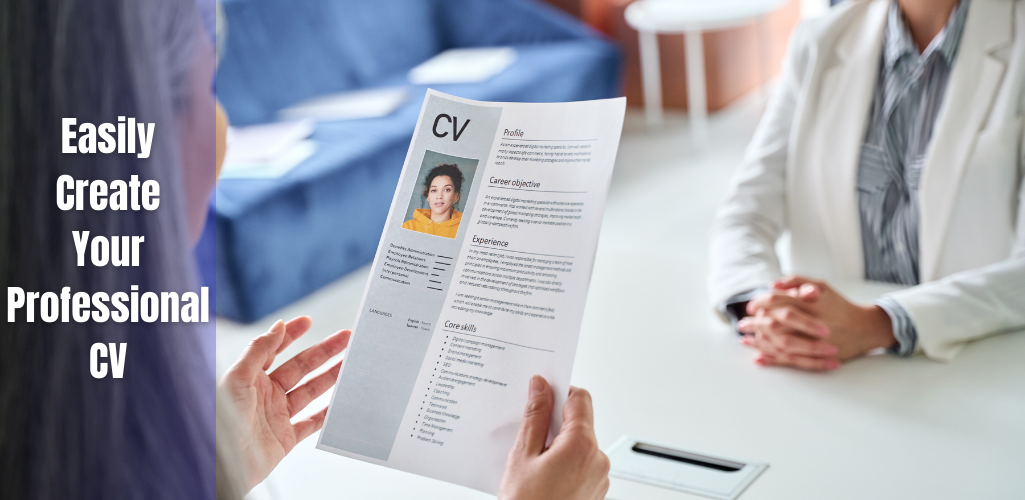
Easily Create Your Professional CV : Free Template & Course Inside!
Imagine getting an email from your dream workplace that says, “We are impressed by your CV and would like to schedule an interview with you.” How amazing would that feel? Well, you can make that happen with the right CV writing skills.
In this guide, you will learn how to create a CV that is simple but attractive, and that showcases your best qualities. You will also get free templates and an exclusive Career Development course that will help you make your CV stand out from the crowd. Are you ready to take the next step in your career? Read on to find out more.
What is a CV?
A CV, or curriculum vitae, is a document that shows your professional and academic achievements, skills, and experiences. It is a complete summary of what you can do, and it helps you make a good first impression when you look for a job. You usually need a CV for jobs in education, research, or outside the UK. A CV differs from a resume, which is shorter and only includes what is relevant to a specific job. You can also write a cover letter with your CV to tell more about yourself and why you want the job.
Social Media Marketing Using TikTok
What are the Key Components of a CV?
Your CV is a document that showcases your professional and academic achievements, skills, and experiences. It is a key tool for making a strong first impression in the job market. To create a great CV, you need to include the essential information that demonstrates your suitability and qualifications for the job. In this guide, you will learn:
- What are the six key parts of a CV and how to write them
- How to tailor your CV to the job you are applying for
- How to format and structure your CV for maximum impact
- Things you don’t need on your CV
- How to avoid common CV mistakes and pitfalls
- How to write a cover letter to complement your CV
- Which keywords and phrases should I include in my CV to make it stand out?
Read on to find out how to create a CV that will impress any company.
What are the Six Key Parts of a CV and How to Write Them
The 6 important parts that every CV should have.
- Contact information
- Profile objective or summary
- Work experience
- Education and qualifications
- Skills
- Additional sections

Let’s learn about these parts to make your CV look good:
Contact Information: This is where you put your name, address, email, phone number, and any other relevant contact information. It should be at the top of your CV and easy to find.
Profile Objective or Summary: This is a short paragraph summarising your skills, experience, and goals related to the job you are applying for. It should capture the attention of the employer and show why you are a good fit for the role.
Work Experience: This is where you list your previous jobs, internships, or volunteer roles in reverse chronological order. You should include the name of the organisation, your position, the dates you worked there, and your main responsibilities and achievements.
Education and Qualifications: This is where you list your academic background, including your degrees, diplomas, certificates, and any other relevant qualifications. You should include the institution’s name, the study level, the subject, and the dates you attended.
Skills: This is where you highlight your relevant skills for the job, such as languages, computer skills, or soft skills. You can use bullet points or a table to organise your skills and show your level of proficiency.
Additional Sections: These are optional sections that you can add to your CV to showcase your hobbies, interests, awards, publications, or any other information that can enhance your application. You should only include these sections if they are relevant and add value to your CV.
How to Tailor Your CV to the Job You are Applying for
Tailoring your CV to the job you are applying for means matching your skills, experience, and achievements to the requirements and expectations of the employer. This way, you can show that you are the best candidate for the role and increase your chances of getting an interview. Here are some steps to tailor your CV to the job you are applying for:
- Read the job description carefully and identify the keywords and phrases that describe the skills, qualifications, and responsibilities of the role.
- Review your CV and highlight the most relevant skills, experience, and achievements that match the keywords and phrases from the job description.
- Adjust your CV to emphasise your alignment with the role. For example, you can rewrite your resume profile, objective or summary to reflect your suitability and goals for the job. You can also reorder your work experience and education sections to put the most relevant ones first. Depending on the job requirements, you can also add or remove skills and additional sections.
- Use the same language and terminology as the job description to show that you understand the employer’s needs and expectations. For example, if the job description mentions “project management”, use the same term instead of “managing projects”.
- Proofread your CV and check for spelling, grammar, and formatting errors. Make sure your CV is clear, concise, and professional.
By following these steps, you can tailor your CV to the job you are applying for and make a strong impression on the employer. If you need more help with your CV writing, you can use some of the resources and courses we have for you.
How to Format and Structure Your CV for Maximum Impact
Getting your CV just right means making it look neat, professional, and straightforward. This way, you make sure the important bits about your skills, experiences, and achievements catch the eye of whoever’s hiring. Let me share some straightforward tips to help you shape up your CV for the best effect:
- Pick an easy-to-read font like Arial or Calibri, keeping the size between 10 and 12.
- Use bullet points and short lines so it's quick to read and understand.
- Organise your CV with clear headings for different sections, such as your contact info, work history, education, skills, and anything else you want to add.
- List your jobs and schooling in reverse chronological order, with the latest ones up top.
- Match the job ad's language to show you're just what they're looking for.
- A bit of colour can make your CV pop, but keep it simple with one or two colours for headings.
- Aim to keep your CV to two pages max.
- Double-check for any typos or mistakes in spelling, grammar, and layout.
By sticking to these pointers, you’ll have a CV that stands out and shows off your best to potential employers. If you’re looking for more help with your CV, Here’s a specially selected course to guide you through how to create an amazing CV.
Things You Don’t Need On Your CV
Your CV should only include the information that is relevant and important for the job you are applying for. You can leave out the following details from your CV:
Photo: Unless the job requires it, you don’t need to include a photo of yourself on your CV. It can take up valuable space and distract the employer from your qualifications.
Unrelated Experience: You don’t need to list every job you have ever had on your CV. Only include the ones that are related to the role you are applying for or that demonstrate your transferable skills.
Long list of hobbies: You don’t need to include a long list of hobbies or interests on your CV. Only include the ones that are relevant to the job or that show your personality and skills.
Salary details: You don’t need to include your current or expected salary on your CV. This can be discussed later in the interview or negotiation stage.
Full address: You don’t need to include your full address on your CV. You can include your city and country or leave it out altogether if you apply for a remote job.
Excessive reference: You don’t need to include more than two or three references on your CV. You can also write “references available upon request” instead of listing them.
Age: You don’t need to include your age or date of birth on your CV. This can lead to age discrimination and is not relevant to your ability to do the job.
How to Avoid Common CV Mistakes and Pitfalls
There are some common CV mistakes and pitfalls that can ruin your chances of getting an interview. Here are some tips to avoid them:
Your CV is a document that showcases your professional and academic achievements, skills, and experiences. It is a key tool for making a strong first impression in the job market. To create a great CV, you need to pay attention to the details and make sure it is error-free, relevant, and impactful. You can use platforms like Grammarly to help you proofread your CV and check for spelling, grammar, and formatting errors. You also need to tailor your CV to the job you are applying for by highlighting your most relevant skills and achievements. You can use the keywords and phrases from the job description to show that you understand the employer’s needs and expectations. You can also use a clear and professional font, bullet points, headings, and dividers to format and structure your CV for maximum impact. You can also use a CV template to save time and ensure consistency. You should keep your CV concise and relevant, ideally no longer than two pages. Avoid including unnecessary or irrelevant information that can distract the employer from your main qualifications. Finally, you should be honest and accurate about your skills, experience, and achievements. Don’t exaggerate or lie on your CV, as this can damage your reputation and credibility.

How to Write a Cover Letter to Complement Your CV
A cover letter is an introductory message that accompanies your CV when applying for a job. The purpose of the cover letter is to persuade the reader to open your CV. To write a cover letter that complements your CV, you should follow these steps:
- Address the cover letter to the hiring manager or the team you are applying to.
- Write an introductory paragraph that introduces yourself and briefly explains why you are interested in the position.
- Write one or two body paragraphs that highlight your relevant skills, experience, and achievements that match the job requirements.
- Write a closing paragraph that expresses your enthusiasm for the role and the company, and prompts the reader to contact you for an interview.
- Sign off with a formal closing and your name.
Which Keywords and Phrases Should I Include in My CV to Make it Stand Out?
To make your CV stand out, use powerful keywords that showcase your achievements and skills. Some examples are:
To make your CV stand out, use powerful keywords that showcase your achievements and skills. Some examples are:
- Improved
- Delivered
- Coached
- Managed
- Led
- Developed
- Increased
- Established
- Accomplished
- Won
- Awarded
- Hard-working
- Adaptable
- Confident
- Accurate
- Innovative
- Proactive
- Reliable
- Responsible
Also, tailor your CV to the specific job by using keywords from the job description. This will help you pass the applicant tracking system and impress the recruiter.
Get the Free Sample CV


Lifetime access to 3000+ courses for just £149!

Exclusive Complimentary Gift for You
Career Development and Passion


0 responses on "Easily Create Your Professional CV : Free Template & Course Inside!"