




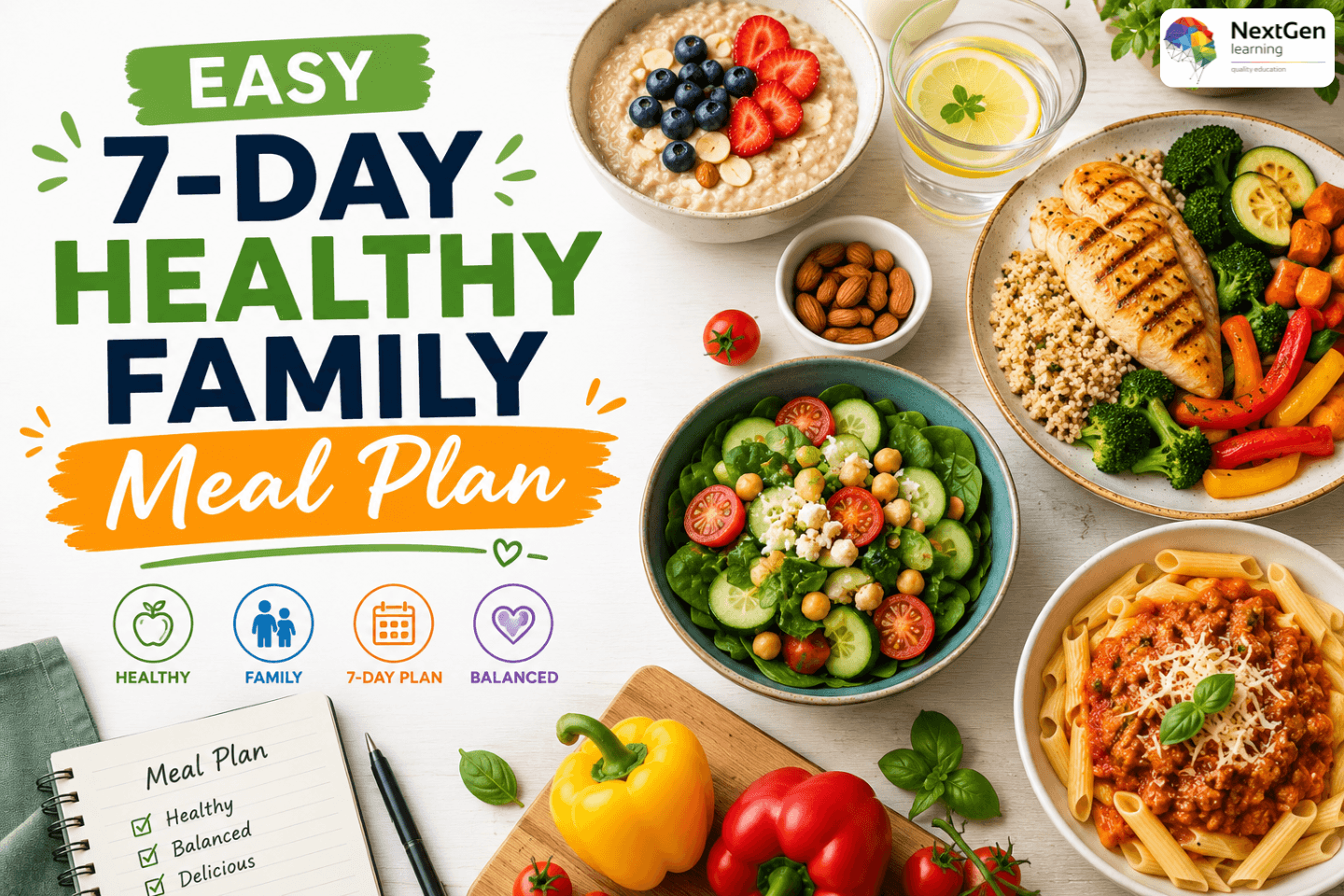
Easy 7-Day Healthy Family Meal Plan
Planning healthy meals for the entire family can often feel overwhelming, especially when balancing busy schedules, different food preferences, and a household budget. However, having a simple meal plan can make healthy eating much easier while reducing daily stress around mealtimes.
A well-structured family meal plan helps ensure everyone enjoys balanced meals that provide essential nutrients, support energy levels, and encourage healthier eating habits. The NHS recommends following a balanced diet that includes a variety of fruits, vegetables, whole grains, and protein-rich foods to support overall health. Moreover, planning meals in advance can reduce food waste, save money on grocery shopping, and minimise last-minute takeaway decisions.
The good news is that healthy family meals do not need to be complicated or expensive. With the right combination of nutritious ingredients, simple recipes, and practical preparation strategies, you can create meals that are both enjoyable and nourishing for the whole family.
This easy 7-day healthy family meal plan provides a full week of breakfast, lunch, and dinner ideas designed to support healthy eating while keeping preparation simple, affordable, and family-friendly.
Table of Contents
Why Following a Healthy Family Meal Plan Matters
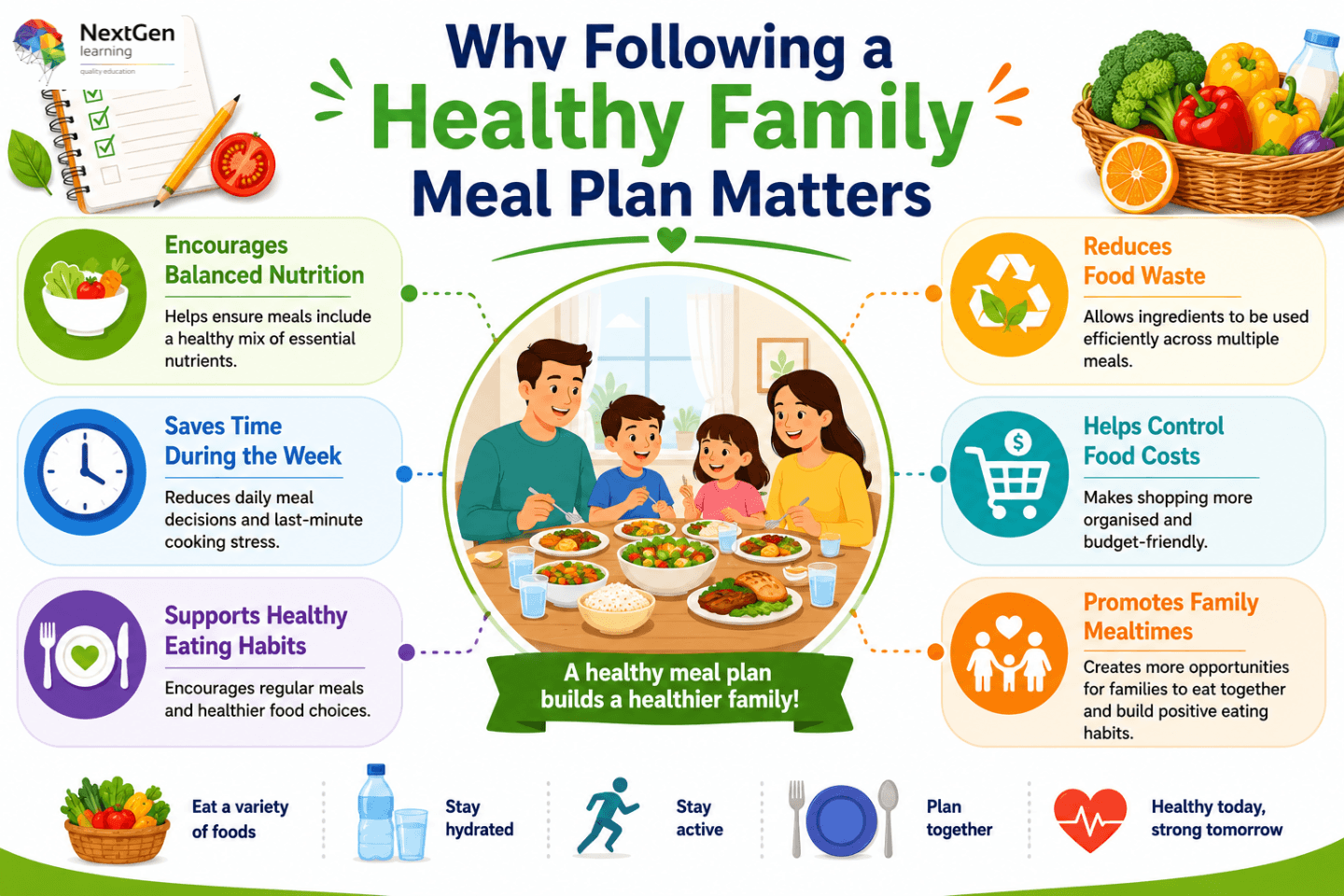
A healthy family meal plan does much more than organise meals for the week. It helps families maintain a balanced diet, develop healthier eating habits, and reduce the stress that often comes with deciding what to cook each day. Moreover, planning meals in advance can improve nutrition by encouraging a wider variety of fruits, vegetables, whole grains, lean proteins, and healthy fats.
For many families, meal planning also offers significant financial benefits. Creating a shopping list based on planned meals can help reduce impulse purchases, minimise food waste, and make grocery budgeting easier. As a result, families can enjoy nutritious meals without overspending.
Following a structured meal plan can provide several advantages:
- Encourages Balanced Nutrition: Helps ensure meals include a healthy mix of essential nutrients.
- Saves Time During the Week: Reduces daily meal decisions and last-minute cooking stress.
- Supports Healthy Eating Habits: Encourages regular meals and healthier food choices.
- Reduces Food Waste: Allows ingredients to be used efficiently across multiple meals.
- Helps Control Food Costs: Makes shopping more organised and budget-friendly.
- Promotes Family Mealtimes: Creates more opportunities for families to eat together and build positive eating habits.
Most importantly, a healthy meal plan creates consistency. Rather than relying on convenience foods or takeaways, families can enjoy nutritious home-cooked meals that support long-term health and wellbeing while fitting into busy lifestyles.
How This 7-Day Healthy Family Meal Plan Works
This meal plan is designed to make healthy eating simple, practical, and achievable for busy families. Each day includes breakfast, lunch, and dinner ideas that focus on balanced nutrition while keeping preparation time manageable. Moreover, many ingredients are used across multiple meals to help reduce food waste and make grocery shopping more cost-effective.
The meals combine lean proteins, whole grains, fruits, vegetables, and healthy fats to support overall health and provide steady energy throughout the day. According to the British Nutrition Foundation, eating a variety of foods from different food groups helps support a balanced and nutritious diet. While the plan offers a complete weekly structure, it can easily be adapted to suit your family’s preferences, dietary requirements, and schedule.
To get the most from this meal plan:
- Plan Your Shopping in Advance: Buy ingredients before the week begins to stay organised.
- Prepare Ingredients Early: Wash, chop, or portion ingredients where possible to save time.
- Use Leftovers Wisely: Repurpose leftover ingredients for lunches and quick meals.
- Stay Flexible: Swap meals between days when needed to fit family commitments.
- Focus on Balance: Aim to include vegetables, protein, and whole grains in most meals.
- Adjust Portions as Needed: Adapt serving sizes based on age, activity levels, and appetite.
Remember, the goal is not perfection but consistency. Even small improvements in meal planning can help families develop healthier eating habits while making mealtimes less stressful and more enjoyable.
7-Day Healthy Family Meal Plan Overview
This simple meal plan provides a full week of balanced breakfasts, lunches, and dinners designed to support healthy eating for the whole family. The meals focus on nutritious ingredients, variety, and practical preparation, making it easier to maintain healthy habits throughout the week.
| Day | Breakfast | Lunch | Dinner |
|---|---|---|---|
| Monday | Berry & Banana Porridge | Chicken Salad Wraps | Baked Salmon, Rice & Vegetables |
| Tuesday | Greek Yogurt with Fruit & Oats | Tuna Pasta Salad | Turkey Meatballs with Wholewheat Pasta |
| Wednesday | Wholegrain Toast with Eggs | Hummus & Veggie Wraps | Chicken Stir-Fry with Brown Rice |
| Thursday | Fruit Smoothie & Toast | Leftover Chicken Stir-Fry | Homemade Vegetable Soup & Wholemeal Bread |
| Friday | Overnight Oats with Berries | Egg & Avocado Sandwich | Fish Pie with Mixed Vegetables |
| Saturday | Scrambled Eggs on Toast | Chicken & Salad Bowl | Homemade Family Pizza with Salad |
| Sunday | Pancakes with Fruit | Roast Chicken Wraps | Roast Chicken, Potatoes & Vegetables |
This meal plan provides a balance of lean protein, whole grains, fruits, and vegetables throughout the week. Moreover, several ingredients are intentionally reused across meals to reduce food waste, save money, and simplify shopping.
The following daily meal plans provide additional details and practical ideas for preparing each meal while keeping healthy eating enjoyable and achievable for the entire family.
Monday

Breakfast: Berry & Banana Porridge
Start the week with a nutritious bowl of porridge topped with fresh berries and sliced banana. Oats provide fibre that helps keep the family feeling fuller for longer, while fruit adds natural sweetness and important vitamins. This quick breakfast is both affordable and easy to prepare on busy mornings.
Lunch: Chicken Salad Wraps
Wholemeal wraps filled with cooked chicken, lettuce, cucumber, tomatoes, and a light yogurt dressing make a balanced and satisfying lunch. Moreover, this meal is a great way to use leftover chicken while increasing vegetable intake throughout the day.
Dinner: Baked Salmon, Rice & Vegetables
For dinner, serve baked salmon with brown rice and a selection of steamed vegetables such as broccoli, carrots, and green beans. Salmon is rich in protein and omega-3 fatty acids, which support heart and brain health. Meanwhile, brown rice and vegetables provide fibre and essential nutrients for a well-balanced family meal.
Why This Day Works
- Provides Lean Protein: Supports growth, muscle maintenance, and overall health.
- Includes Plenty of Fibre: Helps maintain energy levels and supports digestion.
- Contains Fruit and Vegetables: Contributes towards daily nutritional requirements.
- Uses Simple Ingredients: Makes preparation quick and family-friendly.
- Encourages Balanced Eating: Combines protein, healthy carbohydrates, and vegetables in every main meal.
This first day establishes a strong foundation for the week by focusing on simple, nutritious meals that are both satisfying and easy to prepare.
Tuesday
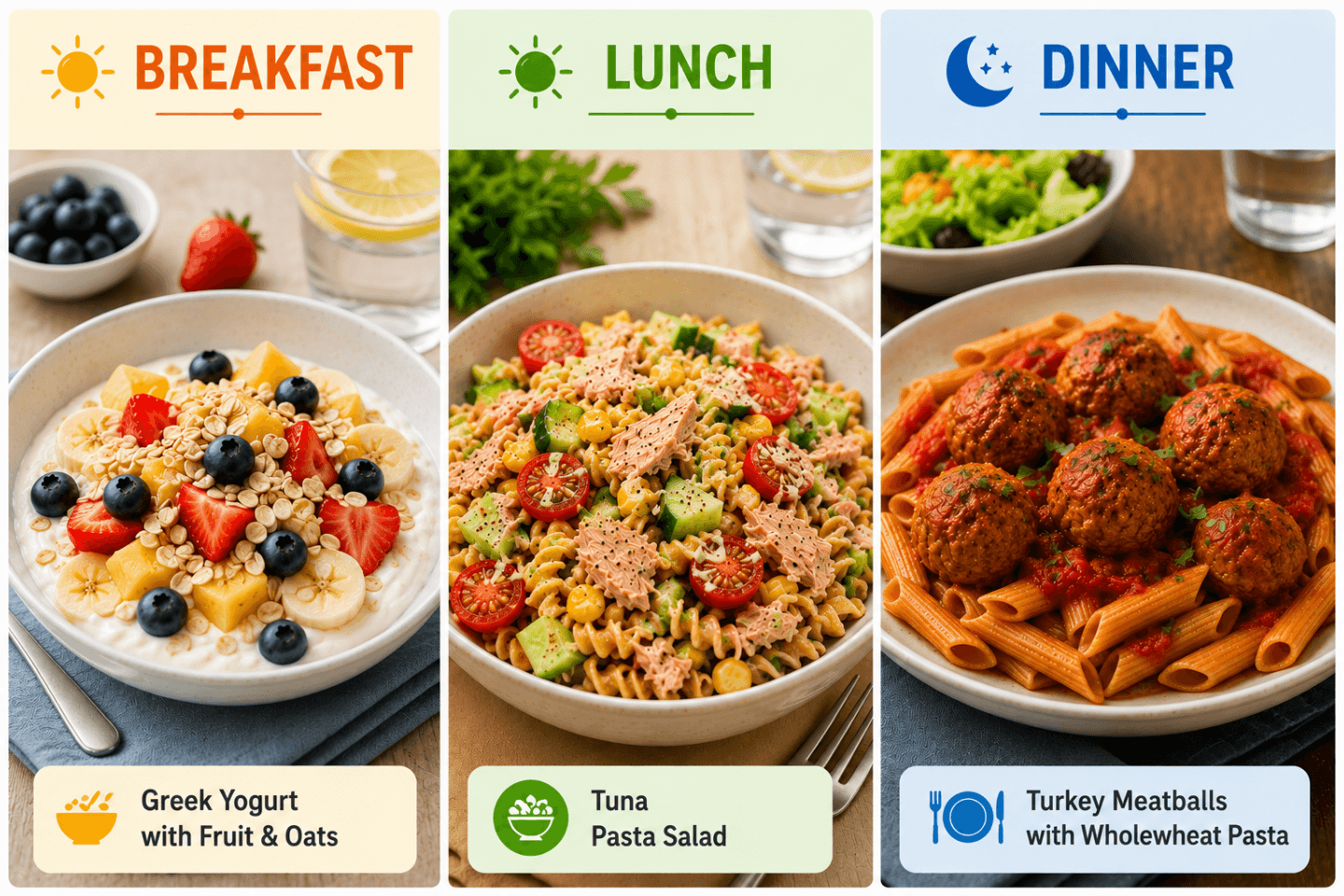
Breakfast: Greek Yogurt with Fruit & Oats
A bowl of Greek yogurt topped with mixed fruit and oats provides a protein-rich start to the day. The yogurt helps keep hunger under control, while the fruit adds vitamins, minerals, and natural sweetness. Moreover, this breakfast takes only a few minutes to prepare, making it ideal for busy family mornings.
Lunch: Tuna Pasta Salad
Tuna pasta salad combines wholewheat pasta, tuna, sweetcorn, cucumber, and cherry tomatoes with a light dressing. This balanced lunch provides protein, fibre, and essential nutrients while being easy to prepare in advance for school or work lunches.
Dinner: Turkey Meatballs with Wholewheat Pasta
Turkey meatballs served with wholewheat pasta and a homemade tomato sauce create a hearty and family-friendly evening meal. Turkey is a lean source of protein, while wholewheat pasta provides longer-lasting energy compared to refined alternatives. Adding extra vegetables to the sauce can further boost the nutritional value.
Why This Day Works
- Provides High-Quality Protein: Supports growth, repair, and overall health.
- Includes Whole Grains: Helps maintain energy levels throughout the day.
- Adds Variety: Introduces different protein sources and flavours.
- Supports Healthy Digestion: Provides fibre from fruit, vegetables, and whole grains.
- Works Well for Meal Prep: Several ingredients can be prepared in advance.
This second day continues to build healthy eating habits by combining nutritious ingredients with simple, practical meals that the whole family can enjoy.
Wednesday

Breakfast: Wholegrain Toast with Eggs
Wholegrain toast topped with boiled, poached, or scrambled eggs provides a simple yet nutritious breakfast. Eggs are an excellent source of protein, while wholegrain bread supplies fibre and slow-release carbohydrates that help maintain energy levels throughout the morning.
Lunch: Hummus & Veggie Wraps
Hummus wraps filled with lettuce, cucumber, carrots, peppers, and spinach offer a colourful and nutrient-rich lunch option. Moreover, they are quick to prepare and provide a good balance of fibre, vitamins, and healthy fats, helping the family stay satisfied between meals.
Dinner: Chicken Stir-Fry with Brown Rice
A chicken stir-fry made with mixed vegetables such as broccoli, peppers, carrots, and green beans is a healthy midweek dinner that can be prepared in under 30 minutes. Served with brown rice, this meal delivers lean protein, fibre, and a wide range of essential nutrients while keeping preparation simple.
Why This Day Works
- Supports Balanced Nutrition: Combines protein, vegetables, and whole grains across all meals.
- Increases Vegetable Intake: Includes a variety of colourful vegetables throughout the day.
- Provides Lasting Energy: Uses wholegrain foods and lean protein sources.
- Quick to Prepare: Ideal for busy weekdays and family schedules.
- Encourages Healthy Eating Habits: Focuses on simple, nutrient-dense ingredients.
This day’s meal plan offers a healthy balance of convenience and nutrition, helping families stay on track with their healthy eating goals while enjoying satisfying and flavourful meals.
Thursday

Breakfast: Fruit Smoothie and Wholegrain Toast
A fruit smoothie made with banana, berries, and milk or yogurt provides a refreshing and nutrient-rich start to the day. Pair it with wholegrain toast to add fibre and keep the family feeling fuller for longer. Moreover, smoothies are a great way to increase fruit intake, especially for children who may be reluctant to eat whole fruit.
Lunch: Leftover Chicken Stir-Fry
Using leftovers from Wednesday’s dinner helps save time while reducing food waste. Reheat the chicken stir-fry and serve it with brown rice or a side salad for a quick and balanced lunch packed with protein and vegetables.
Dinner: Homemade Vegetable Soup with Wholemeal Bread
A warming vegetable soup made with carrots, tomatoes, onions, celery, and other seasonal vegetables is both nutritious and budget-friendly. Serve with wholemeal bread for added fibre and satisfaction. In addition, soup is an excellent way to increase vegetable consumption while keeping family meals simple and affordable.
Why This Day Works
- Reduces Food Waste: Makes good use of leftover ingredients.
- Boosts Vegetable Intake: Includes vegetables in both lunch and dinner.
- Supports Healthy Digestion: Provides fibre from fruits, vegetables, and whole grains.
- Saves Time and Money: Uses simple ingredients that are easy to prepare.
- Keeps Meals Balanced: Combines carbohydrates, protein, and vegetables throughout the day.
This day’s meals focus on convenience, nutrition, and affordability, making healthy eating easier to maintain during a busy week.
Friday

Breakfast: Overnight Oats with Berries
Overnight oats are a convenient and nutritious breakfast option that can be prepared the night before. Combining oats, milk, and fresh berries creates a meal rich in fibre, vitamins, and slow-release energy. As a result, it helps keep the family satisfied throughout the morning while reducing preparation time.
Lunch: Egg and Avocado Sandwich
A wholemeal sandwich filled with sliced boiled eggs, avocado, lettuce, and tomatoes provides a balanced lunch packed with protein and healthy fats. Moreover, this meal is quick to prepare and offers a nutritious alternative to processed lunch options.
Dinner: Fish Pie with Mixed Vegetables
Fish pie is a comforting family favourite that combines fish, vegetables, and a creamy topping. Serve it alongside steamed vegetables such as peas, carrots, and green beans to increase fibre and nutrient intake. Fish also provides important nutrients, including protein and omega-3 fatty acids.
Why This Day Works
- Provides Heart-Healthy Fats: Includes fish and avocado to support overall wellbeing.
- Offers Sustained Energy: Combines protein, fibre, and healthy carbohydrates.
- Supports Family-Friendly Eating: Features familiar meals that appeal to both adults and children.
- Encourages Variety: Introduces different protein sources throughout the day.
- Simple to Prepare: Uses practical ingredients suitable for busy households.
This Friday meal plan balances nutrition and comfort, helping families finish the week with wholesome meals that are both satisfying and easy to prepare.
Saturday

Breakfast: Scrambled Eggs on Wholegrain Toast
Start the weekend with scrambled eggs served on wholegrain toast. Eggs provide high-quality protein, while wholegrain bread supplies fibre and slow-release carbohydrates to help maintain energy levels throughout the morning. In addition, this breakfast is quick to prepare and suitable for the whole family.
Lunch: Chicken and Salad Bowl
A chicken and salad bowl is a light yet satisfying lunch that combines lean protein with a variety of fresh vegetables. Include ingredients such as lettuce, cucumber, tomatoes, peppers, and sweetcorn for added colour, texture, and nutrition. Moreover, leftover chicken can be used to save both time and money.
Dinner: Homemade Family Pizza with Salad
Homemade pizza allows families to enjoy a favourite meal while controlling ingredients and portion sizes. Use a wholemeal pizza base and top it with vegetables, lean protein, and a moderate amount of cheese. Serve with a side salad to increase vegetable intake and create a more balanced meal.
Why This Day Works
- Encourages Family Involvement: Homemade pizza can be prepared together as a family activity.
- Provides Balanced Nutrition: Combines protein, vegetables, and whole grains throughout the day.
- Uses Fresh Ingredients: Helps reduce reliance on highly processed foods.
- Offers Flexibility: Toppings and salad ingredients can be adapted to suit family preferences.
- Supports Healthy Eating Habits: Demonstrates how favourite meals can be made healthier.
This Saturday meal plan combines nutrition, flexibility, and family enjoyment, making healthy eating both practical and enjoyable during the weekend.
Sunday

Breakfast: Pancakes with Fresh Fruit
End the week with a family-friendly breakfast of homemade pancakes topped with fresh fruit such as bananas, berries, or sliced apples. Using fruit instead of sugary syrups helps reduce added sugar while providing important vitamins, minerals, and fibre. Moreover, this breakfast feels like a treat while still supporting healthy eating habits.
Lunch: Roast Chicken Wraps
Roast chicken wraps filled with lettuce, cucumber, tomatoes, and a light yogurt dressing make a quick and nutritious lunch. This meal is also a great way to use leftover roast chicken, helping reduce food waste while providing a good source of lean protein.
Dinner: Roast Chicken, Potatoes and Vegetables
A traditional roast chicken dinner is an excellent way to bring the family together at the end of the week. Serve roasted chicken with potatoes, carrots, broccoli, and other seasonal vegetables for a balanced meal rich in protein, fibre, vitamins, and minerals. In addition, leftovers can be used for lunches during the following week.
Why This Day Works
- Provides a Balanced Family Meal: Combines lean protein, vegetables, and healthy carbohydrates.
- Encourages Family Mealtimes: Creates opportunities to eat together and enjoy home-cooked food.
- Uses Leftovers Efficiently: Reduces food waste and improves meal planning.
- Adds Variety: Includes different fruits and vegetables to support balanced nutrition.
- Prepares for the Week Ahead: Leftover ingredients can be incorporated into future meals.
This final day completes the week’s healthy meal plan by combining nutritious ingredients, family-friendly meals, and practical meal-planning strategies that support long-term healthy eating habits.
Healthy Meal Prep Tips for the Week
Meal preparation is one of the most effective ways to make healthy eating easier and more consistent. By spending a little time preparing ingredients and meals in advance, families can reduce stress during busy weekdays, save money, and avoid relying on convenience foods. Moreover, meal prep helps ensure that nutritious options are always readily available.
You do not need to prepare every meal in advance. Instead, focus on simple tasks that save time throughout the week and make daily cooking more manageable.
Some practical meal prep strategies include:
- Plan Your Weekly Meals: Create a shopping list based on your meal plan before visiting the supermarket.
- Prepare Vegetables Early: Wash, chop, and store vegetables in containers for quick access during cooking.
- Cook Proteins in Batches: Prepare chicken, turkey, or other proteins in advance for use in multiple meals.
- Make Extra Portions: Cook larger quantities and use leftovers for lunches or future dinners.
- Prepare Healthy Snacks: Keep fruit, yogurt, nuts, and vegetable sticks ready for quick snacks.
- Store Meals Properly: Use airtight containers to maintain freshness and improve organisation.
- Freeze Suitable Meals: Soups, casseroles, and pasta dishes can often be frozen for later use.
Meal preparation does not have to be complicated. Even small steps can significantly reduce cooking time and help families stay committed to healthier eating habits. As a result, meal prep can improve consistency, reduce food waste, and make healthy family meals more achievable throughout the week.
Healthy Food Swaps for Better Nutrition
Making small changes to everyday foods can significantly improve the nutritional quality of your family’s diet without making meals feel restrictive. These simple swaps can help reduce added sugar, saturated fat, and highly processed ingredients while increasing fibre, vitamins, and minerals.
| Instead Of | Try |
|---|---|
| White Bread | Wholemeal or Wholegrain Bread |
| Sugary Breakfast Cereals | Porridge Oats or No-Added-Sugar Muesli |
| Crisps | Vegetable Sticks or Unsalted Nuts |
| Sugary Drinks | Water, Milk, or Sugar-Free Drinks |
| White Pasta | Wholewheat Pasta |
| White Rice | Brown Rice |
| Full-Fat Cream Sauces | Greek Yogurt-Based Sauces |
| Fried Foods | Grilled, Baked, or Air-Fried Alternatives |
| Milk Chocolate Snacks | Fresh Fruit or Yogurt |
| Processed Snacks | Homemade Healthy Snacks |
These simple substitutions can help families improve their overall diet while still enjoying familiar foods. The NHS Eatwell Guide encourages healthier food choices and balanced proportions across the main food groups. Moreover, making gradual changes is often more sustainable than attempting major dietary changes all at once. Small improvements made consistently can have a positive impact on long-term health and wellbeing.
Common Healthy Eating Mistakes to Avoid
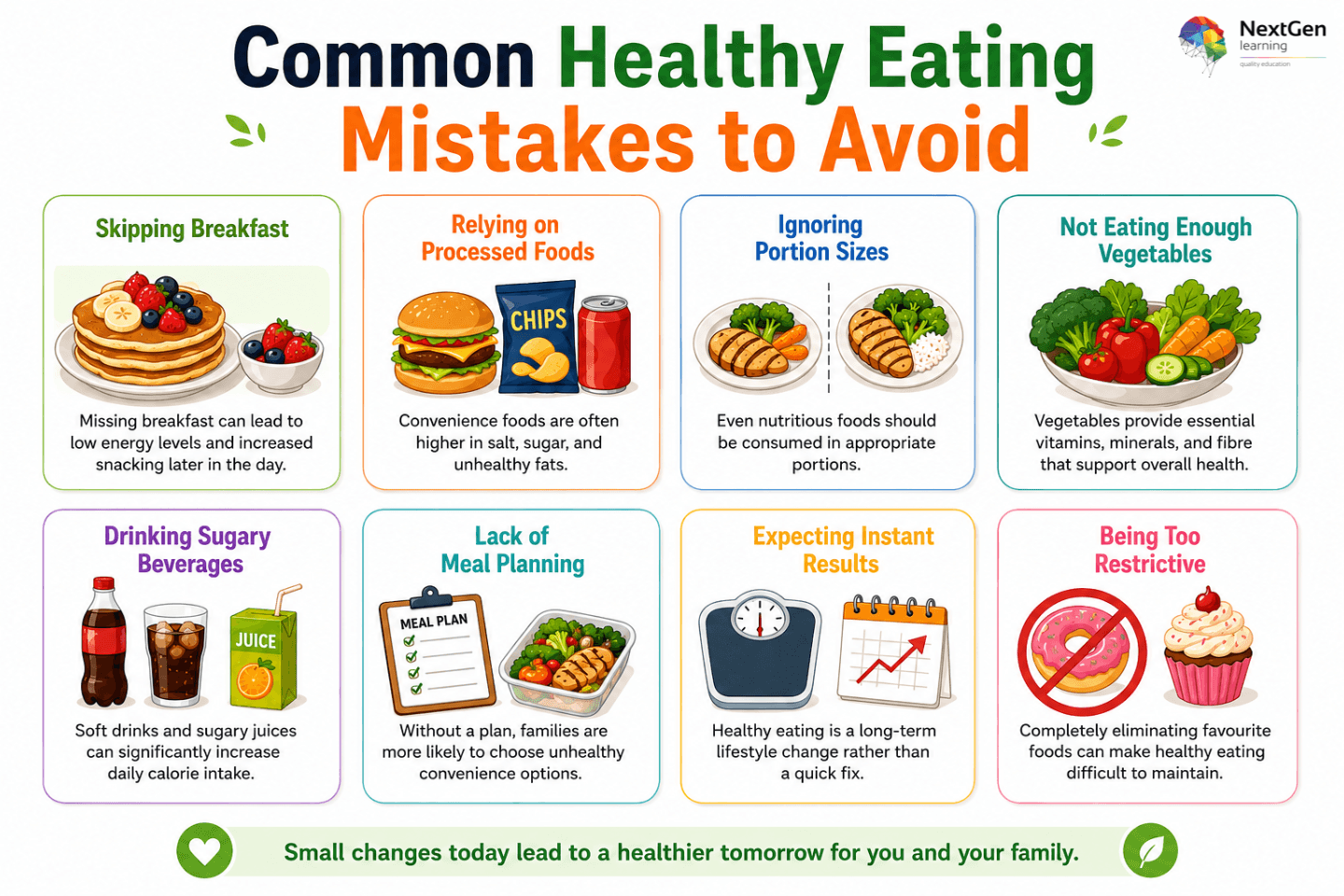
Many families start a healthy eating plan with good intentions but struggle to maintain it because of common mistakes. Fortunately, recognising these challenges can make it easier to build sustainable habits and achieve long-term success. Moreover, healthy eating does not require perfection—small, consistent improvements often deliver the best results.
Avoid these common healthy eating mistakes:
- Skipping Breakfast: Missing breakfast can lead to low energy levels and increased snacking later in the day.
- Relying on Processed Foods: Convenience foods are often higher in salt, sugar, and unhealthy fats.
- Ignoring Portion Sizes: Even nutritious foods should be consumed in appropriate portions.
- Not Eating Enough Vegetables: Vegetables provide essential vitamins, minerals, and fibre that support overall health.
- Drinking Sugary Beverages: Soft drinks and sugary juices can significantly increase daily calorie intake.
- Lack of Meal Planning: Without a plan, families are more likely to choose unhealthy convenience options.
- Expecting Instant Results: Healthy eating is a long-term lifestyle change rather than a quick fix.
- Being Too Restrictive: Completely eliminating favourite foods can make healthy eating difficult to maintain.
Importantly, healthy eating should be flexible and enjoyable. Instead of focusing on strict rules, aim to make balanced choices most of the time. As a result, families are more likely to develop sustainable habits that support long-term health and wellbeing.
How to Make Your Family Meal Plan More Sustainable
A healthy meal plan is most effective when it becomes part of your family’s regular routine rather than a short-term effort. Therefore, focusing on sustainable habits can help maintain healthy eating patterns for the long term. The goal is to create a realistic approach that fits your family’s lifestyle, budget, and preferences.
One of the best ways to make meal planning sustainable is to keep things simple. You do not need a completely different menu every week. Instead, rotate favourite healthy meals, introduce new recipes gradually, and use ingredients that your family already enjoys. Moreover, involving family members in meal planning and preparation can increase engagement and reduce mealtime struggles.
To make healthy eating more sustainable:
- Plan Realistically: Choose meals that fit your schedule and cooking ability.
- Keep Healthy Staples Available: Stock up on fruits, vegetables, whole grains, and lean proteins.
- Use Flexible Recipes: Adapt meals based on available ingredients and family preferences.
- Involve the Whole Family: Encourage children to help choose meals and assist with preparation.
- Allow Occasional Treats: Enjoy favourite foods in moderation without feeling restricted.
- Review and Adjust: Update your meal plan regularly to keep it practical and enjoyable.
Healthy eating is not about achieving perfection. Instead, it is about building habits that can be maintained consistently over time. By making small, manageable changes and focusing on balance rather than restriction, families can create a healthier lifestyle that supports long-term wellbeing.The British Heart Foundation highlights the importance of sustainable healthy eating habits that can be maintained over time.
Frequently Asked Questions
A healthy family meal plan includes a balance of fruits, vegetables, whole grains, lean proteins, and healthy fats. Moreover, it should provide variety throughout the week while limiting highly processed foods, excessive sugar, and unhealthy fats.
Planning meals in advance, creating a shopping list, buying seasonal produce, and using leftovers effectively can help reduce food costs. In addition, preparing meals at home is often more affordable than relying on takeaways or convenience foods.
Yes. Most meals can be adjusted to suit vegetarian, dairy-free, gluten-free, or other dietary requirements. Simply substitute ingredients with suitable alternatives while maintaining a balance of essential nutrients.
Even 30 to 60 minutes of meal preparation can make a significant difference. Preparing vegetables, cooking proteins in advance, and portioning snacks can save time and make healthy eating easier during busy weekdays.
Healthy snack options include fresh fruit, yogurt, vegetable sticks with hummus, unsalted nuts, wholegrain crackers, and homemade smoothies. These snacks provide important nutrients while helping manage hunger between meals.
Involving children in meal planning, shopping, and cooking can increase their interest in healthy foods. Moreover, offering a variety of colourful fruits and vegetables and setting a positive example can help develop healthier eating habits over time.



0 responses on "Easy 7-Day Healthy Family Meal Plan"