





Top 16 Highest Paying Chemistry Jobs in 2026–2027 (Salary & Career Growth Guide)
Chemistry continues to be one of the most valuable and high-paying STEM fields in 2026–2027. From pharmaceuticals and biotechnology to energy, nanotechnology, and environmental science, chemistry professionals play a major role in innovation and industrial growth. As industries continue investing in scientific research and advanced materials, the demand for skilled chemists is rising rapidly across the world.
Moreover, chemistry careers are no longer limited to traditional laboratory roles. Today, chemistry graduates work in drug development, forensic science, sustainable energy, cosmetics, food production, materials engineering, and intellectual property. As a result, professionals with strong chemistry expertise can access excellent salaries, long-term career stability, and global career opportunities.
Importantly, some of the highest paying chemistry jobs now combine science with technology, business, and research leadership. Fields such as medicinal chemistry, chemical engineering, nanotechnology, and patent law continue expanding because companies increasingly rely on scientific innovation to stay competitive. Additionally, emerging sectors like green chemistry and biotechnology are creating entirely new high-income career paths for chemistry professionals.
This guide explores the top 16 highest paying chemistry jobs in 2026–2027, including salary ranges, career growth opportunities, required qualifications, and future demand. Therefore, whether you are a student, chemistry graduate, or working professional planning your next career move, this article will help you identify the best chemistry careers for salary, stability, and long-term success.
Table of Contents
Why Chemistry Careers Are Growing Rapidly in 2026–2027
Chemistry careers are expanding faster than many traditional science roles because industries increasingly depend on research, innovation, and advanced materials. Moreover, global investment in healthcare, sustainable energy, biotechnology, and environmental protection continues creating strong demand for chemistry professionals.
Today, chemists contribute far beyond laboratory research. According to the American Chemical Society, demand for chemistry professionals continues growing across healthcare, energy, and advanced manufacturing industries. They help develop life-saving medicines, improve manufacturing systems, create sustainable materials, and support advanced technologies across multiple industries. As a result, chemistry graduates now have access to wider career opportunities and stronger salary potential than ever before.
Industries Hiring Chemistry Professionals
Several industries actively recruit chemistry graduates because scientific expertise remains essential for research, product development, safety, and innovation.
Top industries hiring chemists include:
- Pharmaceutical Industry: Develop medicines, vaccines, and healthcare products
- Biotechnology Sector: Support genetics, diagnostics, and medical research
- Chemical Manufacturing: Improve industrial production and chemical processes
- Energy Industry: Develop sustainable fuels and renewable energy solutions
- Environmental Science: Support pollution control and sustainability projects
- Food & Cosmetic Industry: Improve product safety, quality, and formulation
Additionally, technology-driven sectors such as nanotechnology and materials science continue increasing demand for chemistry specialists.
Why Chemistry Skills Are in High Demand
Modern industries require professionals who can combine scientific knowledge with analytical thinking and technical expertise. Therefore, chemistry skills remain highly valuable across both research and industrial sectors.
Important high-demand chemistry skills include:
- Laboratory Analysis: Conduct testing, experiments, and quality control
- Problem-Solving: Improve products and industrial processes
- Data Interpretation: Analyse scientific and research findings
- Research Skills: Support innovation and product development
- Technical Knowledge: Understand chemical reactions and materials
Moreover, employers increasingly value chemists who also understand technology, AI tools, sustainability, and regulatory compliance.
Can Chemistry Careers Offer High Salaries?
Yes, chemistry careers can provide excellent salaries, especially in specialised and research-focused industries. Professionals working in pharmaceuticals, chemical engineering, biotechnology, and materials science often earn significantly above average STEM salaries.
Several factors influence chemistry salary growth:
- Education Level: Advanced degrees often increase earning potential
- Industry Specialisation: Pharma and biotech usually offer higher salaries
- Technical Expertise: Specialised laboratory and analytical skills improve pay
- Leadership Experience: Senior and management roles command stronger salaries
- Location & Demand: Major scientific hubs often provide better compensation
Importantly, chemistry careers also offer strong long-term stability because industries will continue depending on scientific innovation, product safety, and advanced research in the future.
Top 16 Highest Paying Chemistry Jobs at a Glance

Choosing the right chemistry career depends on salary potential, industry demand, education level, and long-term growth opportunities. While some chemistry jobs require advanced research qualifications, many high-paying roles are also available for graduates with strong technical skills and industry experience.
Moreover, industries such as pharmaceuticals, biotechnology, energy, and materials science continue offering some of the best salaries for chemistry professionals in 2026–2027. Recent salary and employment data from the U.S. Bureau of Labor Statistics also shows strong long-term demand for chemistry-related careers. Careers that combine chemistry with engineering, research leadership, technology, or intellectual property often provide the highest earning potential.
The table below highlights the top 16 highest paying chemistry jobs along with their average salary ranges, education requirements, and future growth outlook.
| Career | Average Salary | Education Level | Growth Outlook |
|---|---|---|---|
| Research Director | £120,000–£220,000+ | PhD | Very High |
| Medicinal Chemist | £80,000–£175,000+ | Master’s/PhD | Very High |
| Chemical Engineer | £75,000–£170,000+ | Bachelor’s/Master’s | Very High |
| Materials Scientist | £70,000–£160,000+ | Master’s/PhD | High |
| Patent Examiner | £70,000–£150,000+ | Master’s/PhD | High |
| Analytical Chemist | £45,000–£90,000+ | Bachelor’s/Master’s | High |
| Toxicologist | £50,000–£100,000+ | Master’s/PhD | High |
| Forensic Chemist | £40,000–£85,000+ | Bachelor’s/Master’s | Moderate-High |
| Biochemist | £50,000–£110,000+ | Master’s/PhD | High |
| Petrochemical Scientist | £70,000–£150,000+ | Bachelor’s/Master’s | High |
| Environmental Chemist | £45,000–£95,000+ | Bachelor’s/Master’s | High |
| Nanotechnologist | £60,000–£140,000+ | Master’s/PhD | Very High |
| Polymer Chemist | £55,000–£120,000+ | Bachelor’s/Master’s | High |
| Quality Control Chemist | £40,000–£80,000+ | Bachelor’s Degree | Stable |
| Cosmetic Chemist | £45,000–£100,000+ | Bachelor’s/Master’s | High |
| Food Chemist | £45,000–£90,000+ | Bachelor’s/Master’s | High |
Importantly, salary growth often increases through industry experience, specialised certifications, technical expertise, and leadership responsibilities. Additionally, chemistry professionals working in emerging sectors such as green chemistry, nanotechnology, biotechnology, and pharmaceutical innovation are expected to see particularly strong career growth over the coming years.


1. Research Director
Research Directors are senior chemistry professionals who lead major research projects in pharmaceuticals, biotechnology, and scientific innovation. They manage research teams, guide product development, and help companies turn scientific ideas into real-world solutions.
- Average Salary: £120,000–£220,000+ per year
- Main Role: Lead research teams and manage high-value scientific projects
- Required Qualification: PhD in Chemistry, Pharmaceutical Science, or related field
- Career Demand: Very high in pharma, biotech, and medical research
- Why It Pays Well: Research Directors make strategic decisions that affect drug discovery, innovation, and company growth
This role is best for experienced chemists with strong leadership, research, and project management skills.
2. Medicinal Chemist

Medicinal Chemists develop and test chemical compounds used in medicines and pharmaceutical products. They play a major role in drug discovery by improving the safety and effectiveness of treatments.
- Average Salary: £80,000–£175,000+ per year
- Main Role: Design and develop new pharmaceutical compounds
- Required Qualification: Master’s or PhD in Medicinal Chemistry or Pharmaceutical Science
- Career Demand: Very high in pharmaceutical and biotech industries
- Why It Pays Well: Medicinal Chemists directly contribute to drug development and medical innovation
This career is ideal for chemistry professionals interested in pharmaceuticals, laboratory research, and healthcare innovation.
3. Chemical Engineer
Chemical Engineers design and improve industrial processes used to produce chemicals, medicines, fuels, and advanced materials. They combine chemistry with engineering to increase efficiency, safety, and production quality.
- Average Salary: £75,000–£170,000+ per year
- Main Role: Develop and optimise chemical manufacturing processes
- Required Qualification: Bachelor’s or Master’s in Chemical Engineering or Chemistry
- Career Demand: Very high in energy, pharma, and manufacturing industries
- Why It Pays Well: Chemical Engineers manage large-scale industrial systems and high-value production operations
This career suits chemistry professionals who enjoy problem-solving, process design, and industrial innovation.
4. Materials Scientist
Materials Scientists study and develop advanced materials used in industries such as aerospace, electronics, healthcare, and energy. They improve the strength, durability, and performance of materials for modern technologies.
- Average Salary: £70,000–£160,000+ per year
- Main Role: Develop and test advanced industrial materials
- Required Qualification: Master’s or PhD in Materials Science or Chemistry
- Career Demand: High in technology, manufacturing, and energy sectors
- Why It Pays Well: Materials Scientists support innovation in high-value industries and advanced product development
This career is ideal for chemistry professionals interested in research, technology, and material innovation.
5. Patent Examiner
Patent Examiners with a chemistry focus review scientific inventions and chemical discoveries to determine whether they qualify for legal patent protection. They work closely with intellectual property, pharmaceuticals, and research innovation.
- Average Salary: £70,000–£150,000+ per year
- Main Role: Review and evaluate chemistry-related patent applications
- Required Qualification: Master’s or PhD in Chemistry or related field
- Career Demand: High in pharmaceutical, biotech, and legal sectors
- Why It Pays Well: Patent Examiners combine scientific expertise with intellectual property knowledge
This career is ideal for chemistry professionals interested in research, innovation, and patent law.
6. Analytical Chemist
Analytical Chemists study and test chemical substances to identify their composition, quality, and safety. They work in laboratories across pharmaceuticals, environmental science, food production, and manufacturing industries.
- Average Salary: £45,000–£90,000+ per year
- Main Role: Analyse chemical samples and laboratory data
- Required Qualification: Bachelor’s or Master’s in Chemistry or Analytical Chemistry
- Career Demand: High in laboratory, healthcare, and industrial sectors
- Why It Pays Well: Analytical Chemists support product safety, research accuracy, and quality control across major industries
This career is ideal for chemistry professionals who enjoy laboratory testing, scientific analysis, and research work.
7. Food Chemist

Food Chemists study the chemical composition of food to improve quality, safety, nutrition, and shelf life. They work closely with food manufacturers, research laboratories, and health industries to develop safe and innovative food products.
- Average Salary: £45,000–£90,000+ per year
- Main Role: Analyse and improve food products and ingredients
- Required Qualification: Bachelor’s or Master’s in Food Chemistry or Chemistry
- Career Demand: High in food production, nutrition, and manufacturing industries
- Why It Pays Well: Food Chemists help ensure food safety, product quality, and innovation in global food industries
This career is ideal for chemistry professionals interested in food science, nutrition, laboratory research, and product development.
8. Forensic Chemist
Forensic Chemists use chemical analysis to investigate crimes and examine evidence collected from crime scenes. They work with substances such as drugs, toxins, blood samples, and unknown chemicals to support criminal investigations.
- Average Salary: £40,000–£85,000+ per year
- Main Role: Analyse chemical evidence for forensic investigations
- Required Qualification: Bachelor’s or Master’s in Forensic Chemistry or Chemistry
- Career Demand: Moderate to high in forensic laboratories and law enforcement agencies
- Why It Pays Well: Forensic Chemists provide critical scientific evidence used in legal and criminal cases
This career is ideal for chemistry professionals interested in criminal science, laboratory analysis, and investigative research.
9. Biochemist
Biochemists study the chemical processes that occur inside living organisms. They help improve healthcare, pharmaceuticals, genetics, and biotechnology through laboratory research and scientific analysis.
- Average Salary: £50,000–£110,000+ per year
- Main Role: Research biological and chemical processes in living systems
- Required Qualification: Master’s or PhD in Biochemistry or Chemistry
- Career Demand: High in healthcare, biotech, and pharmaceutical industries
- Why It Pays Well: Biochemists contribute to medical research, drug development, and biotechnology innovation
This career is ideal for chemistry professionals interested in biology, healthcare research, and laboratory science.
10. Petrochemical Scientist

Petrochemical Scientists develop and improve chemicals and fuels made from petroleum and natural gas. They work in energy, manufacturing, and industrial production to support large-scale chemical operations.
- Average Salary: £70,000–£150,000+ per year
- Main Role: Research and develop petrochemical products and processes
- Required Qualification: Bachelor’s or Master’s in Chemistry or Chemical Engineering
- Career Demand: High in energy, oil, and industrial sectors
- Why It Pays Well: Petrochemical Scientists work in large-scale industries with high production value and technical complexity
This career is ideal for chemistry professionals interested in energy systems, industrial chemistry, and process innovation.
11. Environmental Chemist
Environmental Chemists study chemicals in air, water, and soil to help reduce pollution and improve environmental safety. They support sustainability projects, environmental testing, and climate-related research.
- Average Salary: £45,000–£95,000+ per year
- Main Role: Analyse environmental pollutants and chemical contamination
- Required Qualification: Bachelor’s or Master’s in Environmental Chemistry or Chemistry
- Career Demand: High in environmental science and sustainability sectors
- Why It Pays Well: Environmental Chemists help industries meet environmental regulations and sustainability goals
This career is ideal for chemistry professionals interested in environmental protection, sustainability, and scientific research.
12. Nanotechnologist
Nanotechnologists work with extremely small materials and particles to develop advanced products for healthcare, electronics, energy, and biotechnology industries. The growing importance of nanotechnology research continues creating high-demand opportunities in science and engineering sectors. Their research supports innovation in modern science and technology.
- Average Salary: £60,000–£140,000+ per year
- Main Role: Develop and study materials at the nanoscale level
- Required Qualification: Master’s or PhD in Nanotechnology, Chemistry, or Materials Science
- Career Demand: Very high in technology, healthcare, and research sectors
- Why It Pays Well: Nanotechnologists contribute to cutting-edge scientific and industrial innovation
This career is ideal for chemistry professionals interested in advanced technology, research, and future-focused scientific development.
13. Polymer Chemist
Polymer Chemists develop and improve materials such as plastics, coatings, adhesives, rubbers, and synthetic fibres. Their work supports industries including automotive, healthcare, packaging, and manufacturing.
- Average Salary: £55,000–£120,000+ per year
- Main Role: Create and test polymer-based materials and products
- Required Qualification: Bachelor’s or Master’s in Polymer Chemistry or Chemistry
- Career Demand: High in manufacturing, healthcare, and industrial sectors
- Why It Pays Well: Polymer Chemists help develop advanced materials used in high-demand commercial industries
This career is ideal for chemistry professionals interested in material development, industrial research, and product innovation.
14. Quality Control Chemist
Quality Control Chemists test raw materials and finished products to ensure they meet safety, quality, and industry standards. They play an important role in pharmaceuticals, food production, cosmetics, and chemical manufacturing.
- Average Salary: £40,000–£80,000+ per year
- Main Role: Test products and maintain quality standards
- Required Qualification: Bachelor’s degree in Chemistry or related field
- Career Demand: Stable across pharmaceutical, manufacturing, and food industries
- Why It Pays Well: Quality Control Chemists help companies maintain product safety, compliance, and customer trust
This career is ideal for chemistry professionals interested in laboratory testing, product safety, and industrial quality management.
15. Cosmetic Chemist

Cosmetic Chemists develop skincare, makeup, haircare, and beauty products by combining chemistry with product formulation and safety testing. They help create innovative cosmetic products that meet consumer and industry standards.
- Average Salary: £45,000–£100,000+ per year
- Main Role: Formulate and test cosmetic and beauty products
- Required Qualification: Bachelor’s or Master’s in Cosmetic Chemistry or Chemistry
- Career Demand: High in beauty, skincare, and personal care industries
- Why It Pays Well: Cosmetic Chemists support product innovation in a fast-growing global beauty market
This career is ideal for chemistry professionals interested in skincare science, beauty product development, and formulation research.
16. Toxicologist
Toxicologists study how chemicals, drugs, and harmful substances affect humans, animals, and the environment. They help improve product safety, healthcare research, and environmental protection.
- Average Salary: £50,000–£100,000+ per year
- Main Role: Test and analyse the effects of chemicals and substances
- Required Qualification: Master’s or PhD in Toxicology or Chemistry
- Career Demand: High in pharmaceutical, environmental, and healthcare sectors
- Why It Pays Well: Toxicologists support drug safety, regulatory compliance, and public health protection
This career is ideal for chemistry professionals interested in laboratory research, healthcare safety, and environmental science.
Best Degrees & Certifications for High-Paying Chemistry Careers
Choosing the right qualification can significantly improve salary potential and career growth in chemistry-related industries. Moreover, specialised degrees and certifications help professionals access advanced research, industrial, and leadership positions.
The table below highlights some of the best educational pathways for high-paying chemistry careers in 2026–2027.
| Qualification | Best Career Path | Salary Impact |
|---|---|---|
| PhD in Chemistry | Research Director | Very High |
| MSc in Medicinal Chemistry | Medicinal Chemist | High |
| Chemical Engineering Degree | Chemical Engineer | Very High |
| MSc in Materials Science | Materials Scientist | High |
| Patent Law Certification | Patent Examiner | High |
| MSc in Toxicology | Toxicologist | High |
| Nanotechnology Degree | Nanotechnologist | Very High |
| Biochemistry Degree | Biochemist | High |
| Quality Management Certification | Quality Control Chemist | Moderate-High |
| Cosmetic Science Certification | Cosmetic Chemist | Moderate-High |
Importantly, advanced qualifications often increase access to leadership roles, specialised research positions, and higher-paying industries. Additionally, chemistry professionals who continue building technical expertise and industry certifications usually achieve stronger long-term career growth.
Future Trends in High-Paying Chemistry Careers
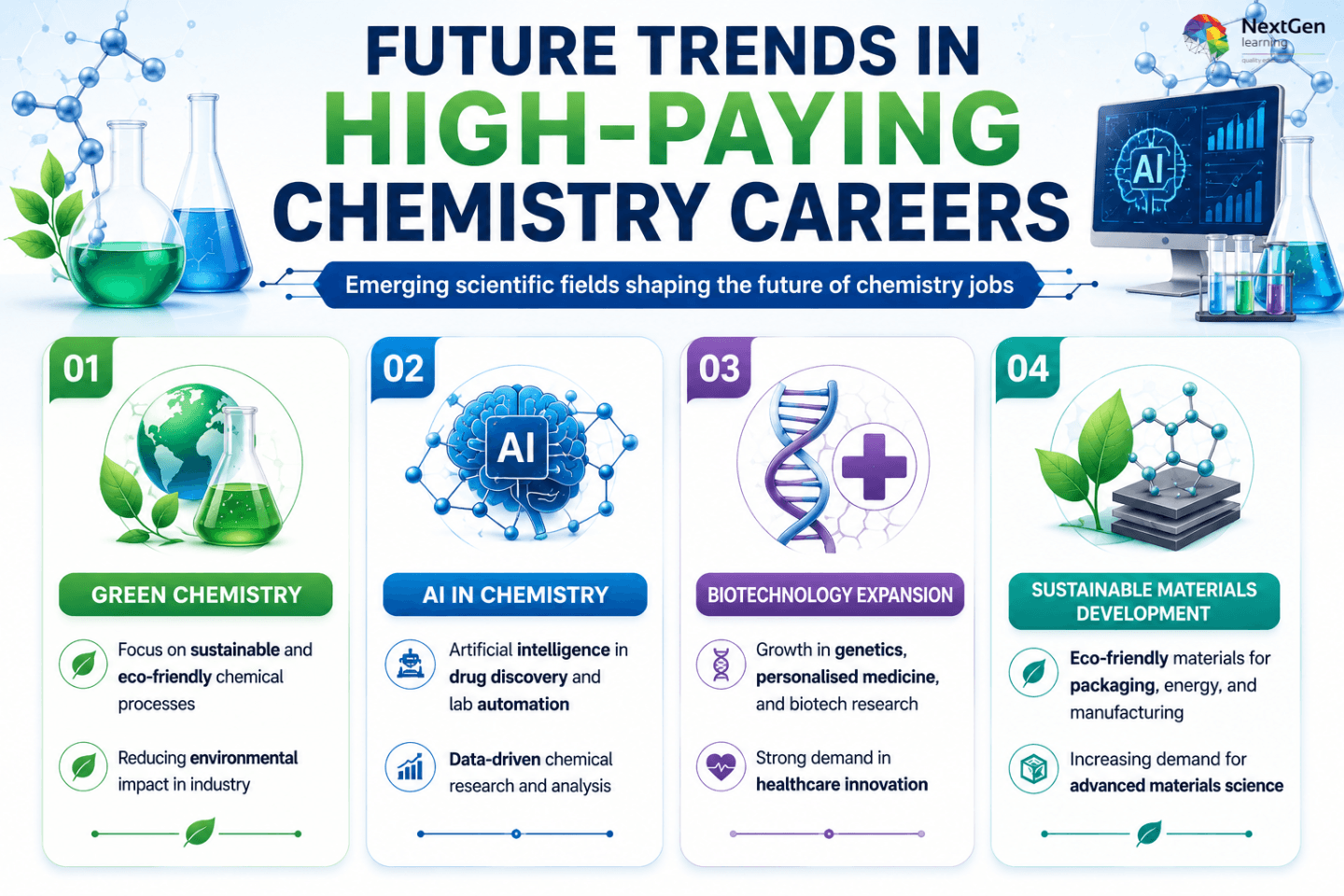
The chemistry industry is changing rapidly because of scientific innovation, sustainability goals, and technological advancement. Research published by the Royal Society of Chemistry highlights increasing investment in sustainable chemistry and scientific innovation. As a result, several emerging fields are expected to create strong career opportunities and higher salaries in the coming years.
Green Chemistry
Green chemistry focuses on developing environmentally friendly chemicals and sustainable industrial processes. Companies increasingly invest in eco-friendly production methods to reduce environmental impact and improve sustainability.
AI in Chemistry
Artificial intelligence is transforming laboratory research, drug discovery, and chemical analysis. Therefore, chemistry professionals with AI and data analysis skills are becoming more valuable across pharmaceutical and biotech industries.
Biotechnology Expansion
Biotechnology continues growing rapidly because of advances in genetics, personalised medicine, and healthcare innovation. Consequently, chemistry professionals working in biotech research often access strong salaries and career progression opportunities.
Sustainable Materials Development
Industries increasingly demand sustainable materials for manufacturing, packaging, energy, and healthcare applications. This trend continues creating strong opportunities for materials scientists, polymer chemists, and environmental chemistry specialists.
Frequently Asked Questions
Research Directors and senior pharmaceutical scientists are among the highest paid chemistry professionals. In large biotech and pharmaceutical companies, salaries can exceed £200,000 per year. Additionally, leadership and specialised research roles usually offer the strongest earning potential.
Yes, chemistry remains a strong career choice because industries continue investing in healthcare, biotechnology, sustainability, and advanced materials. Moreover, chemistry professionals are needed across many high-growth industries. As a result, long-term job demand remains very stable.
Pharmaceutical chemistry, chemical engineering, biotechnology, and research leadership roles often offer the highest salaries. Additionally, specialised areas such as nanotechnology and patent law can provide excellent earning potential. Salary levels usually increase with experience and technical expertise.
Yes, many chemistry professionals earn over £100,000 per year in senior, specialised, or management positions. Careers in pharmaceuticals, petrochemicals, and research leadership often provide the highest salaries. Advanced qualifications and industry experience also improve earning potential significantly.
Nanotechnology, biotechnology, environmental chemistry, and medicinal chemistry are among the fastest-growing chemistry careers. These industries continue expanding because of scientific innovation and sustainability goals. Consequently, demand for skilled chemistry professionals is rising rapidly.
Not all chemistry careers require a PhD qualification. Many roles, such as Chemical Engineer, Quality Control Chemist, and Cosmetic Chemist, offer strong salaries with a bachelor’s or master’s degree. However, research and leadership positions often prefer advanced education.
Pharmaceuticals, biotechnology, manufacturing, energy, food production, and environmental science are among the largest employers of chemistry professionals. Moreover, industries increasingly depend on chemists for research, product safety, and innovation. This creates diverse career opportunities worldwide.
Yes, chemistry careers are expected to remain highly valuable because industries will continue needing scientific research, sustainable solutions, and healthcare innovation. Additionally, emerging technologies such as AI and biotechnology are creating new chemistry-related career paths. Therefore, chemistry remains a strong long-term career choice.



0 responses on "Top 16 Highest Paying Chemistry Jobs in 2026–2027 (Salary & Career Growth Guide)"