





How to Become a Healthcare Assistant: Duties, Pay, and Career Path
Are you seeking a rewarding career in healthcare that offers competitive pay and growth opportunities without requiring a medical degree? If so, becoming a healthcare assistant in the UK could be your perfect career path. With rising demand, flexible roles, and CPD-accredited training options, there’s never been a better time to start.
In this healthcare assistant guide, we’ll explore the duties, pay rates, qualifications, and career progression of healthcare assistants — plus tips on how to get started and stand out in your interviews.
Table of Contents
What Is a Healthcare Assistant? (UK Job Profile)
A healthcare assistant (HCA) plays a vital role in the UK’s health and social care sector. Often working in NHS hospitals, GP practices, or residential care homes, HCAs provide direct support to patients and assist nurses and doctors with day-to-day care.
A typical healthcare assistant job profile includes:
- Helping patients with daily personal care
- Monitoring vital signs such as temperature, pulse, and blood pressure
- Supporting patients with mobility and meals
- Assisting nurses with medical procedures
- Keeping records up to date
Healthcare assistants are sometimes referred to as nursing auxiliaries, clinical support workers, or caregivers in various care settings.
Healthcare Assistant vs Care Assistant: What’s the Difference?
Healthcare Assistant and Care Assistant are sometimes used interchangeably, but the roles can differ depending on the employer and setting.
Healthcare Assistants are commonly based in hospitals, clinics, GP practices or other healthcare environments, where they support patients and work alongside nurses and other healthcare professionals.
Care Assistants are more commonly associated with residential care, domiciliary care, supported living and other social care environments, where the emphasis may be on personal care, everyday living and independence.
The exact responsibilities vary between employers, so always check the individual job description rather than relying on the job title alone.
If you are specifically interested in patient-facing healthcare support, you may also find our Nursing Assistant training guide useful when comparing related healthcare-support roles.
Duties and Responsibilities
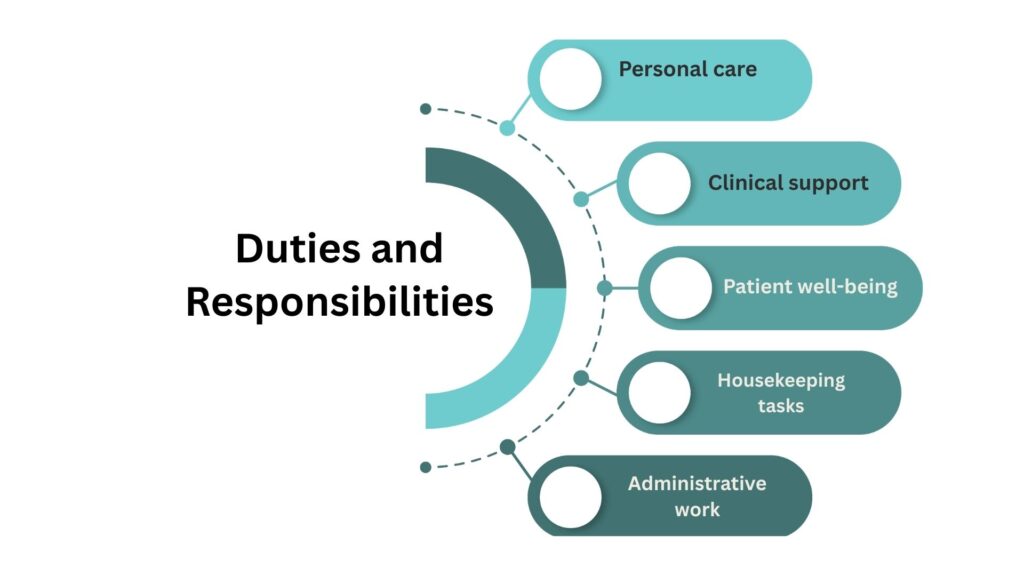
The duties and responsibilities of a healthcare assistant vary by setting, but usually include:
- Personal care – washing, dressing, toileting, and feeding patients
- Clinical support – checking vital signs, taking samples, and preparing equipment
- Patient well-being – offering companionship, reassurance, and emotional support
- Housekeeping tasks – keeping patient areas clean and safe
- Administrative work – updating patient notes and supporting medical staff
This hands-on role requires compassion, patience, and excellent communication skills.
Skills and Qualifications Needed
There are no universal entry qualifications for every Healthcare Assistant role in the UK. Requirements vary between employers and healthcare settings.
Employers commonly look for good literacy and numeracy skills, a caring attitude, strong communication, reliability and the ability to work effectively as part of a healthcare team.
Some vacancies may ask for GCSEs or equivalent qualifications in English and Maths, previous care experience, or a relevant health and social care qualification.
Relevant learning can strengthen your knowledge and demonstrate commitment, but always check the essential and desirable criteria listed in the individual vacancy before applying.
How to Become a Healthcare Assistant in the UK
There is no single route into Healthcare Assistant work. Entry requirements vary by employer, but many people begin by applying for entry-level healthcare support roles and completing workplace training after they are recruited.
Step 1: Build Relevant Experience
Previous healthcare experience is not always essential, but relevant experience can strengthen your application.
This could include paid care work, volunteering, supporting people in community settings or transferable experience from customer-facing and support roles.
Step 2: Search for Healthcare Assistant Vacancies
Look for Healthcare Assistant, Healthcare Support Worker, Clinical Support Worker and similar roles through NHS Jobs, NHS trust websites and other healthcare employers.
Read each job description carefully because qualification and experience requirements vary between vacancies.
Step 3: Prepare Your Application
Use your application to demonstrate qualities relevant to patient care, including communication, empathy, reliability, teamwork, dignity, safeguarding awareness and willingness to learn.
Where possible, use examples from employment, volunteering, education or other responsibilities.
Step 4: Complete Employer Training
Once employed, you will normally complete induction and role-specific training. Depending on the position, this may include safeguarding, infection prevention, moving and handling, health and safety, communication and supervised workplace competencies.
The Care Certificate may also form part of induction for relevant health and social care roles.
Step 5: Continue Developing Your Skills
After gaining workplace experience, you may choose further training, apprenticeships or qualifications that support your longer-term career goals.
Progression requirements depend on the next role, so check the specific criteria rather than assuming that one course automatically leads to promotion.
Pay Rates in the UK
Healthcare assistant pay rates depend on location, employer, and experience.
For NHS staff in England covered by Agenda for Change, Healthcare Assistant and Healthcare Support Worker roles may appear at different pay bands depending on the responsibilities of the vacancy.
For 2026/27, the basic annual NHS Agenda for Change rates include:
Band 2: £25,272
Band 3: £25,760 to £27,476
Not every Healthcare Assistant role is automatically Band 2 or Band 3, so always check the pay band and responsibilities shown in the individual vacancy.
You can check the latest official rates on the NHS Employers Agenda for Change pay scales page.
Shift work, weekends, nights and additional responsibilities may affect overall earnings depending on the employer and contract.

Healthcare Assistant Job Opportunities and Career Progression
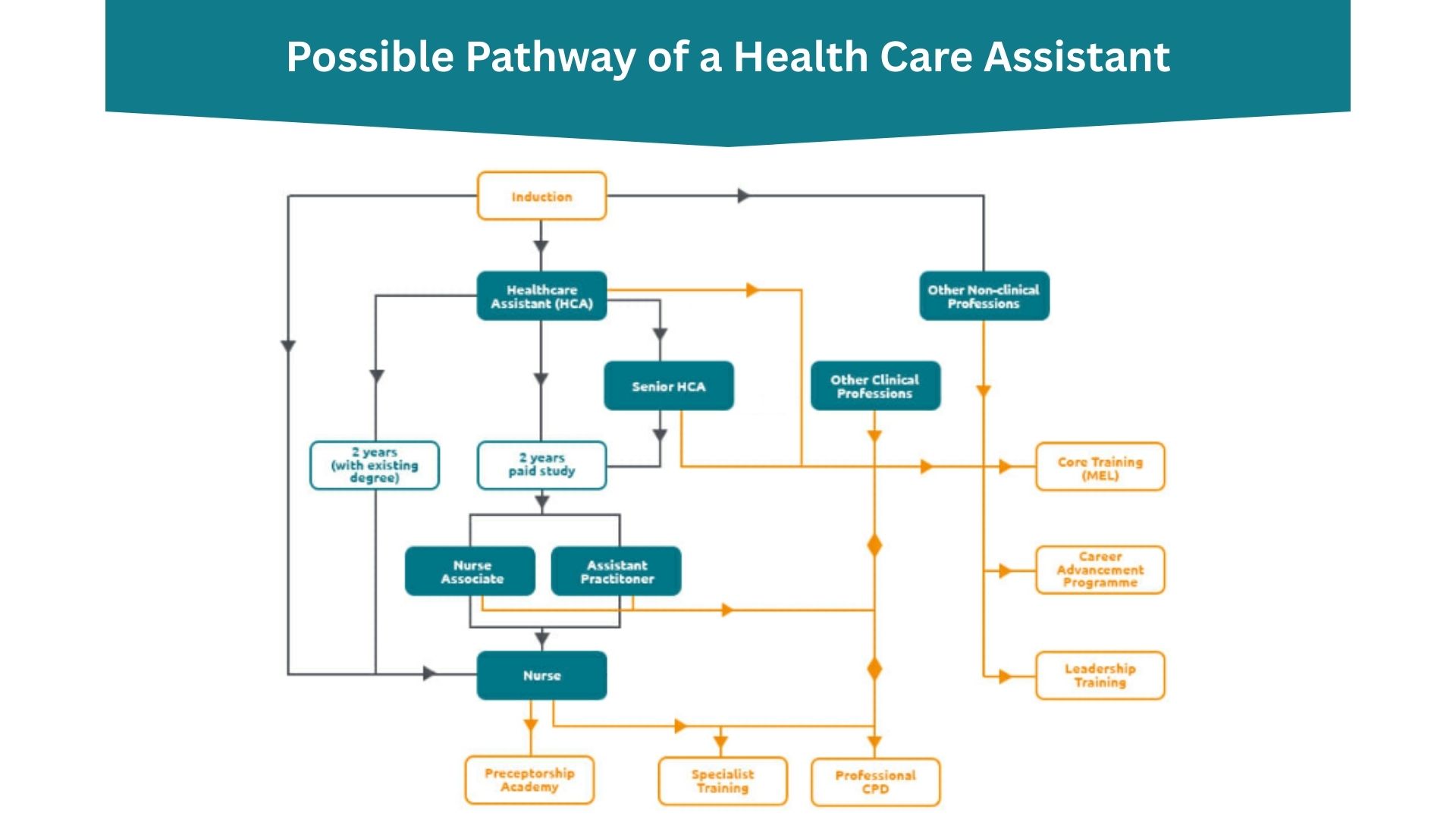
The demand for HCAs is rising due to an ageing population and NHS staff shortages. Career pathways include:
- Senior Healthcare Assistant
- Assistant Practitioner
- Nursing Associate
- Registered Nurse (via nursing degree apprenticeships)
Career progression depends on your experience, competence, employer requirements and any qualifications or training required for the role you want to move into.
Interview Questions for Healthcare Assistant Roles
Preparing for interviews is essential. Here are some common interview questions for healthcare assistant jobs:
- Why do you want to be a healthcare assistant?
- What are the most important skills for a healthcare assistant?
- How would you handle a distressed patient?
- What do you understand about safeguarding in health and social care?
- Can you give an example of when you worked in a team?
Employers are looking for candidates who show empathy, reliability, and awareness of patient dignity.
Training and Education Pathways
To become an HCA in the UK:
- Apply for entry-level healthcare assistant jobs with training provided.
- Gain qualifications such as the Level 2 or Level 3 Diploma in Health and Social Care.
Undertake CPD-accredited short courses (e.g. safeguarding, dementia care, first aid).
Choosing Training for Healthcare Assistant Knowledge
Different training routes support different learning goals.
If you want patient-facing knowledge around areas such as communication, infection control, safeguarding, personal care and supporting patients, you can review our Level 3 Nursing Assistant course to see whether its curriculum matches what you want to learn.
If you are still deciding between Nursing Assistant training, broader Health and Social Care Level 3 learning and Care Certificate training, compare the differences in our Best Health and Social Care Courses UK guide.
Healthcare Assistant Job Outlook in the UK
According to the NHS Workforce Statistics (2024), there are over 260,000 HCAs employed across England, making it one of the largest workforces in healthcare.
Trends to note:
- High demand – NHS vacancy rates remain above 8%.
- Flexible working – bank and agency roles provide shift variety.
Career security – healthcare assistants are essential frontline staff.
Key Takeaways
- A healthcare assistant job is a stable and rewarding career in the UK.
- Core responsibilities include personal care, clinical support, and patient well-being.
- Pay starts at £22k+ in NHS roles, with opportunities to progress.
- Relevant training can help you strengthen your healthcare knowledge, while career progression depends on workplace experience, competence and the requirements of the role you want to pursue.
- Interview prep and CPD training make candidates stand out.

Where to Go Next
If becoming a Healthcare Assistant is your main goal and you want to develop patient-facing care knowledge, review our Level 3 Nursing Assistant course to see the curriculum and learning format.
If you are not yet sure whether Nursing Assistant training, broader Health and Social Care Level 3 learning or Care Certificate training is most suitable, use our Best Health and Social Care Courses UK comparison before choosing.
For a more detailed look at the closely related Nursing Assistant route, read our How to Become a Nursing Assistant guide.
FAQs About HCA Careers
Q1: What is the difference between a healthcare assistant and a support worker?
A healthcare assistant usually works in hospitals or clinical settings, while support workers may focus more on community and social care.
Q2: What is the average salary for a Care Assistant or Health Care Assistant salary per month in UK?
Healthcare Assistant pay varies by employer, role, location and responsibilities. In England, the 2026/27 NHS Agenda for Change basic salary is £25,272 at Band 2 and £25,760 to £27,476 at Band 3. Individual Healthcare Assistant vacancies may use different bands depending on the role, so always check the job advert.
Q3: What qualifications do I need to become a healthcare assistant?
There are no universal qualification requirements for every Healthcare Assistant role. Employers usually expect good literacy, numeracy, communication and interpersonal skills, while some vacancies may ask for GCSEs, previous care experience or a relevant health or social care qualification. Always check the requirements of the individual vacancy.
Q4: Are healthcare assistant jobs in demand?
Yes. With NHS shortages and an ageing population, demand for HCAs continues to rise across the UK.
Q5: What are the main duties of a healthcare assistant?
They include personal care, monitoring patient health, supporting nurses, and providing companionship.
Q6: How long does it take to complete a Level 3 Diploma in Health and Social Care in the UK?
The time required to complete a Level 3 Diploma in Health and Social Care varies depending on the learning format. On average, most learners finish within 6 to 12 months if studying part-time alongside work. Full-time learners may complete it faster. Online study offers even greater flexibility, allowing students to set their own pace and balance learning with personal commitments. Many training providers, including ours, offer self-paced online study, which means you can progress as quickly or slowly as you need. This flexibility makes it accessible for working adults, career changers, and those entering the healthcare sector.
Q7: Can I study the Level 3 Diploma in Health and Social Care online in the UK?
Yes, many providers, including us, offer the Level 3 Diploma in Health and Social Care online. Studying online provides flexibility, allowing learners to balance their training with work or family responsibilities. The online format includes access to digital learning materials, tutor support, and assessments that can be completed from home. Employers recognise online diplomas as long as they are CPD-accredited and regulated qualifications. This makes online study ideal for adult learners, career changers, or those already working in care who want to progress without leaving employment. Enrolling in an online course ensures you can learn at your own pace.
Q8: Do I need prior health or social care experience to study the Level 3 Diploma?
No, you don’t always need prior experience to begin the Level 3 Diploma in Health and Social Care, though having some background in care work can be helpful. Many students start with little or no professional healthcare experience but are motivated by an interest in supporting others. Employers and training providers value qualities such as compassion, communication, and a willingness to learn. If you are already working as a healthcare assistant or carer, the diploma helps formalise your skills and provides a recognised qualification. For complete beginners, it serves as a gateway into a rewarding career in care.
Q9: Is the Level 3 Diploma in Health and Social Care recognised by employers in the UK?
Yes, the Level 3 Diploma in Health and Social Care is widely recognised across the UK by employers in the NHS, private healthcare, and social care sectors. It is a regulated qualification designed to meet industry standards, making it highly relevant for those pursuing a career in patient and client care. Holding this diploma signals to employers that you have both the theoretical knowledge and practical skills needed to deliver safe and effective care. For many roles, especially senior care positions, the qualification is either essential or strongly preferred, making it a valuable asset for your CV.
Q10: Can international students enrol in a Level 3 Diploma in Health and Social Care UK?
Yes, international students can enrol in the Level 3 Diploma in Health and Social Care, provided they meet entry requirements and have sufficient English language skills. Many UK-based providers allow overseas enrolment, particularly for online courses, which can be studied remotely from any location. However, those intending to work in the UK healthcare sector may need to apply for the appropriate work visa and demonstrate their qualifications are recognised by employers or regulatory bodies. For international learners, this diploma provides a strong foundation to pursue global healthcare roles and enhances employability in the UK care industry.
Q11: How can a Level 3 Diploma in Health and Social Care help me progress in my healthcare career?
The Level 3 Diploma in Health and Social Care acts as a career springboard. It qualifies you for senior healthcare assistant, care supervisor, and team leader roles, while also laying the groundwork for advanced training. Many learners use this diploma as a stepping stone to nursing, social work, or management positions within healthcare. It not only enhances employability but also demonstrates your commitment to professional development. Employers view it as proof that you can handle greater responsibilities. By completing this qualification, you unlock opportunities for better pay, more specialised roles, and long-term career stability in health and social care.


0 responses on "How to Become a Healthcare Assistant: Duties, Pay, and Career Path"