





How to Become a PAT Tester in the UK | Career Guide, Salary & Training
Electrical safety is a critical responsibility for every workplace in the UK. Offices, schools, construction sites, and retail businesses rely on electrical equipment every day. However, faulty appliances can quickly turn into serious hazards. As a result, organisations use Portable Appliance Testing (PAT testing) to ensure electrical devices remain safe to use.
A PAT tester is the professional responsible for inspecting electrical appliances and identifying potential safety risks. Through visual inspections and specialised electrical tests, PAT testers help businesses prevent accidents, comply with safety regulations, and protect employees. Therefore, skilled PAT testers are in steady demand across many industries including offices, construction, hospitality, healthcare, and education.
If you are interested in electrical safety or technical careers, becoming a PAT tester can be an excellent entry point into the electrical industry. Importantly, this role does not always require years of electrician training. Instead, with the right knowledge, equipment, and professional training, you can begin performing PAT testing and even start your own testing service.
In this guide, you will learn everything you need to know about how to become a PAT tester in the UK, including:
- What PAT testing is and why it matters
- The responsibilities of a PAT tester
- The skills required for the job
- Training and certification options
- PAT tester salary and career opportunities
- How to start a PAT testing business
By the end of this guide, you will clearly understand the career path, requirements, and opportunities in PAT testing, helping you decide whether this electrical safety career is right for you.
Table of Contents
What Is PAT Testing?

Portable Appliance Testing (PAT testing) is the process of inspecting electrical appliances to ensure they are safe to use. Businesses carry out PAT testing to identify electrical faults, damaged cables, insulation issues, and other hazards that could lead to electric shocks or fires. In workplaces where electrical equipment is used regularly, routine testing helps maintain a safe environment for employees and customers.
PAT testing usually involves two main stages. First, the tester performs a visual inspection of the appliance, plug, and cable to check for obvious damage. Then, specialised PAT testing equipment is used to measure electrical safety parameters such as earth continuity and insulation resistance. These checks confirm whether the appliance is safe to operate.
Although the term “PAT testing” is widely used, it is actually part of broader electrical safety maintenance. UK safety regulations require employers to ensure that electrical equipment does not pose a risk to users. Therefore, PAT testing has become one of the most practical and widely used methods to help organisations meet these safety responsibilities.
PAT testing applies to many common workplace appliances, including:
- Office equipment such as computers, printers, and monitors
- Kitchen appliances like kettles and microwaves
- Power tools used on construction sites
- Extension leads and power strips
- Portable heaters and fans
- Cleaning equipment such as vacuum cleaners
Because these appliances are frequently plugged in and moved, their cables and plugs can wear out over time. As a result, routine inspection helps detect faults before they cause serious accidents.
Overall, PAT testing plays a vital role in workplace safety by reducing electrical risks, preventing equipment failures, and helping organisations comply with UK health and safety standards.
Why PAT Testing Is Important for Workplace Safety
Electrical equipment is used in almost every workplace in the UK. Offices depend on computers and printers, restaurants use kitchen appliances, and construction sites operate power tools daily. However, faulty electrical equipment can cause serious accidents. Therefore, Portable Appliance Testing (PAT testing) plays an important role in maintaining workplace safety.
When electrical appliances are used frequently, cables, plugs, and internal components can wear out or become damaged. If these faults are not detected early, they can lead to electric shocks, burns, fires, or equipment failure. As a result, regular PAT testing helps organisations identify potential risks before they become dangerous.
Although PAT testing is not specifically required by law, UK regulations require employers to ensure that electrical equipment is safe and properly maintained. Laws such as the Electricity at Work Regulations 1989 and the Health and Safety at Work Act 1974 support this responsibility. Consequently, many businesses use PAT testing as a practical way to demonstrate compliance with electrical safety standards.
PAT testing helps organisations:
- Prevent electrical accidents by identifying damaged equipment
- Protect employees and customers from electric shocks and fire hazards
- Maintain safe workplaces in offices, schools, factories, and construction sites
- Comply with UK health and safety regulations
- Reduce legal and financial risks related to unsafe equipment
Another important benefit is risk management. Different workplaces require different inspection frequencies. For example, construction sites often require more frequent testing because tools are heavily used and moved, while office equipment may need less frequent checks.
Overall, PAT testing helps businesses take a proactive approach to electrical safety. By regularly inspecting equipment, organisations can reduce hazards, prevent costly accidents, and maintain safer working environments.
What Does a PAT Tester Do?
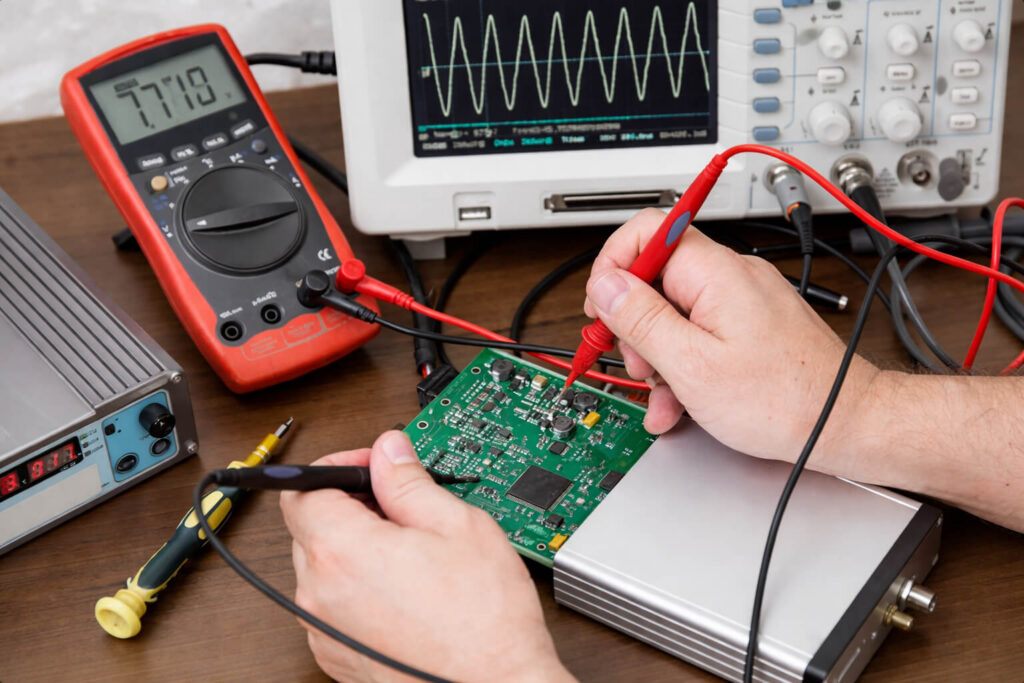
A PAT tester inspects and tests electrical appliances to ensure they are safe to use. Businesses rely on PAT testers to identify potential electrical hazards before they cause accidents. As a result, PAT testers play an important role in maintaining workplace safety and supporting compliance with electrical safety regulations.
In many workplaces, portable electrical appliances are used every day. Over time, cables can wear out, plugs may loosen, and internal electrical faults can develop. Therefore, PAT testers check these appliances regularly to confirm they meet safety standards and operate safely.
PAT testing usually involves two main stages. First, the tester performs a visual inspection to identify obvious issues such as damaged cables, cracked plugs, or loose connections. After that, specialised PAT testing equipment is used to measure electrical safety values such as earth continuity and insulation resistance.
PAT testers commonly work in environments where electrical equipment is widely used, including offices, schools, construction sites, retail stores, hospitals, and industrial facilities. Some professionals work within organisations, while others operate independently and provide testing services to multiple businesses.
Typical responsibilities of a PAT tester include:
- Inspecting electrical appliances for visible damage
- Checking plugs, cables, and sockets for safety issues
- Performing electrical safety tests using PAT testing equipment
- Recording test results and maintaining inspection records
- Labelling appliances with PAT test stickers
- Identifying faulty equipment that needs repair or replacement
- Advising businesses on electrical safety practices
In addition, PAT testers must maintain accurate documentation of every inspection. These records help organisations demonstrate compliance with safety regulations.
Overall, PAT testers combine technical knowledge, attention to detail, and safety awareness to ensure electrical appliances remain safe to use in workplaces.
Skills Required to Become a PAT Tester
To become a successful PAT tester, you need a combination of technical knowledge, safety awareness, and practical inspection skills. While you do not always need to be a qualified electrician, it is important to understand basic electrical safety and how portable appliances operate. Developing these skills ensures that testing is carried out safely and accurately.
PAT testers are responsible for identifying electrical risks and ensuring appliances meet safety standards. Therefore, they must be able to recognise faults quickly and perform inspections carefully. In many cases, simple visual checks can reveal issues such as damaged cables, loose plugs, or signs of overheating before electrical testing even begins.
Attention to detail is also essential. Even a small fault in an appliance can lead to serious hazards such as electric shock or fire. For this reason, PAT testers must follow proper safety procedures and testing guidelines during every inspection.
Key skills required for PAT testing include:
- Basic electrical knowledge – Understanding circuits, insulation, and earthing systems
- Electrical safety awareness – Recognising hazards and preventing electrical accidents
- Visual inspection skills – Identifying damaged cables, cracked plugs, or overheating signs
- Equipment handling skills – Using PAT testing devices and interpreting results correctly
- Attention to detail – Detecting small faults that may cause safety risks
- Record-keeping ability – Logging test results and maintaining compliance records
- Problem-solving skills – Deciding whether equipment requires repair or replacement
In addition, communication skills are helpful because PAT testers often explain inspection results to business owners or safety managers. Understanding workplace risks is also important, as testing requirements may vary depending on the environment.
Overall, professional training can help individuals develop these skills and gain the confidence needed to perform PAT testing safely and effectively.
Step-by-Step Guide: How to Become a PAT Tester in the UK
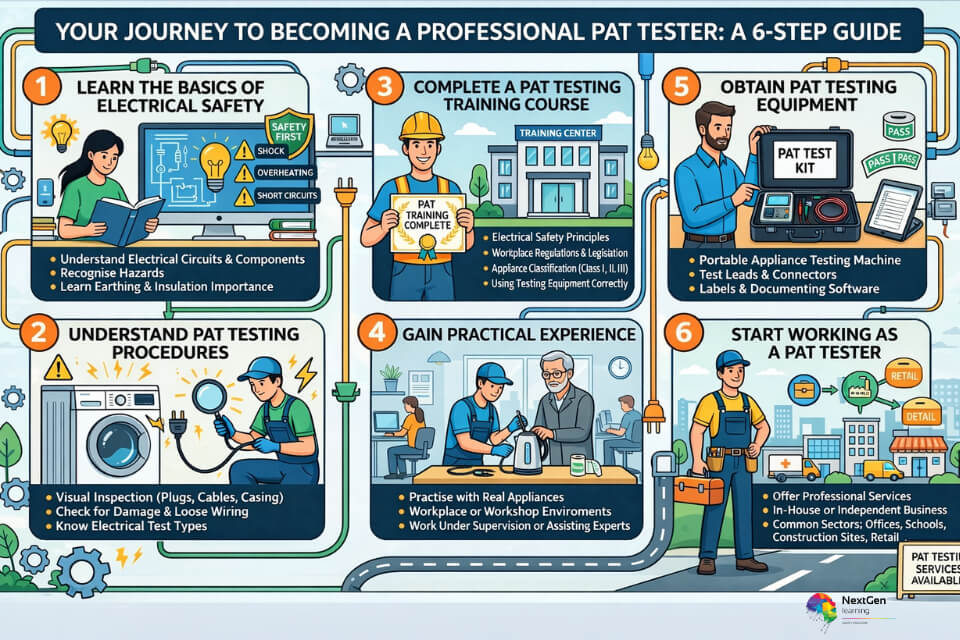
If you want to start a career in electrical safety, becoming a PAT tester is one of the most accessible entry points. Unlike many electrical careers, you do not always need years of apprenticeship to begin. However, you must still develop the knowledge, competence, and practical skills required to test appliances safely.
In the UK, regulations emphasise that PAT testing should be carried out by a competent person. This means someone who understands electrical safety, knows how to operate testing equipment, and can identify potential risks. Therefore, the path to becoming a PAT tester focuses on building practical knowledge and gaining appropriate training.
Below is a clear step-by-step guide to help you become a PAT tester.
Step 1: Learn the Basics of Electrical Safety
Before performing PAT testing, you must understand how electrical equipment works and what risks it can create. Even though PAT testing is not as complex as electrical installation work, testers still need a strong foundation in electrical safety principles.
Focus on learning:
- Basic electrical circuits and components
- Electrical hazards such as shock, overheating, and short circuits
- The importance of earthing and insulation
- Workplace electrical safety practices
This foundational knowledge helps you recognise potential faults during inspections.
Step 2: Understand PAT Testing Procedures
After learning the basics of electrical safety, the next step is understanding how PAT testing works in practice. PAT testing combines visual inspection and electrical testing to ensure appliances are safe to use.
PAT testing procedures typically involve:
- Inspecting plugs, cables, and appliance casing
- Checking for damage, wear, or loose wiring
- Connecting the appliance to a PAT testing device
- Running electrical tests such as insulation resistance and earth continuity
- Recording results and marking appliances as pass or fail
Understanding these procedures ensures you can perform inspections accurately and safely.
Step 3: Complete a PAT Testing Training Course
Although UK law does not require a specific qualification, completing a PAT testing training course is strongly recommended. Training helps you gain the competence required to perform testing safely and professionally.
A typical PAT testing course usually covers:
- Electrical safety principles
- PAT testing legislation and workplace regulations
- Appliance classification (Class I, II, and III equipment)
- Visual inspection techniques
- Using PAT testing equipment correctly
- Recording test results and maintaining documentation
Completing professional training also increases your credibility when offering PAT testing services to businesses.
Step 4: Gain Practical Experience
Once you complete training, gaining practical experience is important. Practising with real appliances helps you become familiar with inspection techniques and testing equipment.
You may gain experience by:
- Practising on appliances in workplaces or workshops
- Assisting experienced PAT testers
- Conducting inspections under supervision
- Testing equipment in offices, schools, or small businesses
The more appliances you test, the more confident you will become in identifying electrical issues.
Step 5: Obtain PAT Testing Equipment
To perform PAT testing professionally, you will need the right equipment. A PAT tester device is used to measure electrical safety parameters and determine whether appliances pass or fail inspection.
Basic PAT testing kits usually include:
- A portable appliance testing machine
- Test leads and connectors
- Appliance labels or stickers
- Test record sheets or digital logging software
Many entry-level PAT testers are designed to be easy to use, making them suitable for beginners as well as professionals.
Step 6: Start Working as a PAT Tester
After gaining training and equipment, you can begin offering PAT testing services. Some people work as in-house PAT testers within companies, while others provide testing services to multiple businesses.
PAT testers commonly work in environments such as:
- Offices and corporate workplaces
- Schools and universities
- Construction sites
- Retail stores and hospitality venues
- Hospitals and healthcare facilities
- Industrial workplaces
Many professionals also choose to run independent PAT testing businesses, offering testing services to local organisations.
Do You Need Qualifications for PAT Testing?
One of the most common questions people ask when exploring this career is whether formal qualifications are required. The short answer is no specific qualification is legally required to perform PAT testing in the UK. However, the law states that PAT testing must be carried out by a competent person who has the knowledge and ability to perform the task safely.
In practice, this means you must understand electrical safety principles, know how to inspect appliances, and be able to operate PAT testing equipment correctly. Therefore, while a formal qualification is not mandatory, most professionals choose to complete training to build competence and credibility.
Employers and businesses usually prefer PAT testers who have completed recognised training because it demonstrates that they understand safety procedures and testing methods.
A typical PAT testing training course usually teaches learners:
- The fundamentals of electrical safety
- The purpose and importance of PAT testing
- UK electrical safety legislation and regulations
- Appliance classification (Class I, II, and III equipment)
- How to perform visual inspections
- How to operate PAT testing devices
- How to record and interpret test results
Training also helps learners understand the risks involved in electrical testing and how to minimise hazards during inspections.
Importantly, people with an electrical background often find it easier to become PAT testers. For example, individuals working in maintenance, facility management, or electrical support roles may already have the necessary technical knowledge. However, PAT testing training is also suitable for beginners who want to enter the electrical safety field.
Common professionals who become PAT testers include:
- Electricians and electrical technicians
- Health and safety officers
- Building maintenance staff
- Facilities managers
- Self-employed electrical service providers
Completing a PAT testing course can also open new career opportunities. Many trained PAT testers offer independent testing services to businesses that need regular electrical safety inspections.
Ultimately, the key requirement is competence. If you have the knowledge, training, and practical ability to carry out tests safely, you can legally perform PAT testing in the UK.
PAT Tester Salary in the UK

One of the biggest advantages of becoming a PAT tester is the opportunity to earn a stable income with relatively low training barriers. Because electrical safety inspections are required across many industries, PAT testers can find work in offices, schools, construction sites, hospitals, and retail environments.
The salary of a PAT tester in the UK can vary depending on experience, employment type, and the number of appliances tested. Some professionals work as full-time employees within maintenance or facilities teams. Others operate as self-employed PAT testing contractors, providing services to multiple businesses.
On average, PAT testers in the UK can earn:
- Entry-level PAT tester: £18,000 – £24,000 per year
- Experienced PAT tester: £25,000 – £35,000 per year
- Senior electrical safety technician: £35,000 – £45,000+ per year
However, many PAT testers increase their earnings by offering services independently. In this case, income depends on the number of appliances tested and the pricing structure used.
Typical PAT testing service charges may include:
- Per appliance testing: £0.80 – £2.00 per item
- Small business inspections: £100 – £300 per visit
- Large commercial sites: £300 – £1,000+ depending on volume
- Construction or industrial sites: higher rates due to higher risk environments
For example, if a PAT tester inspects 200 appliances in a day at £1 per appliance, they could generate around £200 per day before expenses. As a result, independent PAT testers working with multiple clients can significantly increase their earnings.
Several factors influence how much a PAT tester earns:
- Level of experience and training
- Type of industries served
- Number of appliances tested per job
- Equipment and operational costs
- Whether the tester works independently or for a company
Additionally, many PAT testers expand their services to increase income. For example, professionals may also offer:
- Electrical safety inspections
- Equipment maintenance checks
- Workplace safety audits
- Compliance documentation services
By combining PAT testing with other electrical safety services, technicians can build a more profitable and stable career.
Overall, PAT testing offers flexible earning potential. Whether working for a company or operating independently, trained PAT testers can build a reliable income while helping businesses maintain safe electrical environments.
Tools and Equipment Needed for PAT Testing
To perform Portable Appliance Testing professionally, you need the right equipment. PAT testers rely on specialised devices that measure electrical safety parameters and determine whether an appliance is safe to use. Without the proper tools, it is not possible to conduct accurate inspections or verify electrical compliance.
Fortunately, PAT testing equipment is relatively straightforward compared to many electrical testing tools. Most devices are designed to be user-friendly so that trained professionals can quickly perform tests in workplaces such as offices, schools, shops, and construction sites.
A typical PAT testing kit includes several essential tools.
Essential PAT Testing Equipment
- PAT testing machine – The main device used to test electrical safety parameters such as insulation resistance, earth continuity, and polarity.
- Test leads and probes – Cables used to connect appliances to the PAT tester.
- Extension lead adaptors – Allow testers to inspect extension cables and multi-plug adapters.
- PAT test labels or stickers – Used to mark appliances as pass or fail after testing.
- Inspection checklist or testing software – Helps record test results and maintain safety documentation.
- Portable barcode scanner (optional) – Used by professional testers to track appliances and manage large testing records.
The most important tool is the PAT tester machine, which performs electrical safety measurements. These devices automatically run tests and display results, helping testers quickly determine whether an appliance passes or fails inspection.
PAT testing devices generally fall into two main categories:
Basic PAT Testers
These devices are designed for simple testing and are suitable for beginners or small businesses. They typically:
- Perform basic electrical safety tests
- Display simple pass or fail results
- Are lightweight and easy to use
- Require minimal technical setup
Because of their simplicity, basic PAT testers are often used by maintenance staff or small organisations performing occasional testing.
Advanced PAT Testers
Advanced testing devices offer additional functionality and are commonly used by professional PAT testing services. These machines can:
- Store large numbers of test results
- Connect to computers for record management
- Perform additional electrical tests
- Generate inspection reports for businesses
Some advanced systems can even manage large appliance inventories and automate compliance documentation.
When starting a PAT testing career or business, many professionals begin with a basic PAT tester and upgrade later as their workload increases.
Ultimately, investing in reliable equipment ensures that PAT testers can perform accurate inspections, maintain proper records, and deliver professional services to businesses.
How to Start a PAT Testing Business

Starting a PAT testing business can be a profitable opportunity for individuals interested in electrical safety services. Because many businesses must regularly inspect electrical appliances, there is consistent demand for reliable PAT testing providers. Therefore, many trained testers choose to work independently and offer services to local organisations.
Unlike many technical businesses, starting a PAT testing service usually requires low startup costs and minimal infrastructure. With the right training, equipment, and professional approach, you can begin offering PAT testing services to businesses in your area.
Below are the key steps to start a PAT testing business successfully.
1. Complete Professional PAT Testing Training
Although UK law does not require a specific qualification, completing professional training helps you gain the competence needed to perform testing safely. Training also increases credibility when approaching clients.
A good PAT testing course will teach you:
- Electrical safety principles
- UK safety regulations and compliance requirements
- Appliance classification and inspection procedures
- Proper use of PAT testing equipment
- Recording and managing test results
This knowledge ensures that your services meet workplace safety standards.
2. Purchase PAT Testing Equipment
Before offering services, you will need professional PAT testing tools. The most important piece of equipment is a portable appliance testing machine that performs electrical safety measurements.
Typical startup equipment may include:
- PAT testing device
- Test leads and adaptors
- Appliance labels and inspection tags
- Record-keeping software or log sheets
- Carry case for equipment
Many entry-level PAT testers cost between £300 and £800, making them affordable for small businesses.
3. Register Your Business
To operate legally in the UK, you must register your business. Many PAT testers start as self-employed sole traders, although some later register as limited companies.
Basic business setup usually includes:
- Registering with HMRC as self-employed
- Setting up a business bank account
- Obtaining public liability insurance
- Keeping financial records for tax purposes
Insurance is particularly important because PAT testing involves electrical equipment and workplace safety responsibilities.
4. Identify Your Target Clients
Many organisations require PAT testing regularly, which creates a wide range of potential clients. Targeting the right industries can help you grow your business faster.
Common PAT testing clients include:
- Offices and corporate workplaces
- Schools, colleges, and universities
- Retail stores and shopping centres
- Restaurants and hospitality businesses
- Construction companies
- Hotels and accommodation providers
- Healthcare facilities
These organisations often require routine electrical safety inspections.
5. Set Competitive Pricing
Pricing for PAT testing services usually depends on the number of appliances being tested and the complexity of the environment.
Common pricing models include:
- Charging per appliance tested
- Offering fixed prices for small businesses
- Providing discounts for large appliance volumes
- Offering annual maintenance contracts
Setting competitive prices helps attract new clients while maintaining profitability.
6. Market Your PAT Testing Services
Once your business is ready, the next step is attracting clients. Many PAT testers start by promoting their services locally.
Effective marketing methods include:
- Creating a professional website
- Listing services on Google Business Profile
- Contacting local businesses directly
- Partnering with electricians and maintenance companies
- Using social media and local directories
Providing reliable service and maintaining strong customer relationships can also lead to referrals and repeat clients.
PAT Testing Laws and Regulations in the UK
Understanding the legal framework behind PAT testing is essential for anyone working in electrical safety. Although PAT testing itself is not specifically required by law, UK regulations clearly state that employers must ensure electrical equipment is safe and properly maintained. Therefore, PAT testing has become the most widely used method for demonstrating compliance with electrical safety requirements.
In workplaces where electrical appliances are used daily, employers have a legal duty to prevent risks associated with faulty equipment. Consequently, regular inspection and maintenance of electrical devices help organisations meet their safety responsibilities and protect employees.
Several important UK laws support electrical safety and workplace compliance.
Key UK Regulations Related to PAT Testing
- Electricity at Work Regulations 1989 – Requires electrical systems and equipment to be maintained to prevent danger.
- Health and Safety at Work Act 1974 – Places responsibility on employers to protect the health and safety of employees and the public.
- Provision and Use of Work Equipment Regulations (PUWER) 1998 – Ensures work equipment is safe and suitable for use.
- Management of Health and Safety at Work Regulations (MHSWR) 1999 – Requires employers to assess workplace risks and implement safety measures.
These regulations do not specify that PAT testing must be performed at fixed intervals. Instead, they require employers to take a risk-based approach to maintaining electrical equipment.
For example, appliances used frequently or in harsh environments may require more frequent inspections than equipment used occasionally in low-risk environments.
Typical PAT Testing Frequencies
Although there is no universal legal schedule, many organisations follow common industry recommendations.
- Offices and retail environments: every 2–4 years for low-risk equipment
- Schools and educational facilities: typically every 1–2 years
- Construction sites: every 3 months for frequently used tools
- Industrial environments: every 6–12 months depending on risk level
Higher-risk environments often require more frequent inspections because equipment may be exposed to damage, moisture, or heavy usage.
Legal Consequences of Unsafe Electrical Equipment
Failing to maintain electrical equipment can lead to serious consequences for businesses. If an accident occurs due to faulty appliances, organisations may face legal action under workplace safety regulations.
Potential consequences may include:
- Financial penalties and fines
- Workplace safety investigations
- Legal liability if employees or customers are harmed
- In severe cases, imprisonment for serious safety breaches
For this reason, businesses rely on PAT testers to help maintain safe electrical equipment and reduce workplace risks.
Ultimately, PAT testing supports compliance with UK safety laws by ensuring that electrical appliances are regularly inspected, maintained, and documented.
Frequently Asked Questions About PAT Testing
A PAT tester is a professional who inspects and tests electrical appliances to ensure they are safe to use. PAT testers perform visual inspections and electrical tests using specialised equipment to identify faults, damaged cables, or safety risks. Their work helps businesses maintain safe workplaces and comply with electrical safety regulations.
PAT testing itself is not a specific legal requirement. However, UK laws require employers to ensure that electrical equipment is safe and properly maintained. As a result, PAT testing is widely used as a practical method to demonstrate compliance with electrical safety regulations.
PAT testing can be performed by any competent person who has the knowledge and ability to test electrical appliances safely. This usually means someone who understands electrical safety, knows how to inspect equipment, and can use PAT testing devices correctly.
Many businesses choose trained PAT testers or electricians to perform these inspections to ensure accurate results and proper documentation.
The time required for PAT testing depends on the number of appliances being inspected. In most cases, testing a single appliance takes less than one minute when using modern PAT testing equipment.
However, larger workplaces with hundreds of appliances may require several hours or even a full day to complete testing.
There is no universal schedule for PAT testing. Instead, testing frequency depends on the type of equipment and the environment where it is used.
Common recommendations include:
- Offices and low-risk environments: every 2–4 years
- Schools and public environments: every 1–2 years
- Construction sites and high-risk environments: every 3–6 months
Employers usually determine testing frequency based on risk assessments and equipment usage.
Final Thoughts
PAT testing plays an important role in maintaining electrical safety in workplaces across the UK. By inspecting portable appliances regularly, businesses can reduce the risk of electrical accidents, prevent equipment failures, and demonstrate compliance with workplace safety regulations.
For individuals interested in electrical safety careers, becoming a PAT tester offers an accessible entry point into the industry. With the right training, equipment, and practical knowledge, you can begin testing electrical appliances and even build a successful PAT testing service.
Moreover, the demand for PAT testing continues to grow as organisations prioritise safety and regulatory compliance. As a result, trained PAT testers can find opportunities in many sectors including offices, construction, hospitality, healthcare, and education.
Whether you want to improve workplace safety, start a new technical career, or launch your own testing business, learning how to become a PAT tester can open the door to a flexible and rewarding profession.

Portable Appliance Testing (PAT)

0 responses on "How to Become a PAT Tester in the UK | Career Guide, Salary & Training"