





Career Opportunities After a Phlebotomy Diploma: Jobs, NHS Roles, and Career Progression in the UK
Introduction: Why Phlebotomy Is a Smart Healthcare Career Choice
The healthcare sector depends heavily on accurate diagnostic testing to diagnose, monitor, and treat diseases. Among the most common medical procedures performed every day is blood testing. Whether for routine health checks, chronic disease monitoring, or emergency diagnostics, blood samples provide vital information that guides medical decisions.
Behind every successful blood test is a trained healthcare professional known as a phlebotomist. These professionals specialise in collecting blood samples safely and efficiently while ensuring patient comfort and maintaining strict hygiene standards.
Completing a Phlebotomy Diploma can open the door to a wide range of healthcare career opportunities. From hospitals and GP clinics to diagnostic laboratories and community healthcare centres, trained phlebotomy professionals play a crucial role in modern medicine.
For individuals looking to start a healthcare career quickly without spending years in university education, a phlebotomy diploma provides a practical and accessible entry pathway. With the growing demand for diagnostic testing services, phlebotomy skills are increasingly valuable across the healthcare industry.
In this guide, we explore the career opportunities after a phlebotomy diploma, the types of jobs available, career progression options, and how you can start building a successful healthcare career in the UK.
Table of Contents
Why Phlebotomy Professionals Are in High Demand
The demand for trained phlebotomy professionals continues to grow as healthcare systems expand diagnostic services and improve early disease detection.
Healthcare organisations rely on blood testing for diagnosing conditions such as infections, diabetes, anaemia, and cardiovascular diseases. As a result, skilled professionals who can collect blood samples accurately and safely are essential in medical environments.
In the United Kingdom, phlebotomists are widely employed across the public healthcare system, particularly within the National Health Service, which is one of the largest employers of healthcare professionals in Europe.
Hospitals, clinics, diagnostic laboratories, and community healthcare services all rely on trained phlebotomists to support medical testing processes.
According to workforce insights from NHS England, diagnostic services are expanding significantly as the healthcare system focuses on faster diagnosis and improved patient care.
This growth means that individuals with professional phlebotomy training can benefit from strong employment prospects.
Essential Skills Gained from a Phlebotomy Diploma
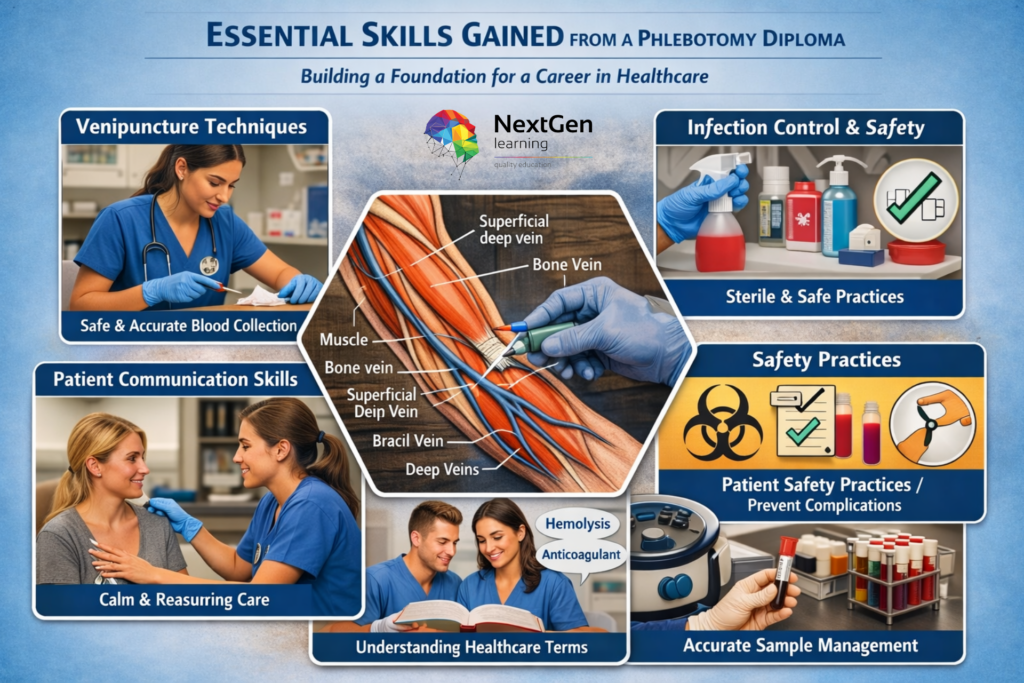
A professional phlebotomy course equips learners with a combination of clinical skills, safety knowledge, and patient care techniques required for healthcare environments.
Key skills developed during a phlebotomy diploma include:
Venipuncture Techniques
Students learn how to draw blood safely using professional venipuncture techniques. This includes identifying suitable veins, using sterile equipment, and ensuring patient comfort during the procedure.
Infection Control and Safety
Phlebotomy training emphasises strict infection control procedures. Learners understand how to maintain sterile environments and prevent contamination during blood collection.
Patient Communication Skills
Many patients experience anxiety or fear when undergoing blood tests. Phlebotomists must communicate effectively, reassure patients, and create a calm clinical environment.
Medical Terminology
Understanding medical terms helps phlebotomists communicate efficiently with doctors, nurses, and laboratory staff.
Sample Handling and Labelling
Proper labelling and handling of blood samples are essential to ensure accurate diagnostic results.
These practical skills make phlebotomy graduates valuable members of healthcare teams.
Phlebotomist Roles in Hospitals and Clinics
One of the most common career opportunities after a phlebotomy diploma is working as a hospital or clinic phlebotomist.
Hospitals perform thousands of blood tests daily. Phlebotomists are responsible for collecting samples from patients across various departments.
Responsibilities of Hospital Phlebotomists
Typical responsibilities include:
- Collecting blood samples from patients
- Verifying patient identification
- Preparing sterile equipment
- Labelling and documenting specimens
- Transporting samples to laboratories
- Ensuring patient comfort and safety
Phlebotomists working in hospitals may collect samples from:
- Outpatients
- Inpatients
- Emergency department patients
- Maternity wards
- Paediatric units
Many professionals begin their careers within the National Health Service, where phlebotomists play an essential role in supporting clinical diagnostics.
Working in hospitals provides valuable hands-on clinical experience and exposure to a wide variety of medical cases.
Laboratory Assistant Careers
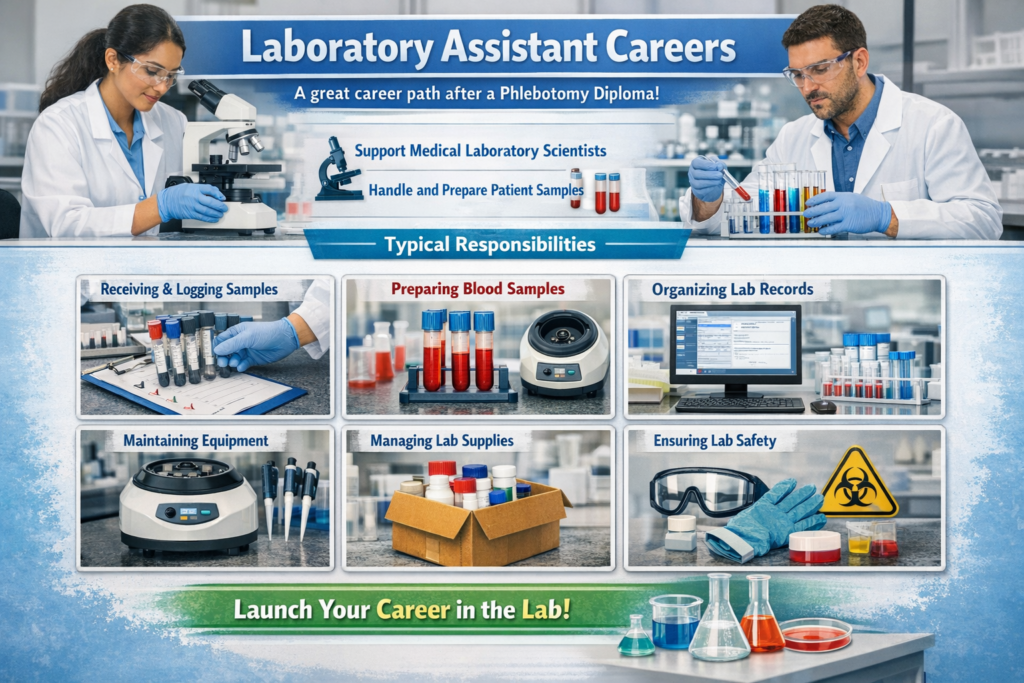
Another excellent career pathway after completing a phlebotomy diploma is working as a laboratory assistant.
Laboratory assistants support medical laboratory scientists by managing patient samples and preparing specimens for testing.
Many individuals who start in phlebotomy later transition into laboratory roles because they already understand sample handling procedures.
Typical Responsibilities of Laboratory Assistants
Laboratory assistants may perform tasks such as:
- Receiving and logging patient samples
- Preparing blood samples for analysis
- Organising laboratory records
- Maintaining equipment and supplies
- Ensuring laboratory safety standards
Laboratory environments require accuracy, organisation, and strict adherence to quality procedures.
Professional organisations such as the Institute of Biomedical Science emphasise the importance of well-trained laboratory support staff in maintaining reliable diagnostic services.
For individuals interested in the technical side of healthcare, laboratory roles offer excellent long-term career potential.
Opportunities in Private Diagnostic Laboratories
In addition to hospitals, many phlebotomy professionals work in private diagnostic laboratories.
These laboratories provide testing services for:
- Private clinics
- GP surgeries
- Occupational health providers
- Research institutions
Private diagnostic companies often operate specialised blood collection centres where trained phlebotomists collect samples from patients.
International diagnostic organisations such as SYNLAB Group operate laboratory networks that employ skilled phlebotomy professionals.
Roles Available in Diagnostic Laboratories
Graduates with a phlebotomy diploma may work in roles including:
- Diagnostic laboratory phlebotomist
- Specimen collection technician
- Sample processing assistant
- Mobile phlebotomist
Some phlebotomists work as mobile phlebotomists, travelling to patients’ homes or care facilities to collect samples.
This role has become more common as healthcare providers expand home-based testing services.
Private laboratories often provide flexible career opportunities and exposure to advanced diagnostic technologies.
Community Healthcare and GP Clinic Opportunities
Phlebotomists are also needed in community healthcare services.
GP clinics, outpatient diagnostic centres, and local health clinics regularly perform routine blood tests.
In these environments, phlebotomists assist with:
- Routine health screenings
- Chronic disease monitoring
- Preventive healthcare tests
- Community health programmes
Community healthcare roles often provide more predictable working hours compared to hospital environments.
These positions allow phlebotomists to work closely with patients and contribute to preventive healthcare services.
Phlebotomy Salary and Job Outlook in the UK
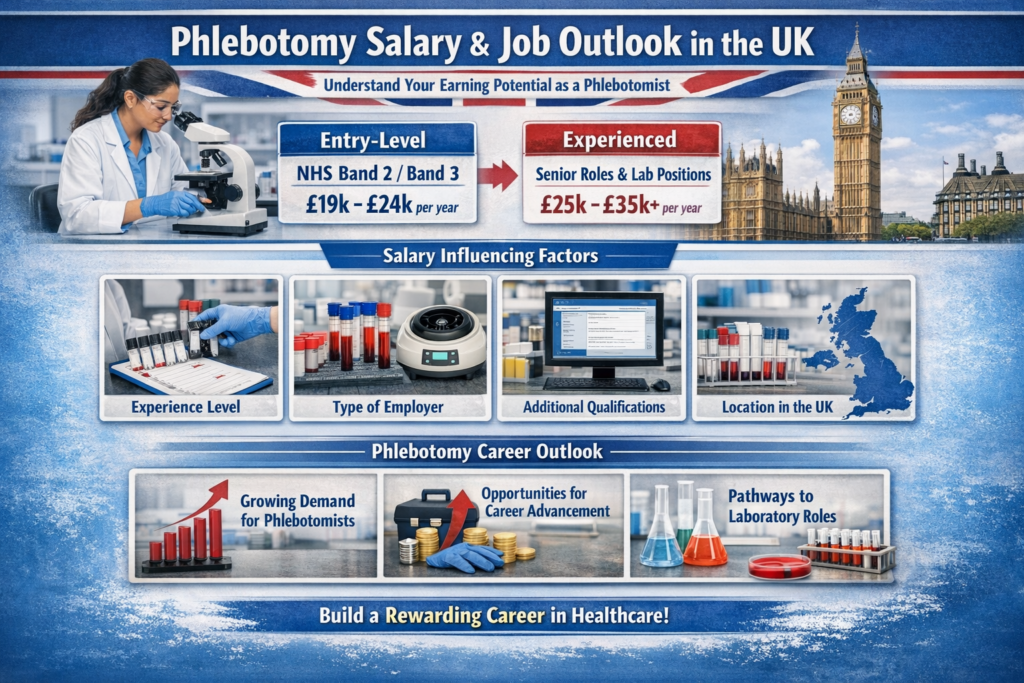
The earning potential for phlebotomists varies depending on experience, location, and healthcare setting.
Entry-level phlebotomists working within the National Health Service typically fall within healthcare support pay bands.
As professionals gain experience, they may progress into senior roles or move into laboratory positions.
Factors that influence salary include:
- Level of experience
- Type of healthcare employer
- Additional healthcare qualifications
- Geographic location
The increasing demand for diagnostic testing services suggests strong job stability for trained phlebotomy professionals.
Career Progression After a Phlebotomy Diploma
A phlebotomy diploma is not only a standalone career qualification but also a stepping stone toward advanced healthcare careers.
Many healthcare professionals begin their careers in entry-level roles before pursuing further education.
Possible career progression options include:
- Senior phlebotomist
- Medical laboratory assistant
- Healthcare assistant
- Clinical support worker
- Laboratory technician
Some professionals choose to continue their education in areas such as biomedical science or nursing.
For example, individuals interested in patient care may pursue nursing qualifications regulated by the Nursing and Midwifery Council.
This progression allows healthcare professionals to build long-term careers while gaining valuable clinical experience.
Why Start Your Healthcare Career with Phlebotomy?
Phlebotomy is often considered one of the most accessible entry points into healthcare.
There are several advantages to starting your healthcare journey with phlebotomy training.
Fast Entry into the Healthcare Industry
Unlike many medical professions that require years of education, phlebotomy training programmes can be completed relatively quickly.
Hands-On Clinical Experience
Phlebotomists interact directly with patients and healthcare teams, gaining valuable real-world experience.
High Demand for Skilled Professionals
Healthcare providers consistently require trained phlebotomists to support diagnostic services.
Flexible Career Opportunities
Phlebotomy skills are transferable across hospitals, clinics, laboratories, and community health centres.
Pathway to Advanced Healthcare Careers
Many healthcare professionals begin their careers in phlebotomy before progressing to nursing, laboratory science, or other medical fields.
How to Start Your Career with a Phlebotomy Diploma
Choosing a well-structured training programme is essential for building a successful healthcare career.
A comprehensive course should cover:
- Blood collection techniques
- Infection prevention procedures
- Patient care practices
- Medical terminology
- Laboratory sample handling
A recognised programme such as the Phlebotomy Diploma provides learners with the knowledge needed to enter healthcare environments with confidence.
You can explore the course here:
Phlebotomy Diploma
Training programmes like this are designed to help learners develop professional skills required in hospitals, diagnostic laboratories, and healthcare clinics.
For additional healthcare career information, resources from NHS England and the Institute of Biomedical Science provide valuable insights into the importance of diagnostic healthcare roles.
Frequently Asked Questions About Phlebotomy Careers
Most phlebotomy training programmes can be completed in a relatively short time, often within a few weeks to a few months depending on the course structure. Online or blended courses allow you to study theory at your own pace, followed by hands-on practical sessions. Once training and assessments are completed, learners can immediately start applying for entry-level phlebotomy or healthcare support roles.
Yes. Many graduates secure phlebotomy roles within the National Health Service. The NHS employs phlebotomists in hospitals, GP surgeries, outpatient clinics, community health centres, and diagnostic laboratories. As long as the diploma is recognised and includes practical training, it provides the foundational skills required to work safely and professionally in NHS clinical environments.
Phlebotomy is an excellent entry point into the healthcare sector. It offers strong job demand, hands-on patient interaction, and opportunities to develop essential clinical skills. Phlebotomists also gain experience that can lead to progression into related fields such as nursing, biomedical science, laboratory work, healthcare assistance, and diagnostic services. With growing healthcare needs, phlebotomy roles remain stable and in demand across the UK.
No. Phlebotomists work in a wide variety of healthcare environments. Besides hospitals, they are employed in GP clinics, private diagnostic labs, blood donation centres, research facilities, community healthcare units, and mobile phlebotomy services. Some also visit patients in their homes, workplaces, or care homes. This flexibility allows phlebotomists to choose a setting that aligns with their career goals and lifestyle.


Phlebotomy Diploma

0 responses on "Career Opportunities After a Phlebotomy Diploma: Jobs, NHS Roles, and Career Progression in the UK"