





Teaching Assistant Qualifications: What Qualifications Do I Need to Be a Teaching Assistant?
Becoming a teaching assistant in the UK does not follow a single fixed route, which often leads to confusion about which qualifications are actually required. Schools, academies, and local authorities may value different levels of training depending on the role, setting, and responsibilities involved.
This guide explains teaching assistant qualifications clearly and accurately, including Level 2, Level 3, Higher Level Teaching Assistant (HLTA), and SEN teaching assistant pathways. It also covers entry requirements, online study options, timelines, and how qualifications affect employability and progression in schools.
By the end of this guide, you will understand:
- Which qualifications do schools expect for teaching assistant roles
- Whether you can work without formal qualifications
- The difference between Level 2, Level 3, SEN, and HLTA routes
- How long qualifications take and how to choose the right level
This page is designed to help you make an informed decision about the right teaching assistant qualification for your career goals, without assumptions or unnecessary complexity.
Table of Contents
Teaching Assistant Qualifications Explained
Teaching assistant qualifications in the UK are designed to prepare individuals to support pupils’ learning, behaviour, and wellbeing in schools and other educational settings. While there is no single mandatory qualification required by law, most schools expect candidates to hold – or be working towards – a recognised teaching assistant qualification.
At a basic level, teaching assistant qualifications focus on three core areas: supporting learning activities, understanding child development, and working safely and professionally within a school environment. As qualification levels increase, training becomes more specialised and responsibility-focused.
What Are Teaching Assistant Qualifications?
Teaching assistant qualifications are vocational awards that confirm your knowledge and competence in supporting teaching and learning in schools. They are typically regulated or quality-assured and aligned with the expectations of UK employers.
Most qualifications fall into clear levels:
- Level 2 – entry-level support roles
- Level 3 – full teaching assistant roles with greater responsibility
- Higher Level Teaching Assistant (HLTA) – advanced classroom support and cover duties
Additional training is also available for specialist roles, such as SEN teaching assistants, who work with children with special educational needs.
Are Qualifications Legally Required to Be a Teaching Assistant?
There is no legal requirement for teaching assistants in England to hold a specific qualification. However, this does not mean qualifications are optional in practice.
Schools are responsible for setting their own recruitment standards. Most employers prefer candidates who:
- Hold a recognised Level 2 or Level 3 teaching assistant qualification
- Can demonstrate safeguarding knowledge
- Understand classroom practice and child development
As competition for roles increases, qualifications often make the difference between meeting minimum criteria and being shortlisted. Teaching assistants also need to pass an enhanced background check, known as an enhanced DBS check, before working in schools.
How Schools and Employers Assess Qualifications
Schools typically assess teaching assistant qualifications based on:
- Level achieved (Level 2 vs Level 3 vs HLTA)
- Relevance to the role, such as SEN support or behaviour management
- Evidence of competence, including practical understanding of classroom support
Some schools may accept unqualified applicants for entry-level roles, particularly where experience or volunteering is present. However, qualified candidates are generally viewed as lower risk and better prepared for the demands of the role.
Key takeaway:
While you may not be legally required to hold a qualification, recognised teaching assistant qualifications significantly improve employability, role suitability, and progression opportunities in UK schools.
What Qualifications Do I Need to Be a Teaching Assistant?
The qualifications needed to become a teaching assistant depend on the school, the age group you want to work with, and the level of responsibility involved. While requirements can vary, most UK employers follow similar expectations when recruiting teaching assistants.
In general, schools look for a combination of relevant qualifications, basic academic requirements, and suitability for working with children, whether through classroom-based study or a teaching assistant apprenticeship route.”
Minimum Entry Requirements for Teaching Assistants
There is no nationally fixed entry requirement, but most schools expect teaching assistants to:
- Have basic literacy and numeracy skills
- Demonstrate an understanding of child development and classroom support
- Be able to follow safeguarding and school policies
For many entry-level roles, candidates are expected to hold or be working towards a Level 2 teaching assistant qualification. For more established roles, a Level 3 qualification is often preferred.
GCSE Requirements (English and Maths)
Most schools expect teaching assistants to have:
- GCSE English and Maths, usually at Grade 4 (C) or above
- Or an equivalent Level 2 qualification in English and Maths
These requirements reflect the need to support pupils with reading, writing, and numeracy. Some schools may accept candidates who are working towards these qualifications, particularly in support or trainee roles.
When Experience Can Matter More Than Qualifications
In some cases, schools may prioritise relevant experience over formal qualifications, especially for:
- Classroom support roles
- SEN support positions
- Temporary or part-time teaching assistant posts
Experience may include:
- Volunteering in schools
- Working in childcare or youth services
- Supporting children with additional needs
However, even when experience is accepted initially, schools often expect teaching assistants to complete a recognised qualification once employed.
Key takeaway:
While entry routes can vary, most teaching assistants either hold or are expected to gain a Level 2 or Level 3 teaching assistant qualification, supported by GCSE English and Maths or equivalent, as outlined in National Careers Service guidance for teaching assistants. Qualifications provide clarity, consistency, and progression opportunities in the role.
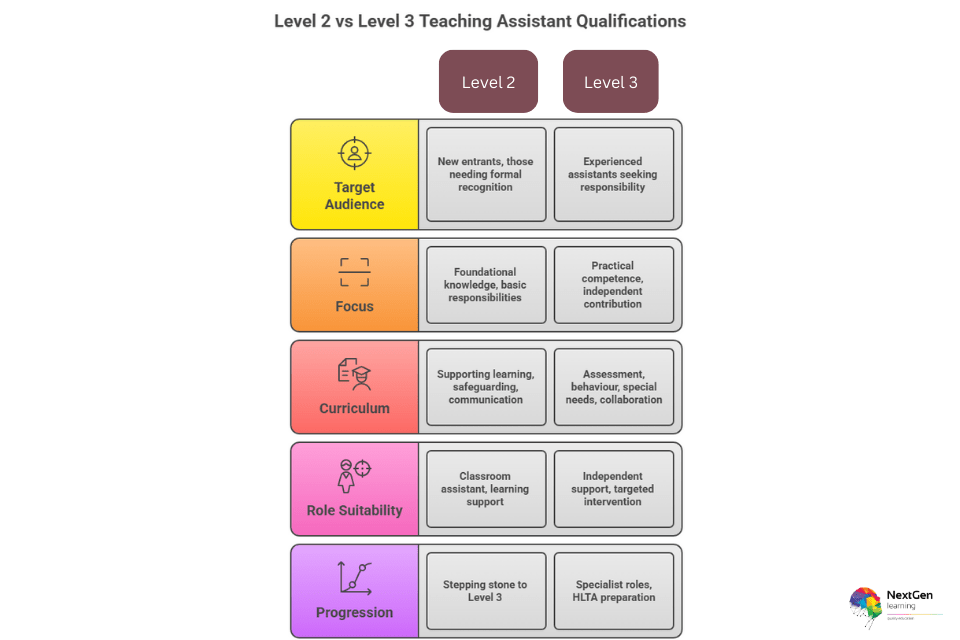
Level 2 Teaching Assistant Qualification (Who It’s For)
A Level 2 teaching assistant qualification is usually the starting point for people entering the role. It is designed for those who are new to working in schools or who want to gain formal recognition of their ability to support learning under supervision.
This level provides the foundation knowledge schools expect from entry-level teaching assistants and classroom support staff.
What Is a Level 2 Teaching Assistant Qualification?
A Level 2 teaching assistant qualification introduces the core responsibilities of supporting teaching and learning in schools. It focuses on understanding how classrooms operate and how teaching assistants contribute to pupils’ development and wellbeing.
Common areas covered include:
- Supporting learning activities
- Child and young person development
- Safeguarding and child protection
- Equality, diversity, and inclusion
- Communication within a school environment
Level 2 qualifications are suitable for those with little or no prior experience in education.
What You Learn at Level 2
At Level 2, training is primarily knowledge-based and aims to build confidence in a school setting. Learners gain an understanding of:
- How to support pupils during lessons
- How to work under the direction of a teacher
- Basic behaviour support strategies
- Professional responsibilities in schools
Some Level 2 qualifications may include observation or placement requirements, while others focus on theoretical learning that supports entry-level roles.
Is Level 2 Enough to Work as a Teaching Assistant?
In many cases, yes. A Level 2 teaching assistant qualification is often sufficient for:
- Classroom assistant roles
- Teaching assistant support positions
- Learning support assistant posts
However, schools may limit responsibilities at this level. Teaching assistants with Level 2 qualifications typically work under close supervision and are less likely to lead activities independently.
Typical Roles After a Level 2 Qualification
With a Level 2 qualification, common roles include:
- Teaching Assistant
- Classroom Assistant
- Learning Support Assistant
- SEN Support Assistant (under supervision)
Many teaching assistants use Level 2 as a stepping stone before progressing to a Level 3 teaching assistant qualification, which offers broader responsibilities and better career prospects.
Key takeaway:
A Level 2 teaching assistant qualification is ideal for beginners. It provides the essential knowledge needed to enter school-based support roles and lays the groundwork for progression to higher-level qualifications.
Level 3 Teaching Assistant Qualification (Career-Ready Route)
A Level 3 teaching assistant qualification is widely regarded as the standard qualification for established teaching assistant roles in UK schools. It is suitable for individuals who want greater responsibility, improved employability, and clearer progression opportunities.
Many schools actively prefer Level 3–qualified teaching assistants, particularly for full-time, long-term, or specialist support roles, where responsibilities and expectations are higher.
What Is a Level 3 Teaching Assistant Qualification?
A Level 3 teaching assistant qualification builds on the foundational knowledge gained at Level 2 and develops practical competence in supporting teaching and learning. It is designed for those who work more independently in classrooms and contribute actively to pupil progress.
Level 3 qualifications typically focus on:
- Supporting assessment for learning
- Promoting positive behaviour
- Understanding child development in greater depth
- Supporting pupils with additional needs
- Working collaboratively with teachers and other professionals
Difference Between Level 3 Certificate and Diploma
There are two common Level 3 routes, and schools may value both depending on the role:
- Level 3 Certificate in Supporting Teaching and Learning in Schools
Focuses on core teaching assistant duties and classroom support. - Level 3 Diploma in Specialist Support for Teaching and Learning in Schools
Includes additional units for specialist areas such as SEN support, behaviour management, or communication needs.
The diploma is often preferred for roles involving additional responsibility or specialist support.
When Schools Prefer Level 3 Qualifications
Schools are more likely to request a Level 3 qualification when:
- Teaching assistants support learning independently
- Pupils require additional or targeted support
- The role involves assessment, intervention, or behaviour support
- Long-term or permanent positions are being filled
Level 3 qualifications demonstrate readiness for the practical and professional demands of the role.
Progression Opportunities After Level 3
After achieving a Level 3 teaching assistant qualification, progression options may include:
- Specialist SEN teaching assistant roles
- Behaviour or intervention support positions
- Preparation for Higher Level Teaching Assistant (HLTA) status
- Further study towards education or teaching pathways
Key takeaway:
A Level 3 teaching assistant qualification offers stronger employability, greater responsibility, and clearer progression. It is often the preferred qualification for schools seeking confident, career-ready teaching assistants.
Higher Level Teaching Assistant (HLTA) Qualifications

Higher Level Teaching Assistant (HLTA) status is designed for experienced teaching assistants who take on advanced classroom responsibilities. HLTAs often work more independently, support lesson delivery, and may supervise classes when teachers are absent.
HLTA is not an entry-level role and sits above standard Level 3 teaching assistant positions.
What Is a Higher Level Teaching Assistant?
A Higher Level Teaching Assistant is a qualified and experienced support professional who:
- Works independently with individuals or groups of pupils
- Delivers learning activities planned by teachers
- Covers lessons during short-term teacher absences
- Supports assessment and pupil progress
HLTAs play a key role in maintaining continuity of learning in schools.
HLTA Qualification Requirements in the UK
To work as an HLTA, teaching assistants typically need:
- Significant classroom experience
- A Level 3 teaching assistant qualification or equivalent
- Strong literacy and numeracy skills
- Evidence of competence across a range of professional standards
HLTA status is usually achieved through an assessment route, rather than a traditional taught qualification. Candidates are assessed against national HLTA standards while working in a school setting.
Experience vs Assessment Routes for HLTA
Unlike Level 2 and Level 3 qualifications, HLTA status:
- Focuses on demonstrated ability, not classroom study alone
- Requires evidence gathered from real classroom practice
- Assesses independence, planning support, and pupil engagement
Schools often support experienced teaching assistants through the HLTA assessment process once they are confident the individual meets the required standards.
How HLTA Differs From Level 3 Teaching Assistant Roles
While Level 3 teaching assistants:
- Support learning under teacher guidance
- Assist with planned activities
HLTAs:
- Work with greater autonomy
- May lead learning activities
- Have broader responsibility for pupil outcomes
Key takeaway:
HLTA status represents an advanced stage in a teaching assistant’s career. It is best suited to experienced Level 3–qualified teaching assistants who are ready for increased responsibility and independent classroom support.
SEN Teaching Assistant Qualifications and Requirements

SEN teaching assistants support children and young people with special educational needs and disabilities (SEND), as defined in UK government SEND guidance. These roles require additional knowledge, sensitivity, and specialist skills beyond general classroom support. While SEN qualifications are not always mandatory, they are strongly preferred by many schools and specialist settings.
What SEN Teaching Assistants Do Differently
SEN teaching assistants often work with pupils who have:
- Autism spectrum conditions
- ADHD
- Speech, language, and communication needs
- Social, emotional, and mental health (SEMH) needs
- Moderate to severe learning difficulties
Their role may involve one-to-one support, small group interventions, behaviour support, and close collaboration with teachers and external professionals in SEN teaching assistant roles.
SEN-Specific Qualifications and Training
While a general Level 2 or Level 3 teaching assistant qualification is usually required, SEN roles often benefit from additional training focused on:
- Understanding special educational needs
- Behaviour management strategies
- Communication and interaction support
- Inclusive learning approaches
Many SEN teaching assistants hold a Level 3 qualification with specialist SEN units or complete targeted SEN training alongside their main qualification.
Autism, ADHD, SEMH, and Learning Difficulty Support Training
Specialist SEN training may focus on:
- Autism awareness and classroom strategies
- ADHD support techniques
- Managing emotional and behavioural challenges
- Supporting pupils with learning and developmental delays
These areas are particularly valued in special schools, alternative provision settings, and mainstream schools with high SEN support needs.
Is an SEN Qualification Mandatory or Preferred?
An SEN-specific qualification is rarely legally required, but it is often:
- Preferred by employers
- Essential for specialist or long-term SEN roles
- Useful for career progression within SEND support
Schools may appoint candidates with general teaching assistant qualifications initially, with the expectation that SEN training will be completed once in post. This progression is explained in more detail in our guide on becoming an SEN teaching assistant.
Key takeaway:
SEN teaching assistant qualifications are not always mandatory, but specialist training significantly improves suitability for SEN roles and increases opportunities in both mainstream and specialist education settings.

Can You Be a Teaching Assistant Without Qualifications?
It is possible to work as a teaching assistant without formal qualifications, but opportunities are more limited and expectations vary between schools. While there is no legal requirement to hold a qualification, most employers strongly prefer candidates who can demonstrate relevant training or a clear willingness to gain it.
When Schools Accept Unqualified Teaching Assistants
Some schools may consider unqualified applicants for:
- Entry-level or trainee teaching assistant roles
- Temporary or part-time support positions
- Roles focused on supervision or pastoral support
This is more common where candidates already have relevant experience or where schools are willing to support training after appointment.
Volunteering, Support Roles, and Entry Pathways
Without qualifications, the most common entry routes include:
- Volunteering in primary or secondary schools
- Working as a classroom helper or learning support volunteer
- Supporting pupils through childcare, youth work, or community roles
These routes help candidates gain classroom exposure and demonstrate suitability for working with children.
Why Qualifications Improve Employability and Progression
While experience can help secure initial opportunities, qualifications:
- Make applications more competitive
- Provide recognised evidence of competence
- Support progression to Level 3, SEN, or HLTA roles
Many schools that recruit unqualified teaching assistants expect them to begin a recognised qualification once employed.
Key takeaway:
You can become a teaching assistant without qualifications, but recognised training significantly improves employability, role stability, and long-term career progression.
👉 For a full step-by-step pathway, including how to start with no experience, see our dedicated guide: How to Become a Teaching Assistant With No Experience.
Teaching Assistant Qualifications Online (Distance Learning)

Many teaching assistant qualifications can be completed through online or distance learning, making this route suitable for learners who need flexibility. Online study allows individuals to gain recognised knowledge while balancing work, family, or other commitments.
Can Teaching Assistant Qualifications Be Studied Online?
Yes, most Level 2 and Level 3 teaching assistant qualifications are available through online learning. These courses typically cover the theoretical knowledge required to work effectively in schools and are designed to align with national occupational standards.
Online study is commonly used for:
- Level 2 teaching assistant qualifications
- Level 3 certificates and diplomas
- SEN-related teaching assistant training
Some qualifications may still require practical evidence or placement-based assessment, depending on the awarding structure.
Online Learning vs Work-Based Assessment
Online qualifications usually involve:
- Structured learning materials
- Written assessments or assignments
- Knowledge-based evaluation
Work-based assessment routes may require:
- Access to a school or educational setting
- Observation of practical skills
- Evidence of real classroom support
Many learners combine online study with voluntary or paid school-based roles to meet practical requirements where applicable.
What Schools Accept From Online Qualifications
Schools generally accept online teaching assistant qualifications when they:
- Are regulated or quality-assured
- Match the level and content expected for the role
- Demonstrate safeguarding, child development, and classroom support knowledge
Employers are typically more concerned with the level and relevance of the qualification than the study format.
Key takeaway:
Online teaching assistant qualifications offer flexibility and accessibility. When they meet recognised standards, they are widely accepted by schools and can support entry, progression, and specialist roles.
How Long Does It Take to Get Teaching Assistant Qualifications?
The time required to gain teaching assistant qualifications depends on the level of study, the learning format, and whether the qualification includes practical assessment. Understanding typical timelines can help you plan your route into education or progression within the role.
Typical Duration for Level 2 Qualifications
Level 2 teaching assistant qualifications usually take:
- 3 to 6 months when studied part-time
- Longer if combined with voluntary or work-based experience
These qualifications are designed to introduce core knowledge and are often completed alongside other commitments.
Typical Duration for Level 3 Qualifications
Level 3 teaching assistant qualifications typically take:
- 6 to 12 months, depending on the course structure
- Additional time if specialist units or practical assessment are included
Learners working in schools may complete Level 3 qualifications alongside their role, applying knowledge in a real classroom environment.
Timeframe for SEN and HLTA Progression
Progression timelines vary:
- SEN training may take a few weeks to several months, depending on specialism
- HLTA status usually requires prior experience and assessment over time, rather than a fixed course length
Schools often support experienced teaching assistants through SEN training or HLTA assessment once they are established in their role.
Key takeaway:
Teaching assistant qualifications can be achieved within months rather than years. Level 2 provides a quick entry route, while Level 3, SEN, and HLTA pathways support longer-term progression and responsibility.
Skills Teaching Assistants Need (Alongside Qualifications)
While qualifications confirm knowledge and training, schools also expect teaching assistants to demonstrate a range of practical and interpersonal skills. These skills support effective classroom engagement, pupil wellbeing, and professional collaboration.
Classroom and Learning Support Skills
Teaching assistants need to:
- Support pupils during lessons and activities
- Reinforce instructions given by teachers
- Adapt support to suit different learning needs
- Help maintain a focused and inclusive learning environment
These skills help ensure pupils remain engaged and supported throughout the school day.
Behaviour Support and Communication Skills
Strong communication is essential for teaching assistants. This includes:
- Clear verbal communication with pupils and staff
- Active listening and patience
- Supporting positive behaviour and emotional regulation
- Managing low-level classroom disruption calmly
Behaviour support skills are particularly important in SEN and inclusion-focused roles.
Safeguarding and Professionalism in Schools
Safeguarding knowledge underpins all teaching assistant roles and is a core expectation in line with Ofsted safeguarding standards. Schools expect teaching assistants to:
- Follow safeguarding and child protection procedures
- Maintain professional boundaries
- Act responsibly and ethically at all times
Professionalism also includes reliability, confidentiality, and a willingness to follow school policies.
Key takeaway:
Qualifications provide the foundation, but strong communication, behaviour support, and safeguarding awareness are essential for success as a teaching assistant.
Teaching Assistant Career Progression and Next Steps
Teaching assistant qualifications support both entry into the role and long-term career development. As experience and training increase, teaching assistants can progress into more specialised or senior positions within education.
Progressing From Level 2 to Level 3
Many teaching assistants begin with a Level 2 qualification and later progress to Level 3 once they gain classroom experience. Moving to Level 3:
- Expands responsibilities
- Improves employability
- Allows for more independent pupil support
Schools often encourage progression to Level 3 to meet staffing needs and improve consistency of support.
Moving Into SEN or Specialist Roles
Teaching assistants may choose to specialise by completing additional training in areas such as:
- Special educational needs and disabilities (SEND)
- Behaviour support
- Communication and interaction needs
Specialist roles often involve closer collaboration with teachers, SENCOs, and external professionals and may offer greater job security in schools with high SEN demand.
From Teaching Assistant to HLTA or Teacher
With experience and appropriate qualifications, progression options include:
- Achieving Higher Level Teaching Assistant (HLTA) status
- Moving into intervention or lead support roles
- Pursuing further study towards teaching qualifications
These pathways allow teaching assistants to increase responsibility while remaining within education.
Key takeaway:
Teaching assistant qualifications provide a clear progression route, from entry-level support roles through to specialist, senior, or teaching-focused pathways.
Teaching Assistant Jobs and Employment Outlook (UK)
Teaching assistants continue to play a vital role in UK schools, supporting teachers, improving pupil outcomes, and promoting inclusive education. Demand for qualified teaching assistants remains steady across primary, secondary, and specialist settings.
Demand for Teaching Assistants in UK Schools
UK schools employ teaching assistants to:
- Provide targeted learning support
- Assist pupils with additional needs
- Support classroom management and inclusion
Demand is particularly strong in:
- Primary education
- SEN and specialist provision
- Schools supporting pupils with complex learning or behavioural needs
As class sizes grow and inclusion requirements increase, schools rely heavily on trained teaching assistants.
Where Teaching Assistant Qualifications Are Most Valued
Teaching assistant qualifications are especially valued in:
- Maintained schools and academies
- Special schools and alternative provision
- Early years and primary settings
Schools typically prioritise candidates who hold recognised Level 2 or Level 3 qualifications, particularly for permanent or long-term roles.
Long-Term Career Stability and Opportunities
Teaching assistant roles offer:
- Consistent demand across the UK
- Opportunities for progression into SEN, HLTA, or teaching pathways
- Flexible working patterns in many settings
While roles vary in responsibility and pay, qualified teaching assistants often experience greater job security and clearer progression options.
Key takeaway:
Teaching assistant qualifications support employability in a growing sector. Schools continue to value trained support staff who can meet diverse learning needs and contribute positively to the classroom environment.
Frequently Asked Questions
This section addresses the most common questions people ask about teaching assistant qualifications in the UK, based on search trends, employer expectations, and common points of confusion.
The full FAQ with strategic answers — including:
- No qualifications
- SEN requirements
- Online study
- Age and career change
- Progression and recognition
Most teaching assistants hold a Level 2 or Level 3 qualification in Supporting Teaching and Learning in Schools. While qualifications are not legally required, most schools prefer candidates with recognised training, alongside GCSE English and Maths or equivalent.
Yes, some schools accept unqualified teaching assistants for entry-level roles, especially with relevant experience. However, most employers expect candidates to work towards a recognised Level 2 or Level 3 teaching assistant qualification once appointed.
Level 2 is suitable for beginners and entry-level roles. Level 3 is often preferred by schools for established teaching assistant positions, as it supports greater responsibility, independent support, and improved career progression opportunities.
Most schools expect teaching assistants to have GCSE English and Maths at Grade 4 (C) or above, or equivalent Level 2 qualifications. This reflects the need to support pupils’ literacy, numeracy, and learning activities effectively.
Schools recognise teaching assistant qualifications when they meet expected standards and cover safeguarding, child development, and classroom support. Employers usually focus on the level and relevance of the qualification rather than where or how it was studied.
Most Level 2 qualifications take 3–6 months, while Level 3 qualifications usually take 6–12 months. Timelines vary depending on study method, assessment requirements, and whether learning is combined with work or volunteering.
A Higher Level Teaching Assistant is an experienced teaching assistant who works independently, supports lesson delivery, and may cover classes. HLTA status is achieved through assessment based on experience rather than a standard taught course.
SEN teaching assistants usually need a general Level 2 or Level 3 qualification, plus additional SEN-focused training. Specialist knowledge in autism, ADHD, SEMH, or learning difficulties is strongly preferred but not always legally required.
Yes, many Level 2 and Level 3 teaching assistant qualifications can be studied online. Schools generally accept online qualifications when they are quality-assured and meet expected standards for classroom support and safeguarding knowledge.
A Level 3 teaching assistant qualification with SEN-focused units is often preferred. Additional training in autism, behaviour support, or communication needs can improve suitability for SEN roles in both mainstream and specialist settings.
Yes, some people start without experience by volunteering or applying for trainee roles. However, gaining a recognised qualification helps demonstrate competence and improves employability, especially for permanent teaching assistant positions.
HLTA status is sometimes linked to Level 4 certificates, but it is primarily an assessment-based status. Candidates must demonstrate competence against national standards rather than complete a traditional academic qualification alone.
Teaching assistant qualifications are not compulsory by law. However, most schools strongly prefer qualified candidates, and many require unqualified teaching assistants to begin training once employed.
Yes, teaching assistant roles are popular with career changers. Transferable skills from childcare, care work, or youth support are valued, and qualifications help bridge the gap into school-based education roles.
No, there is no age limit. Schools focus on suitability, skills, and training rather than age. Many teaching assistants enter the profession later in life or after changing careers.
The roles are similar and often overlap. Teaching assistants usually support whole-class learning, while learning support assistants may focus more on individual or small-group support, particularly for pupils with additional needs.
Yes, all teaching assistants must pass an enhanced DBS check before working in schools. This is a standard safeguarding requirement for any role involving regulated activity with children.
Yes, some teaching assistants progress into teaching by completing further study and gaining Qualified Teacher Status (QTS). Experience as a teaching assistant can provide valuable insight before moving into teacher training.
Final Summary – Choosing the Right Teaching Assistant Qualification
Choosing the right teaching assistant qualification depends on your career goals, experience, and the type of role you want to pursue in schools. While there is no single mandatory qualification, recognised training plays a key role in employability, confidence, and progression.
Key points to consider:
- Level 2 qualifications are suitable for entry-level roles and those new to school environments
- Level 3 qualifications are often preferred by schools and support greater responsibility
- SEN training improves suitability for specialist and inclusive education roles
- HLTA status is designed for experienced teaching assistants ready for advanced duties
For those starting without qualifications, gaining recognised training provides clarity and structure. For experienced teaching assistants, higher-level or specialist qualifications support long-term development and career progression.
By understanding the different qualification routes, you can make an informed decision that aligns with your ambitions and the expectations of UK schools.


0 responses on "Teaching Assistant Qualifications: What Qualifications Do I Need to Be a Teaching Assistant?"