




Top 30 Teaching Assistant Interview Questions (With Smart Answers That Impress)
If you’ve got a teaching assistant interview coming up, you’re probably searching for the exact teaching assistant interview questions schools ask most—plus answers that sound confident, natural, and genuinely helpful. Therefore, this guide is designed for UK schools and real classrooms. Moreover, it covers the teaching assistant role, the interview questions that come up again and again, and how to answer them in a way that fits modern teaching assistant jobs. In short, if you want to walk into your teaching assistant interview prepared, you’re in the right place.
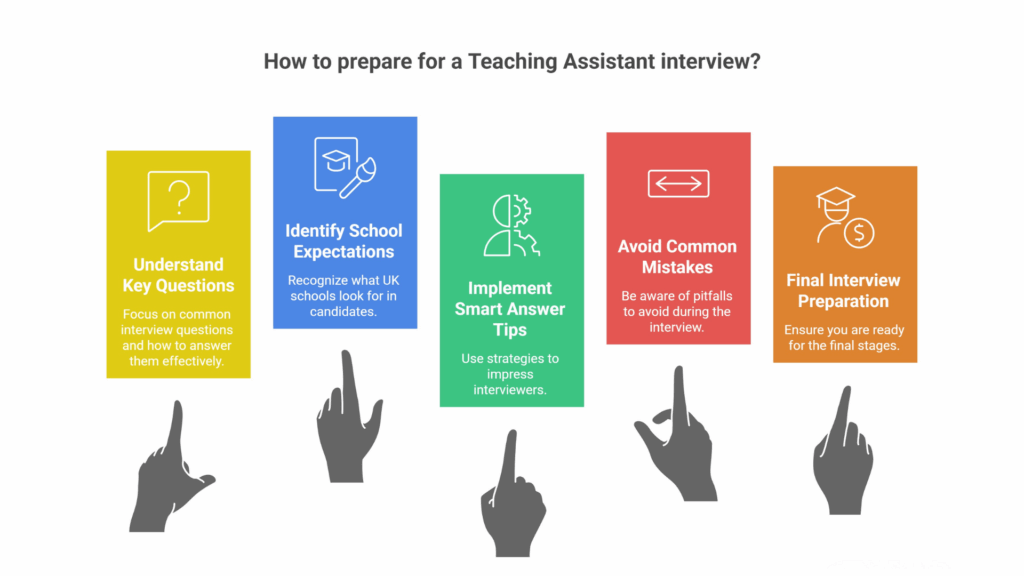
Table of Contents
What UK schools are listening for in Teaching Assistant interview answers
A strong answer isn’t about sounding perfect; instead, it’s about sounding safe, practical, and pupil-focused. Consequently, the best candidates show they can:
- support learning without taking over
- follow the teacher’s direction while still using initiative
- manage behaviour calmly and consistently
- understand inclusion and SEND support
- take safeguarding seriously (always)
Additionally, UK schools often prefer answers that include a quick example, because examples prove you can do the work of a teaching assistant rather than just talk about it.
Top 30 Teaching Assistant Interview Questions (With Smart Answers)
Below are 30 teaching assistant interview questions with smart, UK-relevant answers. Moreover, you’ll notice the answers are clear, calm, and professional—because that’s exactly what interviewers want.

1) Why do you want to be a Teaching Assistant?
Smart answer: I enjoy supporting children to feel confident in learning. Moreover, I like working as part of a team, and I’m motivated bysby helping pupils make small, consistent progress.
2) What do you understand about the Teaching Assistant role?
Smart answer: The teaching assistant role is to support learning, behaviour, and inclusion under the teacher’s direction. Additionally, it includes preparing resources, supporting groups, and helping pupils access the lesson.
3) What strengths would you bring to this Teaching Assistant job?
Smart answer: I’m calm, patient, and organised. Therefore, I can support routines, explain tasks clearly, and build positive relationships with pupils.
4) What would you do if a pupil refuses to work?
Smart answer: First, I’d stay calm and use a quiet, supportive approach. Then, I’d break the task into smaller steps and offer choices. If needed, I’d follow the school’s behaviour policy and inform the teacher.
5) How do you support a child who is struggling with literacy?
Smart answer: I’d use short instructions, modelling, and positive feedback. Additionally, I’d follow the teacher’s plan and use phonics or targeted resources consistently.
6) How would you support a child who struggles with maths?
Smart answer: I’d use practical resources, visual prompts, and step-by-step explanations. Moreover, I’d check my understanding often and celebrate small wins.
7) What would you do if a child becomes disruptive?
Smart answer: I’d use de-escalation: calm tone, clear expectations, and a reset. Consequently, I’d follow the behaviour policy and record or report concerns as required.
8) How do you handle challenging behaviour without escalating it?
Smart answer: I keep my tone steady, use simple language, and focus on the behaviour, not the child. Additionally, I give time for the pupil to regulate and offer a clear next step.
9) How would you support pupils with SEND?
Smart answer: I’d use inclusive strategies like visual timetables, clear routines, and differentiated support. Moreover, I’d follow guidance from the SENCO and the teacher.
10) What’s your understanding of safeguarding?
Smart answer: Safeguarding is everyone’s responsibility. Therefore, if I notice something concerning, I record facts and report it immediately to the DSL, following school policy.
Most Common Teaching Assistant Interview Questions
When preparing for teaching assistant interview questions, many candidates worry about what will actually be asked. In reality, UK schools tend to repeat a core set of interview questions because these reliably show whether a candidate understands the teaching assistant role.
Therefore, some of the most common teaching assistant interview questions include:
- Why do you want to be a Teaching Assistant?
- What skills make you suitable for this teaching assistant role?
- How do you support pupils with different learning needs?
- How would you manage behaviour in the classroom?
- How do you work alongside the class teacher?
These most common teaching assistant interview questions are asked because they reveal your motivation, reliability, and understanding of classroom practice. Moreover, interviewers listen closely to whether your answers focus on pupils, teamwork, and safeguarding. Consequently, preparing strong responses to these questions significantly improves your chances of success in teaching assistant jobs.
11) Tell us about a time you worked well in a team
Smart answer: In school settings, teamwork matters daily. For example, I’ve supported small groups while coordinating with the teacher about progress, behaviour triggers, and next steps.
12) How do you communicate with teachers?
Smart answer: I give clear, brief updates at the right time. Additionally, I ask questions when I’m unsure so I can support learning consistently.
13) What would you do if you disagreed with a teacher’s approach?
Smart answer: I’d remain professional and follow direction in the moment. However, I would raise concerns privately later, focusing on pupil needs and school policy.
14) How do you build rapport with pupils?
Smart answer: I learn names quickly, use positive language, and listen. Moreover, I set clear boundaries, so pupils feel safe and respected.
15) How do you support a shy or anxious child?
Smart answer: I’d use gentle encouragement, predictable routines, and low-pressure participation. Consequently, I’d celebrate effort and build confidence over time.
SEN Teaching Assistant Interview Questions
In the UK, many teaching assistant jobs involve supporting pupils with Special Educational Needs (SEN). As a result, SEN-focused teaching assistant interview questions are now extremely common, even in mainstream schools.
Typical SEN teaching assistant interview questions include:
- How would you support a child with autism in the classroom?
- What strategies would you use to help a pupil with ADHD stay focused?
- How do you adapt tasks for pupils with learning difficulties?
- How do you promote inclusion for SEN pupils?
When answering SEN teaching assistant interview questions, it’s important to show patience, flexibility, and understanding. Additionally, schools want reassurance that you can follow guidance from the teacher and SENCO while maintaining consistent routines. Therefore, linking your answers to inclusive practice, calm behaviour support, and clear communication shows that you understand the responsibilities of the teaching assistant role in real classrooms.
16) What would you do if a pupil disclosed something worrying?
Smart answer: I’d listen, stay calm, and not promise confidentiality. Then, I’d report it immediately to the designated safeguarding lead and record what was said factually.
17) How do you manage confidentiality?
Smart answer: I share information only with appropriate staff. Additionally, I avoid discussing pupils in public spaces and follow school data protection guidance.
18) How do you handle feedback?
Smart answer: I welcome it because it helps me improve. Moreover, I apply feedback quickly and ask for clarity if needed.
19) What do you do if you don’t know the answer to a pupil’s question?
Smart answer: I’d acknowledge it calmly and support the pupil to find out. For example, I might prompt them to check the resources, then confirm with the teacher if needed.
20) Why should we hire you for this Teaching Assistant role?
Smart answer: I’m reliable, pupil-focused, and ready to support learning and behaviour consistently. Therefore, I can help your classroom run smoothly while supporting progress for all pupils.
A Practical Confidence Gap Many Teaching Assistant Candidates Don’t Expect
By this stage, many candidates realise that teaching assistant interview questions are not only about being kind and supportive. Instead, schools also expect clear understanding of behaviour strategies, SEN support, safeguarding, and inclusive practice. Consequently, candidates who struggle in a teaching assistant interview often lack structured knowledge rather than motivation.
To bridge this gap, many aspiring professionals choose to strengthen their understanding before applying for teaching assistant jobs.
Teaching Assistant Interview Questions on Skills and Experience
Another high-demand area in teaching assistant interview questions focuses on your skills and previous experience. Even if you are new to education, interviewers still want to see transferable skills that suit the teaching assistant role.
Common interview questions about skills and experience include:
- What skills make you a good Teaching Assistant?
- What experience do you have working with children?
- How do your skills support learning and behaviour?
- How do you handle feedback and instruction from teachers?
When answering these interview questions, it’s best to give short, clear examples. For instance, communication, organisation, patience, and teamwork are highly valued in teaching assistant jobs. Moreover, experience from volunteering, parenting, or support work can be just as relevant as paid classroom experience. Therefore, always explain how your skills help pupils feel supported, confident, and ready to learn.
21) Describe a time you supported behaviour successfully
Smart answer: I used clear expectations, praise for positive choices, and consistent routines. As a result, the pupil settled, and learning time improved for the group.
22) What would you do if a pupil is falling behind?
Smart answer: I’d report it to the teacher, track patterns, and support with targeted practice. Additionally, I’d encourage the pupil with manageable goals.
23) How do you support EAL pupils?
Smart answer: I use visuals, modelling, and key vocabulary. Moreover, I check understanding often and encourage peer support appropriately.
24) How do you handle a child who becomes overwhelmed?
Smart answer: I’d reduce demands, use calm language, and offer a regulation strategy. Then, I’d follow the school’s plan and update the teacher.
25) What would you do if a parent approached you about progress?
Smart answer: I would be polite; however, I’d not discuss progress in detail. Instead, I’d direct them to the class teacher or the appropriate school process.
26) How do you support the teacher during a lesson?
Smart answer: I circulate, check understanding, support individuals, and keep pupils on task. Additionally, I reinforce instructions and help manage transitions.
27) What does “inclusive practice” mean to you?
Smart answer: It means adapting support so every pupil can access learning. Therefore, I use differentiated scaffolds, respectful language, and consistent routines.
28) What would you do if you noticed possible neglect or poor hygiene?
Smart answer: I would record facts, not assumptions. Then, I’d report immediately via safeguarding procedures, because child welfare comes first.
29) How do you stay organised in a busy classroom?
Smart answer: I prioritise tasks, prepare resources early, and communicate clearly. Moreover, I stay flexible when plans change.
30) What would you do in your first week in this school?
Smart answer: I’d learn routines, behaviour policy, safeguarding processes, and expectations. Additionally, I’d build relationships with pupils and staff while observing what works best.
Questions to Ask at the End of a Teaching Assistant Interview
Asking strong questions shows maturity and genuine interest. Therefore, consider asking:
- What does success look like in this teaching assistant role in the first term?
- How do teaching assistants support behaviour and learning across the school?
- What SEND support and training is available for staff?
- How do you structure communication between the teacher and teaching assistant?
- What are the biggest priorities for the class right now?
Questions to Ask at the End of a Teaching Assistant Interview
While preparing for a teaching assistant interview is essential, many candidates also think beyond their first role. Progressing confidently in teaching assistant jobs often requires structured learning that supports classroom practice, communication, and SEND awareness. Therefore, gaining recognised qualifications can strengthen both interview performance and long-term confidence in the teaching assistant role.
Final Thoughts
Ultimately, the best way to succeed in teaching assistant interview questions is to stay calm, use clear examples, and show that you understand the reality of the teaching assistant role in UK classrooms. Moreover, if you keep your answers pupil-focused, follow safeguarding expectations, and show teamwork, you’ll sound like a teaching assistant schools can rely on. Therefore, use these interview questions to practise out loud, refine your examples, and walk into your next teaching assistant interview ready.
Frequently Asked Questions
The most common teaching assistant interview questions focus on motivation, behaviour management, teamwork, and safeguarding. Moreover, UK schools often ask scenario-based interview questions to assess how you would respond in real classroom situations.
A strong answer explains your motivation to support learning and wellbeing, and it shows you understand the teaching assistant role. Additionally, include a quick example, because real experience—paid or voluntary—adds credibility in a teaching assistant interview.
For a UK teaching assistant interview, choose smart, professional clothing that feels practical. Therefore, aim for a neat, comfortable outfit (for example, a shirt or blouse with tailored trousers). Avoid anything too casual, because first impressions matter for teaching assistant jobs.
Behaviour management interview questions are best answered with calm, policy-led steps. For example, explain how you set expectations, praise positive choices, use de-escalation, and follow the school’s behaviour policy. Consequently, this shows you can support learning without escalating situations in a teaching assistant role.
Ask questions that show you care about pupils and standards. For example, ask about behaviour systems, SEND support, and what success looks like for a teaching assistant in the first term. Moreover, thoughtful questions demonstrate commitment and professionalism during teaching assistant interview questions.

Teaching Assistant Diploma Level 3 (TA, SEN, Autism, ADHD & Dyslexia)

0 responses on "Top 30 Teaching Assistant Interview Questions (With Smart Answers That Impress)"