





What Qualifications Do You Need to Be a Plumber in the UK?
If you’re asking “what qualifications do I need to be a plumber in the UK?”, you’re not alone. Many people consider plumbing as a stable, hands-on career, yet the qualification routes can feel confusing at first. However, the reality is far more flexible than most assume. You don’t always need a traditional academic background, and there isn’t just one fixed path into the profession.
Importantly, plumbing in the UK focuses more on practical skills, recognised training, and workplace competence than formal degrees. As a result, people enter the trade at different ages and from very different backgrounds. Some start straight from school, while others retrain later in life after changing careers. What matters most is choosing the right combination of training and experience for your situation.
That said, not all qualifications carry the same weight. Therefore, it’s essential to understand which qualifications are genuinely required to work as a plumber, which ones improve employability and earnings, and which options are best depending on your goals. In addition, knowing this early can save time, money and frustration.
In this guide, we’ll clearly break down the UK plumbing qualification pathways, explain your main entry routes, and show how long each option typically takes. By the end, you’ll have a clear, realistic picture of how to become a plumber in the UK and which qualifications make the most sense for you.
Table of Contents
Do You Need Qualifications to Be a Plumber in the UK?
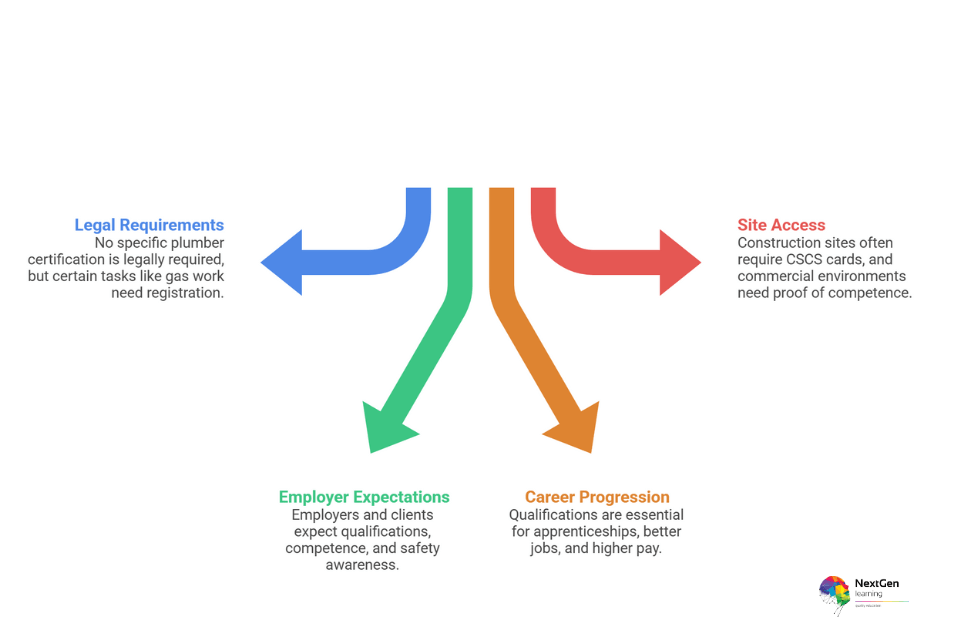
The short answer is yes — but not in the way many people expect. In the UK, there is no single licence called “plumber certification” that legally allows you to work. However, most employers and clients will only hire plumbers who can prove they are trained, competent, and compliant with industry standards.
In practice, this means qualifications are not always a legal requirement, but they are essential for getting work, progressing your career, and earning more. Without recognised training, it is extremely difficult to secure employment, apprenticeships, or site access.
To understand this properly, it helps to separate legal requirements from industry expectations.
What the law says
There is no law that says you must hold a specific plumbing qualification to call yourself a plumber in the UK. However, this does not mean you can legally carry out all plumbing-related work without training.
Certain tasks are strictly regulated, while others are not.
What employers and clients expect
Most employers, contractors, and customers expect plumbers to have:
- Recognised plumbing qualifications
- Proven on-the-job competence
- Evidence of health and safety awareness
- Relevant cards or registrations for site work
As a result, qualifications become the practical requirement, even when they are not technically mandatory.
Work that DOES require certification
Some areas of plumbing cannot be done legally without specific registration:
- Gas work requires Gas Safe registration
- Construction site work often requires a CSCS card
- Commercial or regulated environments require proof of competence
Therefore, while basic domestic plumbing may not be legally restricted, most real-world plumbing jobs still require formal qualifications.
Why qualifications matter even when they’re not “mandatory”
Qualifications help because they:
- Prove you meet UK industry standards
- Show employers you can work safely and competently
- Open access to apprenticeships and better-paid roles
- Reduce liability risks for companies and clients
In contrast, working without recognised qualifications limits your opportunities and earning potential.
To make things clearer, the next section breaks down mandatory vs optional plumbing qualifications, so you know exactly which ones you need and which ones simply give you an advantage.
Mandatory vs Optional Plumbing Qualifications (Important Difference)
Understanding the difference between mandatory and optional plumbing qualifications is essential. Otherwise, it’s easy to waste time on the wrong training or assume you can work without the credentials employers actually expect. While the UK does not require a single licence to become a plumber, certain qualifications are effectively required once you enter the job market.
Qualifications You Must Have to Work as a Plumber
These qualifications are not always written into law, but in reality, you will struggle to get work without them.
- Recognised plumbing training
Employers expect evidence of formal training, such as Level 2 or Level 3 plumbing qualifications, or NVQ-based competence. - Proof of workplace competence
Many roles require on-the-job assessment showing you can safely install, repair, and maintain plumbing systems. - Health and safety awareness
You must demonstrate safe working practices, particularly on construction sites or in commercial environments.
As a result, these qualifications become the baseline for employability, even if they are not legally mandated.
Qualifications That Improve Jobs, Pay, and Progression
Other qualifications are not compulsory, but they significantly improve career prospects and earning potential.
- NVQ Level 3 in Plumbing and Domestic Heating
This confirms full occupational competence and is highly valued by employers. - CSCS card
Often required for site access, especially on new-build or commercial projects. - Gas Safe registration
Essential if you plan to work with gas appliances or heating systems. - Water regulations and compliance training
Improves credibility and expands the range of work you can take on.
Consequently, plumbers with these qualifications access better jobs, charge higher rates, and progress faster.
Why this distinction matters
Many beginners assume any plumbing course is enough. However, short or unrecognised courses alone rarely meet employer expectations. Instead, employers look for a clear pathway showing training, competence, and compliance.
In the next section, we’ll explore the main routes to becoming a plumber in the UK, so you can choose the option that fits your age, experience, and career goals.
Main Routes to Becoming a Plumber in the UK

There is no single route into plumbing in the UK. Instead, the best option depends on your age, experience, learning style, and how quickly you want to start working. Importantly, all legitimate routes aim to build the same outcome: practical skills, recognised training, and real workplace competence.
Below are the main pathways people use to become plumbers, along with when each route makes the most sense.
College Plumbing Courses (Level 2 & Level 3 Diplomas)
College-based plumbing courses are a common starting point, especially for school leavers. Typically, these courses focus on theory, practical workshops, and foundational plumbing knowledge.
- Level 2 introduces basic plumbing systems, tools, and safety
- Level 3 builds advanced skills and prepares learners for real-world work
- Courses usually take 1–2 years to complete
However, college courses alone do not make you fully qualified. As a result, most learners still need workplace experience or NVQ assessment to become employable.
This route works best if you:
- Prefer classroom-based learning
- Are starting straight from school
- Plan to progress into an apprenticeship or NVQ later
Plumbing Apprenticeships (NVQ Route)
Apprenticeships combine paid work with structured training. Because of this, they are one of the most respected routes into plumbing.
- You work on real jobs while learning
- Training leads to NVQ Level 2 and Level 3
- Completion usually takes 3–4 years
Importantly, apprenticeships are not just for teenagers. While competition can be higher for older applicants, adults can still apply.
This route is ideal if you:
- Want hands-on experience from day one
- Prefer learning on the job
- Are happy with a longer but structured pathway
Becoming a Plumber Without an Apprenticeship
Some people enter plumbing by working as a plumber’s mate or assistant. In this case, skills develop on the job while formal qualifications are completed alongside work.
- You gain experience through employment
- You complete plumbing qualifications separately
- Progress depends on employer support and motivation
However, this route requires discipline. Without structured assessment, progress can stall. Therefore, recognised qualifications remain essential.
This option suits people who:
- Change careers later in life
- Already work in construction or maintenance
- Need flexibility around earning while training
Essential Qualifications and Cards Plumbers Often Need
Beyond training and experience, plumbers in the UK often need specific cards and registrations to work legally, safely, and professionally. Although these are sometimes overlooked, they play a major role in employability and site access. Therefore, understanding them early can prevent unnecessary delays later.
CSCS Card – Site Access and Safety
A CSCS card is commonly required for working on construction sites. In most cases, employers will not allow site access without one.
- Proves basic health and safety knowledge
- Required on many residential and commercial sites
- Often requested even for plumbing assistants
As a result, holding a CSCS card significantly increases job opportunities.
Gas Safe Registration – Gas Work Only
Gas Safe registration is mandatory if you carry out any gas-related work. Importantly, this applies only to gas systems, not general plumbing.
- Legally required for installing or repairing gas appliances
- Requires approved qualifications and assessment
- Not needed for water-only plumbing roles
However, many plumbers choose to add this later to expand services and income.
Water Regulations and Compliance Awareness
Plumbers working on water systems must follow UK water regulations. While formal registration is not always required, training in compliance improves credibility.
- Ensures safe drinking water systems
- Reduces risk of legal issues
- Often expected by employers and contractors
Consequently, compliance knowledge supports long-term career stability.
What Skills and Personal Qualities Do Successful Plumbers Have?
Qualifications open the door to plumbing, but skills and personal qualities determine how far you progress. In fact, many employers value attitude and reliability just as much as formal training. Therefore, understanding these skills early helps you prepare for real working conditions, not just exams.
Technical and Practical Skills
Plumbing is a hands-on trade. As a result, strong practical ability is essential from day one.
- Install, repair, and maintain water and heating systems safely
- Read plans, drawings, and technical instructions accurately
- Use tools and equipment correctly and efficiently
- Diagnose faults and apply effective solutions
Moreover, technical confidence grows with experience, which is why structured training and on-the-job practice matter.
Problem-Solving and Attention to Detail
Every job is different. Because of this, plumbers must think critically and work methodically.
- Identify issues quickly under pressure
- Adapt solutions to different properties and systems
- Check work carefully to prevent leaks or future failures
Consequently, strong problem-solving skills reduce callbacks and build reputation.
Communication and Customer Skills
Many plumbers work directly with homeowners or site managers. Therefore, communication plays a major role.
- Explain problems and solutions clearly
- Provide accurate time and cost estimates
- Build trust with customers and contractors
In contrast, poor communication often leads to disputes, even when technical work is good.
Physical Fitness and Reliability
Plumbing is physically demanding. Additionally, employers expect consistency and professionalism.
- Work in tight spaces and challenging environments
- Handle manual tasks safely
- Arrive on time and meet deadlines
Ultimately, reliability separates average plumbers from highly sought-after professionals.
With the right skills and mindset in place, the next question most people ask is how long it actually takes to become qualified. In the next section, we’ll break down realistic timelines based on each training route.
How Long Does It Take to Become a Qualified Plumber in the UK?
The time it takes to become a qualified plumber in the UK depends largely on the route you choose and how quickly you gain workplace experience. However, understanding realistic timelines helps you plan properly and avoid false expectations.
Typical Timelines by Route
College route
- Level 2 Diploma: around 1 year
- Level 3 Diploma: an additional 1 year
- Extra workplace experience or NVQ assessment often required
In total, this route usually takes 2–3 years, depending on progression and job access.
Apprenticeship route
- Combines work and training
- NVQ Level 2 and Level 3 achieved over time
- Structured assessments included
As a result, apprenticeships typically take 3–4 years, but lead directly to recognised competence.
Work-based route (without apprenticeship)
- Start as a plumber’s mate or assistant
- Train alongside work
- Complete qualifications separately
This route varies, but most people take 2–5 years, depending on employer support and personal commitment.
Why timelines can differ
Not everyone progresses at the same pace. For example, factors such as job availability, assessment access, and prior experience all affect timelines. Moreover, adding specialist qualifications, such as gas work, can extend training but increase earning potential.
Therefore, the “fastest” route is not always the best. What matters most is reaching a level where you can work safely, confidently, and independently.
Now that timelines are clear, the next important question is how qualifications affect earnings. In the next section, we’ll explore plumber salaries in the UK and how training impacts pay.
Plumber Salary in the UK (What Qualifications Mean for Pay)
Plumbing salaries in the UK vary widely. However, qualifications and experience play a major role in how much you can realistically earn. While entry-level roles offer modest pay, earnings increase steadily as skills, certifications, and responsibility grow.
Typical UK Plumbing Salary Ranges
- Trainee or plumber’s mate: £18,000–£22,000 per year
- Newly qualified plumber: £25,000–£30,000 per year
- Experienced plumber: £30,000–£40,000+ per year
- Self-employed plumbers: often earn more, depending on workload and location
Importantly, these figures reflect general industry ranges rather than guaranteed income.
How Qualifications Affect Earnings
Qualifications directly influence earning potential because they determine the type of work you can take on.
- Level 2 training allows entry-level roles but limits responsibility
- Level 3 or NVQ competence unlocks better-paid, independent work
- Site cards and compliance training expand job access
- Gas qualifications significantly increase earning potential
As a result, plumbers with broader certification can charge higher rates and secure more consistent work.
Location and Specialisation Matter
Earnings also depend on where and how you work. For example, plumbers in large cities often earn more, while specialists in heating or gas work command higher fees. Consequently, continued training usually pays for itself over time.
Now that salary expectations are clear, the final question many readers ask is whether plumbing is truly a good long-term career. In the next section, we’ll evaluate job demand, stability, and progression opportunities.
Is Plumbing a Good Career Choice in the UK?
Plumbing remains one of the most reliable skilled trades in the UK. However, whether it’s the right career for you depends on your expectations, work preferences, and long-term goals. When looked at realistically, plumbing offers strong demand, steady income growth, and flexible career options.
Job Demand and Stability
Plumbers provide essential services. As a result, demand stays consistent regardless of economic conditions.
- Homes and buildings always need water, heating, and maintenance
- Repairs and emergency work cannot be postponed for long
- New housing and renovation projects continue across the UK
Therefore, qualified plumbers rarely struggle to find work once established.
Career Progression Opportunities
Plumbing offers clear progression paths. For example, many plumbers move from employed roles into self-employment or specialist areas.
- Progress from assistant to fully qualified plumber
- Add specialisations such as heating or gas work
- Start a small business or work as an independent contractor
Consequently, income and independence increase over time.
Work-Life Considerations
Plumbing is physically demanding. However, many people prefer this to desk-based roles.
- Hands-on, practical work
- Variety in daily tasks
- Opportunities for flexible hours when self-employed
In contrast, the role can involve emergency call-outs and challenging environments, which may not suit everyone.
Who Plumbing Suits Best
Plumbing is a good career choice if you:
- Enjoy practical problem-solving
- Prefer active work over office jobs
- Value job security and transferable skills
With these factors in mind, the final step is addressing common questions people still have before committing. In the next section, we’ll answer the most frequently asked questions about plumbing qualifications in the UK.
Frequently Asked Questions About Plumbing Qualifications
GCSEs are helpful but not always essential. However, many college courses and apprenticeships prefer GCSEs in English and maths. In practice, adults without GCSEs can still enter plumbing through work-based routes or alternative training pathways.
Yes. In fact, many plumbers retrain later in life. Employers value reliability, maturity, and work ethic. Therefore, age is rarely a barrier if you’re committed to training and gaining experience.
No. Although apprenticeships are popular, you can qualify through college courses or work-based learning combined with recognised qualifications. What matters most is proving competence, not the route itself.
Online courses are useful for theory and foundations. However, they do not replace hands-on training or workplace assessment. As a result, they work best as a starting point or alongside practical experience.
There is no single plumbing licence in the UK. However, gas work requires Gas Safe registration, and many sites require CSCS cards. Therefore, legal requirements depend on the type of work you do.
Final Thoughts – Choosing the Right Plumbing Qualification Path
Becoming a plumber in the UK is more flexible than many people realise. However, success depends on choosing a route that builds both practical skills and recognised competence. While you don’t need a university degree, you do need structured training, real experience, and the right certifications for your career goals.
Ultimately, the best pathway is the one that fits your age, background, and working style. By understanding which qualifications are essential and which simply give you an advantage, you can plan confidently and avoid costly mistakes.
If you approach plumbing with commitment, patience, and the right training, it can offer long-term stability, strong earnings, and genuine career satisfaction.


0 responses on "What Qualifications Do You Need to Be a Plumber in the UK?"