





What You Will Learn in a Phlebotomy Diploma Course
Introduction: Building the Essential Skills for a Career in Healthcare
Healthcare systems depend on accurate diagnostic testing to identify illnesses, monitor treatment outcomes, and assess overall patient health. Among the most frequently performed medical procedures in hospitals and clinics is blood testing. From routine health checks to complex disease investigations, blood samples provide vital information that helps doctors make informed clinical decisions.
However, collecting blood samples safely and accurately requires specialised training. This is where phlebotomy professionals play a crucial role. A trained phlebotomist is responsible for drawing blood from patients, ensuring samples are handled correctly, and maintaining strict hygiene standards throughout the procedure.
Enrolling in a professional training programme such as the Phlebotomy Diploma allows learners to develop the clinical knowledge and practical techniques needed to perform blood collection procedures confidently.
A well-structured phlebotomy diploma course does more than teach how to draw blood. It introduces learners to essential healthcare practices, patient communication techniques, and laboratory procedures that are required in real medical environments.
In this guide, we explore what you will learn in a phlebotomy diploma course, including the practical skills, medical knowledge, and professional competencies that prepare students for careers in hospitals, clinics, and diagnostic laboratories.
Table of Contents
Venipuncture Techniques: Mastering the Core Skill of Phlebotomy
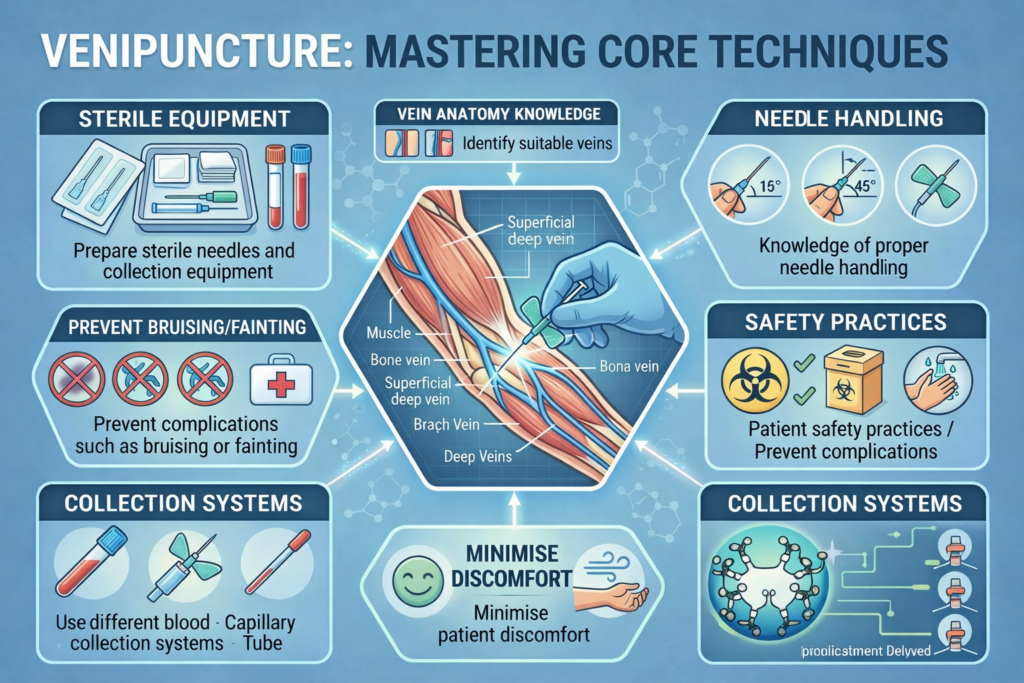
Phlebotomy is not only a technical medical skill but also a patient-focused profession. Phlebotomists interact with patients throughout the blood collection process, which means strong communication skills are essential.
Many individuals feel nervous or anxious about blood tests. A skilled phlebotomist must be able to reassure patients, explain procedures clearly, and create a comfortable environment during the process.
A phlebotomy diploma course therefore includes training in patient communication and care techniques.
Students learn how to:
- Explain blood collection procedures clearly
- Support patients who feel anxious or fearful
- Maintain professionalism and empathy
- Provide clear pre-test and post-test instructions
- Respond calmly to patient concerns
Developing these interpersonal skills helps phlebotomists build trust with patients while ensuring a positive healthcare experience.
Healthcare organisations such as the National Health Service place strong emphasis on patient-centred care, making communication skills an important part of clinical training.
By combining technical knowledge with patient care abilities, phlebotomy professionals can perform their duties more effectively in real healthcare environments.
Infection Control and Safety Procedures
Working with blood samples requires strict hygiene standards and infection prevention measures. Healthcare professionals must follow specific safety protocols to protect themselves, their colleagues, and their patients from potential health risks.
A phlebotomy diploma course provides comprehensive training in infection control and healthcare safety procedures, ensuring that students understand how to maintain a sterile clinical environment.
Key topics covered during this part of the training include:
- Proper hand hygiene and sanitation procedures
- Correct use of personal protective equipment (PPE)
- Safe disposal of needles and sharps
- Preventing cross-contamination between patients
- Maintaining sterile blood collection equipment
- Managing accidental needle injuries safely
Understanding infection prevention is essential in healthcare settings where bloodborne pathogens and other infectious agents may pose risks.
Healthcare safety guidelines promoted by organisations such as the World Health Organization emphasise the importance of proper infection control procedures in clinical environments.
By learning these safety practices, phlebotomy students develop the confidence to perform procedures while maintaining professional hygiene standards.
Patient Communication and Care Skills
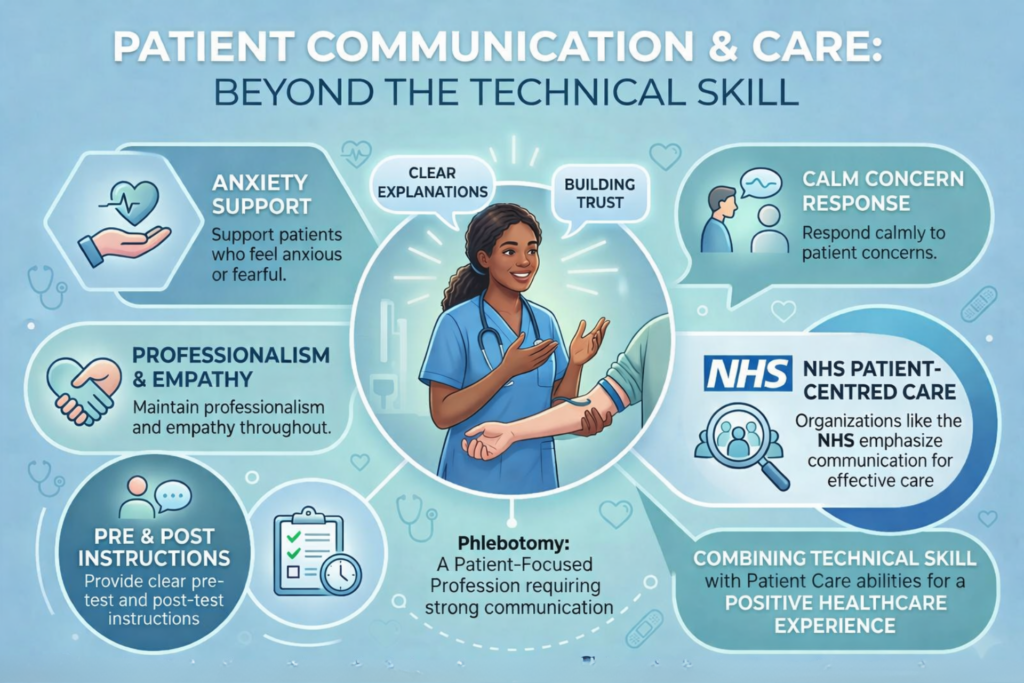
Phlebotomy is not only a technical medical skill but also a patient-focused profession. Phlebotomists interact with patients throughout the blood collection process, which means strong communication skills are essential.
Many individuals feel nervous or anxious about blood tests. A skilled phlebotomist must be able to reassure patients, explain procedures clearly, and create a comfortable environment during the process.
A phlebotomy diploma course therefore includes training in patient communication and care techniques.
Students learn how to:
- Explain blood collection procedures clearly
- Support patients who feel anxious or fearful
- Maintain professionalism and empathy
- Provide clear pre-test and post-test instructions
- Respond calmly to patient concerns
Developing these interpersonal skills helps phlebotomists build trust with patients while ensuring a positive healthcare experience.
Healthcare organisations such as the National Health Service place strong emphasis on patient-centred care, making communication skills an important part of clinical training.
By combining technical knowledge with patient care abilities, phlebotomy professionals can perform their duties more effectively in real healthcare environments.
Medical Terminology and Basic Human Anatomy
Understanding medical terminology and human anatomy is essential for anyone working in healthcare. Phlebotomy diploma courses introduce learners to the fundamental medical knowledge required to perform blood collection procedures safely.
Students typically study:
- Basic human anatomy and physiology
- The structure and function of veins
- The circulatory system and blood flow
- Common medical terminology used in healthcare
- Names and purposes of diagnostic blood tests
Learning basic anatomy helps phlebotomists understand how to identify appropriate venipuncture sites and avoid sensitive areas during blood collection.
Medical terminology training also allows phlebotomists to communicate effectively with doctors, nurses, and laboratory technicians.
Professional organisations such as the Institute of Biomedical Science highlight the importance of foundational medical knowledge for professionals involved in laboratory diagnostics.
With this understanding, phlebotomy students gain insight into how their role supports the broader healthcare system.
Blood Sample Handling and Documentation
Collecting a blood sample is only the first step in the diagnostic process. After the sample is taken, it must be labelled, recorded, and transported correctly to ensure accurate laboratory results.
A phlebotomy diploma course teaches learners how to handle and document blood samples properly.
Key training topics include:
- Correct labelling of blood specimen containers
- Recording patient details accurately
- Handling blood samples safely during transport
- Storing specimens under appropriate conditions
- Preparing samples for laboratory analysis
- Maintaining accurate medical records
Even small mistakes in labelling or documentation can lead to incorrect test results, which may affect patient treatment decisions.
Because of this, healthcare professionals must follow strict sample management procedures.
Accurate specimen handling ensures that laboratories receive reliable samples for testing, allowing doctors to make correct diagnoses.
Developing Practical Healthcare Skills
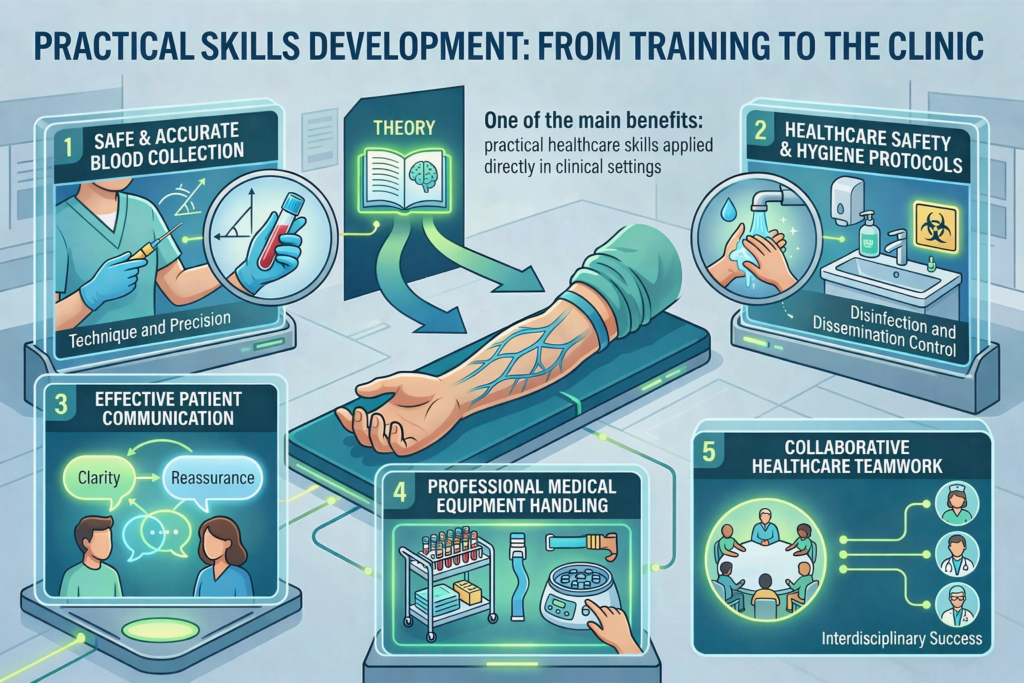
One of the main benefits of completing a Phlebotomy Diploma is the opportunity to develop practical healthcare skills that can be applied directly in clinical settings.
Unlike some academic courses that focus mainly on theory, phlebotomy training combines medical knowledge with practical learning.
Students develop the ability to:
- Perform safe and accurate blood collection procedures
- Follow healthcare safety and hygiene protocols
- Communicate effectively with patients
- Handle medical equipment professionally
- Work collaboratively with healthcare teams
These practical skills prepare learners to work in healthcare environments such as hospitals, clinics, and diagnostic laboratories.
You can explore the course here:
Preparing for Real Healthcare Environments
Phlebotomy diploma courses are designed to simulate real healthcare environments so that students understand how diagnostic testing works in practice.
Learners gain insight into the workflow of hospitals, clinics, and laboratories where blood samples are processed and analysed.
Healthcare systems such as NHS England rely on trained diagnostic professionals who understand laboratory procedures and healthcare regulations.
Through structured training modules, students develop the competence needed to perform their duties confidently in professional medical settings.
Why Phlebotomy Training Is Important for Healthcare Careers
Phlebotomy training plays a vital role in maintaining the accuracy and reliability of diagnostic healthcare services.
Blood testing is used to diagnose countless medical conditions, from infections and nutritional deficiencies to chronic diseases and genetic disorders.
Without properly trained phlebotomists to collect blood samples safely, healthcare providers would struggle to conduct the tests needed for diagnosis and treatment planning.
For individuals interested in entering the healthcare field, phlebotomy training offers a practical and accessible pathway into clinical environments.
The skills learned through professional training can open doors to roles in hospitals, laboratories, and community healthcare services.
Conclusion: Building a Strong Foundation for a Healthcare Career
A phlebotomy diploma course provides learners with the essential knowledge and practical skills needed to support modern diagnostic healthcare services.
From mastering venipuncture techniques to understanding infection control, patient communication, medical terminology, and laboratory procedures, students gain a well-rounded education that prepares them for professional healthcare roles.
By enrolling in a structured programme such as the Phlebotomy Diploma, learners can build practical clinical skills and develop the confidence needed to work in hospitals, clinics, and diagnostic laboratories.
Explore the course here:
Phlebotomy Diploma
With the right training and dedication, a phlebotomy diploma can serve as the first step toward a rewarding career in healthcare while contributing to the vital diagnostic processes that support patient care every day.
Frequently Asked Questions (FAQ) About a Phlebotomy Diploma
A phlebotomy diploma is a professional healthcare qualification that trains students to safely collect blood samples for diagnostic testing. The course covers practical skills like venipuncture, infection control, patient communication, and laboratory sample handling, preparing learners for careers in hospitals, clinics, and diagnostic laboratories.
Most phlebotomy diploma courses in the UK can be completed within a few weeks to a few months, depending on the programme format. Online or blended courses may offer flexibility for learners who are working or studying alongside other commitments.
Yes. Many graduates secure positions as phlebotomists within the National Health Service, working in hospitals, GP clinics, community healthcare centres, and diagnostic laboratories. The NHS highly values professionals with accredited phlebotomy training.
After completing the diploma, graduates can work in roles such as:
- Hospital or clinic phlebotomist
- Diagnostic laboratory assistant
- Mobile phlebotomist
- Community healthcare support worker
- Entry-level medical laboratory technician
These roles offer opportunities to gain hands-on clinical experience and further career progression in healthcare.
No prior healthcare experience is required. A phlebotomy diploma is designed for beginners who want to start a career in healthcare. The course teaches all necessary skills, including blood collection, infection control, medical terminology, and patient communication.
Phlebotomy is an in-demand healthcare career in the UK. With an ageing population, increasing diagnostic testing, and the growth of private laboratories, trained phlebotomists are needed in hospitals, clinics, and laboratories. It also provides a strong foundation for further healthcare careers, such as nursing, biomedical science, or laboratory work.
Learners develop a wide range of professional skills, including:
- Venipuncture and blood collection techniques
- Infection prevention and control procedures
- Patient communication and care
- Medical terminology and anatomy basics
- Sample handling, labelling, and documentation
- Understanding laboratory workflow and safety


Phlebotomy Diploma

0 responses on "What You Will Learn in a Phlebotomy Diploma Course"