





The Care Certificate: Your First Step to a Nursing Assistant Career
Starting a career in the UK care sector is a meaningful decision. However, for many people, knowing where to begin can feel confusing. The Care Certificate provides that essential starting point. Whether you aim to work as a Care Assistant, Healthcare Assistant, Nursing Assistant, or Care Worker within Adult Care, the Care Certificate offers the knowledge, confidence, and professional standards required to begin safely and successfully.
Moreover, the Care Certificate is not just an introduction to care work. Instead, it lays the groundwork for long-term career development. Therefore, for individuals who plan to progress into advanced qualifications such as a Level 3 Diploma in Health and Social Care or a Level 3 Diploma in Nursing Assistant Complete Training, the Care Certificate is often the first and most important step.
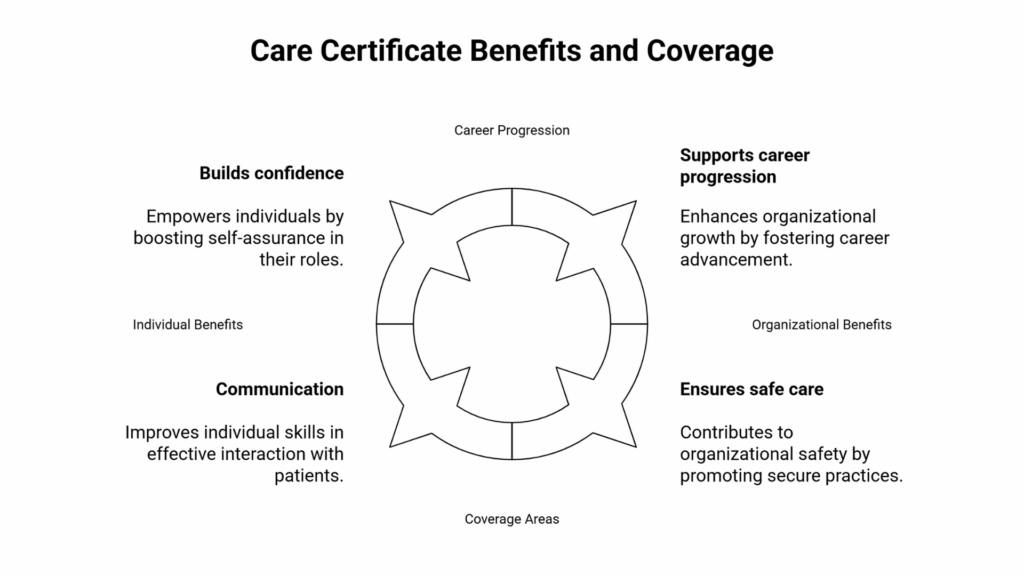
Table of Contents
What Is the Care Certificate?
The Care Certificate is a nationally recognised set of standards developed to ensure that new care staff in England receive consistent and high-quality training. Essentially, it defines what every Care Worker should know, understand, and demonstrate when working in Adult Care or healthcare environments.
Importantly, the Care Certificate focuses on practical competence rather than classroom theory alone. As a result, both Care Assistant and Healthcare Assistant roles benefit from learning that reflects real workplace situations. Furthermore, the Care Certificate ensures that new staff understand professional boundaries, safeguarding responsibilities, and person-centred care principles.
Although the support Certificate is not a formal qualification, it is widely expected by employers. Consequently, completing it improves trust, employability, and confidence for anyone entering the care sector.
Why the Care Certificate Is Important in the UK Care Sector
The Care Certificate plays a critical role in maintaining standards across the UK care sector. Firstly, it ensures that every Care Worker has the same baseline knowledge, regardless of where they work. Therefore, service users receive safer and more consistent care.
Secondly, the Care Certificate protects care staff themselves. For example, understanding health and safety, safeguarding, and duty of care reduces workplace risks. As a result, both Care Assistant and Healthcare Assistant professionals feel more confident in their responsibilities.
Moreover, for anyone aspiring to become a Nursing Assistant, the Care Certificate demonstrates commitment and professionalism. Consequently, employers often view it as evidence of readiness for progression within Adult Care and healthcare settings.
Who Needs the Care Certificate?
The Care Certificate is designed for anyone new to care roles. This includes individuals starting work as a Care Assistant, Healthcare Assistant, or Care Worker in Adult Care settings such as care homes, supported living, and domiciliary care.
Additionally, some experienced staff may also complete the Care Certificate if they have not previously undertaken structured training. This ensures consistency across teams and organisations.
Importantly, many people who plan to become a Nursing Assistant begin their journey as a Care Assistant or Care Worker. Therefore, the Care Certificate acts as a gateway into broader healthcare careers.
What the Care Certificate Covers
The Care Certificate consists of 15 standards that reflect everyday responsibilities in Adult Care. These standards focus on both knowledge and practical skills.
Key areas include:
- Understanding your role as a Care Worker
- Effective communication in care settings
- Equality, diversity, and inclusion
- Safeguarding adults
- Duty of care
- Infection prevention and control
- Health and safety awareness
Furthermore, the Care Certificate emphasises values such as dignity, respect, and compassion. As a result, both Care Assistant and Healthcare Assistant roles are grounded in ethical and professional care delivery.
Is the Care Certificate Mandatory in Adult Care?
The Care Certificate is not legally mandatory. However, in practice, it is strongly expected within Adult Care services. Most employers require new Care Workers to complete it during their initial employment period.
Moreover, care providers are inspected by regulatory bodies, which expect staff to be properly trained. Consequently, not having the Care Certificate can limit opportunities for a Care Assistant or Healthcare Assistant.
For individuals aiming to become a Nursing Assistant, the Care Certificate is widely regarded as essential preparation rather than optional learning.
How the Care Certificate Helps You Become a Nursing Assistant
For many learners, the Care Certificate represents the first milestone toward becoming a Nursing Assistant. It introduces essential concepts such as safe care, communication, and professional conduct.
Furthermore, completing the Care Certificate builds confidence in clinical environments. As a result, Care Workers often transition more smoothly into Healthcare Assistant and Nursing Assistant roles.
Importantly, the Care Certificate prepares learners for further study. Many individuals progress directly into advanced training, including the Level 3 Diploma in Nursing Assistant Complete Training, which builds upon the same principles and standards.
Care Certificate Requirements for Care Assistants and Healthcare Assistants
To achieve the Care Certificate, learners must demonstrate competence through workplace-based assessments. This applies to every Care Assistant and Healthcare Assistant working in Adult Care.
Assessment methods typically include:
- Direct observation in the workplace
- Knowledge questions and reflective discussions
- Supervisor or assessor sign-off
Therefore, the Care Certificate ensures that each Care Worker can apply learning in real situations. This practical focus is especially valuable for those progressing toward Nursing Assistant roles.
How Long the Care Certificate Takes to Complete
In most cases, the Care Certificate takes between 12 and 16 weeks to complete. However, completion time may vary depending on working hours and employer support.
Importantly, the Care Certificate is usually completed alongside employment. Consequently, Care Assistants and Care Workers can earn while they learn within Adult Care environments.
Once completed, the Care Certificate does not expire. Therefore, both Healthcare Assistant and Nursing Assistant professionals can build long-term careers on this foundation.
What Happens After You Complete the Care Certificate
After completing the Care Certificate, many career pathways become available. Some Care Assistants move into senior Care Worker roles, while others progress into healthcare settings as Healthcare Assistants.
Moreover, individuals who want long-term growth often enrol in further qualifications. Two highly valuable options are:
- Level 3 Diploma in Health and Social Care
- Level 3 Diploma in Nursing Assistant Complete Training
These courses develop leadership, clinical understanding, and professional competence. As a result, they significantly improve career progression opportunities within Adult Care and healthcare services.
Conclusion
The Care Certificate is more than an entry requirement; it is the foundation of a successful care career. Whether you aspire to work as a Care Assistant, Healthcare Assistant, Nursing Assistant, or Care Worker in Adult Care, the Care Certificate provides essential skills, confidence, and professional standards.
Furthermore, by progressing to higher qualifications such as a Level 3 Diploma in Health and Social Care or a Level 3 Diploma in Nursing Assistant Complete Training, you can build a stable, rewarding, and respected career. Ultimately, starting with the Care Certificate is the smartest and most effective way to begin your journey in the UK care sector.
Frequently Asked Questions
A care assistant supports individuals with daily living activities such as personal care, mobility, medication support, and emotional wellbeing. The role focuses on providing safe, respectful, and person-centred care in adult care settings.
Care assistants usually work in adult care environments such as care homes or community care, while healthcare assistants often work in hospitals or clinical settings. However, both roles share similar responsibilities and require strong care skills and professional conduct.
Most nursing assistants start by working in care or healthcare support roles. Gaining foundational training and workplace experience is essential before progressing into nursing assistant positions and further professional development.
Care workers need strong communication skills, empathy, patience, and the ability to follow safe care practices. Understanding safeguarding, dignity, and teamwork is also essential for working effectively in adult care roles.
Yes, care roles offer clear progression opportunities. Many professionals move into senior care positions, healthcare support roles, or further training such as Level 3 diplomas that lead to leadership or nursing support careers.


Level 3 Diploma in Nursing Assistant Complete Training

0 responses on "The Care Certificate: Your First Step to a Nursing Assistant Career"