





What Is the PIES Model in Health and Social Care? Full Guide UK
The PIES model is one of the most important frameworks used in health and social care because it helps professionals support individuals in a more complete and person-centred way. Rather than focusing only on physical health, the PIES approach considers emotional well-being, intellectual development, and social connection alongside physical care.
In modern healthcare and social care settings, professionals regularly support individuals with different physical conditions, emotional challenges, learning needs, and social circumstances. Therefore, understanding the full range of a person’s needs is essential for delivering safe, effective, and compassionate care.
PIES stands for:
- Physical development relating to health, mobility, nutrition, hygiene, and physical well-being.
- Intellectual development focusing on learning, thinking, memory, communication, and problem-solving abilities.
- Emotional development involving feelings, confidence, mental health, and emotional resilience.
- Social development connected to relationships, communication, community involvement, and social support.
The PIES model helps care workers, nurses, carers, support workers, and healthcare professionals assess individuals more holistically. As a result, support plans become more personalised and better suited to improving overall well-being and quality of life.
Today, the PIES framework is widely used across:
- hospitals and NHS healthcare services
- residential care homes
- community support programmes
- mental health services
- child care and elderly care settings
- rehabilitation and social care environments
This guide explains what the PIES model means, why it matters in health and social care, how professionals apply it in real-life care settings, and how it supports person-centred healthcare across the UK.
Table of Contents
What Does PIES Stand For?
PIES stands for Physical, Intellectual, Emotional, and Social development. In health and social care, these four areas are used to assess a person’s overall well-being and ensure care supports the whole individual rather than focusing on only one aspect of health.
The PIES model helps healthcare professionals understand how different areas of a person’s life are connected. For example, poor physical health may affect emotional well-being, while social isolation can negatively influence mental health and confidence. Therefore, the PIES framework encourages a more balanced and person-centred approach to care.
Overview of the PIES Model
| PIES Area | Focus in Health and Social Care |
|---|---|
| Physical | Health, mobility, nutrition, hygiene, physical care |
| Intellectual | Learning, thinking, communication, memory, problem-solving |
| Emotional | Feelings, confidence, mental health, emotional well-being |
| Social | Relationships, communication, community, social support |
Physical Development
Physical development relates to the body, overall health, mobility, fitness, hygiene, and medical care needs. In healthcare settings, professionals monitor physical well-being to ensure individuals remain safe, healthy, and comfortable.
Physical support may include:
- medication management
- mobility assistance
- nutrition and hydration support
- personal hygiene care
- physiotherapy and rehabilitation
For elderly individuals or patients recovering from illness, physical care often plays a major role in maintaining independence and improving quality of life.
Intellectual Development
Intellectual development focuses on how individuals think, learn, communicate, remember information, and solve problems. Maintaining intellectual stimulation is important because cognitive health can affect confidence, independence, and emotional well-being.
Examples of Intellectual Support Include:
- Encouraging learning activities and hobbies
- Supporting memory and communication skills
- Providing educational and cognitive stimulation
- Helping individuals make informed decisions
Healthcare professionals often encourage activities that keep the mind active, particularly within elderly care, mental health support, and rehabilitation services.
Emotional Development
Emotional development relates to feelings, confidence, self-esteem, emotional resilience, and mental well-being. In social care, emotional support is extremely important because many individuals may experience stress, anxiety, loneliness, trauma, or emotional distress.
Care workers support emotional well-being by:
- listening actively and empathetically
- offering reassurance and encouragement
- building positive professional relationships
- supporting mental health and confidence
Strong emotional support can significantly improve trust, communication, and overall well-being within healthcare environments.
Social Development
Social development focuses on relationships, communication, social interaction, and community involvement. Social isolation can negatively affect both physical and emotional health. Therefore, maintaining social connections is an important part of person-centred care.
Social Support May Include:
- Encouraging family and community involvement
- Supporting friendships and group activities
- Helping individuals engage socially and confidently
- Reducing loneliness and social isolation
Strong social support often improves emotional stability, confidence, and long-term quality of life for individuals receiving care.
Why the PIES Model Matters in Health and Social Care
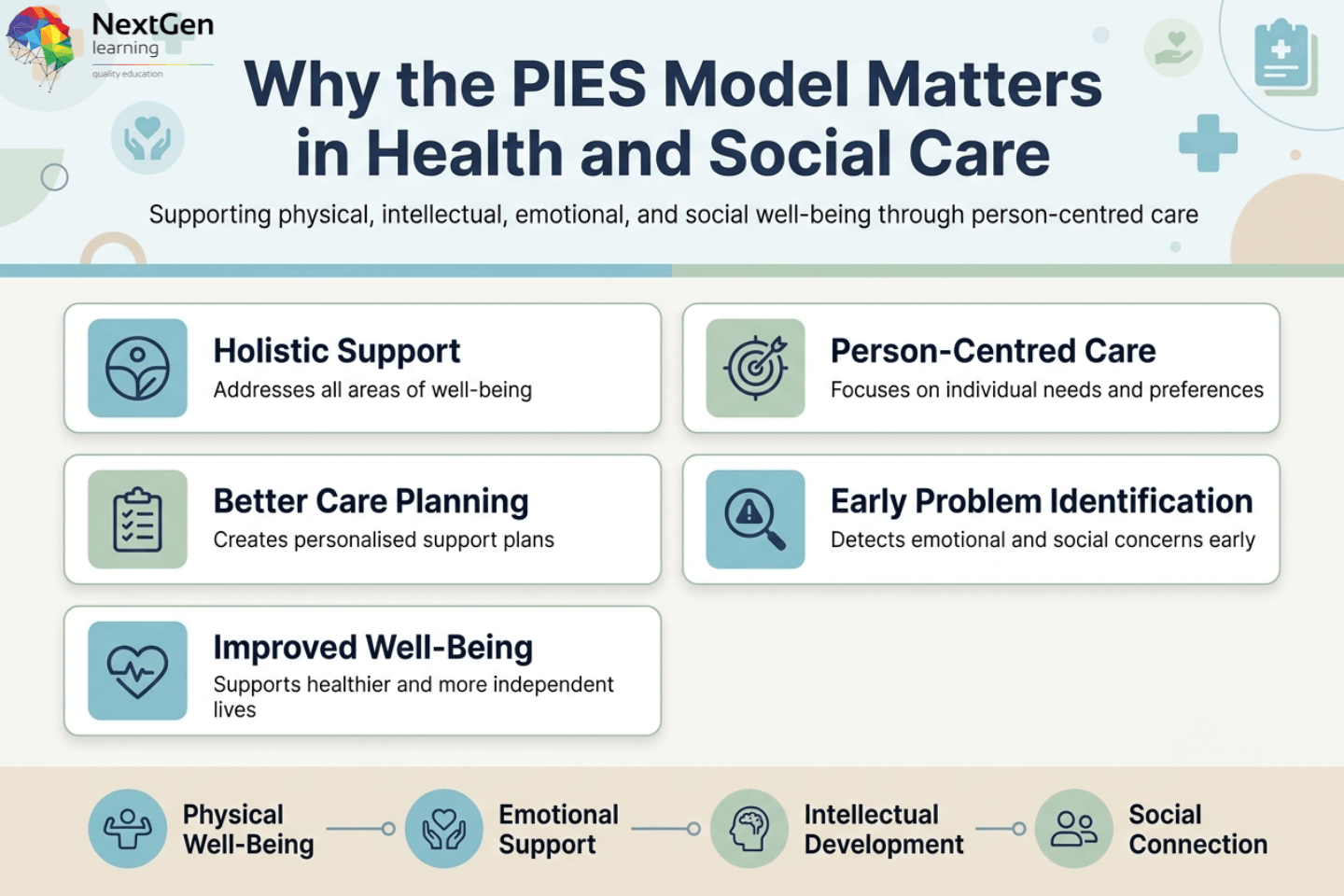
The PIES model is important because it helps healthcare and social care professionals support the whole person rather than focusing only on physical health problems. In many care settings, an individual’s physical condition is closely connected to their emotional well-being, intellectual development, and social life. Therefore, understanding all four areas of PIES allows professionals to provide more balanced, personalised, and effective care.
Modern health and social care services increasingly focus on person-centred care. As a result, professionals must consider how emotional stress, loneliness, learning difficulties, mobility issues, or social isolation may affect a person’s overall quality of life.
Why the PIES Framework Is Important
| Benefit of PIES | Impact on Care |
|---|---|
| Holistic Support | Addresses all areas of well-being |
| Person-Centred Care | Focuses on individual needs and preferences |
| Better Care Planning | Helps create more personalised support plans |
| Early Problem Identification | Detects emotional, social, or cognitive issues early |
| Improved Well-Being | Supports healthier and more independent lives |
Supports Holistic and Person-Centred Care
The PIES framework encourages care workers to look beyond medical conditions alone. Instead, it promotes a holistic approach where physical, emotional, intellectual, and social needs are all considered equally important.
For example:
- poor mobility may reduce social interaction
- loneliness may affect emotional well-being
- stress and anxiety may impact physical health
- cognitive difficulties may reduce independence
By recognising these connections, healthcare professionals can provide more effective and compassionate support.
Improves Care Planning and Decision-Making
The PIES model also helps professionals create more personalised care plans based on an individual’s unique circumstances and needs. Consequently, support becomes more targeted, practical, and beneficial for long-term well-being.
Care Workers Use PIES To:
- Assess individual strengths and support needs more accurately
- Identify areas requiring additional emotional or social support
- Promote independence and confidence where possible
- Improve communication between healthcare professionals and families
This structured approach helps ensure care remains balanced and responsive to changing needs.
Encourages Better Emotional and Social Support
Many individuals receiving care may experience anxiety, isolation, depression, or low confidence alongside physical health conditions. Therefore, emotional and social support are essential parts of healthcare and social care services.
The PIES model helps professionals:
- build stronger relationships with clients
- support emotional well-being
- reduce loneliness and social isolation
- encourage community involvement and engagement
This often leads to improved confidence, communication, and overall quality of life.
Helps Professionals Deliver Better Care Outcomes
When all four areas of PIES are considered together, individuals often receive more effective and personalised support. Care workers can identify concerns earlier, improve communication, and create healthier care environments that support both independence and emotional well-being.
Because of this, the PIES model remains one of the most valuable frameworks within modern UK health and social care settings.
How Care Workers Use the PIES Model

Health and social care professionals use the PIES model to understand and support every aspect of an individual’s well-being. Rather than focusing only on medical treatment or physical support, the framework helps care workers assess emotional health, intellectual needs, and social connections alongside physical care.
In many healthcare environments, professionals use PIES as part of care planning, risk assessment, safeguarding, rehabilitation, and daily support activities. Consequently, the model helps ensure care remains balanced, person-centred, and responsive to changing individual needs.
Using PIES During Care Assessments
Care workers often begin by observing the individual’s daily routines, behaviours, communication, emotional state, and physical condition. They may also speak with family members, healthcare professionals, or support workers to understand the person’s wider needs more clearly.
Care Assessments May Include:
- Physical health and mobility needs
- Communication and cognitive abilities
- Emotional well-being and mental health concerns
- Social interaction and support systems
This process helps professionals identify areas where additional support may be required.
Supporting Physical Needs
The physical part of PIES focuses on maintaining health, safety, mobility, hygiene, and overall physical well-being. Care workers support individuals by helping manage everyday physical care needs while encouraging independence wherever possible.
Examples of physical support include:
- assisting with mobility and exercise
- supporting nutrition and hydration
- helping with personal hygiene
- monitoring medication and health conditions
- arranging physiotherapy or medical appointments
Physical support is especially important within elderly care, rehabilitation, disability support, and hospital environments.
Supporting Intellectual Development
Healthcare professionals also encourage intellectual stimulation to maintain cognitive function, confidence, and communication abilities. Intellectual support can help individuals remain mentally active and socially engaged.
Intellectual Support May Involve:
- Encouraging educational activities and hobbies
- Supporting memory and communication exercises
- Promoting problem-solving and independent thinking
- Helping individuals understand care decisions clearly
These approaches are commonly used within dementia care, mental health support, rehabilitation, and child development services.
Supporting Emotional Well-Being
Emotional support is a major part of person-centred care because emotional health strongly affects confidence, behaviour, communication, and recovery. Care workers regularly support individuals experiencing stress, anxiety, loneliness, grief, trauma, or emotional distress.
Professionals may support emotional well-being by:
- listening actively and empathetically
- offering reassurance and encouragement
- building positive relationships
- reducing emotional stress and isolation
Strong emotional support often improves trust and overall quality of care significantly.
Supporting Social Development
Social support helps individuals maintain relationships, confidence, communication skills, and community involvement. In many cases, social isolation can negatively affect both emotional and physical well-being. Therefore, social care workers encourage positive social interaction whenever possible.
Social Support May Include:
- Encouraging participation in group activities
- Helping individuals reconnect with family or friends
- Supporting community involvement and engagement
- Reducing loneliness and social isolation
Maintaining healthy social connections can improve confidence, emotional stability, and long-term well-being.
PIES in Everyday Healthcare Settings
The PIES framework is widely used across:
- hospitals and NHS services
- residential care homes
- community support programmes
- mental health services
- rehabilitation centres
- schools and child care settings
Because the model supports holistic and person-centred care, it remains an essential framework within modern UK health and social care practice.
Benefits of Using PIES in Health and Social Care

The PIES model provides a more balanced and person-centred approach to healthcare and social care. By focusing on physical, intellectual, emotional, and social well-being together, professionals can better understand the full range of an individual’s needs. Consequently, care becomes more personalised, supportive, and effective.
In many healthcare settings, problems in one area of PIES can affect other aspects of a person’s life. For example, emotional stress may reduce physical health, while social isolation can negatively impact confidence and mental well-being. Therefore, using the PIES framework helps care workers identify concerns earlier and provide more holistic support.
Key Benefits of the PIES Model
| Benefit | How It Improves Care |
|---|---|
| Holistic Support | Focuses on the whole person rather than one issue |
| Personalised Care Plans | Adapts support to individual needs and preferences |
| Better Emotional Well-Being | Helps reduce stress, anxiety, and isolation |
| Improved Communication | Strengthens trust between clients and care workers |
| Greater Independence | Encourages confidence and self-management |
Supports Better Quality of Care
One of the biggest advantages of the PIES model is that it improves the overall quality of care. Care workers can assess multiple aspects of a person’s well-being instead of focusing only on medical treatment or physical support.
This approach helps professionals:
- identify unmet emotional or social needs
- understand behavioural changes more clearly
- improve long-term support planning
- deliver more compassionate care
As a result, individuals often feel more valued, respected, and understood within healthcare environments.
Encourages Person-Centred Care
The PIES framework strongly supports person-centred care because it recognises that every individual has unique experiences, preferences, and support needs. Care workers are encouraged to involve individuals in decisions about their own care while respecting dignity, independence, and personal choice.
Person-Centred Benefits Include:
- More personalised support and communication
- Greater involvement in care planning and decision-making
- Improved emotional confidence and independence
- Stronger relationships between clients and care professionals
This often leads to better cooperation, trust, and long-term care outcomes.
Helps Identify Problems Early
Using the PIES model allows healthcare professionals to recognise small concerns before they develop into larger problems. Emotional distress, loneliness, communication difficulties, or cognitive decline may become noticeable earlier when all four areas of well-being are assessed regularly.
Early identification can help:
- prevent worsening health conditions
- improve safeguarding and support
- reduce emotional stress and isolation
- improve long-term recovery outcomes
This proactive approach is highly valuable within elderly care, mental health services, rehabilitation, and community healthcare settings.
Improves Emotional and Social Well-Being
Many individuals receiving care may experience loneliness, anxiety, grief, trauma, or reduced confidence. Therefore, emotional and social support are just as important as physical healthcare.
The PIES model encourages professionals to:
- build positive professional relationships
- support communication and confidence
- encourage social interaction
- improve emotional stability and well-being
These supportive care practices often help individuals feel safer, happier, and more connected to their communities.
Benefits for Healthcare Professionals
The PIES framework also benefits care workers and healthcare organisations because it improves communication, teamwork, and care planning. Professionals can better understand how different areas of well-being affect each individual while working more collaboratively with multidisciplinary teams.
Because of this, the PIES model remains an important framework for delivering high-quality, compassionate, and holistic care across UK health and social care services.
Challenges of Applying the PIES Model
Although the PIES model is highly valuable in health and social care, applying it effectively can sometimes be challenging. Care workers must assess physical, intellectual, emotional, and social needs together, which often requires time, communication, teamwork, and ongoing professional support. Consequently, some healthcare settings may struggle to address all areas equally.
In busy care environments, professionals may face workload pressures, limited staffing, or resource shortages that make holistic care more difficult to deliver consistently.
Common Challenges of Using the PIES Model
| Challenge | Impact on Care |
|---|---|
| Limited Time | Reduces detailed assessment opportunities |
| Staff Shortages | Makes personalised support more difficult |
| Lack of Training | Affects understanding of holistic care approaches |
| Limited Resources | Restricts emotional and social support services |
| Communication Barriers | Can reduce effective care planning |
Time and Workload Pressures
Many healthcare and social care professionals work in fast-paced environments where they support multiple individuals each day. Therefore, spending enough time assessing all four areas of PIES can sometimes become difficult.
For example:
- emotional concerns may be overlooked
- social isolation may go unnoticed
- intellectual support may receive less attention
- care planning may focus mainly on physical needs
As a result, some aspects of well-being may not receive the same level of support.
Limited Resources and Support Services
In some care settings, emotional, social, or intellectual support services may not always be easily available. Healthcare organisations may experience:
- staffing shortages
- limited funding
- lack of specialist programmes
- reduced access to community services
These challenges can affect the ability to provide fully holistic and person-centred care consistently.
Need for Professional Training
The PIES framework requires strong communication skills, emotional intelligence, observation abilities, and professional understanding. However, not all healthcare workers receive the same level of training in holistic care practices.
Areas Where Additional Training May Be Needed
- Emotional well-being and mental health support
- Safeguarding and person-centred care practices
- Communication and active listening skills
- Understanding developmental and social needs
Ongoing professional development is important to help staff apply the PIES model more effectively within different healthcare settings.
Communication and Cultural Barriers
Communication difficulties can also affect how professionals assess and support individuals through the PIES framework. Language barriers, cognitive conditions, hearing difficulties, or cultural differences may make it harder to understand someone’s emotional or social needs fully.
Care workers must therefore:
- communicate patiently and clearly
- respect cultural differences
- adapt communication methods where necessary
- involve families or support professionals appropriately
Strong communication helps improve understanding and ensures more inclusive care planning.
Balancing All Four Areas Equally
One of the biggest challenges of the PIES model is maintaining balance across all four development areas. In some situations, physical health needs may receive greater attention while emotional or social well-being becomes less prioritised.
However, effective holistic care requires professionals to recognise that:
- emotional health affects physical recovery
- social isolation affects mental well-being
- intellectual stimulation supports confidence and independence
Balancing these areas properly helps improve overall care quality and long-term well-being outcomes.
Despite these challenges, the PIES model remains one of the most effective frameworks for delivering compassionate, person-centred, and holistic care within modern UK health and social care services.
Real-Life Examples of PIES in Healthcare Settings

The PIES model is used every day across hospitals, care homes, schools, rehabilitation centres, and community healthcare services throughout the UK. Healthcare professionals apply the framework to ensure individuals receive balanced support that addresses physical, intellectual, emotional, and social well-being together.
Rather than treating only one issue, care workers use PIES to understand how different areas of a person’s life affect their overall health and quality of life.
PIES in Hospitals and NHS Services
In hospitals, healthcare professionals use the PIES framework to support both medical recovery and emotional well-being. Patients recovering from illness, surgery, or long-term health conditions often require more than physical treatment alone.
Hospital-Based PIES Support May Include:
- Managing pain, mobility, and physical recovery
- Explaining treatments and medical procedures clearly
- Providing reassurance during stressful situations
- Encouraging family involvement and emotional support
This holistic approach often improves patient comfort, communication, and recovery outcomes.
PIES in Residential Care Homes
Care homes regularly use the PIES model to support elderly individuals who may experience mobility difficulties, loneliness, memory problems, or emotional distress. Consequently, care workers focus on maintaining dignity, independence, and social engagement alongside physical care.
Examples of care home support include:
- adapting meals to dietary needs
- organising social activities and group events
- encouraging memory games and cognitive activities
- supporting emotional well-being through companionship
These approaches help residents remain more active, connected, and emotionally supported.
PIES in Mental Health and Rehabilitation Services
Mental health and rehabilitation settings often rely heavily on emotional and social support alongside physical and intellectual care. Professionals use the PIES framework to create recovery-focused care plans that support confidence, communication, and emotional stability.
Mental Health Support Through PIES Includes:
- Providing emotional reassurance and therapeutic communication
- Encouraging social interaction and confidence-building activities
- Supporting coping strategies and mental well-being
- Helping individuals rebuild independence and daily life skills
The framework helps professionals deliver more compassionate and person-centred recovery support.
PIES in Child Care and Educational Settings
The PIES model is also widely used within schools, child development services, and educational support programmes. Teachers, support workers, and child care professionals use the framework to monitor development and well-being across multiple areas.
Professionals may support children by:
- encouraging physical activity and healthy routines
- promoting learning and problem-solving skills
- supporting emotional confidence and communication
- encouraging teamwork and social interaction
This balanced approach helps children develop more confidently both academically and socially.
Why Real-Life Application Matters
The real strength of the PIES model is its flexibility across different healthcare and social care environments. Whether supporting children, adults, elderly individuals, or people recovering from illness, the framework helps professionals provide more complete and person-centred care.
By considering physical, intellectual, emotional, and social needs together, healthcare workers can improve well-being, strengthen relationships, and deliver more effective long-term support across modern UK healthcare settings.
Health and Social Care Course
Develop essential healthcare and caregiving skills with our CPD-accredited Health and Social Care Course. This professionally designed online training programme helps learners understand person-centred care, safeguarding, communication, emotional well-being, and professional support practices used within modern UK healthcare environments.
The course is ideal for aspiring carers, support workers, healthcare assistants, nursing learners, and individuals looking to build a rewarding career in health and social care. Additionally, it provides practical knowledge relevant to residential care homes, NHS support roles, community care services, rehabilitation settings, and mental health support environments.
What You Will Learn
- Person-centred care and holistic support principles
- Safeguarding responsibilities and duty of care
- Communication and relationship-building skills
- Emotional well-being and mental health awareness
- Professional standards within UK health and social care
The flexible online learning format allows learners to study at their own pace from any device while gaining practical healthcare knowledge designed for real-world care environments.
Upon successful completion, learners will receive a CPD-accredited digital certificate that can help strengthen their CV, support career progression, and improve employment opportunities within the UK health and social care sector.
FAQs About the PIES Model in Health and Social Care
PIES stands for Physical, Intellectual, Emotional, and Social development. The framework helps healthcare and social care professionals assess and support all areas of a person’s well-being rather than focusing only on physical health.
The PIES model is important because it promotes holistic and person-centred care. It helps professionals understand how physical health, emotions, social relationships, and intellectual development all affect overall well-being and quality of life.
Care workers use the PIES framework during assessments, care planning, safeguarding, rehabilitation, and daily support activities. They evaluate physical, emotional, intellectual, and social needs to provide more balanced and personalised care.
Physical development relates to health, mobility, hygiene, nutrition, exercise, and overall physical well-being. Healthcare professionals support physical development through medical care, rehabilitation, mobility assistance, and healthy lifestyle support.
Emotional development focuses on feelings, confidence, self-esteem, mental health, and emotional resilience. Care workers support emotional well-being by providing reassurance, empathy, active listening, and positive professional relationships.
The PIES framework supports person-centred care by encouraging professionals to consider each individual’s unique needs, preferences, experiences, and support requirements. This approach helps create more personalised and effective care plans.
The PIES model is widely used across hospitals, residential care homes, mental health services, rehabilitation centres, schools, community care programmes, and elderly care settings throughout the UK.
The PIES model helps improve holistic care, emotional well-being, communication, independence, and long-term quality of life. It also supports better care planning and stronger relationships between care workers and individuals receiving support.



0 responses on "What Is the PIES Model in Health and Social Care? Full Guide UK"