

Popular Courses

Brand
Awarding body image

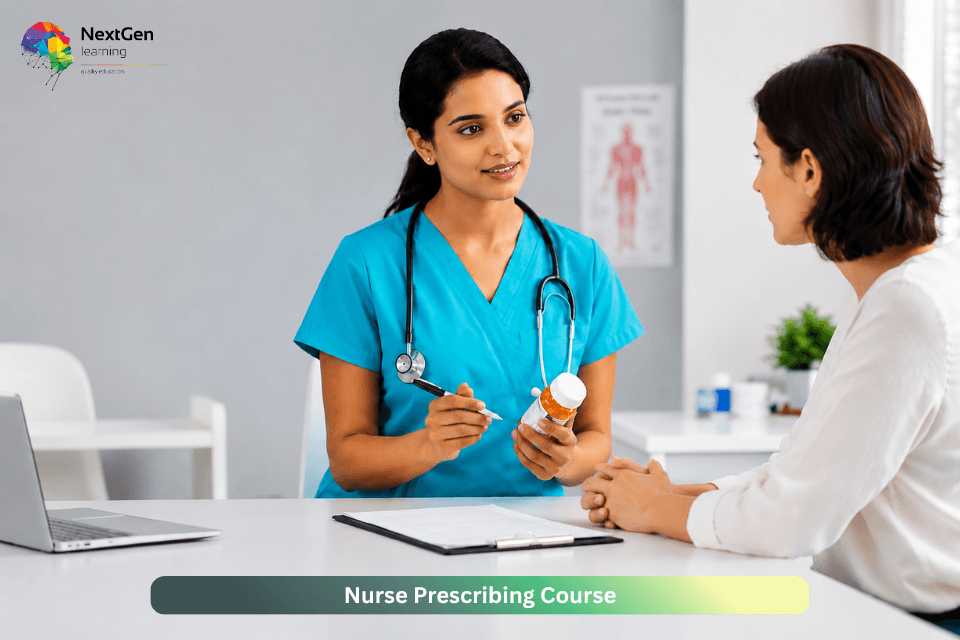
Overview of Nurse Prescribing Diploma Course

Nurse Prescribing Diploma

Modern healthcare increasingly relies on safe, evidence-based decision-making and clear professional responsibilities. Even nurses not involved in prescribing benefit from understanding non-medical prescribing principles. Knowledge of legal frameworks, ethical accountability, and medicine management enhances patient safety, supports multidisciplinary communication, and reduces errors. Theoretical insight into prescribing also helps nurses contribute effectively to care planning and clinical discussions.

Medication-related errors often arise from knowledge gaps, poor governance awareness, or misunderstanding clinical guidelines. Structured training improves medicine safety, adherence to protocols, and patient outcomes. Workforce trends show growing demand for nurses with a strong foundation in prescribing concepts, governance, and condition-specific considerations. This course strengthens analytical thinking around prescribing decisions, patient factors, and professional expectations across care settings and life stages.

The Nurse Prescribing Diploma offers a flexible, theory-focused learning experience. Learners access organised modules, real examples, and up-to-date content aligned with professional standards. With online materials, lifetime self-paced study, and continuous academic support, learners develop a reliable understanding of prescribing responsibilities—without undertaking real

prescribing—making this course ideal for professional development and knowledge enhancement.

Why Choose Us?​

  • 💸 Affordable and accessible, with clear, well-organised study materials

  • 🎓 Earn a globally recognised accredited qualification

  • ⏳ Lifetime access – study at your own pace

  • 🏆 Receive your certificate instantly upon course completion

  • 📅 Flexible learning – no deadlines

  • 💰 Transparent pricing – no hidden costs

  • ⚡ Fast assessments with instant results

  • 🚀 Boost your career or switch paths with ease

  • 📧💬 24/7 support via email and live chat

Description of Nurse Prescribing Diploma Course

This Nurse Prescribing Diploma offers a theory-based introduction to concepts that shape safe, ethical and informed prescribing decisions in healthcare settings. Moreover, it outlines how legislation, governance principles and professional standards help ensure responsible medication-related decision making. Therefore, learners gain foundational knowledge relevant to roles that require an understanding of prescribing frameworks without performing clinical prescribing themselves.

In addition, the course explains medicine management principles, condition-related considerations and antimicrobial awareness, alongside theoretical overviews of mental-health, cardiac, neurological and liver-related topics. It also explores palliative-care concepts, lifespan factors and communication approaches. Furthermore, this non-medical prescribing training highlights future trends, professional challenges and the evolving digital landscape that influences prescribing roles today.


📚 Curriculum Overview

Module 01: Introduction to Nurse Prescribing Concepts

Introduces the purpose, scope and theoretical context of nurse prescribing roles, including responsibilities and decision-making frameworks.

Module 02: Legal, Ethical & Governance Principles

Covers legislation, accountability, ethical considerations, professional boundaries and safe documentation concepts.

Module 03: Medicines Management Foundations

Explores medication classifications, safe-handling concepts, monitoring considerations and medicine management principles.

Module 04: Condition-Related Theoretical Approaches (Part 1)

Provides theoretical overviews of anxiety-related, liver-related and commonly encountered conditions relevant to prescribing decisions.

Module 05: Condition-Related Theoretical Approaches (Part 2)

Covers antimicrobial considerations, cardiac-related topics and neurological concepts at an educational, non-clinical level.

Module 06: Lifespan-Related Prescribing Considerations

Explores pregnancy and lactation considerations, older-adult needs and theoretical approaches to children’s prescribing contexts.

Module 07: Common Medicines: Overview & Classifications

Examines frequently referenced medicines, classifications and risk-awareness factors for safe, informed theoretical understanding.

Module 08: Principles of Supportive & Palliative Approaches

Introduces palliative-care concepts, comfort-focused approaches, communication and multidisciplinary collaboration.

Module 09: Challenges, Developments & Future of Prescribing Roles

Discusses evolving responsibilities, digital prescribing developments, workforce changes and future professional expectations.

Certificate of Achievement

After completing the final exam, you’ll receive a CPD QS Accredited Certificate from NextGen Learning — a recognised credential that strengthens your CV.

  • Digital Certificate: £9.99

📌 Limited-time discounted pricing — secure your certificate while the offer lasts.

Nextgen Certificate

Who Is This Course For ?

  • Individuals seeking theoretical knowledge of prescribing frameworks

  • Healthcare support workers exploring medicine-related concepts

  • Students preparing for further healthcare or nursing studies

  • Anyone wanting non-clinical understanding of legal and ethical prescribing principles

  • Learners wishing to improve awareness of condition-related considerations

Moreover, this course is designed to guide learners step by step. In addition, the lessons are organised in a logical flow, ensuring that each concept builds smoothly on the previous one. Consequently, learners gain confidence as they progress. Furthermore, the content connects theory with practical examples, making the learning experience more engaging. Similarly, complex topics are simplified so that beginners can understand them easily. As a result, learners can apply the knowledge in real situations. On the other hand, those with prior experience can refine their existing skills. Therefore, the course supports continuous improvement for all learners. Ultimately, it provides a structured pathway that helps students achieve their learning goals effectively.online communication skills

This Nurse Prescribing Diploma provides online theoretical learning on prescribing concepts, legal frameworks, medicine management and condition-related considerations. Designed for learners exploring non-medical prescribing knowledge and healthcare-related education. Covers lifespan considerations, ethical principles and future developments in prescribing roles. Delivered as a flexible, globally accessible online course.

Requirements of Nurse Prescribing Diploma Course

The Nurse Prescribing Diploma course requires no prior degree or experience. Therefore, all you require is English proficiency, numeracy literacy, and a gadget with a stable internet connection. Consequently, you can learn and train for a prosperous career in the thriving and fast-growing industry, without any fuss.

Moreover, this course is designed to guide learners step by step. In addition, the lessons are organised in a logical flow, ensuring that each concept builds smoothly on the previous one. Consequently, learners gain confidence as they progress. Furthermore, the content connects theory with practical examples, making the learning experience more engaging. Similarly, complex topics are simplified so that beginners can understand them easily. As a result, learners can apply the knowledge in real situations. On the other hand, those with prior experience can refine their existing skills. Therefore, the course supports continuous improvement for all learners. Ultimately, it provides a structured pathway that helps students achieve their learning goals effectively.online communication skills

Career Path​ of Nurse Prescribing Diploma

  • Healthcare Support Assistant – gains awareness of medicine-related concepts to support multidisciplinary teams.

  • Clinical Administration Assistant – works with documentation and medication-related record keeping.

  • Health Services Coordinator – supports departments where prescribing frameworks are used.

  • Pharmacy Support Worker – benefits from understanding medicine classifications and safety principles.

  • Care Setting Assistant – applies theoretical knowledge in patient-support contexts (non-clinical).

Moreover, this course is designed to guide learners step by step. In addition, the lessons are organised in a logical flow, ensuring that each concept builds smoothly on the previous one. Consequently, learners gain confidence as they progress. Furthermore, the content connects theory with practical examples, making the learning experience more engaging. Similarly, complex topics are simplified so that beginners can understand them easily. As a result, learners can apply the knowledge in real situations. On the other hand, those with prior experience can refine their existing skills. Therefore, the course supports continuous improvement for all learners. Ultimately, it provides a structured pathway that helps students achieve their learning goals effectively.online communication skills

Order Your Certificate

To order CPD Quality Standard Certificate, we kindly invite you to visit the following link:

FAQs - Nurse Prescribing Diploma

To obtain the V300 qualification, you must complete a nurse prescribing course approved by a recognised institution, usually requiring prior registration as a nurse (RN or RM) and relevant clinical experience. The course combines theoretical learning and competencies in non-medical prescribing.

Most V300 courses take 6 to 12 months, depending on whether you study full-time, part-time, or online. Duration can vary based on the training provider and clinical placement requirements.

Yes, many accredited providers offer online or blended learning options, allowing you to study theory remotely while completing required components in your workplace.

The course is challenging but manageable with commitment. It involves understanding pharmacology, legal and ethical frameworks, clinical decision-making, and patient-centred prescribing. Strong study habits and support from mentors make success achievable.

Eligibility typically requires being a registered nurse or midwife, having at least 3 years of clinical experience, and usually working in a relevant area of practice.

Absolutely. The V300 enhances professional autonomy, opens roles in advanced nursing practice, and strengthens multidisciplinary collaboration.

Course Curriculum

Nurse Prescribing Diploma
Module 1: Introduction to Nurse Prescribing
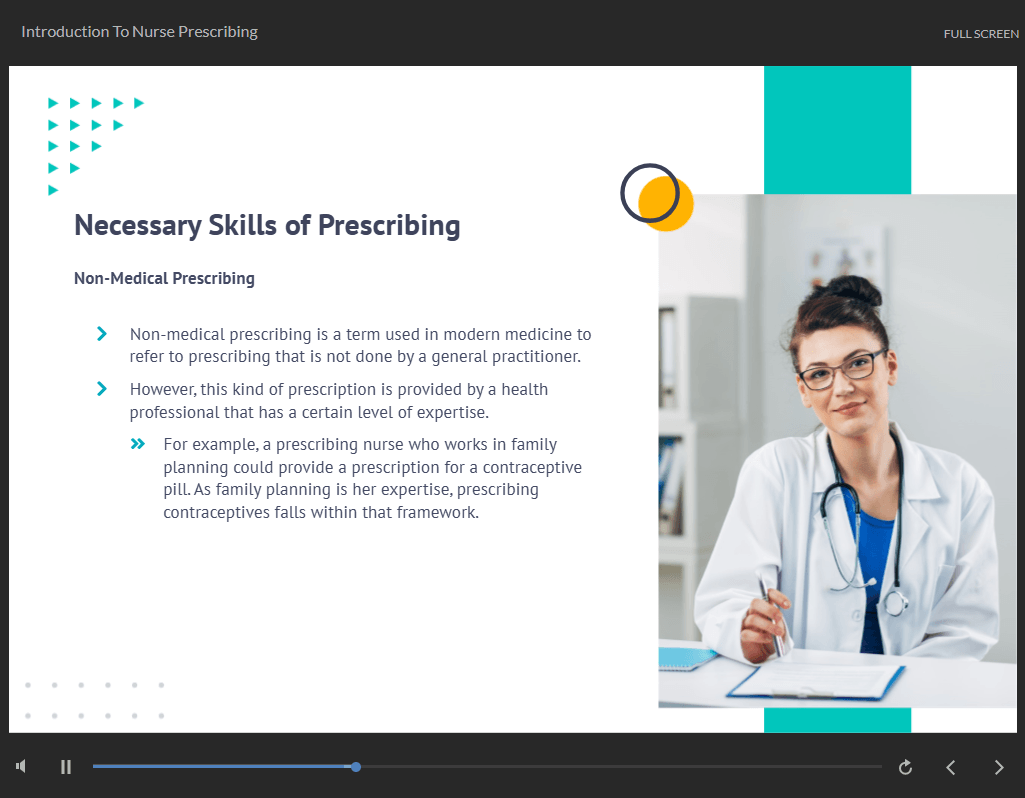
Introduction to Nurse Prescribing 00:16:00
Module 2: Legal and Ethical Aspects of Prescribing
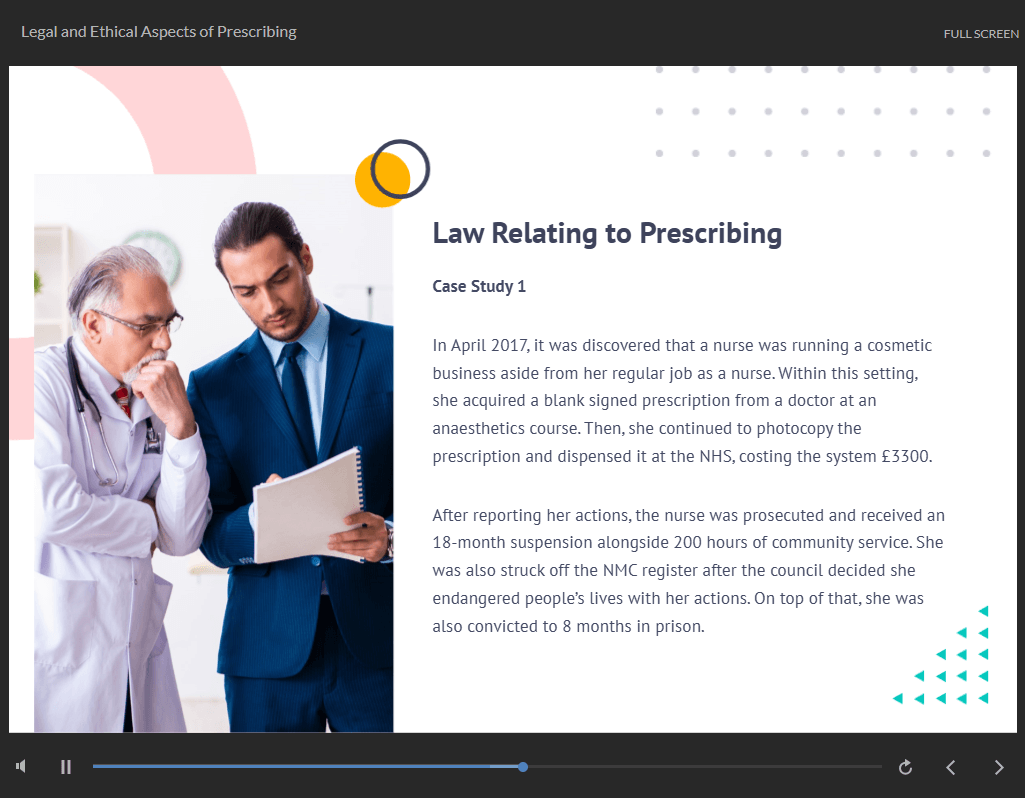
Legal and Ethical Aspects of Prescribing 00:32:00
Module 3: Medicine Management
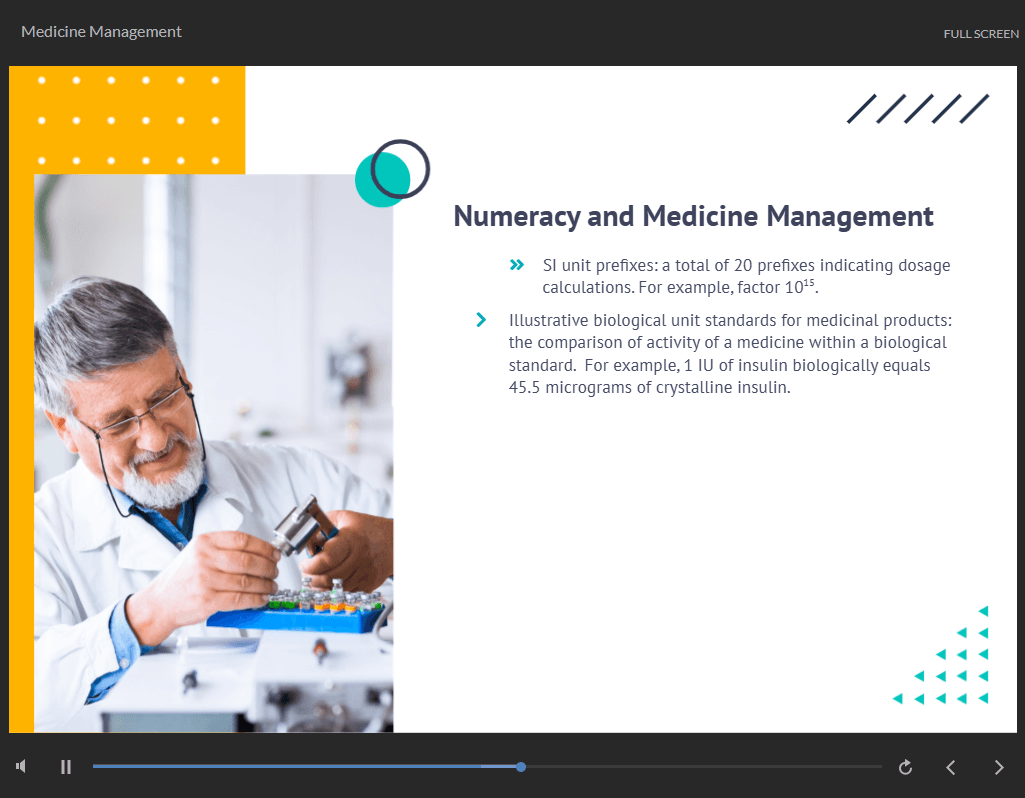
Medicine Management 00:36:00
Module 4: Anxiety Disorders in Adults
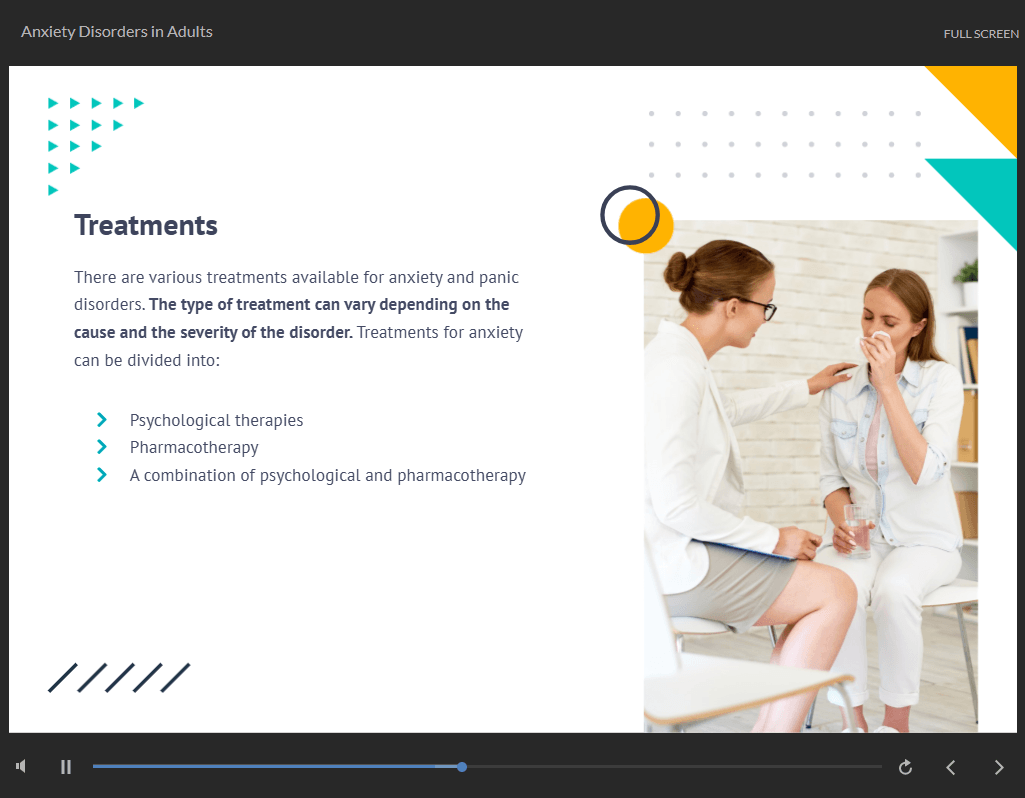
Anxiety Disorders in Adults 00:15:00
Module 5: Liver Diseases: Diagnosis & Prescribing
Liver Diseases Diagnoses Prescribing 00:46:00
Module 6: Common Problems: Pharmacological Management
Common Problems Pharmacological Management 01:06:00
Module 7: Anti-Microbial Prescribing
Anti Microbial Prescribing 00:28:00
Module 8: Cardiac Problems and Prescribing
Cardiac Problems and Prescribing 00:21:00
Module 9: Neurological Problems and Prescribing
Neurological Problems and Prescribing 00:16:00
Module 10: Palliative Cares
Palliative Care 00:09:00
Module 11: Prescribing in Pregnancy and Lactation
Prescribing in Pregnancy and Lactation 00:31:00
Module 12: Prescribing for Older People
Prescribing for Older People 00:12:00
Module 13: Prescribing Children’s
Prescribing for Children 00:17:00
Module 14: Common Medicines in Use
Common Medicines in Use 00:19:00
Module 15: Challenges and Future of Nurse Prescribing
Challenges and Future of Nurse Prescribing 00:14:00
Order Your Certificate
Order Your Certificate 00:00:00

Related Courses

A product of

© 2026 NextGen Learning. All rights reserved

Home Search Cart Offers
Select your currency
USD United States (US) dollar