



Popular Courses

Brand
Awarding body image

Overview of DBT Course

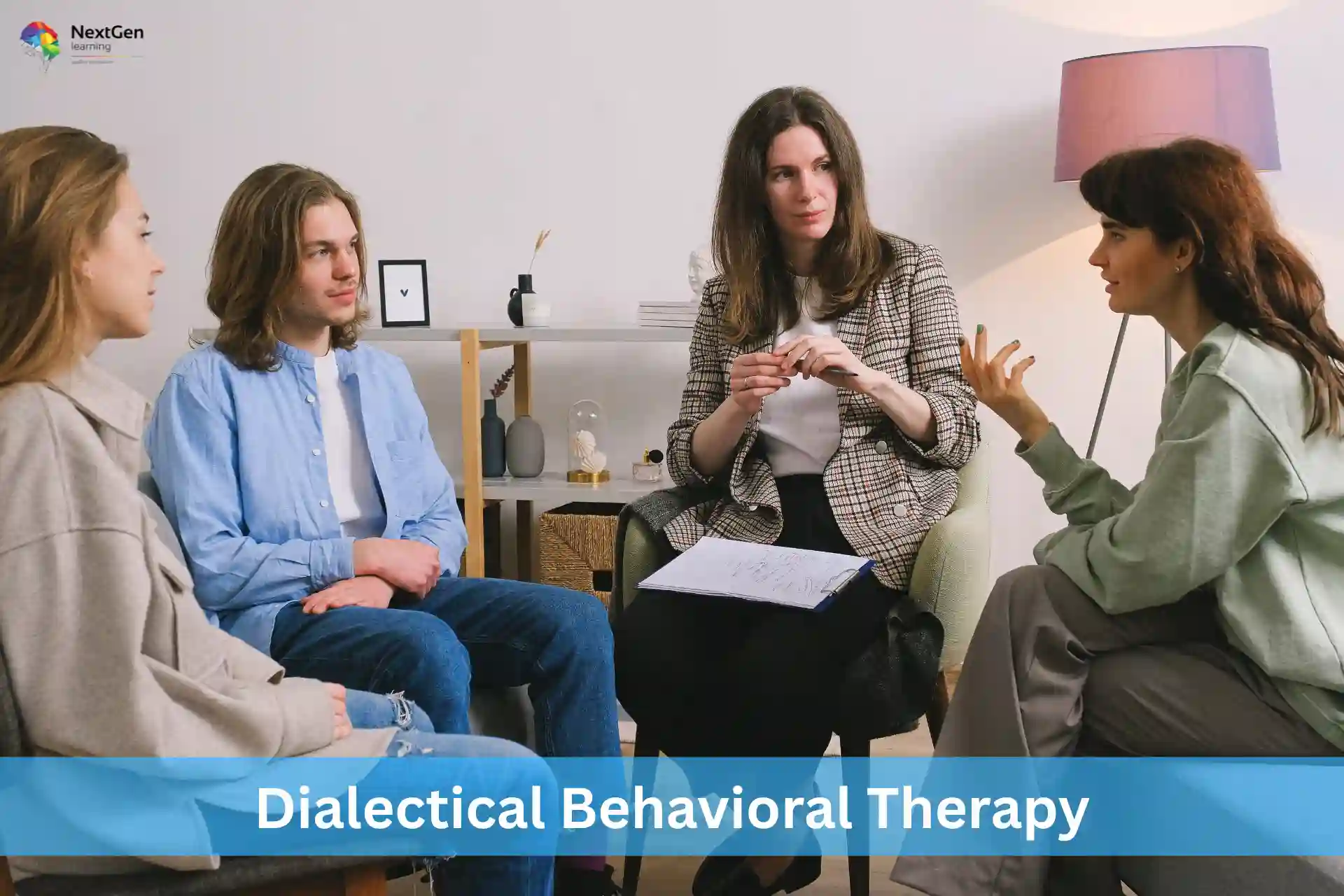
Managing difficult emotions or supporting someone through emotional distress can feel challenging without the right framework. This DBT Course provides a structured introduction to Dialectical Behaviour Therapy and the practical skills used to improve emotional awareness, coping and communication.

You will explore the four core DBT skill areas: mindfulness, distress tolerance, emotion regulation and interpersonal effectiveness. These are widely recognised as central components of DBT skills training.

The course also explores radical acceptance, self-soothing, coping plans, Wise Mind, thought defusion, emotional awareness, listening and relationship skills. Your existing curriculum covers these topics across 85 modules and more than eight hours of guided learning.

This Dialectical Behaviour Therapy Course can help you:

  • Understand why emotions and behaviours can become difficult to manage.
  • Explore practical distress-tolerance and coping strategies.
  • Build greater awareness of thoughts and emotional patterns.
  • Develop mindfulness and present-moment awareness.
  • Improve understanding of communication and relationships.
  • Strengthen knowledge useful in support, care and wellbeing settings.

This course is designed for learning and CPD. It does not qualify learners to practise as DBT therapists or replace professional mental-health treatment or clinical DBT training.

Exclusive Course Glimpse

Learning Outcomes

By completing this DBT Course, you should be able to:

  • Explain the basic principles and purpose of Dialectical Behaviour Therapy.
  • Identify the four core areas of DBT skills.
  • Describe how distress tolerance can support responses to difficult situations.
  • Recognise self-destructive or unhelpful coping patterns.
  • Explain the purpose of radical acceptance and self-soothing.
  • Apply introductory mindfulness and Wise Mind concepts.
  • Identify primary and secondary emotions.
  • Explain common ideas behind emotion regulation.
  • Recognise how thoughts, emotions and behaviour can influence one another.
  • Describe key interpersonal-effectiveness and communication principles.
  • Develop awareness of basic coping and self-management plans.

These outcomes can support personal development, professional learning and progression to more advanced study.

Why Choose This Course

Professional DBT Training can be intensive and may be designed for clinicians or established therapy teams. Specialist UK providers offer multi-day or extended professional training for practitioners.

Your course offers a different advantage: accessible, structured DBT learning for people who want to understand the core skills without immediately committing to specialist clinical training.

Key benefits include:

  • 85 structured modules covering major DBT skill areas.
  • 8 hours 14 minutes of guided learning for deeper subject coverage.
  • 100% online study – learn around work or other commitments.
  • Lifetime access – revisit lessons when you need a refresher.
  • CPD-accredited learning – support your professional-development record.
  • Assessment included – consolidate your understanding after study.
  • Tutor support – access learning assistance when required.
  • Practical topic coverage – including mindfulness, distress tolerance, self-soothing, emotion regulation and relationship skills.

This makes the course especially suitable for learners who want a comprehensive but flexible introduction to DBT concepts.

Certificate of Achievement

  • CPD Accredited Certificate
  • Digital Certificate
  • Professional Recognition
  • CV & LinkedIn Enhancement
  • Proof of Professional Skills
Nextgen Certificate

Who Is This Course For?​

This Dialectical Behaviour Therapy Course is particularly relevant to:

  • Mental health and support workers wanting broader DBT awareness.
  • Care and wellbeing professionals seeking additional CPD knowledge.
  • Counselling and psychology learners exploring therapeutic approaches.
  • Coaches and mentors interested in emotional awareness and communication.
  • Students and career changers considering mental-health or support pathways.
  • Personal-development learners wanting to understand coping, mindfulness and emotional regulation.

No previous DBT or psychology qualification is required to begin.

Career Opportunities (UK)

Knowledge from a DBT Course can complement roles involving emotional support, communication, wellbeing and mental health. However, this course is best viewed as supplementary CPD and knowledge development, not as a direct professional qualification.

Care Worker

Care workers support vulnerable people with daily activities, independence and wellbeing. DBT-informed knowledge can complement communication, emotional awareness and coping-support skills.

Typical UK salary: £20,000–£25,000 per year.

Residential Support Worker

Residential support workers support children or vulnerable adults with their physical and mental wellbeing. Understanding distress tolerance, communication and emotional regulation can be relevant in support environments.

Typical UK salary: £22,000–£30,000 per year.

Family Support Worker

Family support workers help families manage practical challenges and support wellbeing and development. DBT knowledge may complement wider communication and emotional-support skills.

Typical UK salary: £24,000–£36,000 per year.

Counsellor

Counsellors support people in exploring feelings, challenges and possible changes in a safe environment.

Typical UK salary: £25,000–£48,000 per year.

This course can broaden awareness of DBT concepts, but professional counselling normally requires further recognised education and supervised training.

Psychological Wellbeing Practitioner

Psychological wellbeing practitioners support people experiencing common mental-health difficulties through structured services.

Typical UK salary: £28,000–£39,000 per year.

This course may provide useful supplementary knowledge, but this role requires specific professional training.

Mental Health Nurse

Mental health nurses support people in hospitals, clinics and community services.

Typical UK salary: £32,000–£48,000 per year.

DBT awareness may complement professional practice, but becoming a mental health nurse requires approved nursing education and professional registration.

Overall, the course is most valuable for building DBT awareness, supporting existing care or wellbeing work, strengthening CPD and preparing for further study.

Entry Requirements

  • No formal qualifications are required.
  • Suitable for beginners and support professionals.
  • Basic written English is recommended.
  • Access to an internet-connected device is required.
  • An interest in DBT, mental health, emotional regulation or wellbeing is helpful.

Order Your Certificate

To order your Certificate, we kindly invite you to visit the following link

Frequently Asked Questions -

A DBT Course introduces the principles and skills associated with Dialectical Behaviour Therapy. This course explores areas such as mindfulness, distress tolerance, emotion regulation and interpersonal effectiveness, helping learners build a structured understanding of DBT.

The course is suitable for beginners, mental-health and support workers, care professionals, counselling or psychology learners, coaches, wellbeing professionals and individuals interested in emotional regulation and personal development.

This DBT Training introduces practical concepts for understanding emotions, managing distress and improving communication. Topics include mindfulness, radical acceptance, self-soothing, Wise Mind, coping strategies, emotion regulation and interpersonal skills.

Yes. The course is delivered online, allowing you to study flexibly around work, education or other responsibilities. Lifetime access also allows you to revisit the learning materials when you need a refresher.

Yes. No previous DBT or psychology qualification is required. The Dialectical Behaviour Therapy Course introduces key concepts progressively, making it accessible to learners who are new to DBT.

Yes. DBT knowledge can complement professional development for people working or studying in areas such as care, support, wellbeing, counselling and mental health. However, specific professional roles may require additional qualifications, supervised training or registration.

No. This is a CPD knowledge-development course and does not provide clinical DBT practitioner status or qualify you to practise as a DBT therapist. Professional therapeutic practice requires appropriate education, training and experience.

Yes. After successfully completing the course, learners can receive a CPD-accredited digital certificate as evidence of course completion and continuing professional development.

Course Curriculum

Section 01: Basic Distress Tolerance Skills
What is DBT Dialectical Behavior Therapy? 00:09:00
Introduction to Basic Distress Tolerance Skills 00:04:00
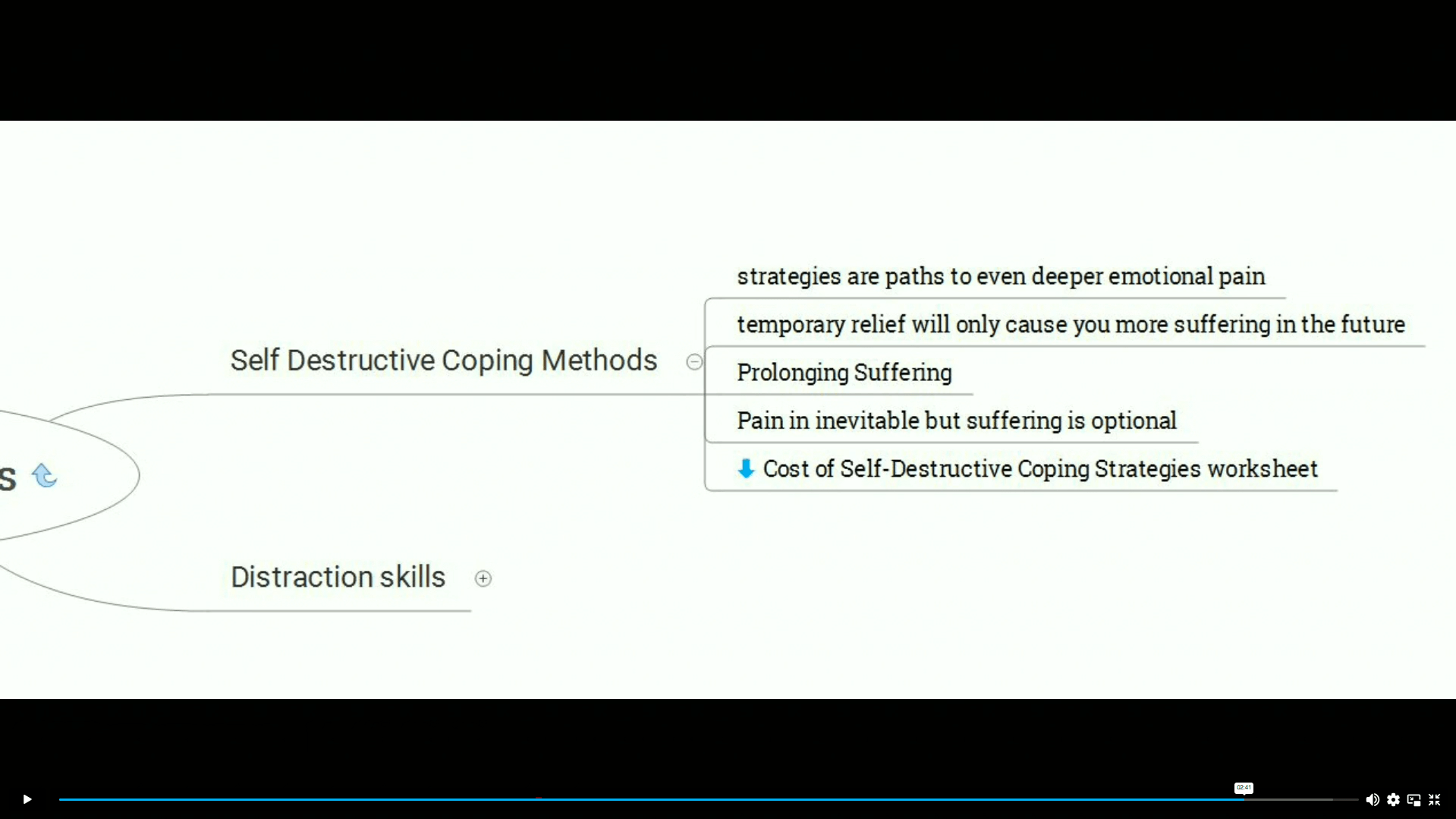
Self Destructive Coping Methods 00:03:00
Suffering is Optional 00:03:00
Self Destructive Behaviours 00:07:00
Pleasurable Activities 00:04:00
Attending Others 00:02:00
Distracting Thoughts 00:03:00
Leaving 00:03:00
Tasks and Chores 00:02:00
Counting Distraction Skills Plan 00:02:00
Self Soothing Skills 00:03:00
Smell 00:03:00
Vision 00:02:00
Hearing 00:04:00
Taste 00:02:00
Touch 00:02:00
Self Soothing Plan 00:01:00
Radical Self-Acceptance 00:12:00
Section 02: Advance Distress Tolerance Skills
Advance Distress Tolerance Skills 00:01:00
Safe Place Visualization 00:06:00
Cue Controlled Relaxation 00:02:00
Time out 00:02:00
Encouraging Thoughts 00:03:00
Creating a Coping Plan 00:01:00
Section 03: Mindfulness Skills
What is Mindfulness? 00:03:00
What Skills 00:02:00
Focus for a Minute 00:04:00
Focus on Object 00:03:00
Guided Focus on Object 00:05:00
Band of Light 00:10:00
Inner Outer Meditation 00:16:00
Record for 3 Minutes 00:02:00
Thought Defusion 00:06:00
Describe your emotions 00:07:00
Focus Shifting 00:14:00
Mindfulness Breathing 00:13:00
Wise Mind 00:07:00
Wise Mind Meditation 00:10:00
Wise Mind Decision Making 00:03:00
Ration Emotive Decision Making 00:01:00
Loving Kindness Meditation 00:10:00
Mindfulness of space 00:08:00
Mindfulness for Stillness and Silence 00:08:00
Section 04: Emotion Regulation Skills
Primary & Secondary Emotions 00:04:00
Emotion Dysregulation 00:05:00
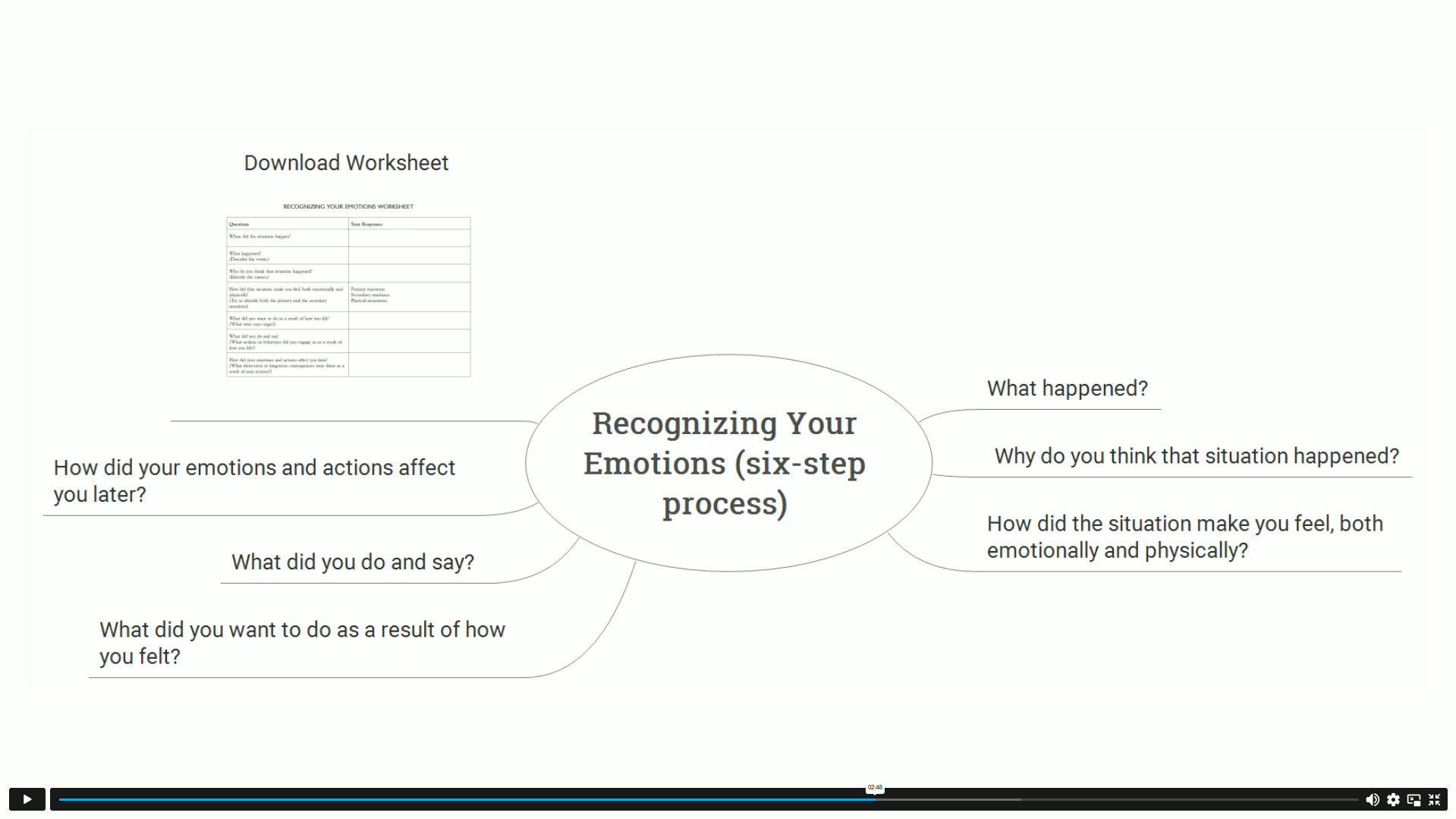
Six Steps to Recognize Emotions 00:04:00
Emotional Record 00:02:00
Emotions on Continuum 00:02:00
Opposite to emotion 00:03:00
Mood momentum 00:02:00
Daily routines 00:05:00
Labeling 00:05:00
The Shoulds 00:03:00
Filtering 00:05:00
PLEASED 00:03:00
All or nothing 00:03:00
Energy Loops 00:05:00
Training State Management 00:06:00
Lesson 16 00:06:00
Section 05: Interpersonal Effectiveness
Start with you part 1 00:11:00
Start with you Part 2 00:12:00
Start with you Part 3 00:18:00
Golden Rule 00:04:00
Being who you want to be 00:09:00
Encourage 00:07:00
Appreciate 00:06:00
Forgiveness 00:09:00
Listening and Understanding 00:11:00
Concern 00:16:00
Help 00:12:00
Action 00:09:00
Results 00:08:00
Influence 00:06:00
Sensitivity 00:11:00
Motivation 00:12:00
Affirmation 00:05:00
Pride 00:07:00
Insecurity and Moodiness 00:08:00
Perfection 00:09:00
Negativism 00:06:00
BONUS Spirituality for Interpersonal skills 00:16:00
Conclusion 00:01:00
Assignment
Assignment -Dialectical Behavioral Therapy 00:00:00
Order Your Certificate
Order Your Certificate 00:00:00

Related Courses

A product of

© 2026 NextGen Learning. All rights reserved

Home Search Cart Offers