

Popular Courses

Brand
Awarding body image

Aerospace Engineering

Overview of Aerospace Engineering Course

The idea of flight has always inspired curiosity, from aircraft flying across the sky to spacecraft exploring beyond Earth. This aerospace engineering course is designed to help you understand how these complex systems are created, how they operate, and why they are essential in today’s world.

Many learners often feel that aviation and space topics are too technical or difficult to understand. Therefore, this course breaks down aerodynamics basics and space technology fundamentals into clear, simple explanations. Each concept is introduced step by step so you can build confidence as you learn.

Throughout the course, you will explore how flight works by understanding the forces that act on an aircraft. You will learn how lift is generated, how drag affects motion, and how engineers use these principles to design efficient and safe systems. In addition, the course introduces you to the basics of propulsion, aircraft structures, and space systems.

The course also connects theory with real-world applications. You will see how aerospace engineering is used in modern aviation, satellite systems, and space missions. This helps you understand not just the concepts, but also their practical importance.

By the end of this course, you will have a strong foundational understanding of aerospace engineering. Whether you want to pursue further studies, explore career opportunities, or simply learn out of curiosity, this course provides a solid starting point in the world of aviation and space technology.

Exclusive Course Glimpse

Description of Aerospace Engineering Course

This aerospace engineering online course is designed to introduce core concepts in aviation and space science. It focuses on making complex ideas easier to understand through structured lessons and real-world examples.

You will learn about aircraft design basics and explore how machines operate in air and space environments. Each topic is explained in a practical way so you can build strong understanding step by step.

What You Will Learn

  • Understand key principles of aerospace engineering
  • Learn how flight systems operate
  • Explore aerodynamics and motion concepts
  • Understand aircraft structure and design
  • Learn basic space science ideas
  • Develop technical thinking ability
  • Build a strong knowledge foundation

Why Choose This Course?

  • Beginner-friendly learning approach
  • Simple explanations without complex terms
  • Step-by-step structured lessons
  • Real-world engineering examples
  • Flexible online access
  • Clear and easy content

This course helps you learn smoothly and build confidence.

Certificate of Achievement

Upon successful completion, you will qualify for the UK and internationally-recognised CPD certificate .

This helps you:

  • Show your knowledge
  • Improve your profile
  • Support career growth
  • Build confidence
Nextgen Certificate

Who Is This Course For?​

  • Students interested in engineering
  • Beginners curious about aviation
  • Learners exploring space science
  • Individuals planning technical careers
  • Anyone interested in flight systems

Requirements of Aerospace Engineering Course

  • Basic English understanding
  • Interest in science and technology
  • Internet connection
  • Any digital device

No prior experience required.

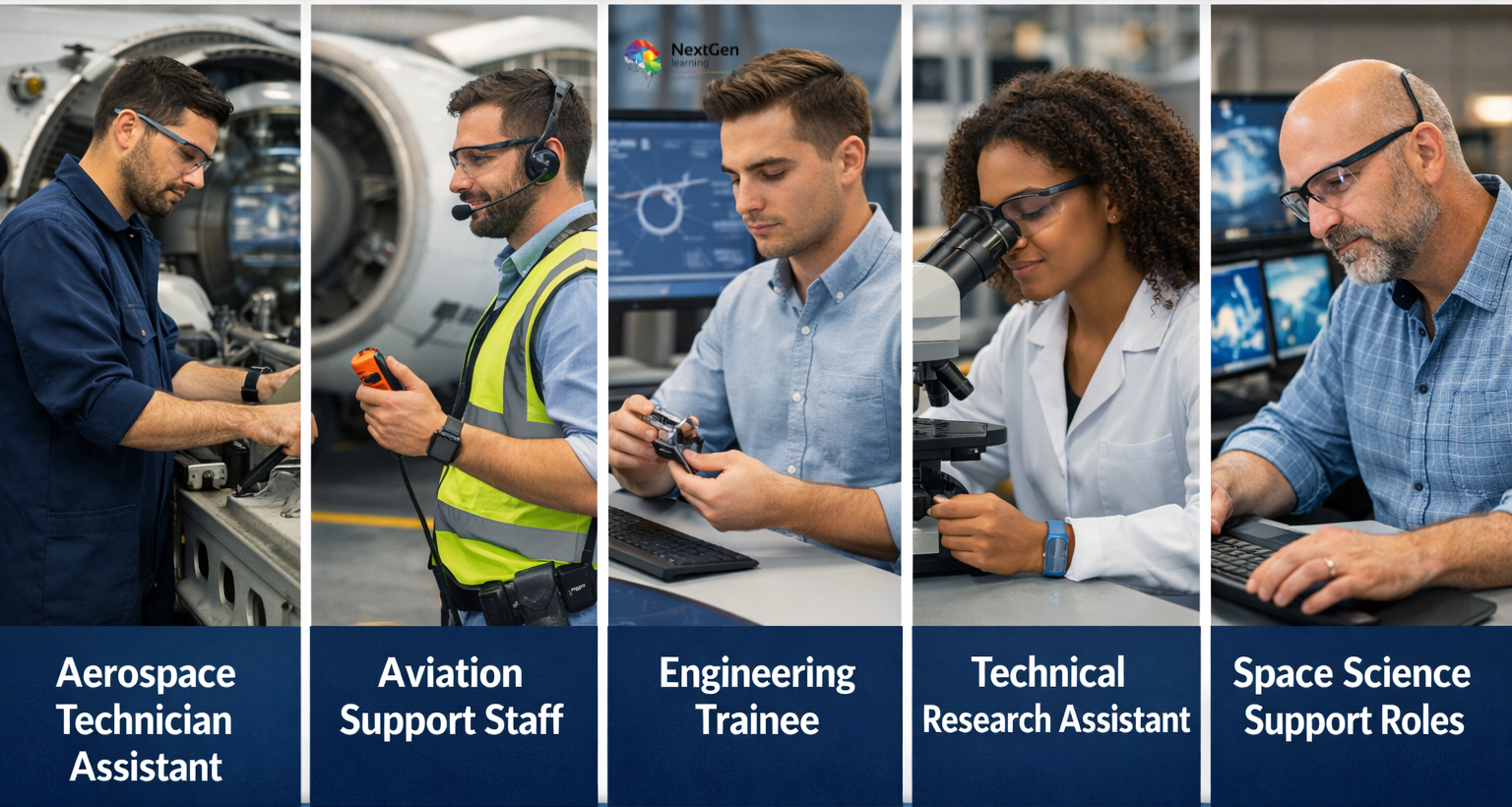
Career Path of Aerospace Engineering Course

This course builds a foundation for opportunities such as:

  • Aerospace Technician Assistant
  • Aviation Support Staff
  • Engineering Trainee
  • Technical Research Assistant
  • Space Science Support Roles

Order Your Certificate

To order your Certificate, we kindly invite you to visit the following link

FAQs of Aerospace Engineering Course

An aerospace engineering course teaches the principles behind the design, development, and operation of aircraft and spacecraft. It covers key topics such as aerodynamics, propulsion systems, flight mechanics, and space technology. This course helps learners understand how flying machines work and how engineers solve real-world challenges in aviation and space exploration.

You can learn aerospace engineering online by enrolling in structured courses that cover both theory and practical concepts. Start with beginner-friendly topics like aerodynamics and gradually move to advanced areas such as propulsion and flight systems. Online learning allows you to study at your own pace, access digital resources, and build foundational knowledge without needing a physical lab.

Aerodynamics is the study of how air interacts with moving objects, especially aircraft. The basics include understanding four key forces: lift, drag, thrust, and weight. These forces determine how an aircraft takes off, stays in the air, and lands safely. Learning aerodynamics helps you understand how wings generate lift and how engineers design efficient flying systems.

Yes, this course is designed for beginners. It starts with simple explanations of core concepts and gradually builds your understanding step by step. No prior experience in aerospace or engineering is required, making it ideal for students, enthusiasts, and anyone curious about aviation and space technology.

In an aviation engineering course, you will learn how aircraft systems work, including engines, structures, and control systems. You will also explore aerodynamics, flight principles, and safety considerations. The course focuses on both theoretical knowledge and real-world applications, helping you understand how aircraft are designed and operated.

This course provides a strong foundation for starting a career in aerospace engineering. It helps you build essential knowledge and technical understanding required in the field. While advanced education and practical experience may be needed for specialized roles, this course is an excellent first step toward careers in aviation, manufacturing, or space-related industries.

Aerospace engineering plays a crucial role in modern technology by enabling air travel, satellite communication, weather forecasting, and space exploration. Innovations in this field contribute to faster transportation, global connectivity, and scientific discoveries. It also drives advancements in materials, robotics, and automation used across various industries.

Course Curriculum

Introduction
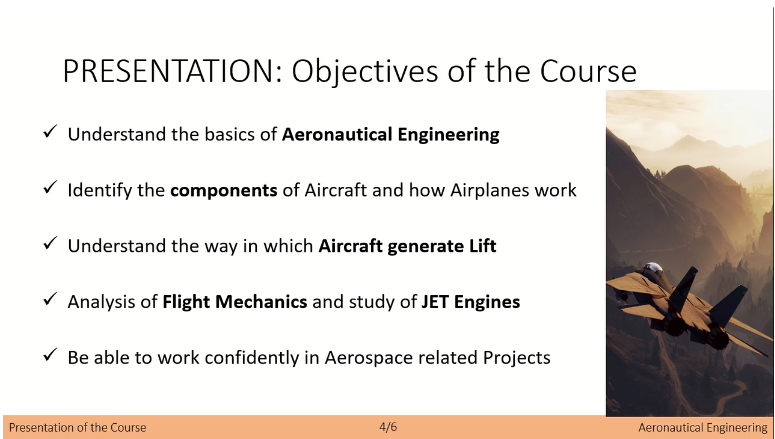
Presentation of the Course 00:03:00
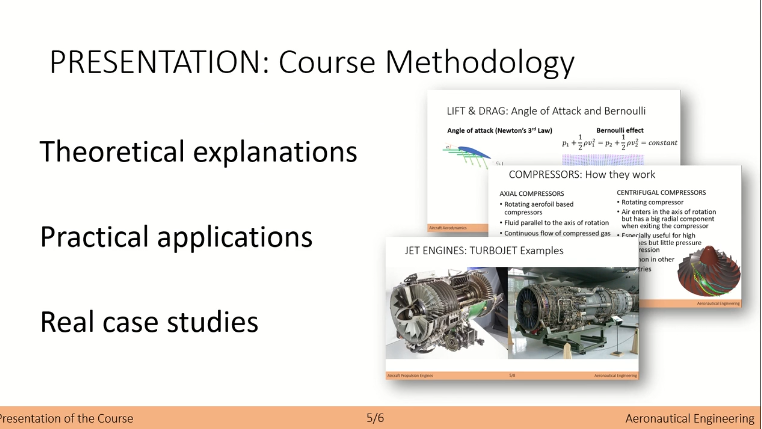
Course Structure 00:04:00
Introduction to Airplanes and their Main Elements 00:06:00
Classification of Airplanes
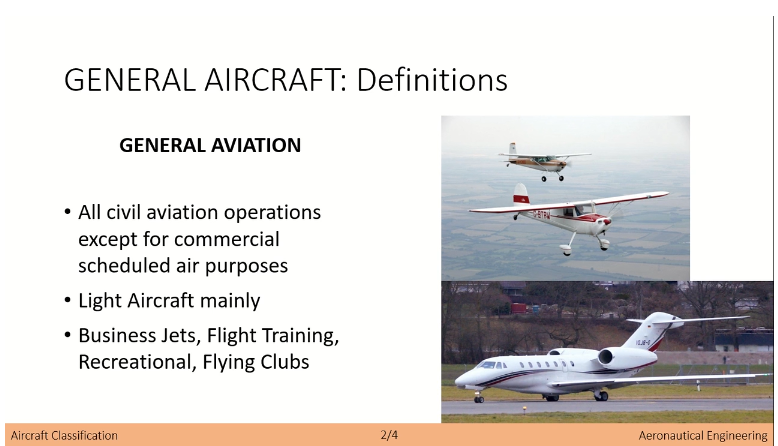
General Aviation 00:04:00
Commercial Aviation 00:04:00
Military Aircraft 00:06:00
Aerodynamics
Airplane Forces and Trajectory 00:07:00
Lift and Drag: Newton’s 3rd Law and Bernoulli 00:16:00
3D Wings Lift and Drag 00:18:00
High Lift Devices 00:15:00
Turbulence and Stall 00:13:00
Airplane Propulsion Engines (JETs)
Engines Overview 00:06:00
Inlets 00:07:00
Compressors 00:10:00
Turbines and Nozzles 00:05:00
TurboJet vs. Turbofan Review 00:21:00
Flight Mechanics
Gravity Center and Pressure Center: Stability 00:13:00
Control Surfaces of an Aircraft and Maneuvers 00:10:00
Aircraft Performance
Definition of Weights 00:08:00
Range of an Aircraft as function of Weight 00:14:00
Optimization of Range – Breguet Equations 00:17:00

Related Courses

A product of

© 2026 NextGen Learning. All rights reserved