




A dermatologist-recommended skincare routine includes gentle cleansing, moisturising, and sun protection, tailored to your skin type. Consistency is key, and dermatologists often recommend products with proven ingredients like hyaluronic acid, vitamin C, and sunscreen.
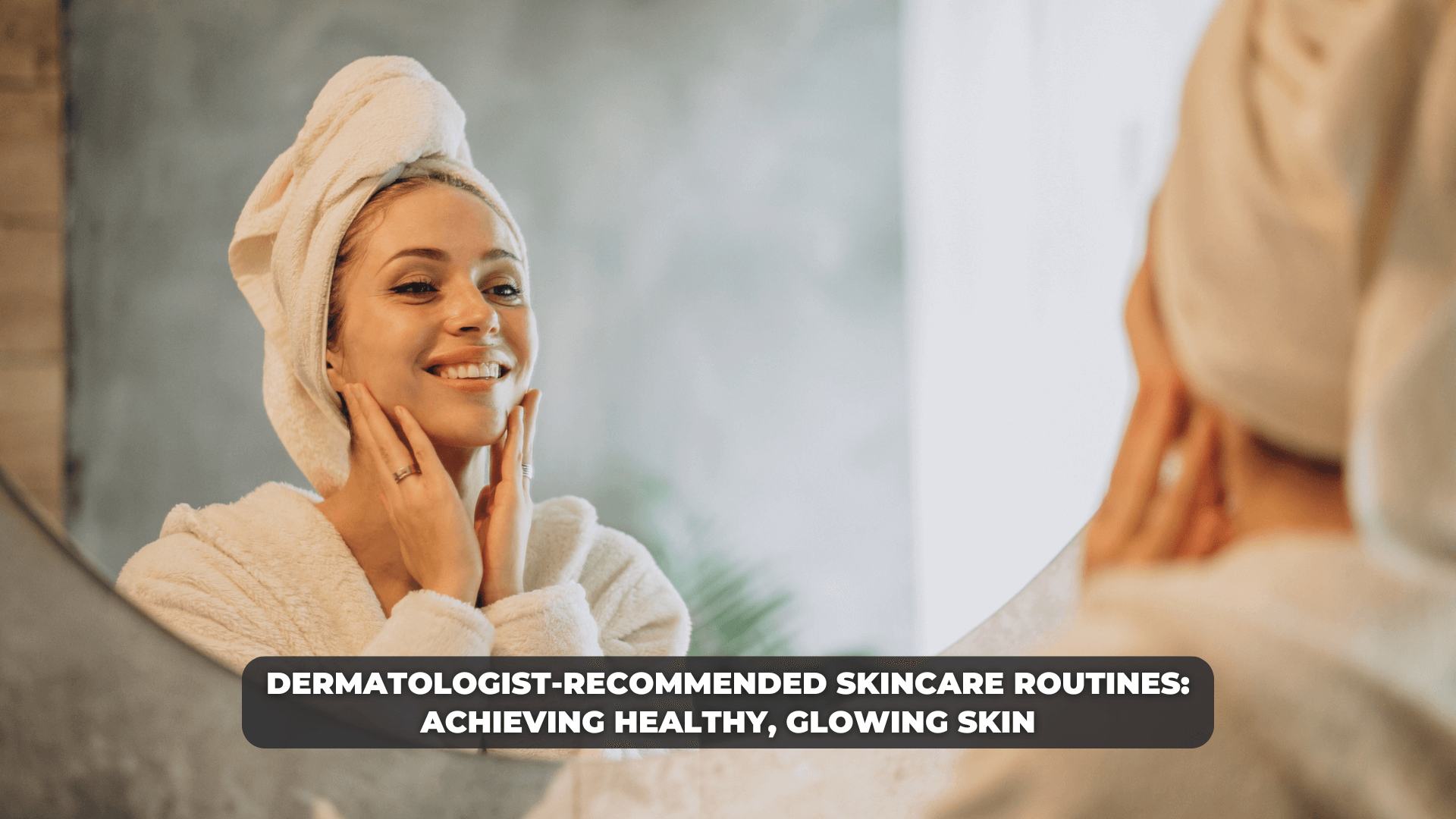
Dermatologist-Recommended Skincare Routines: Achieving Healthy, Glowing Skin
When it comes to skin care, choosing the right products can feel confusing, especially with so many cleansers and moisturisers available. But the best advice comes from dermatologists, who know what works for your skin. A dermatologist-recommended skincare routine involves picking the right cleanser and moisturiser to keep your skin healthy and glowing.
Having a good skin care routine is important for long-term skin health. Skin care tips from dermatologists help you address your skin’s needs. By following a simple routine, you’ll see lasting results. Using the right cleanser to clean your skin and a good moisturiser to keep it hydrated is key to glowing skin.

Table of Contents
Why a Skincare Routine is Essential for Healthy Skin
A dermatologist-recommended skincare routine is important because it’s made to fit your skin’s needs without extra products. In contrast, unlike general advice, dermatologists use science and experience to give you the best routine for your skin type. As a result, by following a skincare routine from dermatologists, you’re using products that actually work. For example, dermatologists stress the need for moisturisers that keep your skin hydrated, cleansers that don’t remove natural oils, and daily sun protection.
Moreover, dermatologist-backed routines are simple, with a few key steps anyone can follow. On the other hand, using too many products can irritate your skin. Therefore, sticking to the basics — cleansing, moisturising, and sun protection — gives the best results with little effort. Finally, this approach ensures your skin gets exactly what it needs.
Understanding Your Skin Type for the Best Results
One of the key elements to creating a skincare routine that works is identifying your skin type. Dermatologists often categorise skin into four types: oily, dry, combination, and sensitive. Each of these skin types has different needs, and the right routine can make a world of difference.
For Oily Skin
If you have oily skin, it’s important to control excess oil production without stripping the skin of essential moisture. Dermatologists recommend using an oil-free cleanser that removes impurities and excess oil without irritating the skin. You should also opt for a lightweight, non-comedogenic moisturiser — one that won’t clog pores. Ingredients like salicylic acid and benzoyl peroxide can help combat breakouts, while sunscreen should always be applied to prevent further oiliness caused by the sun.
For Dry Skin
Dry skin requires a routine that focuses on hydration. Cleansers for dry skin should be creamy or hydrating, avoiding harsh foaming agents that can strip the skin’s natural oils. Moisturisers should be rich and hydrating, with ingredients like ceramides and hyaluronic acid that lock in moisture and help to restore the skin’s barrier. For dry skin, always ensure that your routine is focused on replenishing moisture and protecting the skin from environmental stressors.
For Sensitive Skin
Sensitive skin is prone to irritation and redness, so it’s essential to choose gentle products. Dermatologists recommend fragrance-free cleansers and moisturisers with soothing ingredients such as aloe vera and chamomile. Avoid products with alcohol, synthetic dyes, and heavy fragrances. The key is to keep things simple and use products that support the skin’s natural barrier without causing irritation.
For Acne-Prone Skin
Acne-prone skin requires a skincare routine that targets breakouts while maintaining a healthy skin barrier. Cleansers with salicylic acid are highly effective in preventing acne by deeply cleansing the pores. Moisturisers for acne-prone skin should be oil-free and non-comedogenic to prevent clogging pores. In addition to cleansing and moisturising, spot treatments with benzoyl peroxide or salicylic acid can be used to target individual breakouts.
Taking Your Skincare Knowledge Further
If you’re looking to take your skincare knowledge to the next level, the Dermatology & Skincare Level 5 Course is the perfect way to gain advanced expertise in skin health, diagnosis, and professional treatments. In addition, this course is ideal for those who want to build a career as a skin specialist or learn more about skincare treatments to enhance their beauty career. Furthermore, by enrolling in this course, you’ll gain a deep understanding of the science behind skincare and treatments, allowing you to confidently recommend dermatologist-approved routines and products to others.
Moreover, this course is designed to provide a comprehensive view of the latest skin care techniques and technology, so you’ll be able to stay ahead in the industry. As a result, whether you’re starting a career in skincare or want to enhance your existing knowledge, this course provides expert-level insights that will set you apart in the beauty industry. Additionally, the skills you learn will empower you to offer professional guidance to clients and help them achieve their skin health goals. Ultimately, this course equips you with everything you need to succeed and make a lasting impact in the world of skincare.
Key Steps for Building a Skincare Routine That Works for You
Building a skincare routine might seem complicated, but with the right guidance, it’s easy to follow a dermatologist-recommended skincare routine that suits your skin type. Here’s a simple, step-by-step guide:
Step 1: Cleanse Your Skin
The first step in any skincare routine is to cleanse. Dermatologists recommend using a gentle cleanser suited to your skin type. For oily skin, go for a gel-based cleanser, while creamy cleansers are ideal for dry or sensitive skin. Cleansing helps remove dirt, oil, and impurities, preparing your skin for the next steps.
Step 2: Apply Toner (Optional)
Toner is an optional step that helps balance the skin’s pH levels after cleansing. Look for alcohol-free toners that hydrate and soothe the skin. If you have oily skin, choose a toner with witch hazel to control oil, or opt for one with aloe vera for sensitive skin.
Step 3: Treat Specific Concerns
This step involves applying targeted treatments or serums for specific concerns such as acne, pigmentation, or fine lines. Dermatologists often recommend starting with one active ingredient at a time, such as retinol for anti-aging or salicylic acid for acne.
Step 4: Moisturise
Moisturising is essential, no matter your skin type. Choose a moisturiser that fits your skin’s needs — gel-based moisturisers for oily skin, rich moisturisers for dry skin, and gentle moisturisers for sensitive skin. The key is to hydrate and protect the skin’s barrier.
Step 5: Sun Protection
Sunscreen is a non-negotiable part of any dermatologist-approved skincare routine. Choose a broad-spectrum sunscreen with at least SPF 30 and apply it every morning, even on cloudy days. Sunscreen helps protect your skin from harmful UV rays that cause premature aging and skin cancer.
Exploring Advanced Skin Treatments
If you’re looking to expand your knowledge beyond skin care and venture into the world of advanced skin treatments, the Laser Hair Removal Training course is the ideal next step. Moreover, this course is specifically designed for beauty professionals, aestheticians, and medical practitioners who want to learn the ins and outs of laser hair removal technologies, adding another layer to their skin care expertise. In fact, the course provides in-depth training on the latest advancements in laser technologies, ensuring you stay at the forefront of the industry.
By taking this course, you’ll gain a thorough understanding of laser hair removal techniques, the biological and technical aspects of the treatment, and how to safely perform full-body treatments. As a result, you’ll be able to offer your clients a wider range of services with the confidence that you have the expertise to perform them safely and effectively. Furthermore, this is a perfect opportunity for anyone looking to enhance their beauty career, learn cutting-edge skin care technology, and provide more comprehensive treatments. Additionally, completing this course can set you apart in the competitive beauty industry and increase your potential for career growth. Ultimately, you’ll be equipped with the skills and knowledge to succeed and provide high-quality services to your clients.
Common Skincare Mistakes to Avoid
While following a dermatologist-recommended skincare routine is essential, it’s also important to avoid common mistakes that could harm your skin. Here are some mistakes dermatologists see often:
1. Over-Cleansing
Cleansing your skin too often can strip it of its natural oils, leaving it dry and irritated. Stick to cleansing twice a day — once in the morning and once at night — and choose a gentle cleanser.
2. Not Using Sunscreen
Many people skip sunscreen, especially during the winter months. However, UV rays are harmful all year round, and applying sunscreen daily is crucial for protecting your skin from premature aging and sun damage.
3. Using Too Many Active Ingredients
It’s tempting to use products with a lot of active ingredients, but this can lead to skin irritation. Start slowly with one product at a time, and always use products as recommended by your dermatologist.
4. Skipping Moisturiser
Even if you have oily skin, skipping moisturiser can lead to an imbalance in your skin, causing it to produce even more oil. Choose a moisturiser that is suited to your skin type and apply it after cleansing.
5. Not Being Consistent
Consistency is key in skincare. Following your dermatologist-recommended skincare routine every day will yield the best results. Make skincare a daily habit, and give products time to work before jumping to new ones.
Wrapping Up Your Skincare Journey
Achieving healthy, glowing skin is simple and doesn’t need to be expensive. By following a dermatologist-recommended skincare routine, you can improve your skin care and see real results. Whether you’re cleansing, moisturising, or using sunscreen, the steps are easy and effective. These skin care tips will help you take care of your skin and feel more confident. If you want to learn more and become an expert in dermatology and skin care, think about joining the Dermatology & Skincare Level 5 Course or the Laser Hair Removal Training course to grow your skills and advance your career.
FAQs About Dermatologist-Recommended Skincare Routines
Dermatologists suggest cleansing your skin twice a day — in the morning and evening — to remove impurities. After cleansing, applying a suitable moisturiser will help keep your skin hydrated and balanced throughout the day.
Yes, identifying your skin type is essential. Dermatologists typically recommend specific skincare routines for each skin type, whether it’s oily, dry, sensitive, or acne-prone. Tailoring your products to your skin type ensures the best results.
Look for a gentle, non-comedogenic cleanser that won’t strip your skin of its natural oils. For moisturisers, choose a hydrating product with ingredients like hyaluronic acid and ceramides, depending on your skin’s needs.
Yes, dermatologists generally recommend simple skincare routines that focus on the basics: cleansing, moisturising, and sun protection. Overcomplicating your routine with too many active ingredients can lead to irritation and sensitivity


Dermatology & Skincare Course Level 5 | Professional Dermatology Training
Certificate:
yes
Accreditation:
Level 5 CPD Certificate
Access:
Lifetime
0 responses on "Dermatologist-Recommended Skincare Routines: Achieving Healthy, Glowing Skin"