



One to One Teaching Assistant: Role, Pay & How to Get Hired
A one to one teaching assistant supports an individual pupil through the school day, usually following the class teacher’s plan. Picture a child who struggles to follow instructions, stay focused or join in group activities.
The right adult can make the difference between feeling left out and taking part. The support may be academic, communication-based, emotional, physical or linked to special educational needs. This guide explains the duties, UK pay, qualifications and practical steps for applying.
Table of Contents
What Does a One to One Teaching Assistant Do?
A one to one teaching assistant gives dedicated support to a pupil who needs extra help to access lessons, routines and social activities. They work under the direction of the class teacher, who stays responsible for planning and teaching. The assistant helps the pupil understand tasks, stay engaged and build independence rather than replacing the teacher.
You may find the role in mainstream schools, specialist settings or units attached to a school. Responsibilities are not identical everywhere. One school may need help with reading and writing, while another needs support with communication, personal care or behaviour. Titles such as 1:1 TA, learning support assistant and SEND support assistant can overlap, so always read the job description.
Could You Support a Pupil Who Needs Extra Help?
Cover SEN support, communication, emotional needs and inclusive classroom strategies through flexible online training designed for aspiring teaching assistants and beginners.
Prepare for SEN Classroom SupportWhat Are the Main Duties of a One-to-One Teaching Assistant?
A one to one teaching assistant helps an individual pupil follow lessons, complete classroom activities and participate alongside classmates. Their main duties include explaining instructions, supporting communication, encouraging independence and sharing the pupil’s progress with the teacher.
How Does One-to-One Support Work During a Lesson?
Take a typical classroom moment: a pupil sitting with a reading worksheet, unsure where to begin. Instead of completing the task for them, you point to the first sentence, ask a simple question and allow time for an answer.
This is what effective one-to-one support looks like: helping a pupil succeed without doing the work for them.

During a typical lesson, you may also:
- Break difficult instructions into smaller, manageable steps.
- Support reading, writing and maths activities.
- Help the pupil communicate and join group activities.
- Encourage classroom routines and independent work.
- Record relevant progress and share observations with the teacher.
The Education Endowment Foundation’s guidance on effective deployment of teaching assistants emphasises that classroom support should complement teaching, not replace it. The aim is to help pupils become more independent, rather than rely on constant adult assistance.
How Does One-to-One Support Help Pupils With SEND?
SEND stands for special educational needs and disabilities. Pupils may need help with communication, attention, sensory differences or taking part in classroom activities.
A one to one SEN teaching assistant helps put the support plan into practice, while the class teacher and the school’s SENDCo (special educational needs coordinator) coordinate it.
An EHCP (education, health and care plan) does not automatically mean a pupil has a dedicated adult all day. Schools decide how to use support based on need, and the focus is always inclusion and growing independence. For England-specific duties, see the SEND code of practice for England. Scotland, Wales and Northern Ireland have their own frameworks.
How Much Does a One to One Teaching Assistant Earn in the UK?
A one-to-one teaching assistant’s salary varies by school, location and working hours. The National Careers Service teaching assistant salary guide lists £19,000–£26,000 a year for teaching assistants generally. This is a broad guide, not a salary average specifically for one-to-one roles.
Why Can Term-Time Pay Be Lower Than Advertised Salary?
Imagine finding a school job advertised at £26,000, only to notice that the actual salary is £19,500. Why the difference?
Many school vacancies show two figures:
- Full-time equivalent (FTE): What the role would pay on a full-time, year-round basis.
- Actual salary: What you are paid for your contracted hours and working weeks, before deductions.
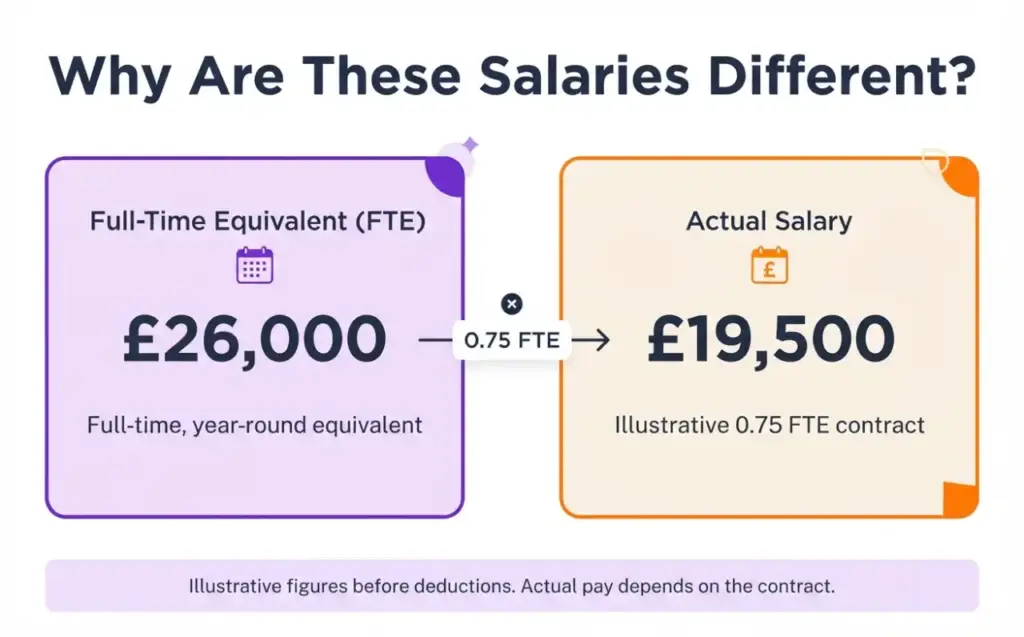
For example, a £26,000 FTE salary at 0.75 FTE works out to £19,500 before deductions, provided that fraction reflects the contract.
Schools may calculate term-time pay differently, so always read the salary details carefully. The Department for Education’s current school support vacancy listings can help you spot how these figures appear in real adverts.
What Qualifications Do You Need to Become a One-to-One Teaching Assistant?
You do not need one specific qualification for every one-to-one teaching assistant role in the UK. Schools set their own entry requirements, but many prefer GCSE English and maths, relevant training and experience supporting children. Some entry-level positions also welcome applicants without previous school experience.
Should You Choose Level 2 or Level 3 Training?
There is no single legal qualification for every one-to-one support role. Schools set their own requirements for direct applications. Many ask for GCSE English and maths (or equivalent skills) plus experience with children or young people, such as volunteering, childcare or youth work.
If you would rather learn while you work, the teaching assistant apprenticeship route combines paid experience with training.
CPD training and regulated qualifications are different things. CPD courses build knowledge and show commitment, but they are not automatically equivalent to Ofqual-regulated qualifications.
A Level 2 or Level 3 course may suit you depending on the vacancies you want, but the number in a course title does not prove it is regulated. Check the job advert first, then check the course’s awarding details.
Want More Confidence With KS1 and KS2 Subjects?
Focus on English, maths, science and classroom support across Key Stages 1 and 2 through flexible CPD training for assistants.
What Skills Make a Good One-to-One Teaching Assistant?
Schools value qualities that certificates cannot fully show. Patience and clear communication come first, along with the ability to listen and change an explanation when it isn’t working. Good assistants support pupils without creating unnecessary dependence, working with the teacher and SENDCo to step back at the right time.
Confidentiality and professional boundaries matter too, because you will know personal details about a pupil. Safeguarding is just as important. You must recognise concerns and report them promptly to the designated safeguarding lead, as set out in Keeping Children Safe in Education 2026. Strong one to one teaching assistant skills combine kindness with sound professional judgement.
How Can You Get a One-to-One Teaching Assistant Job Without Experience?
You can become a one-to-one teaching assistant without previous school experience by volunteering with children, highlighting transferable skills and applying for entry-level school support roles. Focus on vacancies that accept beginners and show how your patience, communication and reliability could help pupils.
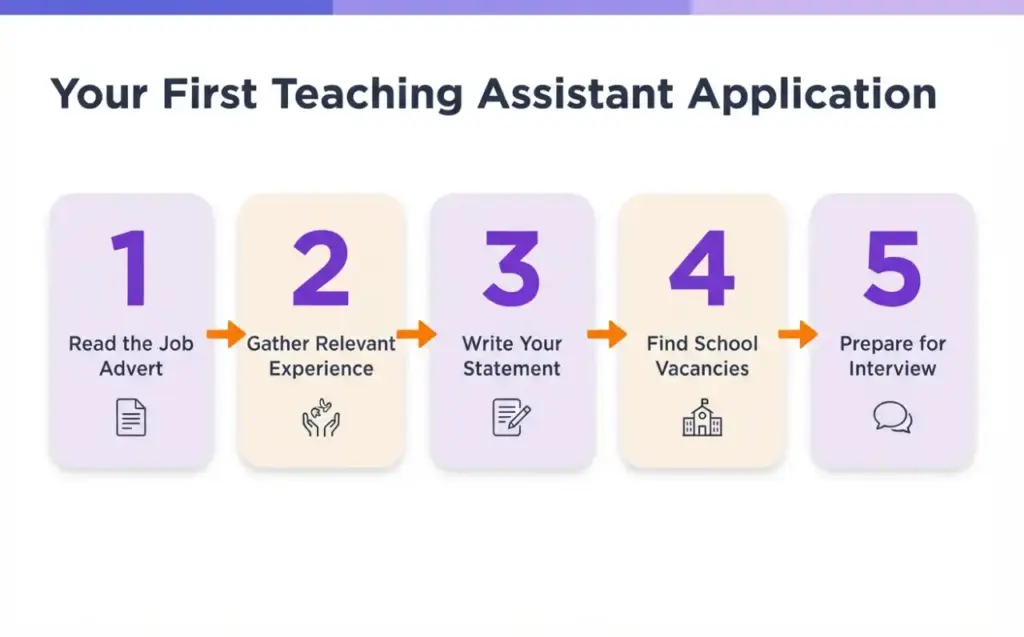
Five Steps to Apply for Your First School Support Role
Schools value real contact with children, and you can build it before you apply. Searching for one to one teaching assistant jobs becomes easier once you know what to look for.
- 1. Read the vacancy’s individual-support duties and essential criteria.
- 2. Gather examples from volunteering, childcare or other suitable experience.
- 3. Write a supporting statement that addresses the school’s criteria.
- 4. Search school and academy vacancies using terms such as 1:1 TA and SEND support assistant on the official Teaching Vacancies service.
- 5. Prepare for scenario-based interviews and the safer recruitment checks schools must carry out.
What Does a Typical One-to-One School Day Look Like?
This illustrative day changes with the pupil and the school. In the morning, you might talk through the day’s plan with the pupil, then support a literacy task. At transitions, you help them move between rooms and activities calmly.
Lunchtime support may be part of the role, followed by an afternoon activity and a short feedback chat with the teacher. A one-to-one assistant is not necessarily with one pupil every minute.
Conclusion
One-to-one support blends practical classroom help with sensitivity to each pupil’s needs. Review local vacancies, check the entry requirements and decide which type of support work interests you most. With sound preparation and a thoughtful application, you can take a realistic first step into school support work.
Frequently Asked Questions
No. The best arrangement depends on the pupil’s needs, classroom planning and the aim of building independence, so schools should review support regularly.
Titles often overlap, but duties depend on the employer and job description. Compare the listed responsibilities rather than relying on the title alone.
Grade 5 is an employer-specific pay or job grade, not a national standard. The salary attached varies by local authority, academy trust and pay scale.
Requirements and competition vary by school. Relevant experience, a focused supporting statement and strong references can all improve your chances of being shortlisted.
Consider the entry requirements for the jobs you want, whether the course is regulated or CPD, and your current experience. Check real vacancies before choosing.
Yes, in some roles. Allocation depends on school arrangements and the pupil’s needs, and support may change over time.
Schools in England must follow safer recruitment checks. Roles with regular work with children usually require an enhanced DBS check, and the school will confirm what applies.
Yes, but teacher training is a separate route with its own entry requirements. Assistant experience helps, though CPD courses do not replace initial teacher training.
Yes. Individual support can be provided in mainstream and specialist settings, depending on the pupil’s needs and the school’s plans.
Contracts differ. Many positions are term-time only, so working weeks and pay may follow the school calendar rather than the full year.