



Charity Safeguarding Training: Who Needs It & Where to Get It
Every charity that works with people has a duty to keep them safe. Charity safeguarding training is how trustees, staff and volunteers find out what harm looks like and what to do when they spot it.
So, what does the law ask for? In England and Wales, trustees must take reasonable steps to protect people who come into contact with their charity. The Charity Commission also expects charities to have trained trustees, staff and volunteers. But no law names one course or one level. Each person needs training that fits their role.
This guide sets out who needs what, where to find it and how to keep it current, including the rules in Scotland and Northern Ireland.
Safeguarding training for your volunteers can fit around their week
Eight online modules covering safeguarding laws and guidance, abuse signs, disclosures, reporting and record keeping, with a CPD certificate available on completion.
Start the Child Protection and Safeguarding course
Table of Contents
Is safeguarding training a legal requirement for charities?
The duty to keep people safe is a legal one. The exact training is up to you.
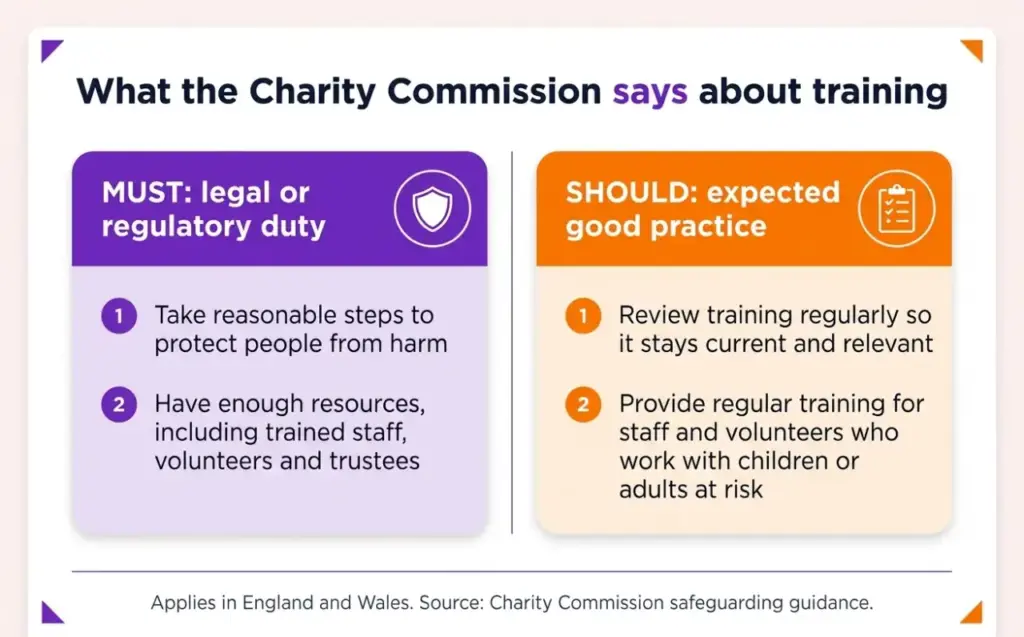
The Charity Commission’s safeguarding guidance for charities and trustees uses two words with care. “Must” means a legal or regulatory duty. “Should” means good practice that the Commission expects you to follow. Here is how training fits:
- Trustees must take reasonable steps to protect people from harm.
- The board must make sure the charity has enough resources, including trained staff, volunteers and trustees.
- Trustees should review training regularly, so it stays current and relevant.
- Charities that work with children or adults at risk should make sure all staff and volunteers get regular training.
So charity safeguarding training is not optional. But you choose the course, the provider and the depth, based on your charity’s work and risks. A lunch club for older people faces different risks from an overnight youth camp.
The duty covers everyone who comes into contact with your charity: beneficiaries, staff, volunteers and others. It is not only about children. Safeguarding sits alongside the wider duties in the essential trustee (CC3).
Scotland and Northern Ireland
In Scotland, OSCR’s guidance on charity trustees’ duties says trustees should be appropriately trained in safeguarding so they can make informed decisions. It also says trustees share collective responsibility, even when tasks are handed to staff. In Northern Ireland, follow the Charity Commission for Northern Ireland. Cross-border charities may answer to more than one regulator.
Training only works when it matches your own rules. How to Write a Safeguarding Policy for Your Organisation shows what your policy should say.
Who needs charity safeguarding training?
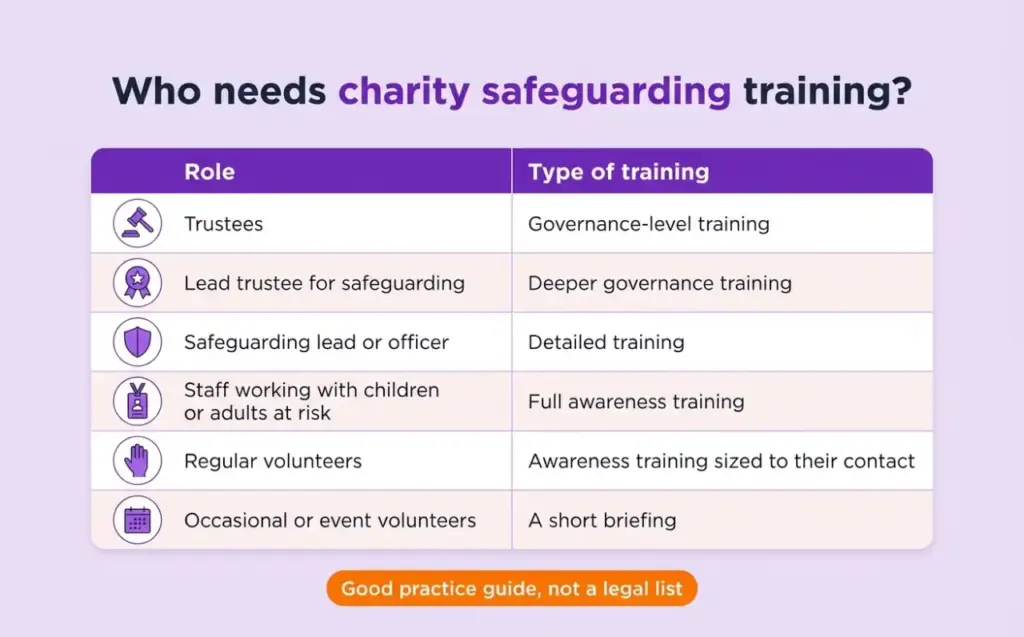
Anyone who could come into contact with a child or an adult at risk needs some training. Charity safeguarding training should match the role, so the depth varies.
| Role | Type of training | Main focus |
|---|---|---|
| Trustees | Governance-level training | Their duties, oversight of risks, serious incident reporting |
| Lead trustee for safeguarding | Deeper governance training | Holding the safeguarding lead to account, reporting to the board |
| Safeguarding lead or officer | Detailed training | Handling concerns, referrals, records, supporting others |
| Staff working with children or adults at risk | Full awareness training | Spotting concerns, responding to disclosures, reporting |
| Regular volunteers | Awareness training sized to their contact | Signs of harm, code of conduct, who to tell |
| Occasional or event volunteers | A short briefing | Code of conduct and who to report to |
This table reflects good practice, not a legal list. A simple rule: the more contact someone has with people at risk, and the more trust they hold, the more training they need.
Trustees rarely need frontline detail. Good safeguarding training for trustees focuses on governance: asking the right questions at board meetings and spotting when something is going wrong.
Volunteers often do most frontline work. Safeguarding Training for Volunteers: What You Need and Where to Get It covers their needs step by step.
What good charity safeguarding training covers
Whichever course you choose, good charity safeguarding training should cover:
- the types and signs of abuse and neglect for children and, where relevant, adults at risk
- what to do when someone tells you about harm (a disclosure)
- your charity’s own reporting steps and who to contact
- writing clear, factual records
- sharing information safely, and when confidentiality has limits
- staying safe online if your charity works online
- your code of conduct and safe ways of working
- serious incident reporting, for trustees and leads
Many courses use the 5 Rs: recognise, respond, report, record and refer. It is a helpful memory aid, not a legal standard.
Speed matters. The Charity Commission’s guidance on reporting safeguarding concerns says when safeguarding concerns arise, charities must act swiftly to make appropriate referrals to local children’s social care, the local Safeguarding Adults Board, or partner agencies in accordance with local multi-agency safeguarding procedures and statutory guidance. Trustees also hold responsibility for making sure the charity reports serious incidents to the Charity Commission promptly.
No course can cover your own procedures, so follow every course with a short briefing on your policy.
Wondering how many hours it takes, or what a course includes? Safeguarding Course for Volunteers: What’s Covered and How Long It Takes answers both.
Turn this checklist into training your team can complete
Covers child sexual exploitation, risk assessment and what to do after a referral, with lifetime access, an online test and 24/7 support.
Enrol on the Child Protection and Safeguarding course
Where can charities get safeguarding training?
Most charities use a mix of these routes to charity safeguarding training:
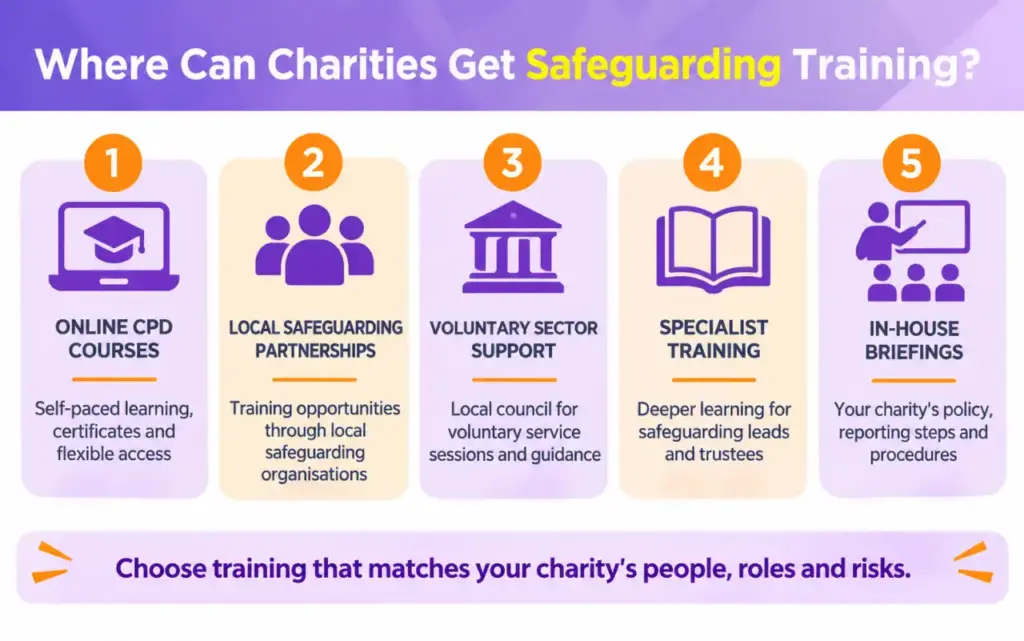
- Online CPD-accredited courses. These suit volunteers who work different days and places. People study at their own pace and receive a certificate for your records.
- Your local safeguarding partnership. Local Safeguarding Children Partnerships and Safeguarding Adults Boards may offer training for voluntary groups. Ask yours what is available.
- Local voluntary sector support. Your council for voluntary service may run sessions or point you towards local options.
- Specialist training for leads and boards. Leads need deeper training, and safeguarding training for trustees should focus on oversight.
- In-house briefings. Every route still needs a session on your own policy.
If your charity works with adults at risk, choose training that covers adults as well as children.
How to choose safeguarding training for your charity
Before you book charity safeguarding training, ask these questions:
- 1. Does it match the people you work with: children, adults or both?
- 2. Does it reflect current UK guidance?
- 3. Is there a test or assessment at the end?
- 4. Will each person receive a certificate for your records?
- 5. Is there a refresher option?
- 6. Can you enrol a whole team?
- 7. Is it easy to use on a phone, in plain language?
A note on accreditation: CPD accreditation means a course has been assessed against continuing professional development standards. It is not a regulated qualification or a licence to practise. For most charity roles, that is fine if the content fits.
Keeping training current: a simple yearly cycle for trustees
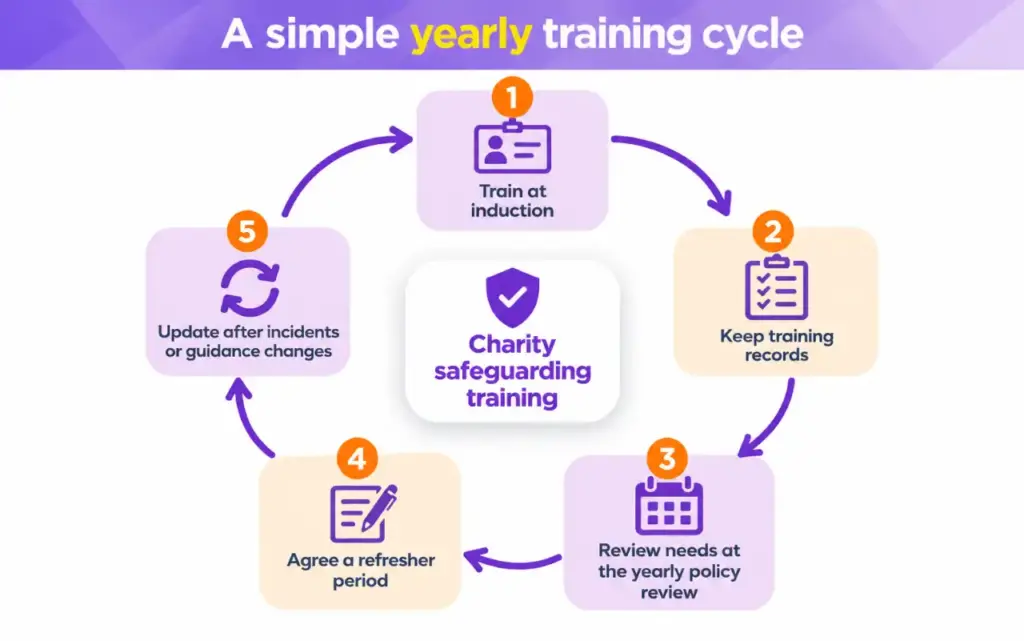
Charity safeguarding training is not a one-off task. This five-step cycle keeps it on track:
- 1. Train people at induction before they have unsupervised contact with beneficiaries.
- 2. Keep a training record for every trustee, staff member and volunteer.
- 3. Review training needs at your yearly policy review. The Charity Commission says policies should be reviewed at least once a year and always after a serious incident.
- 4. Agree on a refresher period as a board, and write it down.
- 5. Update training after an incident or a change in guidance.
For yearly updates, the Child Protection Annual Refresher is one option.
Questions for your next board meeting:
- Who has not finished their training yet?
- Does our training cover adults as well as children?
- When did our safeguarding lead last train?
- Has every trustee completed safeguarding training for trustees?
- What did we change after our last concern?
Small charity without a policy yet? Safeguarding Policy Template for Small Organisations offers a ready-made structure, including a training section you can fill in.
The right training for the right person
Good charity safeguarding training is not about one big course. It is about the right training for each role, clear records and a yearly review. Start with your trustees and safeguarding lead, then make sure every volunteer can act calmly when a concern comes up.
Frequently Asked Questions
It depends on the course and role. Awareness courses take a few hours; our Child Protection and Safeguarding course takes about 4 hours 34 minutes.
Some local safeguarding partnerships may offer free sessions. Paid courses usually add an assessment and a certificate, which helps you keep clear training records.
The 5 Rs are recognise, respond, report, record and refer. They are a widely used training framework, not a legal standard set by law.
Charity Commission guidance sets no numbered levels; those come mainly from healthcare frameworks. Match each person’s charity safeguarding training to their role instead.
No law sets a fixed period. Many organisations refresh every one to three years and after incidents. Your board should agree on its own interval.
Yes, for many roles, if it is current and relevant. Follow it with a briefing on your own procedures. Higher-risk roles may need extra training.