



Safeguarding Children Course Online: How to Choose the Right One
Need a safeguarding children course online, but not sure which one to pick? There are hundreds of options, and a “Level 2” certificate from one provider may not match a “Level 2” from another.
Here’s the short answer. The right course fits your job and your workplace. It covers the core topics, tells you clearly what certificate you’ll get, ends with a test, and is accepted by your employer. This guide takes you through each of those checks, one at a time.
It’s written for teaching assistants, nursery staff, childminders, sports coaches, tutors, volunteers, and managers booking training for a team.
Start With a Clear, Self-Paced Course
A CPD-accredited course covering the law, signs of abuse, what to do when a child speaks up, and keeping clear records.
Table of Contents
Can You Take a Safeguarding Children Course Online?
Yes. For many roles, a safeguarding children course online is a normal, accepted way to get trained. Online safeguarding training works well for basic awareness, for CPD (continuing professional development, which simply means keeping your skills up to date), and for refreshers between in-person sessions.
But an online course isn’t always the whole picture. Schools and nurseries usually run their own induction too, so new staff hear the setting’s own rules and the name of the person to report worries to. Senior roles, such as a Designated Safeguarding Lead (DSL), the person in charge of safeguarding in a school or nursery, usually need longer, more detailed training.
The simplest rule? Ask your employer or safeguarding lead what they accept before you pay for anything.
Are you brand new to working with children? Read What Is Safeguarding? A Simple Guide for Beginners first, and every course module will make far more sense.
Which Level of Safeguarding Training Do You Need?
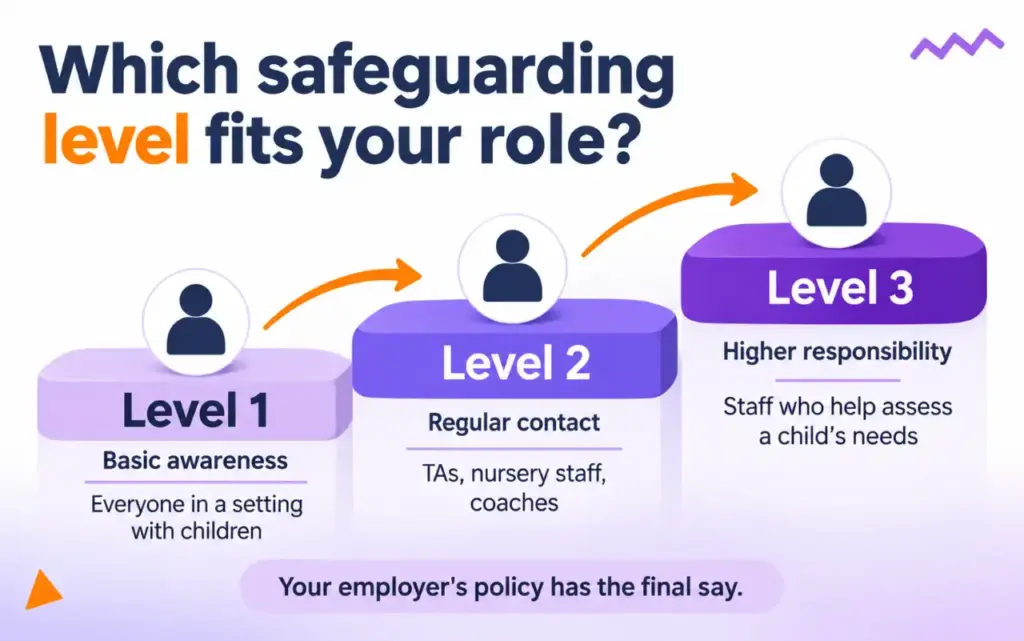
It depends on how much time you spend with children and how much responsibility you have. Level 1 suits basic awareness, Level 2 suits people in regular contact with children, and Level 3 suits staff who help decide how to support a child.
Where the Levels Come From
The Level 1, 2 and 3 labels started in healthcare. The Royal College of Paediatrics and Child Health and partner colleges publish a document called Safeguarding Children and Young People: Roles and Competencies for Healthcare Staff. It sets out the levels for NHS and other health staff.
Outside healthcare, no single national rule says what Level 1, 2 or 3 must mean. Training providers use the labels in different ways. So check what a course actually covers, not just the number on the front.
Safeguarding Children Training Levels at a Glance
| Level | Who It Often Suits | What It Usually Covers |
|---|---|---|
| Level 1 | Anyone working in a setting with children, including staff with limited direct contact, such as office or kitchen staff. | Recognising safeguarding concerns, understanding basic responsibilities and knowing who to report concerns to. |
| Level 2 | Staff who regularly work with children, such as teaching assistants, nursery staff, coaches and youth workers. | Recognising signs of abuse or neglect, responding appropriately, recording concerns and following reporting procedures. |
| Level 3 | Staff involved in assessing children’s needs or working with other agencies, including children’s social care and the police. | More advanced safeguarding knowledge, assessment processes, professional responsibilities and multi-agency working. |
These safeguarding children training levels are common industry descriptions rather than fixed statutory definitions. Your employer’s safeguarding policy has the final say. While Level 3 courses often cover DSL competencies, titled “DSL Training” specifically focuses on leading, managing, and taking legal oversight for safeguarding across an entire setting
Level 1 and 2 training start with spotting signs. The 4 Categories of Child Abuse Explained shows them through everyday examples, like repeated Monday-morning bruises.
What Safeguarding Training Does Your Job Expect?
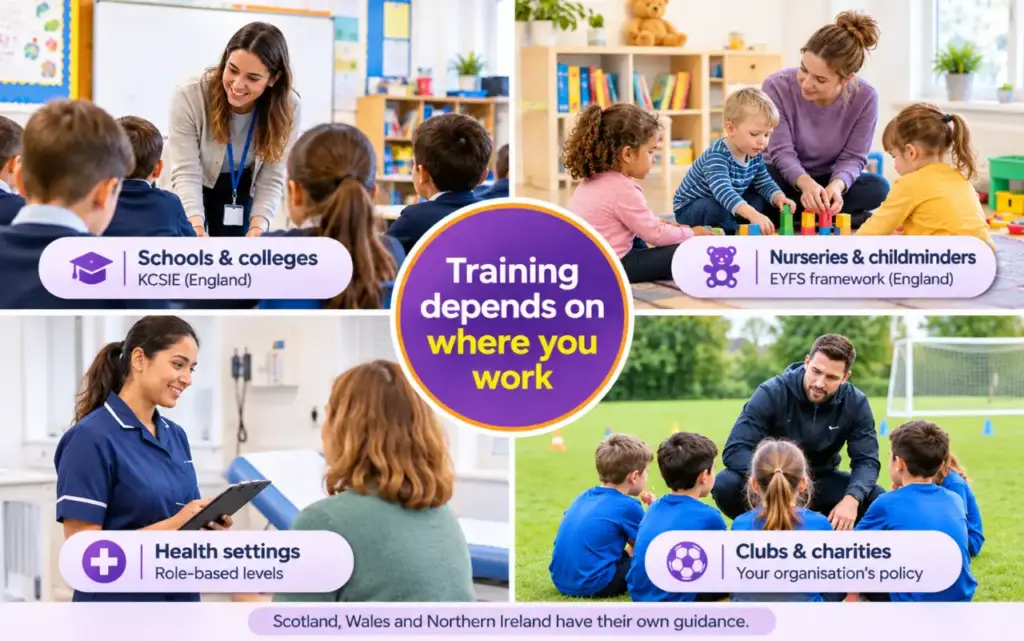
It depends on where you work and which part of the UK you’re in. Here’s a quick guide for England.
| Where You Work | Main Guidance | What It Means for Training |
|---|---|---|
| Schools and colleges | Keeping Children Safe in Education , statutory guidance from the Department for Education for schools and colleges in England. | All staff should receive safeguarding and child protection training, including online safety, at induction. Training should be regularly updated, with safeguarding updates at least annually. |
| Nurseries, pre-schools and childminders | EYFS Statutory Framework , which sets safeguarding and welfare requirements for early years providers in England. | Practitioners must receive appropriate safeguarding training. The designated safeguarding lead must complete training relevant to their responsibilities. Applicable EYFS training criteria must also be met. |
| NHS and other health settings | Relevant intercollegiate safeguarding children roles and competencies guidance, alongside NHS and employer policies. | Training requirements depend on professional responsibilities, the nature of contact with children and the safeguarding competencies required for the role. |
| Sports clubs, youth groups and charities | The organisation’s safeguarding policy, relevant governing body guidance and applicable statutory requirements. | Training varies according to the role, responsibilities and activities. Check with your organisation or governing body for specific requirements. |
Childminding from your living room? Safeguarding is checked at every Ofsted inspection. Safeguarding Training for Childminders: What Ofsted Expects tells you what inspectors want.
If You Work in Scotland, Wales or Northern Ireland
Keeping Children Safe in Education and the EYFS framework apply in England. The rest of the UK has its own guidance:
- Scotland: National Guidance for Child Protection in Scotland
- Wales: the Wales Safeguarding Procedures
- Northern Ireland: Co-operating to Safeguard Children and Young People in Northern Ireland
The main ideas are similar, but local services and some steps differ. If you work outside England, check that the course suits your nation’s guidance, or ask your employer.
What Should a Good Safeguarding Children Course Cover?
A good course should cover the law, the signs of abuse, what to do when a child tells you something, how to report it, and how to keep clear records. Whatever the level, a good safeguarding children course online should include:
- the main laws and guidance where you work
- the types of abuse and their warning signs
- child sexual exploitation and other kinds of exploitation
- keeping children safe online
- what to say and do if a child tells you something worrying
- how and where to report a concern
- writing clear, accurate records
- when information can and can’t be shared
- the role of the safeguarding lead
NextGen Learning’s Safeguarding Children course has eight modules: Introduction to Safeguarding, Laws and Guidance, Child Abuse, Child Sexual Exploitation, Responding to Disclosure and Reporting, Risks and Risk Assessment, Things to Do after Referral, and Record Keeping. Check it against this list and against what your employer asks for.
Exploitation can begin with grooming in an ordinary gaming chat. Signs of Online Grooming Every Parent and Teacher Should Know lists the early warning clues.
Check the Modules for Yourself
Eight self-paced modules run from laws and guidance to referral and record keeping, plus an online test with immediate results.
How to Check a Safeguarding Children Course Online Before You Enrol
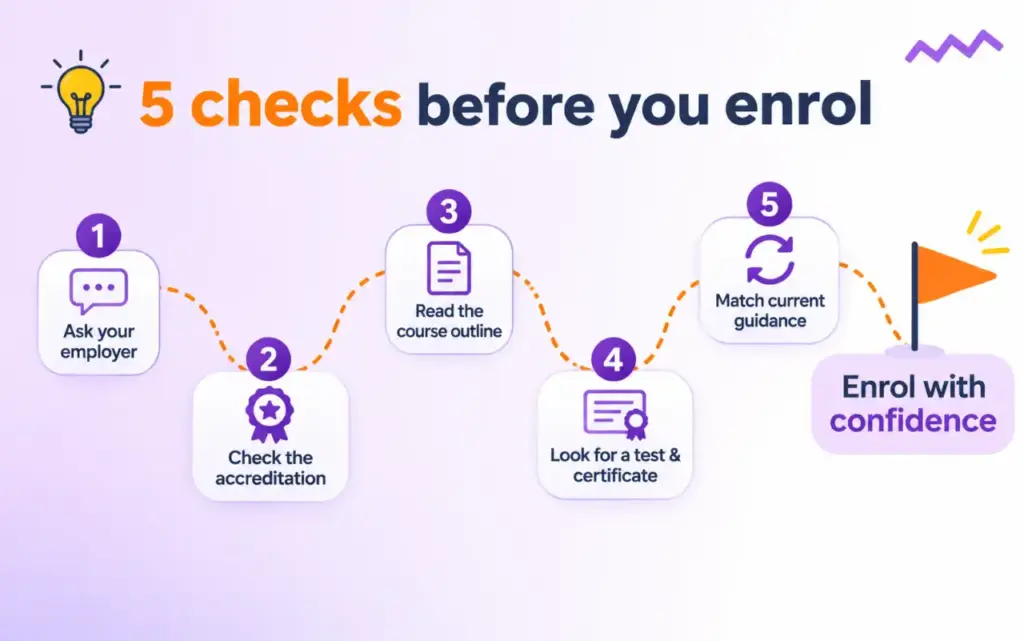
Before you pay for any course, run through these five checks.
- 1. Ask what your employer accepts. Speak to your manager or safeguarding lead, or read your workplace’s safeguarding policy.
- 2. Check the accreditation and what it means. Accreditation means an outside body has checked the course. A CPD safeguarding course is accredited training. It is not a regulated qualification, like a GCSE, and it is not a licence to practise. Some courses are also endorsed, or approved, by groups such as the Quality Licence Scheme, which approves non-regulated training.
- 3. Read the full course outline. A level label tells you very little. The module list tells you much more.
- 4. Look for a test and a certificate an employer can check. A good course tests what you’ve taken in and lets others confirm your certificate is real.
- 5. Make sure it matches current guidance where you work. Keeping Children Safe in Education is usually updated every year, so course content should keep up.
Red Flags to Watch For
- a promise of a guaranteed job
- no clear course outline
- no test at the end
- big “qualification” or “level” claims with no explanation
- no sign the content follows current UK guidance
One course says “child protection”, another says “safeguarding”. Are they the same? Safeguarding vs Child Protection: What’s the Difference? clears it up before you pay.
How Often Should Safeguarding Training Be Refreshed?
It depends on where you work. In schools and colleges in England, Keeping Children Safe in Education says all staff should get safeguarding updates at least once a year, and the Designated Safeguarding Lead should update their training at least every two years. Other employers set their own timetable.
Online risks change fast, too. New apps and games appear all the time, which is one big reason safeguarding refresher training matters.
Groomers often start with friendly messages in games or apps. Online Safety for Children: A Practical Guide for Parents and Staff helps you keep up.
Pick the Course That Fits Your Role, Not Just the Label
The best safeguarding children course online is the one that fits your role, your workplace and your part of the UK. Before you enrol, ask yourself four questions. Does my employer accept it? Does the course outline cover what I need? Is the certificate clear about what it is? When will I need a refresher?
If NextGen Learning’s course ticks those boxes, you can start the Safeguarding Children course and study at your own pace. Managers training a whole team can ask about group options.
And if you’re worried about a child right now, don’t wait for a course. Call 999 if a child is in immediate danger, or report child abuse to your local council.
FAQs About Choosing a Safeguarding Children Course Online
Often, yes, especially for awareness training and CPD. But every employer sets its own rules, so ask your manager or safeguarding lead before you enrol in any course.
No. Training covers spotting and reporting concerns. A DBS check (Disclosure Scotland or AccessNI outside England and Wales) looks at criminal records. Many roles with children need both.
No. A CPD course is accredited training, not a regulated qualification like a GCSE or A level. For most awareness training, that’s fine, but check what your role needs.
Usually, yes, if they work with children. Many clubs, charities and youth groups ask volunteers to complete training under their safeguarding policy. Requirements vary, so check with the organiser.