

Popular Courses

Brand
Awarding body image

Course Highlights

💷 Affordable Price: Practical electronics repair training at a budget-friendly price
💻 Study Mode: 100% Online Electronics Repair Course
📚 Complete Curriculum: 7 structured sections
Estimated Duration: Approx. 4+ hours guided learning
📝 Assessment Included: Assignment-based evaluation
🏅 Accreditation: CPD Accredited Course
📜 Digital Certificate: CPD Accredited PDF Certificate Available
🔓 Flexible Access: 12 Months | 24/7 Online Learning
🚀 Instant Enrolment: Start your electronics repair training today

Overview of Electronic & Electrical Devices Maintenance & Troubleshooting

Have you ever wondered how electronic devices are repaired when they stop working? From smartphones and televisions to home appliances and workplace equipment, modern life depends heavily on electronics. In fact, the global consumer electronics market continues to grow rapidly, creating strong demand for people who understand electronics repair, device maintenance, and electronic troubleshooting techniques. Therefore, learning these skills through a structured electronics repair course can be both practical and career-enhancing.

This electronics repair course online introduces the essential knowledge needed to understand electronic components, circuit behaviour, and troubleshooting methods used in real electronic repair environments. From the beginning, you will explore how electrical and electronic devices function, how to use testing tools such as multimeters, and how technicians identify faults in circuits. As a result, you will gradually build confidence in electronic circuit troubleshooting, electronic testing techniques, and electrical device maintenance.

Moreover, this electronic troubleshooting course focuses on clear explanations and practical understanding. You will learn how to apply preventive maintenance electronics practices, test components like resistors, capacitors, diodes, and transistors, and follow safe working procedures. Consequently, this training supports anyone interested in consumer electronics repair, electronics technician training, or learning electronics repair skills for personal projects or future technical careers.

Exclusive Course Glimpse

What You Will Learn in Electronic & Electrical Devices Maintenance & Troubleshooting

This electronics repair training course explains electronic systems step by step. Therefore, learners can develop the ability to diagnose faults, test components, and repair electronic devices effectively.

By completing this electronics repair course, you will learn to:

  • Understand electronic maintenance fundamentals: Learn how electronic and electrical devices operate and how electronics repair techniques help maintain equipment performance and reliability.
  • Identify electronic components clearly: Recognise common electronic components such as resistors, capacitors, diodes, and transistors used in circuits and electronic devices.
  • Apply electronic circuit troubleshooting: Develop practical skills to locate faults using structured electronic circuit troubleshooting methods used in electronics repair.
  • Use electronics repair tools confidently: Understand how to use essential tools including multimeters, soldering irons, wire cutters, pliers, and other electronics testing tools.
  • Perform electronic testing techniques: Learn how technicians test fuses, switches, transformers, bulbs, and other electrical parts to diagnose device faults accurately.
  • Understand voltage, current, and resistance: Explore the fundamentals of Ohm’s Law, electrical current types, and circuit behaviour used in electronics repair and troubleshooting.
  • Analyse circuit diagrams and symbols: Learn how to read basic circuit diagrams and electronic symbols used in electronic maintenance and troubleshooting work.
  • Test electronic components safely: Practise testing methods for capacitors, resistors, diodes, inductors, and transistors using electronic testing techniques.
  • Follow electrical safety procedures: Understand safe working practices required during electronic device maintenance and electrical troubleshooting.
  • Build practical electronics repair skills: Develop confidence in consumer electronics repair, device maintenance, and troubleshooting electronic faults in real-world devices.

As a result, you will build practical knowledge needed for electronics technician training and device servicing roles.

Why Choose Us?​

There are many electronics repair courses online. However, this course focuses on simple explanations, practical troubleshooting techniques, and real-world electronic maintenance knowledge.

Moreover, the course includes:

  • Affordable Learning: Step-by-step lessons that are easy to follow
  • CPD-Certified: Strengthen your CV with recognised credentials
  • Lifetime Access: Learn at your own pace, anytime
  • Instant Certificate: Receive certification upon completion
  • Flexible Scheduling: Study around work or family life
  • Transparent Pricing: No hidden fees
  • Quick Assessments: Track your progress confidently
  • 24/7 Support: Get help via chat or email

Therefore, this electronic maintenance course helps learners build both confidence and technical understanding.

Certificate of Achievement

Nextgen Certificate

After successfully completing this electronics repair course online, you will receive a CPD-accredited certificate to confirm your learning professionally.

You can typically choose:

  • PDF Certificate 
  • Hardcopy Certificate 

This certificate can help you:

  • Demonstrate electronics repair skills training
  • Strengthen your CV in technical fields
  • Support entry into electronics technician roles
  • Show commitment to professional development

Consequently, certification adds credibility to your electronics troubleshooting knowledge and repair expertise.

Who Is This Course For?​

Electronic & Electrical Devices Maintenance & Troubleshooting

This electronics repair training course is designed for beginners, hobbyists, and learners interested in technical careers.

This course is suitable for:

  • Beginners exploring electronics repair courses UK
  • Learners interested in consumer electronics repair
  • Individuals wanting to understand electronic circuit troubleshooting
  • DIY enthusiasts repairing home electronics devices
  • Students interested in electronics technician training
  • Professionals wanting to refresh electronic maintenance knowledge
  • Anyone interested in electronics basics and circuit analysis

Even if you have no technical background, the course explains concepts clearly and gradually.

Requirements​

There are no strict entry requirements for this electronics repair course online. However, the following will help you study comfortably:

  • Basic English reading skills
  • A smartphone, tablet, or computer
  • Stable internet connection

Because the course is fully online, learners can study at their own pace. Therefore, you can revisit modules and practise electronic troubleshooting techniques whenever needed.

Career Path of Electronic & Electrical Devices Maintenance & Troubleshooting

Completing this electronics repair course can support entry-level technical roles or help you develop practical electronic maintenance skills.

Possible career paths include:

  • Electronics Repair Technician – £22,000 to £35,000
    Diagnose and repair consumer electronics including circuit boards, power supplies, and household devices.
  • Consumer Electronics Service Engineer – £25,000 to £40,000
    Maintain and service electronic equipment used in homes or workplaces.
  • Mobile Phone Repair Technician – £20,000 to £32,000
    Repair smartphones, tablets, and small digital devices using troubleshooting techniques.
  • PCB Repair Technician – £26,000 to £42,000
    Work with printed circuit board repair and testing in electronics manufacturing or servicing.
  • Electronics Maintenance Engineer – £28,000 to £45,000
    Maintain electronic systems in industrial or technical environments.

Salary ranges vary depending on experience, location, and employer.

Order Your Certificate

To order your Certificate, we kindly invite you to visit the following link

Frequently Asked Questions -

Yes, many learners choose an electronics repair course online because it allows flexible learning. Online courses teach electronics fundamentals, troubleshooting techniques, and circuit testing without requiring classroom attendance. Therefore, you can study electronics repair from home.

You will learn electronic circuit troubleshooting, multimeter testing, device maintenance, and component identification. Moreover, you will understand how to diagnose faults in electronic devices safely. These skills are useful for electronics technician roles.

Basic electronics tools such as multimeters, soldering irons, and wire cutters are commonly used in electronics repair. However, many courses first explain the tools before requiring hands-on practice. Therefore, beginners can start learning without advanced equipment.

After completing electronics technician training, you may pursue roles such as electronics repair technician, service engineer, or device maintenance technician. Some learners also start freelance repair services.

Yes, electronics repair skills remain valuable because modern homes and workplaces rely heavily on electronic devices. Therefore, professionals who understand electronic maintenance and troubleshooting continue to be in demand.

Course Curriculum

Electronic & Electrical Devices Maintenance & Troubleshooting
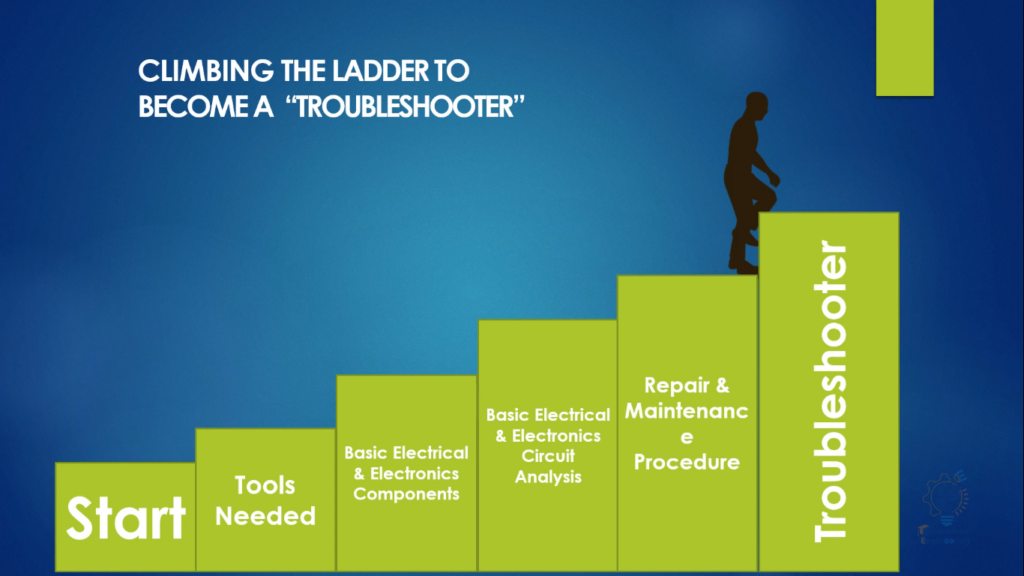
Section 1: Introduction & Getting Started
Unit 1: Introduction 00:02:00
Unit 2: Instructor’s Introduction 00:03:00
Section 2: Electronic and Electrical maintenance Repair
Unit 1: Becoming a Troubleshooter 00:02:00
Section 3: Tools Needed
Unit 1: Tools Needed 00:01:00
Unit 2: Multimeters 00:07:00
Unit 3: Wire Cutter and Stripper 00:03:00
Unit 4: Wiring Tools Soldering Iron 00:02:00
Unit 5: Screw Drivers 00:03:00
Unit 6: Pliers 00:02:00
Unit 7: Wrench 00:02:00
Unit 8: Oscilloscope and Function Generator 00:03:00
Section 4: Electronic Components
Unit 1: Passive Electronic Components 00:03:00
Unit 2: Active Electronic Component Diode 00:03:00
Unit 3: Active Electronic Component Transistor 00:03:00
Unit 4: Common Electronic and Electrical Components 00:05:00
Section 5: Testing
Unit 1: Testing a Fuse 00:03:00
Unit 2: Testing a Bulb or Lamp 00:02:00
Unit 3: Testing a Switch 00:01:00
Unit 4: Testing a Transformer 00:04:00
Unit 5: Testing a Resistance 00:08:00
Section 6: Troubleshooting
Unit 1: Safety Concerns 00:05:00
Unit 2: Main Concerns – Maintenance 00:02:00
Unit 3: Main Concerns – Servicing 00:02:00
Unit 4: Troubleshooting Part – 1 00:03:00
Unit 5: Troubleshooting Part – 2 00:04:00
Section 7: Introduction to Electronic Components: A Step by Step Guide
Unit 1: Introduction 00:05:00
Unit 2: Voltage Current and Resistance 00:06:00
Unit 3: Types of Current 00:03:00
Unit 4: Types of Circuits 00:02:00
Unit 5: Practical: Introduction to Digital Multimeter DMM 00:07:00
Unit 6: Volt Ohm Meter Basics 00:05:00
Unit 7: Measuring Voltage 00:13:00
Unit 8: Practical: How to Measure DC Voltage 00:03:00
Unit 9: Measuring Current 00:05:00
Unit 10: Measuring Currents – Lab Experiment Explained 00:11:00
Unit 11: Practical 1: How to Measure Current 00:04:00
Unit 12: Practical 2: How to Measure Current 00:01:00
Unit 13: Measuring Resistance 00:08:00
Unit 14: Practical: How to Test Resistors 00:05:00
Unit 15: Circuit Diagram Basics and Basic Symbols 00:12:00
Unit 16: Introduction to Resistor and Color Band Coding 00:09:00
Unit 17: Power Dissipation + Parallel and Series Resistors 00:12:00
Unit 18: Ohm’s Law 00:14:00
Unit 19: Introduction to Capacitors 00:11:00
Unit 20: Capacitors Behavior + Capacitors in Series and Parallel 00:07:00
Unit 21: Practical 1: How to Test a Capacitor 00:03:00
Unit 22: Practical 2: How to Test A Capacitor 00:02:00
Unit 23: Introduction to Inductors 00:07:00
Unit 24: Practical: How to Test and Measure Coils 00:06:00
Unit 25: Introduction to Diode + Zener Diode and LED 00:08:00
Unit 26: Practical 1: How to Test a Diode 00:02:00
Unit 27: Practical 2: How to Test a Diode 00:02:00
Unit 28: Introduction to Transistors 00:10:00
Unit 29: Practical 1: How to Test a Transistor 00:04:00
Unit 30: Practical 2: How to Test a Transistor 00:04:00
Unit 31: Practical 3: How to Test a Transistor 00:03:00
Assignment
Assignment – Electronic & Electrical Devices Maintenance & Troubleshooting 00:00:00
Order Your Certificate
Order Your Certificate 00:00:00

Related Courses

No course found

A product of

© 2026 NextGen Learning. All rights reserved

Home Search Cart Offers
Select your currency
GBP Pound sterling