


Popular Courses

Brand
Awarding body image

Overview of Financial Modelling Course Online

A business idea can look promising until the numbers are tested.

How many customers do you need? What will sales generate? How much will labour, operating costs and investment affect profitability? And will the business have enough cash to operate?

This Financial Modelling Course helps you answer those questions more systematically. You will start with the fundamentals of financial modelling and learn how a business model connects with financial assumptions before working through practical revenue, customer-acquisition, cost and investment models.

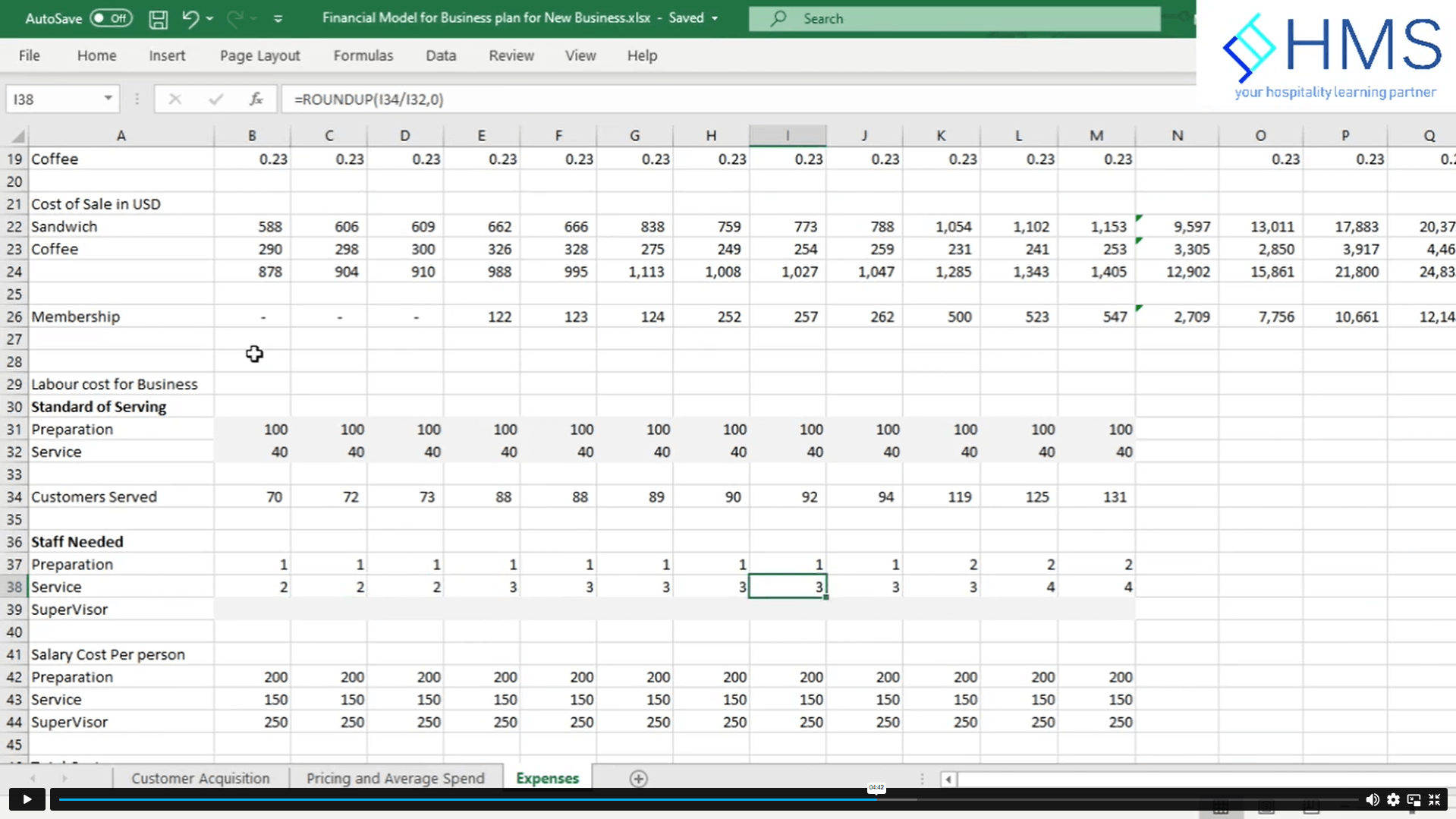
The course then takes you further into the three core financial statements, including income statement, cash flow and balance-sheet modelling, before bringing these elements together in a financial model for a new-business plan. Your curriculum also includes a restaurant case study, helping you see how financial assumptions connect in a practical business scenario.

Current UK financial-modelling training follows a similar practical direction. City St George’s focuses on building financial models for business planning and evaluation, while LSBF connects financial modelling with forecasting company performance and answering business problems.

Through this course, you can learn how to:

  • Understand how financial models support business decisions.
  • Translate business assumptions into financial projections.
  • Model customer acquisition and revenue.
  • Estimate cost of sales, labour and operating expenses.
  • Assess capital investment and return on investment.
  • Build income-statement and cash-flow models.
  • Understand balance-sheet modelling.
  • Identify and correct common model errors.
  • Use financial modelling to support a new-business plan.

If you want to learn financial modelling with a clear business focus, this course provides a structured route from core concepts into practical forecasting and planning.

Exclusive Course Glimpse

Learning Outcomes

By completing this course, you should be able to:

  • Explain the purpose of financial modelling.
  • Identify the starting point of a financial model.
  • Connect business processes with financial assumptions.
  • Build basic comparative profit-and-loss models.
  • Create customer-acquisition and revenue models.
  • Estimate labour, operating and cost-of-sale assumptions.
  • Model capital investment and ROI.
  • Understand income-statement and cash-flow projections.
  • Explain the role of balance-sheet modelling.
  • Recognise common financial-model errors.
  • Apply financial forecasting and analysis to business-planning decisions.

Why Choose This Course

Financial modelling can become overwhelming when learners are introduced to formulas without understanding why the model is being built.

This Financial Modelling Training keeps the commercial purpose clear.

  • Business-first approach – understand how business assumptions influence financial outcomes.
  • Practical case study – follow a restaurant model from initial idea through detailed planning.
  • Revenue and cost modelling – work with customer acquisition, sales, labour and operating expenses.
  • Investment decisions – explore capital investment and ROI calculations.
  • Three-statement awareness – develop knowledge of income statements, cash flow and balance sheets.
  • Business-plan relevance – see how financial modelling supports planning for a new business.
  • Flexible online learning – study around work, business or other responsibilities.
  • CPD-accredited development – support your professional learning.

Unlike a highly technical Excel Financial Modelling Course, your current curriculum is primarily focused on the logic, structure and business application of financial models rather than advanced spreadsheet functions. That distinction is important for learner expectations. More technical UK courses often assume existing Excel and financial-statement knowledge.

Certificate of Achievement

  • CPD Accredited Certificate
  • Digital Certificate
  • Professional Recognition
  • CV & LinkedIn Enhancement
  • Proof of Professional Skills
Nextgen Certificate

Who Is This Course For?​

This course is particularly suitable for:

  • Entrepreneurs testing a business idea
  • Small-business owners planning growth
  • Finance learners developing modelling knowledge
  • Finance assistants and junior analysts
  • Managers involved in budgeting or planning
  • Business consultants
  • Students exploring finance careers
  • Professionals wanting stronger forecasting skills

If you are comparing a Financial Modelling Course for Beginners, this programme starts with core modelling concepts but progresses into revenue, cost, ROI and three-statement models. Basic numeracy and confidence working with business figures will therefore be helpful.

Career Opportunities (UK)

This Financial Modelling Course can support foundational knowledge relevant to finance, business analysis and planning roles. Professional careers usually also require practical experience and, depending on the role, further qualifications.

Management Accountant

Management accountants prepare financial information, budgets and forecasts to support business decisions.

Typical UK salary: £30,000–£60,000 per year.

Business Analyst

Business analysts investigate business problems and identify opportunities for improvement.

Typical UK salary: £23,000–£55,000 per year.

Financial assumptions, forecasting and business-case thinking can complement broader analysis skills.

Investment Analyst

Investment analysts assess financial information to help support investment decisions.

Typical UK salary: £28,000–£75,000 per year.

The modelling and ROI elements provide useful introductory context, although investment roles normally require broader finance knowledge.

Business Adviser

Business advisers support start-ups and established organisations with planning and growth.

Typical UK salary: £27,000–£65,000 per year.

The business-planning and financial-decision elements of this course are particularly relevant to this pathway.

Entry Requirements

  • No formal qualifications are required.
  • Basic numeracy is recommended.
  • Some familiarity with business figures is helpful.
  • Access to an internet-connected device is required.
  • An interest in finance, forecasting or business planning is beneficial.

A strong business plan needs more than an idea—it needs numbers that make sense. Learn how to structure revenue, costs, investment, cash flow and financial statements so you can evaluate business assumptions with greater confidence.

Order Your Certificate

To order your Certificate, we kindly invite you to visit the following link

Frequently Asked Questions -

A Financial Modelling Course teaches you how to organise financial assumptions and projections into structured models that can support business planning and decision making. This course covers customer acquisition, revenue, costs, investment, ROI, income statements, cash flow and balance-sheet modelling.

Yes. The course introduces the fundamentals of financial modelling before progressing into practical business models. You do not need a formal finance qualification, although basic numeracy and confidence working with business figures will be useful.

This Financial Modelling Training explores business and financial models, revenue forecasting, customer acquisition, labour and operating costs, capital investment, ROI, income statements, cash flow, balance sheets and financial modelling for a new-business plan.

Financial modelling helps you translate business assumptions into numbers. For example, you can consider expected customers, revenue, costs, staffing and investment to better understand how different assumptions could affect the financial outlook of a business.

Yes. Financial forecasting and analysis are relevant throughout the programme as you work with revenue, costs, cash flow and other financial assumptions. The focus is on using modelled information to support business planning and more informed decisions.

The course teaches financial-modelling concepts and practical business applications. It should not be marketed primarily as an Excel Financial Modelling Course unless your learning activities specifically require and teach Excel. Learners looking for advanced Excel formulas, VBA or spreadsheet engineering may need more specialised training.

Yes. Cash flow forms part of the curriculum alongside income statements and balance sheets. This helps you understand why profitability alone does not provide the complete financial picture of a business.

Yes. Entrepreneurs and small-business owners can benefit from understanding how customer assumptions, revenue, costs, investment and cash flow connect when evaluating a business idea or preparing financial elements of a business plan.

The course can develop useful foundational knowledge for finance, analysis and business-planning pathways. However, professional finance positions generally require additional qualifications, technical skills and/or practical experience.

Yes. Successful completion provides the certificate options available with the course as evidence of learning and continuing professional development. It should not be confused with a regulated professional finance qualification.

Course Curriculum

Section 01: Introduction
Introduction to the course 00:02:00
Introducton to the Business Priocess 00:03:00
What is Financial Modelling 00:08:00
Starting Point of a Financial Model 00:04:00
First Steps before Starting to create Financial Model and Linking Business Model 00:07:00
Section 02: Case Study: Restaurant - Basic Model for Selecting Initial Idea
Starting with End in Mind-Comparative P&L 00:13:00
Customer Acquisition Model 00:16:00
Revenue and Cost Models 00:22:00
Adding Product and Modelling Labour and Other Costs 00:21:00
Modelling Capital Investments and ROI Calc 00:10:00
Section 03: Business Plan and 3 Financial Statement Models
Detailed Customer Acquisition Model and Revenue Model 00:17:00
Cost of Sale Model 00:08:00
Modelling Labour Cost 00:07:00
Modelling Other Operating Expenses 00:14:00
Modelling Income Statement and Cash Flows 00:27:00
Modelling Balance Sheet 00:14:00
Fixing the Error in Financial Model and Brief of RR 00:07:00
Financial Model for Business plan for New Business 00:00:00
Assignment
Assignment – Financial Modelling for Decision Making and Business plan 00:00:00
Order Your Certificate
Order Your Certificate 00:00:00

Related Courses

A product of

© 2026 NextGen Learning. All rights reserved

Home Search Cart Offers