


Popular Courses

Brand
Awarding body image

Overview of HTML Web Development Course Online

Starting web development can feel confusing when you are faced with HTML, CSS, JavaScript and countless other technologies at once. The good news is that you do not need to learn everything at the same time.

This HTML Course starts with one of the foundations of the web: HTML, the markup used to structure webpage content. You will learn how HTML elements organise headings, text, links, images, tables, forms and multimedia before gaining introductory awareness of CSS and JavaScript.

If you are exploring Web Development for Beginners, this course can help you:

  • Start from scratch with no previous coding experience required.
  • Understand HTML structure rather than simply copying code.
  • Create webpage content using headings, lists, links and images.
  • Work with tables, forms and multimedia to build richer pages.
  • Understand how CSS and JavaScript fit in with HTML.
  • Build confidence for further web-development learning.

With 17 focused modules and an assignment, the course gives you a structured route to Learn HTML without jumping immediately into more advanced programming.

Exclusive Course Glimpse

Learning Outcomes

By completing this course, you should be able to:

  • Explain how HTML is used to structure webpage content.
  • Set up a basic HTML project.
  • Use common HTML tags, elements and attributes correctly.
  • Organise content using headings and lists.
  • Create links between webpages and external resources.
  • Add and manage images within HTML pages.
  • Build basic and more detailed tables.
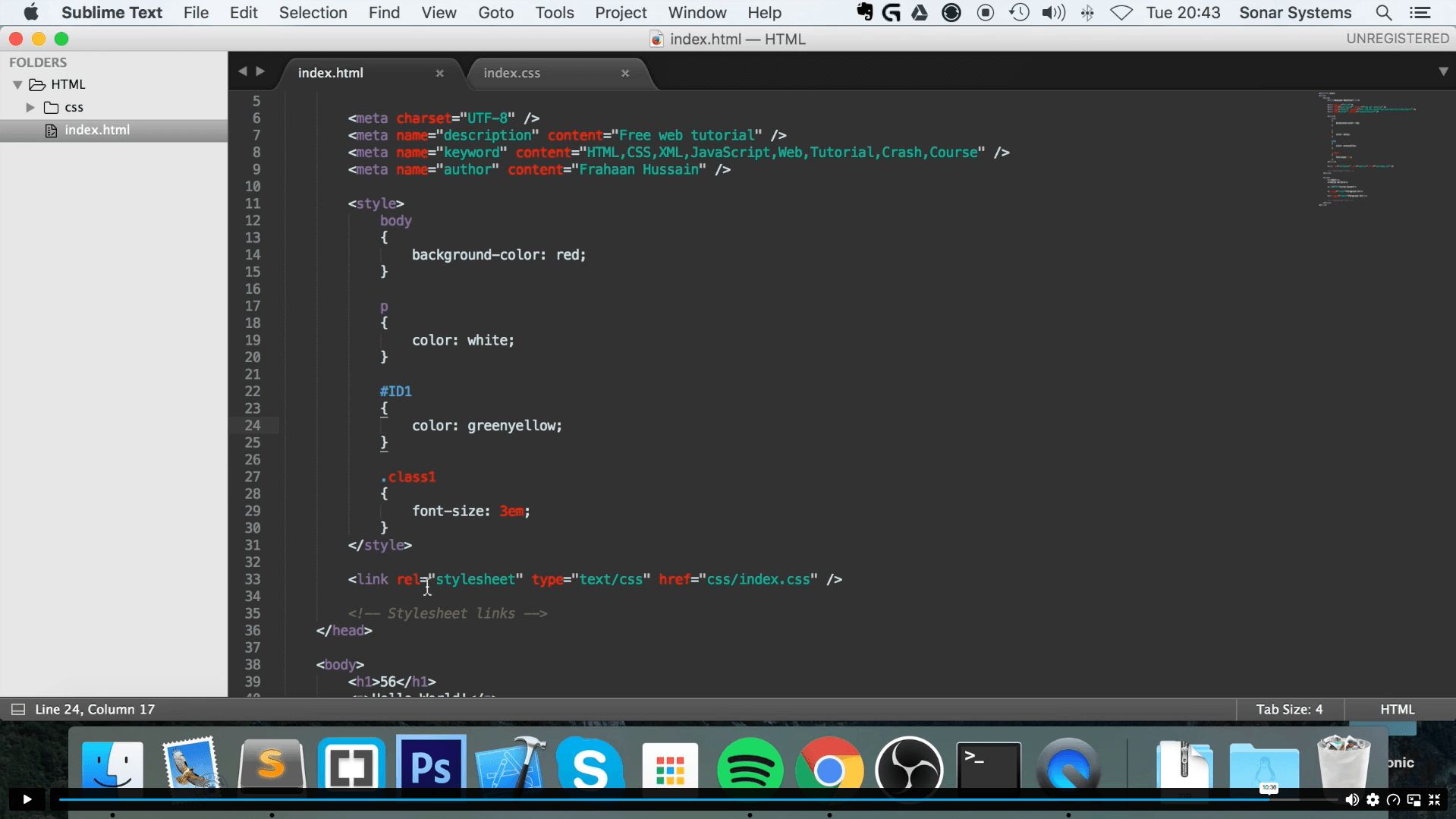
  • Use meta tags to provide page information.
  • Embed video, audio and iframe content.
  • Create basic HTML forms.
  • Recognise how CSS controls webpage presentation.
  • Explain the introductory role of JavaScript in web interaction.

These skills provide a useful starting point before progressing into CSS, JavaScript, responsive design and broader front-end development.

Why Choose This Course

Free HTML tutorials are easy to find. The harder part for many beginners is knowing what to learn first, what comes next and how the different pieces fit together.

This course provides a structured learning path instead of leaving you to piece together disconnected tutorials.

What makes the course useful?

  • Designed for beginners – start without previous coding knowledge.
  • Structured progression – move from basic HTML setup to forms, media, CSS and JavaScript awareness.
  • Practical webpage focus – understand how common webpage elements are created.
  • 17 focused modules – learn one area at a time instead of facing everything at once.
  • 100% online learning – study from a suitable internet-connected device.
  • CPD-accredited learning – support your continuing professional development.
  • Assignment included – reinforce your understanding after completing the modules.
  • Foundation for further learning – prepare to explore CSS, JavaScript and wider web development.

For someone looking at Web Development for Beginners, the value of this course is simple: it gives you a manageable first step rather than expecting you to become a developer overnight.

Certificate of Achievement

  • CPD Accredited Certificate
  • Digital Certificate
  • Professional Recognition
  • CV & LinkedIn Enhancement
  • Proof of Professional Skills
Nextgen Certificate

Who Is This Course For?​

This course is particularly suitable for:

  • Complete beginners who want to learn how webpages are built.
  • Students developing practical digital and coding knowledge.
  • Career changers exploring web development before committing to advanced training.
  • Digital marketers and content professionals who work with website content.
  • Website administrators and content editors who want greater confidence with HTML.
  • Small business owners interested in understanding the structure behind their websites.
  • Aspiring developers looking for a starting point before CSS and JavaScript.

No previous coding experience is required.

Career Opportunities (UK)

HTML knowledge can support several digital career pathways because webpage structure is relevant to development, design and online-content work. However, this beginner course should be viewed as a starting point. Most professional roles require broader skills, practical projects and further learning.

Web Content Editor

Web content editors create, organise and maintain online content, including text, images and multimedia. HTML knowledge can help when formatting pages, managing links and understanding webpage structure.

Typical UK salary: £25,000–£40,000 per year.

This is one of the most directly relevant pathways for learners who combine HTML knowledge with strong content and digital skills.

Web Developer

Web developers create and maintain websites and web applications. HTML is an important foundation, although professional development roles also require broader technologies and practical experience.

Typical UK salary: £27,000–£60,000 per year.

This course can help you begin the learning journey before progressing into CSS, JavaScript, responsive development and portfolio projects.

Web Designer

Web designers combine creative and technical skills to plan and improve websites. Understanding HTML can make it easier to understand how visual designs translate into actual webpage structures.

Typical UK salary: £28,000–£50,000 per year.

Further design skills, software knowledge and portfolio development are normally required.

E-learning Developer

E-learning developers create digital learning materials and online course experiences. HTML and web-design knowledge can complement wider skills in digital content, learning technology and multimedia.

Typical UK salary: £25,000–£45,000 per year.

Further technical, design or instructional-development skills may be needed depending on the role.

Overall, the strongest career value of this course is helping you build an HTML foundation, explore digital career options and prepare for more advanced web-development learning.

Entry Requirements

  • No previous HTML or coding experience required.
  • No formal academic qualification required.
  • Basic computer confidence is helpful.
  • Access to an internet-connected device is required.
  • An interest in HTML, websites or web development is recommended.

Start with the building blocks of the web, Learn HTML step by step and develop the confidence to take your next step into web development.

Order Your Certificate

To order your Certificate, we kindly invite you to visit the following link

Frequently Asked Questions -

An HTML web development course teaches learners how websites are structured using HTML. This course covers tags, headings, lists, links, images, tables, meta tags, media, forms, CSS and JavaScript basics. Moreover, it helps learners build a strong starting point for website development.

An HTML Course teaches you how webpage content is structured using HTML. You can learn how to work with headings, paragraphs, links, images, tables, forms, multimedia and other common webpage elements.

Yes. The course is designed for learners with little or no previous coding experience. It introduces HTML step by step, making it a suitable starting point for Web Development for Beginners.

You will learn how to structure webpages, use HTML tags and attributes, create links and lists, add images, work with tables and forms, embed media and understand how CSS and JavaScript connect with HTML.

Yes. You do not need previous programming experience to Learn HTML. The course begins with fundamental concepts and gradually introduces more detailed webpage elements and structures.

Yes. HTML provides the structure of webpage content and is one of the core technologies used in front-end web development. After building your HTML foundation, you can progress to CSS, JavaScript, responsive design and other web-development skills.

Yes. The course is delivered online, allowing you to study around work, education or other commitments and progress through the modules at your own pace.

No. This course provides foundational HTML knowledge and introduces wider web-development concepts. Professional web-development roles normally require additional skills such as CSS, JavaScript, responsive development, practical projects and portfolio experience.

Yes. After successfully completing the course, learners can receive a CPD-accredited digital certificate as evidence of course completion and continuing professional development.

Course Curriculum

HTML Web Development Crash Course
Module 01: Setup and Overview 00:10:00
Module 02: Basic Tags 00:08:00
Module 03: Headings 00:05:00
Module 04: Lists 00:06:00
Module 05: Links 00:06:00
Module 06: Images 00:07:00
Module 07: Tables 00:05:00
Module 08: Advanced Tables 00:05:00
Module 09: Meta Tags 00:06:00
Module 10: Description Lists 00:02:00
Module 11: Presentation 00:06:00
Module 12: Iframe 00:03:00
Module 13: Video 00:04:00
Module 14: Audio 00:03:00
Module 15: Forms 00:09:00
Module 16: CSS 00:11:00
Module 17: JavaScript 00:07:00
Assignment
Assignment – HTML Web Development Crash Course 00:00:00
Order Your Certificate
Order Your Certificate 00:00:00

Related Courses

No course found

A product of

© 2026 NextGen Learning. All rights reserved

Home Search Cart Offers