



Dental Nurse Course UK: Costs & Training Routes (2026)
Choosing the right dental nurse course in the UK can be confusing, especially when training options come with different costs and qualifications. Some courses provide introductory dental knowledge, while others offer recognised pathways towards professional registration. Understanding these differences can help you make an informed decision.
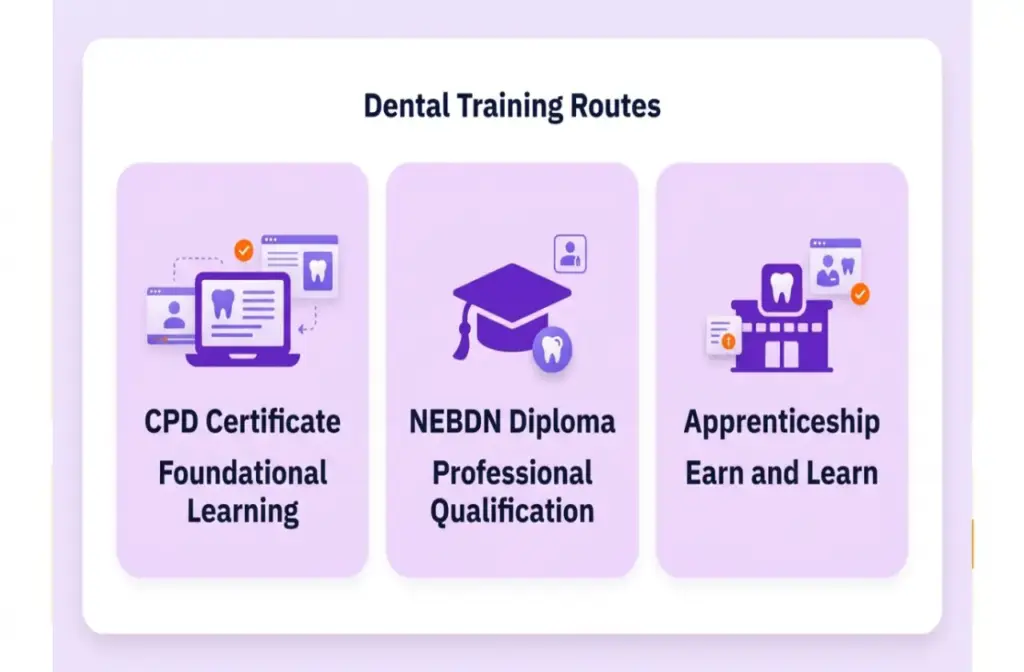
Before enrolling, it is important to understand dental assistant vs dental nurse roles and their qualification requirements. A CPD certificate, NEBDN Diploma and dental nurse apprenticeship each serve a different purpose, depending on your experience and career goals.
This guide compares dental nurse courses UK learners can choose in 2026, including training costs, entry requirements, study formats and GDC registration eligibility. Whether you are starting from scratch or exploring a career change, you will find practical information to help you choose a suitable route.
Table of Contents
Dental Nurse Courses in the UK: Quick Comparison
The right dental nursing course depends on whether you want introductory knowledge or a qualification that can lead to professional registration.
| Feature | CPD Certificate | NEBDN Diploma | Apprenticeship |
|---|---|---|---|
| Purpose | Introductory dental knowledge. | Professional dental nursing qualification. | Paid workplace training. |
| Study Format | Usually fully online. | Online or classroom-based theory with clinical practice. | Employment with structured training. |
| Duration | Often a few hours. | Typically 12–18 months, depending on the provider. | Typically 18 months in England, excluding assessment. |
| Cost | Provider-dependent. | Around £2,000 or more in published examples. | No apprentice tuition fees in England. |
| Clinical Placement | Not normally required for introductory study. | Required. | Employment-based. |
| GDC Registration | No. | Recognised route. | Recognised route through approved training. |
Key difference: A CPD dental assistant certificate develops knowledge but does not qualify you for GDC registration. Recognised dental nursing qualifications and approved apprenticeships provide professional training pathways.
CPD Certificate vs NEBDN Diploma vs Apprenticeship: What's the Difference?
All three options can support learning, but their purpose and professional outcomes are different.
CPD Dental Assistant Certificate
A CPD dental assistant course is suitable for beginners who want to understand dental practice before committing to formal training.
These courses may cover dental instruments, infection control, oral health, patient communication and practice administration.
NextGen Learning’s online dental assistant certificate course offers ten modules, flexible online study, assessments and CPD certification.
It provides introductory knowledge and evidence of learning. However, it is not a GDC-recognised dental nursing qualification and does not independently authorise someone to practise as a registered dental nurse.
NEBDN Dental Nursing Diploma
The NEBDN Level 3 Diploma in Dental Nursing is a recognised qualification route for aspiring dental nurses.

Training combines theoretical learning, supervised clinical experience and formal assessment. Learners also complete a portfolio demonstrating practical competence.
According to the NEBDN qualification requirements, learners must work in an appropriate dental clinical environment before beginning the qualification.
Successful completion of an eligible diploma allows graduates to apply for GDC registration, provided they meet the remaining registration requirements.
NEBDN is one recognised awarding organisation, not the only route into dental nursing.
If you are starting your career, learning how to become a dental nurse can help you understand the necessary qualifications and practical experience.
Level 3 Dental Nurse Apprenticeship
A dental nurse apprenticeship combines employment with structured professional training.
Apprentices earn wages while gaining clinical experience, developing practical skills and completing assessments.
In England, the Level 3 dental nurse apprenticeship standard specifies a typical training duration of 18 months, excluding the assessment period.
This route may suit learners who prefer practical experience alongside formal study.
How Much Does a Dental Nurse Course Cost in the UK in 2026?
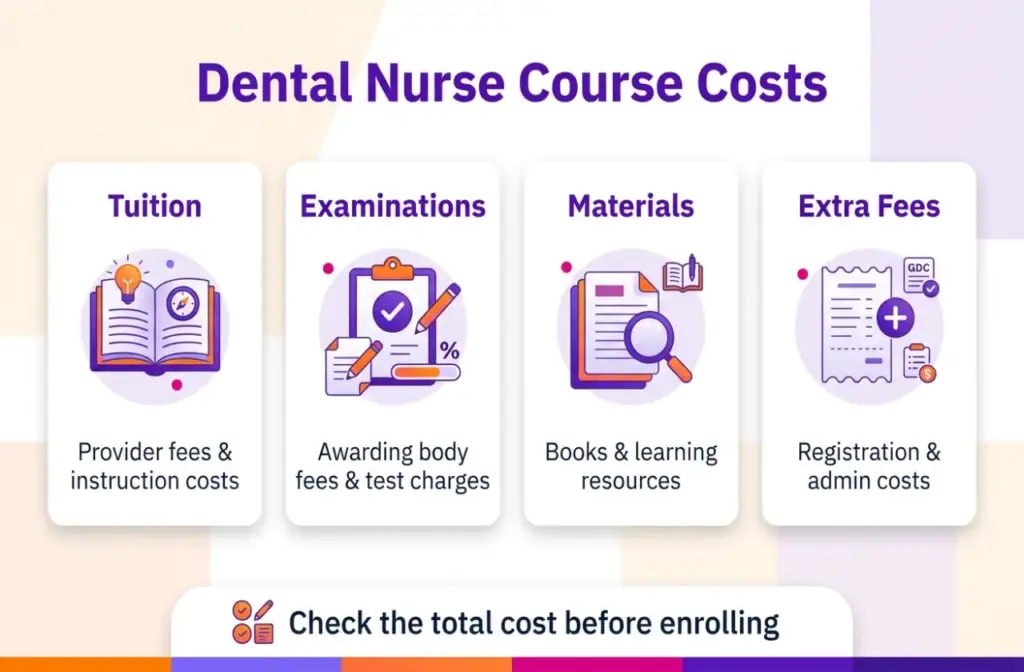
The dental nurse course cost varies depending on the qualification, training provider and included assessment fees.
How Can Coaches Recognise Safeguarding Concerns?
CPD and NEBDN Diploma Course Fees
Introductory CPD certificates generally cost less than recognised dental nursing diploma programmes, although prices vary by provider.
For the NEBDN Diploma, published 2026 course fees include:
| Training Provider | Published Cost | What’s Included |
|---|---|---|
| Tempdent | £1,450 + VAT | Tuition only, with a separate examination fee of £525. |
| Dental Nurse Courses | £2,200 | November 2026 intake, including study materials and one NEBDN examination fee. |
| Education Made Right | £2,249 | NEBDN Level 3 Diploma, with a reduced course fee of £2,149 available to eligible start-up service customers. |
Prices checked on 7 November 2026. These are advertised provider prices, not an official UK fee scale.
Price clarification: Dental Nurse Courses’ earlier 2026 document lists £1,995, while its FAQ states £2,000. However, its current course page advertises £2,200 for the November 2026 intake, so the table uses the latest intake-specific figure.
Before enrolling, check whether the quoted dental nurse training fees include VAT, examination charges, resits, learning materials and additional support.
A lower advertised tuition fee does not always mean a lower total training cost.
Are Dental Nurse Apprenticeships Free?
In England, eligible apprentices do not pay tuition fees. Government-backed apprenticeship training costs are covered through the apprenticeship funding system and employer arrangements.
Apprentices also receive wages.
From April 2026, the apprentice minimum wage is £8 per hour for apprentices under 19 and those aged 19 or over in their first year.
Apprentices aged 19 or over who have completed their first year must receive the minimum wage applicable to their age.
Apprenticeship funding and availability differ across Scotland, Wales and Northern Ireland.
You can explore the dental nurse apprenticeship route further to understand entry requirements, training and employment opportunities.
Which Dental Nurse Training Route Should You Choose?
Choosing the best dental nurse training route starts with your career goal.
- 1. Exploring dental work: Consider introductory CPD training to develop foundational knowledge.
- 2. Already employed as a trainee: A recognised dental nursing diploma may suit your circumstances.
- 3. Wanting paid practical training: Explore a dental nurse apprenticeship.
- 4. Planning to become registered: Choose a qualification recognised by the General Dental Council.
Before paying for training, check the entry requirements, clinical placement arrangements, assessment methods and total fees.
If you are completely new to dentistry, an introductory certificate can help you explore the subject. However, it does not replace the qualifications needed for professional registration.
Can an Online Dental Nurse Course Qualify You for GDC Registration?
Yes, an online dental nurse course can contribute towards a recognised qualification, but online theory alone is not enough.
Registration-qualifying training must meet the GDC’s standards and include appropriate supervised clinical learning. Understanding dental nurse qualifications can help you identify recognised training programmes and avoid confusion with introductory certificates.
The GDC maintains a list of recognised dental nursing qualifications. Importantly, dental nursing assistant certificates are not automatically eligible for registration.
There is also a significant 2026 requirement.
Under the 2026 trainee dental nurse requirements, anyone newly employed as a trainee dental nurse from 1 June 2026 must begin recognised training within 12 months of starting work.
Existing trainees who had not started training by that date are subject to transitional deadlines.
Always verify a qualification’s recognition before enrolling.
Conclusion
Finding the right dental nurse course depends on your career goals, budget and preferred learning style. CPD certificates offer introductory knowledge, while recognised diplomas and apprenticeships provide pathways towards professional qualification.
If you’re new to dentistry, an online dental assistant course can help you develop foundational knowledge. However, becoming a registered dental nurse requires a GDC-recognised qualification and meeting the relevant registration requirements.
Before enrolling, compare course fees, practical training requirements and qualification recognition. Choosing a suitable pathway will help you plan your next steps in dental nursing with greater confidence.
Frequently Asked Questions
Yes. Many introductory courses accept beginners without dental experience. Recognised diploma programmes may also accept inexperienced learners, but you generally need suitable clinical employment before starting NEBDN training.
You can complete some introductory dental assistant courses online. However, training for professional dental nurse registration requires clinical experience alongside theoretical learning. Online diploma teaching does not remove the practical requirements.
Requirements vary by provider and training route. Some programmes assess English and maths skills during enrolment. Apprenticeship employers may set their own entry criteria, so check the individual vacancy or course requirements.
Recognised diploma programmes commonly take around 12–18 months, depending on their structure. England’s dental nurse apprenticeship has a typical training duration of 18 months, excluding assessment. Short CPD courses take considerably less time but do not provide the same qualification.
No. A dental assistant certificate demonstrates completion of specified learning, whereas a GDC-recognised dental nursing diploma provides a professional qualification pathway. CPD certification alone does not establish eligibility for GDC registration.