


Safeguarding Course for Volunteers: What’s Covered & How Long
You’ve signed up to help at a youth club, a primary school or a Saturday football session. Then someone mentions you’ll need safeguarding training before you start. What does that involve, and how much of your time will it take?
A safeguarding course for volunteers shows you how to spot when a child might be at risk, what to say if a child tells you something worrying, and how to report and record it. NextGen Learning’s Child Protection and Safeguarding course takes 4 hours and 34 minutes across eight modules, plus a practice exam and a final exam.
Safeguarding simply means keeping people safe from harm, abuse and neglect. There’s no fixed expiry date for the training, because the organisation you volunteer with decides when you need a refresher. This guide covers volunteering with children in the UK. If you’ll be supporting adults at risk, you’ll need a different course.
Ready to Get Started Before Your First Session?
Work through eight online modules on abuse, disclosure, reporting and record keeping, then pass the final exam to claim a CPD certificate.
Table of Contents
What Does a Safeguarding Course for Volunteers Cover?
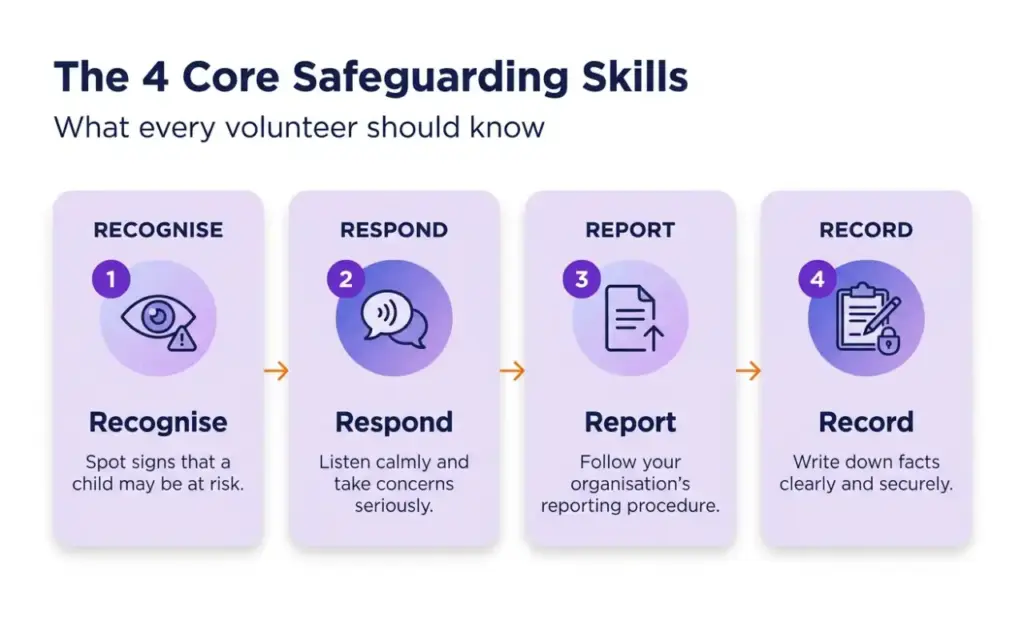
It covers four core skills: spotting a concern, responding to it, reporting it and recording it. The Charity Commission’s safeguarding guidance says everyone involved with a charity should be able to “recognise, respond to, report and record” a safeguarding concern, and a good safeguarding course for volunteers covers all four.
New to safeguarding? What Is Safeguarding? A Clear Guide for Care, Schools & Health covers the basics, from what it means to who it protects.
What a Course Can’t Cover for You
No online course can tell you how your own organisation works. Every group has its own safeguarding policy, its own reporting steps and a named person to go to with concerns, often called the designated safeguarding lead (DSL) or safeguarding officer.
Before your first session, ask for a copy of the policy, find out who your safeguarding lead is, and go to any induction you’re offered.
Wondering what happens once you pass a concern on? What Happens After a Child Protection or Safeguarding Referral? sets out each stage in order.
How Long Does a Safeguarding Course for Volunteers Take?
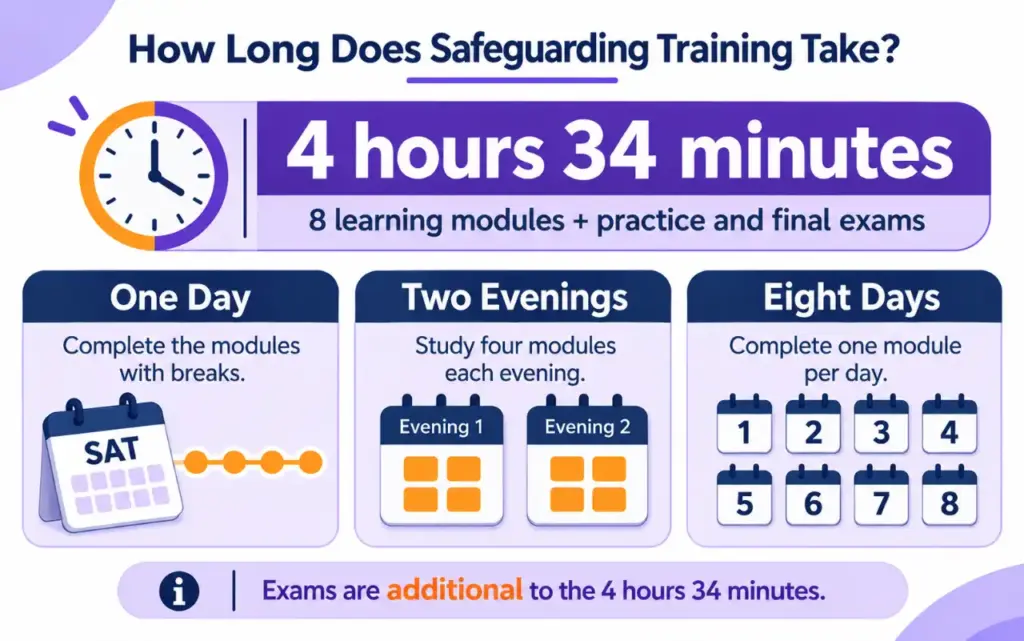
How long does a safeguarding course take? With NextGen Learning, it’s 4 hours and 34 minutes of study, plus the two exams. You work at your own pace and your access doesn’t run out, so there’s no rush to finish in one sitting.
Other courses vary. Short introductory courses are often labelled “Level 1”, but there’s no national standard for safeguarding levels for volunteers. A Level 2 course from one provider might cover more or less than another’s, so the topics matter more than the label.
An online safeguarding course for volunteers fits around work, school runs and family life. The modules run from 16 to 49 minutes, so you could:
- finish in one day, with a few breaks, on a quiet Saturday;
- split it over two evenings, with four modules a night;
- take one module a day for eight days, then sit the exams.
How Long Are Safeguarding Certificates Valid?
Most safeguarding certificates for volunteers don’t carry an official expiry date. So, how long are safeguarding certificates valid? In practice, for as long as the organisation you volunteer with accepts them. It decides how often you need a refresher, usually based on your role and how much time you spend with children.
The Charity Commission expects charities to make sure staff and volunteers receive regular training, but it doesn’t set one fixed timescale for everyone.
Schools work a little differently. If you volunteer in a school or college in England, Keeping Children Safe in Education 2026 has applied since 1 September 2026. Schools use it to decide what safeguarding training and updates each person needs.
Make a note of the date you finish your safeguarding course for volunteers. It helps your organisation plan when your next refresher is due.
Still unsure what your role needs overall? Safeguarding Training for Volunteers: What You Need and Where to Get It covers requirements, providers and next steps.
Starting a New Volunteer Role? Train at Your Own Pace
Fit 4 hours 34 minutes of study around your week, with unlimited access, 24/7 support and a practice exam before the final.
Enrol on the Child Protection and Safeguarding course
What Else Do Volunteers Need Alongside a Safeguarding Course?
A course prepares you to act on a concern, but it doesn’t replace the steps your organisation takes to make sure you’re right for the role. Alongside your training, expect an induction, a copy of the safeguarding policy and, for many roles, a DBS check.
Running a small group? Our How to Write a Safeguarding Policy for Your Organisation make the paperwork simpler.
What Changed for Volunteers in 2026?
The biggest change came on 1 September 2026, when the law on “regulated activity” changed in England and Wales. Northern Ireland made a similar change.
Regulated activity is regular work with children that anyone on the children’s barred list must never do. Before September, some volunteers didn’t count because a teacher or head coach supervised them. That rule has now gone. If you teach, train, instruct, care for or supervise children often enough (for example, on more than three days in any 30-day period) or overnight, you’re in regulated activity, even with someone watching.
GOV.UK’s guidance on the change to regulated activity names examples such as a weekly school reading helper, an assistant coach at a children’s sports club and a youth group volunteer.
These roles can now have an enhanced DBS check with a children’s barred list check, and the DBS eligibility guidance explains which roles qualify. Standard and enhanced DBS checks are free for eligible volunteers, while a basic DBS check costs £20 for everyone.
Official statutory guidance was also updated. The Department for Education issued updated statutory guidance in Working Together to Safeguard Children 2026 in spring 2026, followed by Keeping Children Safe in Education 2026, which came into force on 1 September 2026.
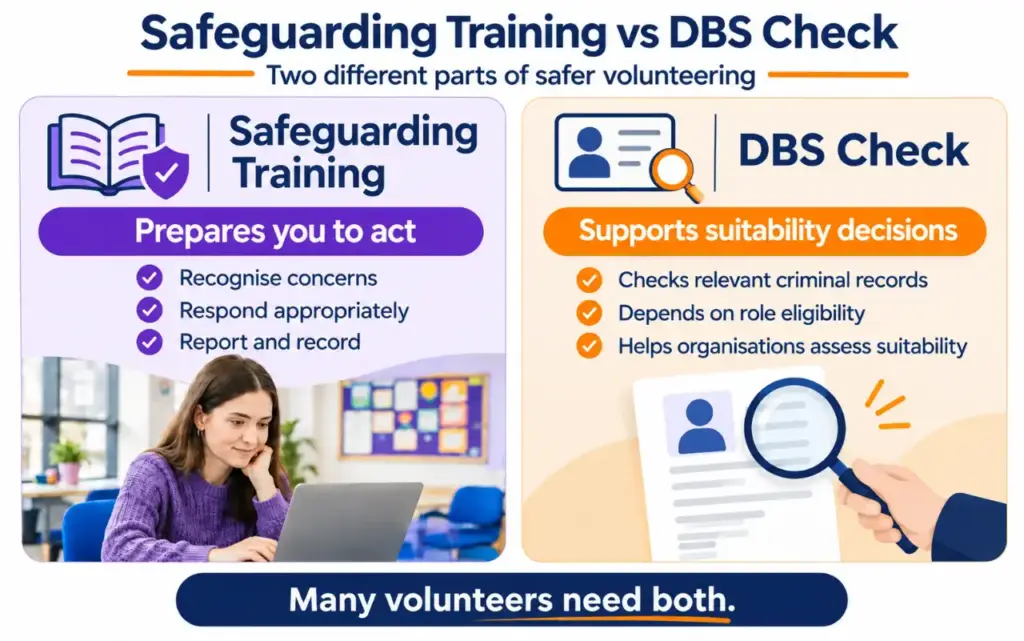
Training and a DBS check do different jobs. Your safeguarding course for volunteers prepares you to act on a concern, while the DBS check helps your organisation decide whether you’re suitable. Many volunteers need both.
Volunteering in Scotland or Northern Ireland
Scotland has its own system. Anyone doing a regulated role with children must join the Protecting Vulnerable Groups (PVG) scheme, run by Disclosure Scotland. In Northern Ireland, criminal record checks go through AccessNI. Safeguarding guidance also differs between the four nations, so ask your organisation which rules it follows.
How to Choose the Right Course for Your Volunteer Role
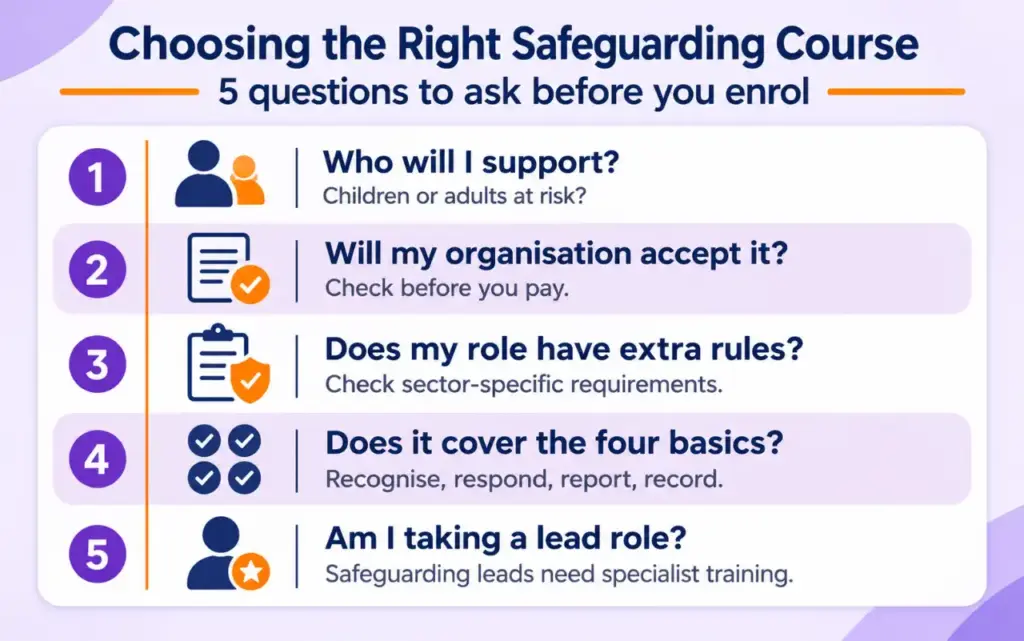
Not every safeguarding course for volunteers suits every role. Before you enrol, ask yourself five quick questions:
- Who will I support? Children’s courses focus on children. If you’ll support adults at risk, pick an adult safeguarding course.
- Will my organisation accept it? Ask your volunteer coordinator before you pay, as some groups offer their own training free.
- Does my activity have extra rules? Some sports and youth organisations ask for training they’ve approved.
- Does it cover the four basics? Spotting concerns, responding, reporting and recording.
- Am I taking on a lead role? Safeguarding leads need more specialist training.
Ready to step up as your group’s safeguarding lead? Roles and Responsibilities of a Designated Safeguarding Lead sets out what the role involves.
Volunteering in youth work or sport? Safeguarding for Youth Workers: Responsibilities and Training cover the extra duties.
Volunteering with children can also lead towards paid roles, such as teaching assistant or youth worker. Real experience and a safeguarding certificate for volunteers both help an application, although neither guarantees a job.
Frequently Asked Questions
No law names one required course for every volunteer, but the Charity Commission expects charities to train volunteers regularly, and many children’s groups require it.
It depends on the provider. There’s no national standard for safeguarding levels for volunteers, so look at each course’s listed study time and topics.
Yes. Online courses suit most volunteers because you study at your own pace. Your organisation may still ask you to attend its own induction session.
Many do, but rules differ between organisations and sectors. Ask your volunteer coordinator before you enrol, especially if you volunteer in sport or youth work.
On our course, complete all eight modules and pass the final exam. You can then order a PDF or printed hard copy certificate.