




Why Phlebotomy Skills Are Essential in Modern Healthcare
Introduction: The Critical Role of Phlebotomy in Patient Care
In today’s fast-paced healthcare environment, accurate diagnostic testing forms the backbone of effective patient care. From monitoring chronic illnesses to assessing recovery or conducting routine health checks, blood tests remain among the most frequently requested procedures in medical settings. Behind every reliable blood test, however, is a skilled healthcare professional responsible for collecting the sample safely and effectively — the phlebotomist.
While phlebotomy may not be the first career that comes to mind when considering healthcare roles, its importance cannot be overstated. Accurate blood collection is the critical first step in the diagnostic process, providing physicians and laboratory specialists with the information they need to make informed decisions. Healthcare systems around the world — from large public services like the National Health Service (NHS) to private diagnostic clinics — rely heavily on trained phlebotomy professionals to maintain high standards of patient care.
A structured Phlebotomy Diploma equips aspiring healthcare workers with the skills, knowledge, and confidence to perform blood collection procedures safely, ethically, and professionally. This guide explores why phlebotomy is essential in modern healthcare, the role of phlebotomists in diagnostic testing, career opportunities after training, and how structured courses prepare students for a meaningful career.
Table of Contents
What Is Phlebotomy? Understanding Its Importance in Healthcare
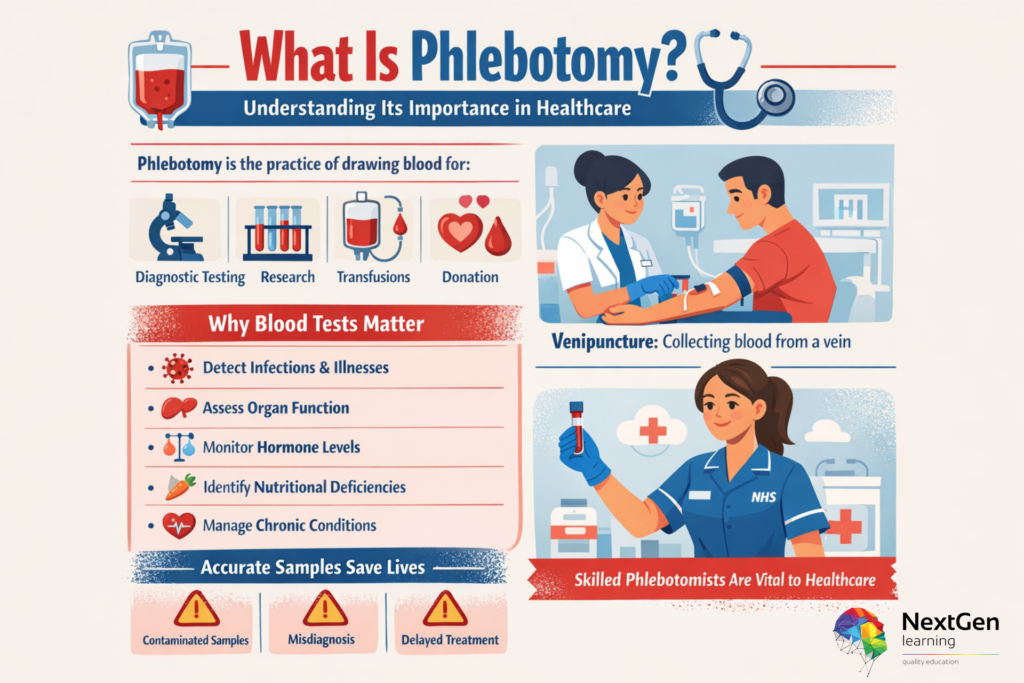
Phlebotomy is the medical practice of drawing blood from patients for diagnostic testing, research, transfusions, or donation. The most common technique used is venipuncture, which involves inserting a sterile needle into a vein — usually in the arm — to safely collect a blood sample.
Blood testing provides crucial insights into a patient’s health. These tests can:
- Detect infections and illnesses
- Assess organ function (liver, kidney, thyroid)
- Monitor hormone and nutrient levels
- Identify nutritional deficiencies
- Support the management of chronic conditions
Because blood is such a critical indicator of internal health, the accuracy and quality of blood samples directly influence diagnostic outcomes. Mishandled or contaminated samples can lead to misdiagnosis, delayed treatment, or inappropriate prescriptions — highlighting why skilled phlebotomists are indispensable in healthcare systems such as the NHS.
The Central Role of Blood Testing in Medical Diagnosis
Blood tests are among the most powerful diagnostic tools in medicine. Physicians rely on them to detect and monitor conditions like:
- Diabetes and blood sugar irregularities
- Cardiovascular disease markers
- Organ function abnormalities (liver, kidney, thyroid)
- Nutritional deficiencies (iron, vitamins)
- Infections and immune response evaluations
According to the American Association for Clinical Chemistry (AACC), blood testing informs nearly 70% of medical decisions — from confirming diagnoses to guiding treatment plans¹. This statistic underscores the importance of accurate blood collection: the first step in nearly every clinical pathway.
Why Proper Blood Collection Techniques Are Crucial
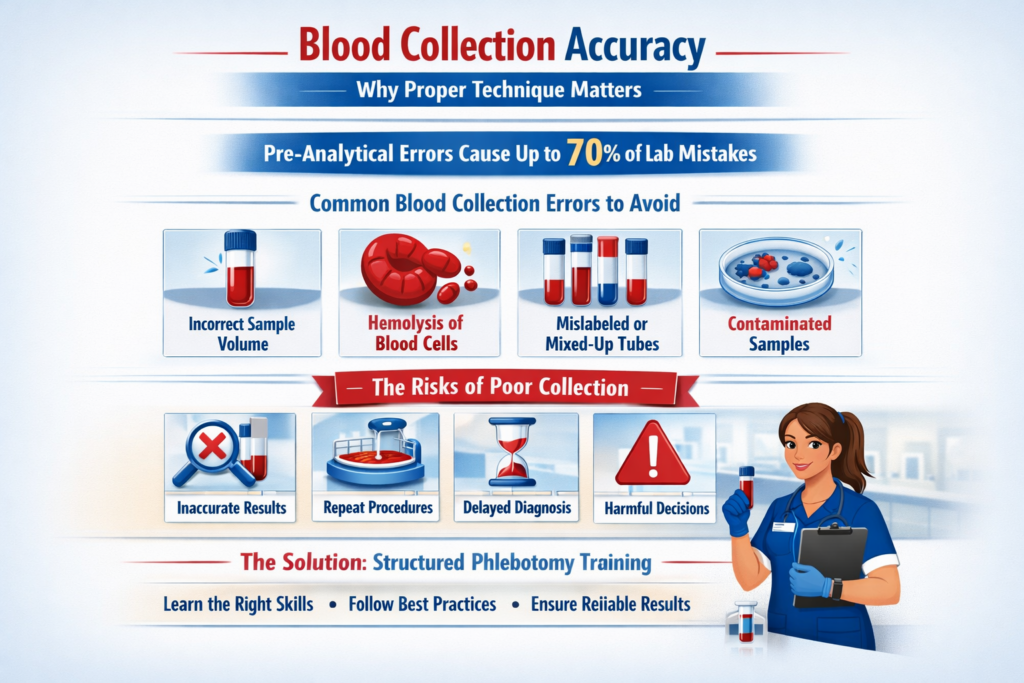
Drawing blood may appear straightforward, but it is a clinical procedure that requires skill, precision, and patient care expertise. Improper collection can lead to pre-analytical errors, which research shows account for up to 70% of laboratory mistakes². Common errors include:
- Incorrect sample volume
- Hemolysis (rupturing of blood cells)
- Mislabelled or mixed-up tubes
- Contamination
These errors can result in inaccurate results, repeated procedures, delayed diagnoses, and potentially harmful clinical decisions.
Structured phlebotomy training ensures you develop the knowledge, skills, and confidence to minimise errors and provide samples that are reliable, trustworthy, and safe.
Patient Safety and Hygiene Standards
Blood draws involve needles and bodily fluids, which means safety is paramount. Phlebotomists must strictly follow:
- Infection control protocols: Hand hygiene, sterile gloves, site preparation, and proper disposal of sharps
- Needlestick injury prevention: Protecting both patients and healthcare staff
- Accurate sample handling: Proper labelling and storage prevent misdiagnosis
The World Health Organization (WHO) sets global standards for safe blood collection, emphasizing cleanliness, correct technique, and proper handling³. A trained phlebotomist adheres to these protocols to ensure patient safety is prioritised throughout every step of the blood collection process.
How Phlebotomists Support Doctors and Laboratory Teams
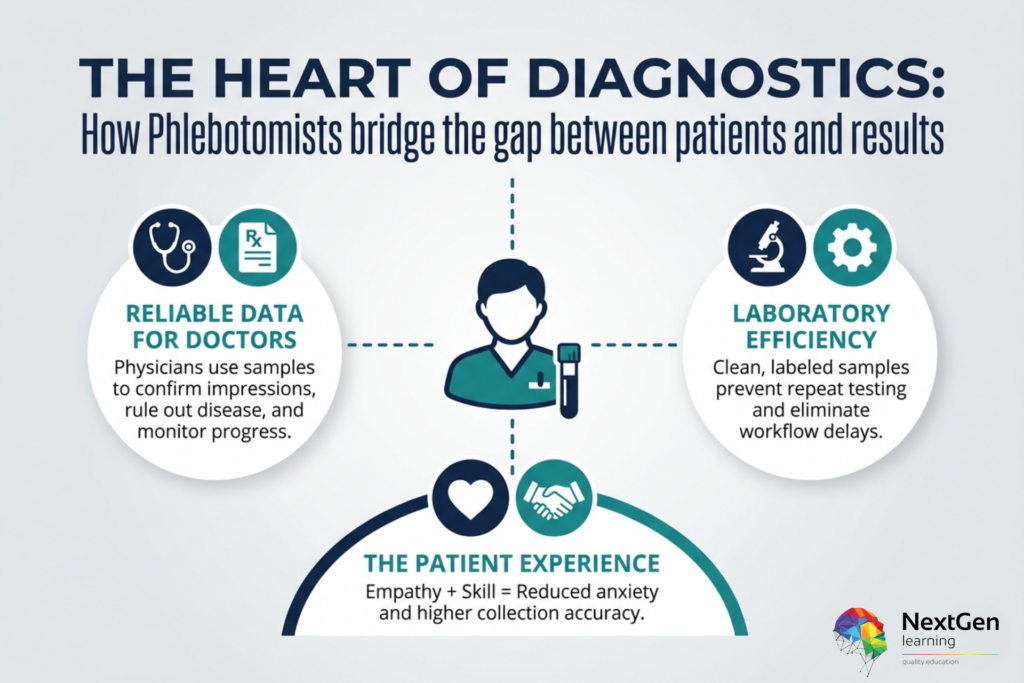
Phlebotomists may often be behind the scenes, but their role connects critical components of healthcare delivery:
1. Reliable Diagnostic Data
Physicians rely on accurate laboratory results to:
- Confirm clinical impressions
- Rule out diseases
- Adjust medications
- Monitor patient progress
Without high-quality blood samples, doctors cannot make informed decisions, no matter their expertise.
2. Enhancing Laboratory Efficiency
Poorly collected or mislabelled samples can lead to:
- Repeat testing
- Increased lab workload
- Delays in diagnosis
Competent phlebotomists ensure specimens reach laboratories clean, properly labelled, and ready for analysis, improving workflow efficiency.
3. Supporting Patient Experience
Phlebotomists interact directly with patients — from children and the elderly to those anxious about needles. Professional communication and a calm, reassuring approach:
- Reduce patient anxiety
- Improve cooperation during blood draws
- Increase the accuracy of sample collection
By combining technical skill with empathy, phlebotomists enhance both clinical outcomes and patient satisfaction.
Phlebotomy in Real-World Healthcare Systems
Advanced healthcare systems rely on phlebotomy services every day. In the UK, the NHS performs thousands of blood tests daily across hospitals, clinics, diagnostic units, and community care facilities.
Without trained phlebotomists:
- Laboratory turnaround times would slow
- Diagnostic accuracy could decline
- Patient care may be compromised
This demonstrates that competent blood collection skills are foundational to modern healthcare.
Who Should Consider Phlebotomy Training?
Phlebotomy is an ideal career for a variety of learners:
1. Students and Career Changers
For those exploring healthcare, phlebotomy offers a practical entry point, providing clinical exposure, patient interaction, and hands-on technical training.
2. Healthcare Assistants and Support Staff
Existing healthcare workers can upskill with phlebotomy training, enhancing their role and career progression opportunities.
3. Aspiring Clinical Professionals
Individuals pursuing nursing, laboratory science, or diagnostic technology gain early expertise in blood collection, giving them a competitive edge.
Developing strong phlebotomy skills enhances employability and opens doors to new healthcare opportunities.
Structured Phlebotomy Training Makes the Difference
Anyone can attempt to draw blood, but professional competence requires structured training. A recognised Phlebotomy Diploma teaches:
- Proper venipuncture techniques
- Infection control and hygiene protocols
- Patient preparation and communication
- Safe handling, labelling, and storage of samples
- Clinical protocols and ethical practices
Training builds confidence, which directly improves:
- Procedural accuracy
- Patient comfort
- Efficiency in clinical settings
- Contribution to team performance
Practical simulations and supervised clinical placements included in diploma programmes ensure that students can transition smoothly into professional roles.
Career Opportunities After a Phlebotomy Diploma
Completing a Phlebotomy Diploma opens multiple career pathways:
1. Clinical Phlebotomist
Work in hospitals, clinics, or laboratories, performing blood collection and contributing to patient diagnostics.
Salary in the UK: £18,000–£25,000 entry-level, rising to £30,000 with experience.
2. Mobile Phlebotomist
Provide community or home-based blood collection services, catering to patients unable to visit clinics.
3. Laboratory Assistant
Support lab staff with sample handling, preparation, and processing, often serving as a stepping stone to clinical laboratory science roles.
4. Diagnostic Centre Technician
Work in private diagnostic clinics, hospitals, or specialised testing centres.
5. Blood Donation Specialist
Collect and process blood donations in community blood centres, supporting national healthcare needs.
6. Further Healthcare Training
Use phlebotomy as a foundation for advanced courses in:
- Nursing
- Medical laboratory science
- Diagnostic technology
- Clinical research
For further skill enhancement, learners can explore complementary programmes:
- Medical Assisting Courses – NextGen Learning
- Healthcare Courses – NextGen Learning
Structured training plus additional certifications maximises employability and career growth.
Why Phlebotomy Skills Are Future-Proof
Healthcare demand continues to rise due to:
- Ageing populations
- Preventive care initiatives
- Technological advancements in diagnostics
Skilled phlebotomists are highly sought after in hospitals, laboratories, clinics, and community care, ensuring job stability, career growth, and meaningful patient impact.
Traits of Successful Phlebotomists
To excel, phlebotomists should demonstrate:
- Attention to detail
- Empathy and strong communication skills
- Confidence in clinical procedures
- Adherence to hygiene and safety protocols
- Patience and adaptability
A structured Phlebotomy Diploma nurtures both technical competence and professional qualities, preparing students to meet real-world healthcare demands.
Challenges in Phlebotomy and How Training Helps
Phlebotomy can be challenging, but training addresses common obstacles:
- Difficult veins: Learn alternative techniques for patients with fragile or deep veins
- Patient anxiety: Develop communication skills to reduce stress and improve cooperation
- Sample contamination: Emphasis on strict hygiene and safe handling protocols
Proper training ensures phlebotomists are confident, competent, and adaptable.
Conclusion: Phlebotomy Skills Save Lives
Phlebotomy is more than a technical task — it is a critical responsibility in modern healthcare. Every accurately collected blood sample contributes to:
- Correct diagnosis
- Safe and effective treatment
- Efficient laboratory workflow
- Improved patient outcomes
Investing in professional training — such as a Phlebotomy Diploma — equips you with the skills, confidence, and credibility to become a competent phlebotomist.
If you want a rewarding healthcare career that blends patient care, technical expertise, and professional growth, phlebotomy is an ideal path — and quality training makes all the difference.
FAQ: Your Questions About Phlebotomy and Training Answered
A Phlebotomy Diploma is a structured training programme that teaches both the theoretical knowledge and practical skills needed to become a professional phlebotomist. It covers:
- Venipuncture and blood collection techniques
- Infection control and patient safety
- Sample handling, labelling, and storage
- Professional communication and ethics
Completing a recognised diploma ensures you are career-ready and meet UK healthcare standards. Learn more about this training through the NextGen Learning Phlebotomy Diploma.
Most UK-based phlebotomy diplomas can be completed in 3 to 6 months, depending on whether you study full-time or part-time. Programmes typically include:
- Classroom-based theory
- Practical hands-on training
- Supervised clinical placements
This combination ensures that learners graduate confident and competent to work in hospitals, labs, or clinics.
No prior experience is usually required. Many courses are designed for:
- Students entering healthcare for the first time
- Career changers looking to join the healthcare industry
- Existing healthcare assistants looking to upskill
However, some providers may prefer a basic understanding of biology or science. You can also complement your diploma with additional Medical Assisting or Healthcare courses for broader career opportunities.
Graduates can pursue various roles, including:
- Clinical Phlebotomist: Collect blood in hospitals and laboratories
- Mobile Phlebotomist: Provide home or community-based blood collection
- Laboratory Assistant: Support lab staff with sample handling and reporting
- Diagnostic Centre Technician: Work in private diagnostic clinics
- Blood Donation Specialist: Collect and process blood donations
Completing a diploma enhances employability and opens pathways to advanced healthcare careers like nursing, medical laboratory science, or diagnostic technology.
Salaries vary depending on experience and location:
- Entry-level: £18,000–£25,000 per year
- Experienced phlebotomists: £25,000–£30,000 per year
- Specialist or mobile phlebotomists may earn higher, especially in private clinics
Certification through a recognised diploma improves your earning potential and credibility in the healthcare sector.
Yes, when trained correctly. Safety in phlebotomy is heavily regulated, including:
- Strict infection control protocols
- Proper use and disposal of sharps
- Patient verification and sample labelling procedures
Structured courses, such as the NextGen Learning Phlebotomy Diploma, ensure students are fully trained in safe practices before entering clinical environments.
Many UK providers offer blended learning options. While theory can be completed online, practical hands-on training is mandatory. Most courses include:
- Online modules for anatomy, physiology, and infection control
- In-person sessions for venipuncture practice and clinical placements
This approach ensures that graduates are both knowledgeable and clinically competent.
Phlebotomy plays a direct role in patient outcomes:
- Accurate samples lead to correct diagnoses
- Proper technique reduces patient discomfort and anxiety
- Timely collection improves lab workflow and treatment efficiency
Every blood sample a phlebotomist collects is an essential step in the patient’s healthcare journey.
Absolutely. Many learners use a Phlebotomy Diploma as a foundation for:
- Nursing courses
- Medical laboratory science programmes
- Diagnostic technology and clinical research careers
This makes phlebotomy a strategic entry point into the broader healthcare field.
NextGen Learning offers:
- UK-recognised accreditation
- Experienced instructors with real clinical expertise
- Practical, hands-on training and clinical placements
- Career support and guidance for job placement
Explore the NextGen Learning Phlebotomy Diploma to start your healthcare career with confidence