




The 4 Categories of Child Abuse Explained
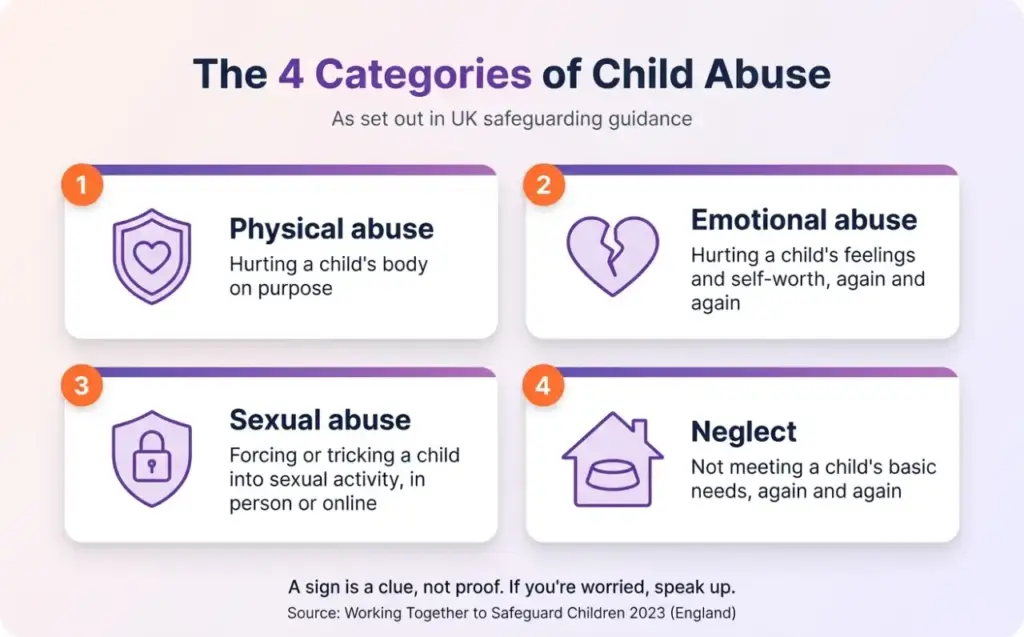
The 4 categories of child abuse are physical abuse, emotional abuse, sexual abuse and neglect. UK safeguarding guidance uses these four groups so that everyone who looks after children can spot worries early and describe them in the same way.
That matters whether you work in a nursery, teach in a primary school, coach a Saturday football team or look after children at home. When a worry has a clear name, it’s much easier to pass on to the right person.
Below, each category is explained in plain words, with everyday examples, possible signs and simple steps to follow if something doesn’t feel right. If a child is in immediate danger, call 999.
Spot the Warning Signs with Confidence
Our CPD-accredited Safeguarding Children course walks you through child abuse, disclosures, reporting and record keeping across eight short online modules.
Table of Contents
What Are the 4 Categories of Child Abuse?
The 4 categories of child abuse are physical abuse, emotional abuse, sexual abuse and neglect. Each one describes a different way a child can be harmed, either by what someone does or by what they fail to do.
| Category | What It Means | Everyday Example | Possible Signs |
|---|---|---|---|
| Physical abuse | Deliberately causing physical harm to a child. | Hitting, shaking or burning. | Unexplained bruises or injuries. |
| Emotional abuse | Persistent emotional mistreatment that harms a child’s emotional development. | Constant shouting, threats or humiliation. | Low self-esteem, anxiety or withdrawal. |
| Sexual abuse | Involving a child in sexual activity, including non-contact or online abuse. | Exposing a child to sexual images or inappropriate sexual contact. | Sexual behaviour or knowledge unusual for their age. |
| Neglect | Persistently failing to meet a child’s basic physical or psychological needs. | Repeatedly failing to provide adequate food, clothing or medical care. | Frequent hunger, poor hygiene or persistent absence from school. |
These signs of child abuse are clues, not proof. One sign on its own is a reason to pay closer attention and share your worry with the right person.
Abuse is only one part of keeping children safe. What Is Safeguarding? A Simple Guide for Beginners shows the bigger picture in plain words.
How Does UK Guidance Define Child Abuse?
Child abuse is when someone harms a child or fails to act to stop harm. In England, this definition comes from Working Together to Safeguard Children 2023, the government’s statutory guidance for everyone who works with children.
The guidance explains that abuse can happen at home, in a school or club, in the wider community or completely online. It can be carried out by adults or by other children.
The 4 categories of child abuse sit inside this definition. They offer teachers, nursery staff, social workers, police and health teams a shared language, so a concern written down by a nursery worker means the same thing to a social worker who reads it later.
There’s also a legal side. When a child is suffering, or is likely to suffer, significant harm, the Children Act 1989 places a duty on the local council to make enquiries. Scotland, Wales and Northern Ireland each have their own child protection guidance, but they use very similar categories.
Not sure where safeguarding ends and child protection begins? Safeguarding vs Child Protection: What’s the Difference? sets out how each one works in practice.
What Is Physical Abuse?
Physical abuse is when someone deliberately hurts a child’s body. It includes hitting, shaking, throwing, burning, scalding, poisoning, or trying to drown or suffocate a child.
It also covers fabricated or induced illness. This is when a parent or carer makes up symptoms, or deliberately makes a child unwell, so the child receives medical care they don’t need.
Possible signs of physical abuse include:
- bruises, burns or other injuries that nobody can explain
- injuries in places children rarely hurt by accident, such as the ears, neck or upper arms
- explanations that keep changing or don’t match the injury
- a child who flinches, seems scared of a certain adult or doesn’t want to go home
Picture a reception teacher who notices fresh bruises on the same child every Monday morning. That pattern deserves attention, even if the child says they fell over.
The law on smacking is different across the UK. The FAQs below explain how.
What Is Emotional Abuse?
Emotional abuse is ongoing treatment that badly harms a child’s feelings and sense of worth. It might be constant shouting, threats, name-calling, mocking, or ignoring a child for long periods.
Other examples include:
- telling a child they are useless, unwanted or unloved
- expecting things far beyond their age, such as making a young child responsible for adult problems
- frightening a child on purpose
- a child living with domestic abuse between adults at home
- serious bullying, including cyberbullying
Under the Domestic Abuse Act 2021, a child who hears, witnesses or lives with the effects of domestic abuse is treated as a victim in their own right.
Possible signs include very low confidence, being anxious or clingy, reaching milestones later than expected, or trying far too hard to please adults. Emotional harm also tends to sit alongside every other type of child abuse.
What Is Sexual Abuse?
Sexual abuse is when a child is forced or tricked into sexual activity. It doesn’t always involve touching, and it counts as abuse whether or not the child realises what is happening.
Non-contact sexual abuse includes showing a child sexual images, getting them to make or share images, or encouraging sexual behaviour that isn’t right for their age. It can happen face-to-face or entirely online.
Grooming often comes first. An abuser gains a child’s trust and sometimes the family’s trust too, so the abuse is easier to hide. Abusers can be men, women or other children. Abuse by another child is known as child-on-child abuse.
Possible signs include talking about or acting out sexual things in ways that don’t fit the child’s age, becoming quiet or withdrawn, hiding their phone or tablet, or having gifts or money with no clear explanation.
Grooming often starts with kind words, gifts or secret chats. Signs of Online Grooming Every Parent and Teacher Should Know lists the red flags.
What Is Neglect?
Neglect is the ongoing failure to meet a child’s basic needs. These include food, warm clothes, a safe home, supervision, medical care, and love and attention.
The key word is ongoing. One missed breakfast or one messy day isn’t neglect, and a family struggling with money isn’t automatically harming their child. What matters is a pattern that seriously affects a child’s health or growth.
It can even start before birth, for example, if a mother misuses drugs or alcohol during pregnancy.

Possible signs include a child who:
- is often hungry, unwashed or dressed in clothes unsuitable for the weather
- has untreated health or dental problems
- misses lots of school or nursery
- is left alone or without supervision for long periods
A nursery child who regularly arrives hungry and without a coat in January is a typical example worth raising.
Of the 4 categories of child abuse, neglect is the most common reason children in England are placed on a child protection plan.
Where Do Other Types of Harm Fit?
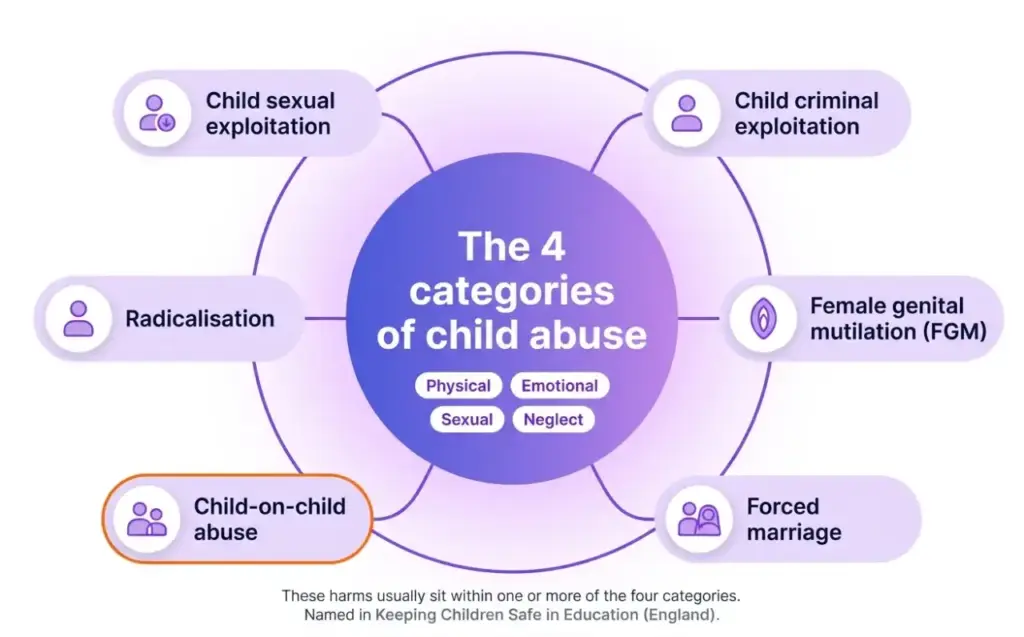
Many other forms of harm sit inside one or more of the 4 categories of child abuse, rather than forming new categories. Keeping Children Safe in Education, the statutory guidance for schools and colleges in England, names several of them:
- Child sexual exploitation: a child is pressured into sexual activity in exchange for something, such as gifts, money or attention.
- Child criminal exploitation: a child is made to commit crimes, such as carrying drugs for “county lines” gangs.
- Female genital mutilation (FGM): cutting or harming a girl’s genitals for non-medical reasons. It is illegal in the UK.
- Forced marriage: someone is made to marry without their full and free consent.
- Child-on-child abuse: abuse by another child, including bullying, sexual harassment and physical violence.
- Radicalisation: a child is drawn towards extremist views.
Many of these harms can begin online. The Online Safety for Children: A Practical Guide for Parents and Staff shares simple ways to help.
What Should You Do If You're Worried About a Child?
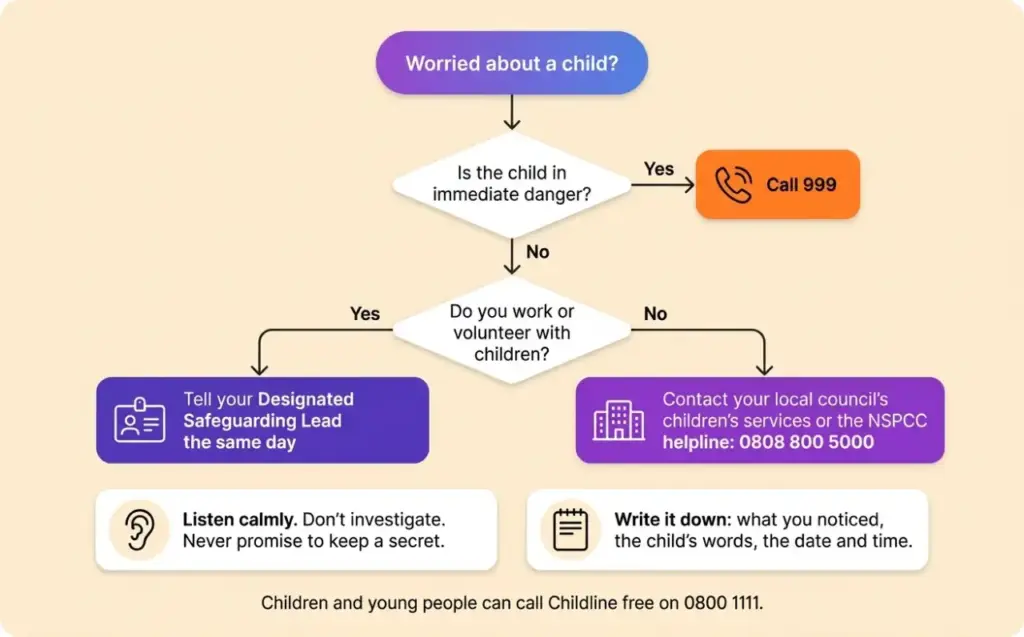
If a child is in immediate danger, call 999. If not, speak to the Designated Safeguarding Lead (DSL) where you work, or contact your local council’s children’s services.
- 1. Act fast in an emergency. Call 999 if a child is at risk of harm right now.
- 2. Tell your DSL the same day. If you work or volunteer with children, follow your setting’s safeguarding policy. The DSL, sometimes called a safeguarding officer in clubs and charities, is the person trained to handle concerns.
- 3. Contact children’s services if you’re a parent or member of the public. You can report child abuse to your local council or call the NSPCC helpline on 0808 800 5000. Children and young people can call Childline for free on 0800 1111.
- 4. Listen, but don’t investigate. Stay calm, let the child talk, and never promise to keep a secret.
- 5. Write it down. Note what you saw or heard, in the child’s own words where possible, with the date and time.
Ready for What Comes After a Concern?
Find out how to respond when a child speaks up, assess risk, act after a referral and keep clear, accurate safeguarding records.
Why Does Speaking Up Early Matter?
Speaking up early matters because a small worry is far easier to act on than serious harm. The 4 categories of child abuse (physical abuse, emotional abuse, sexual abuse and neglect) simply help you put a name to what you’ve noticed.
You don’t need proof, and you don’t need to be sure. Notice the change, write it down and pass it on to the right person. That one step is often how a child gets the help they need.
Frequently Asked Questions
Child abuse is when someone harms a child or fails to protect them from harm. It includes hurting their body or feelings, sexual harm, or ignoring their basic needs.
There’s no single official list. People often mean the four categories of abuse, or the “4 Rs” used in training: recognise, respond, report and record.
Common types include physical, emotional, medical and educational neglect, plus a lack of supervision. A child might face several at once, such as missing meals and missing school.
The 10 types come from Care Act 2014 statutory guidance for adults who need care and support. Children’s safeguarding uses four main categories instead, alongside specific harms like exploitation.
No. The categories describe what happened to a child. Trauma describes how a frightening experience affects them afterwards. Abuse can cause trauma, but so can accidents or loss.
Look for sudden changes: becoming quiet, angry, clingy or fearful, acting younger than their age, or missing school. One sign alone isn’t proof, but it’s worth sharing your concern.
No. Every type can cause serious, lasting harm. The impact depends on the child, how long the abuse went on and how much support they receive afterwards.
In England, neglect is the most common reason a child is placed on a child protection plan. Emotional abuse usually comes next. Other UK nations record figures separately.
Yes. The 4 categories of child abuse often overlap. UK guidance notes that some level of emotional abuse is involved in every type of abuse.
No. Online abuse fits within the existing categories. It often involves sexual or emotional abuse, such as grooming, sharing sexual images of a child or cyberbullying.
Usually, yes. The NSPCC helpline lets you share worries without leaving your name, and many councils accept anonymous reports. Leaving contact details can help social workers follow up.

0 responses on "The 4 Categories of Child Abuse Explained"