

Popular Courses

Brand
Awarding body image

Overview of QuickBooks Self-Employed Course Online

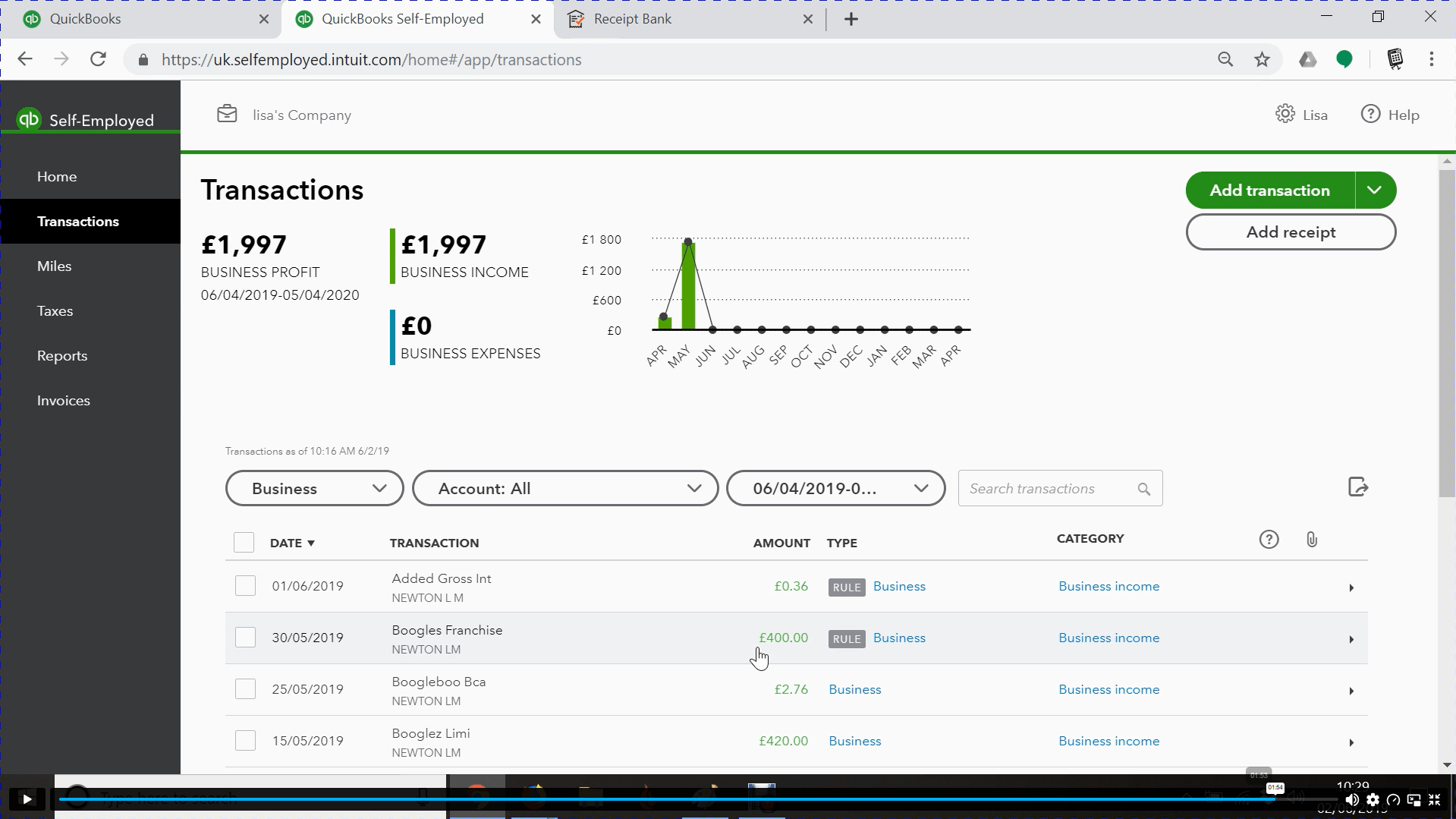
This QuickBooks Self-Employed course helps learners understand how digital bookkeeping supports clearer income, expense and transaction management. Furthermore, it explains how connected accounts, receipt inboxes, bank rules and reports can make everyday record keeping easier. Learners will gain practical awareness of creating invoices, adding transactions, amending rules and reviewing financial information inside QuickBooks. Consequently, the course is useful for self-employed professionals, freelancers, small business owners and finance learners who want stronger confidence with cloud-based bookkeeping tools.

By completing this course, you will be able to:

  • Understand the basic QuickBooks Self-Employed interface.
  • Connect a first account inside QuickBooks.
  • Use the receipts inbox for record organisation.
  • Add rules to support transaction categorisation.
  • Create a basic invoice in QuickBooks.
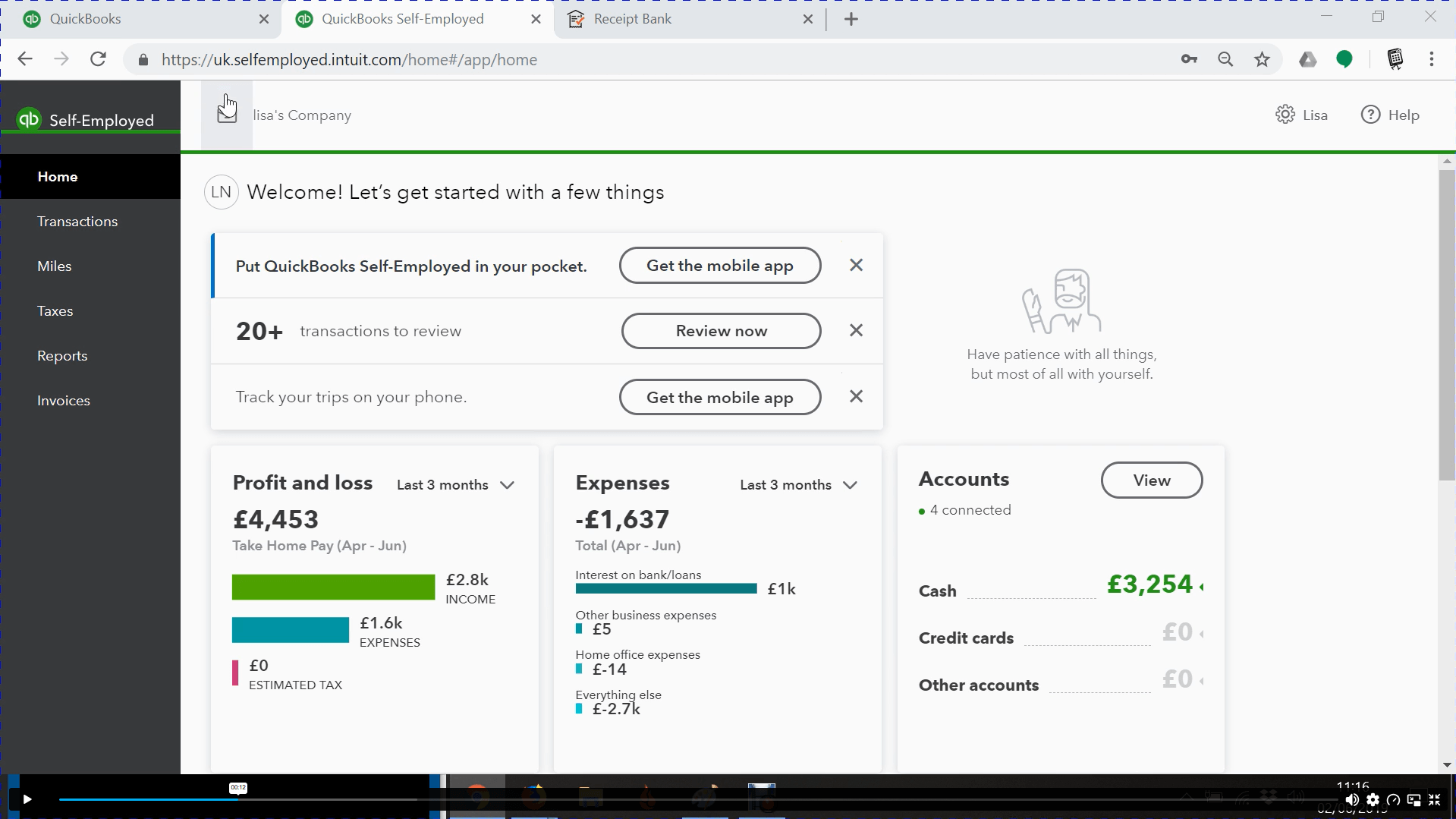
  • Understand key home page details.
  • Connect another account when required.
  • Create bank rules for account transactions.
  • Amend rules to improve bookkeeping accuracy.
  • Access reports and add non-bank transactions.

Exclusive Course Glimpse

Learning Outcomes

After completing this course, learners will confidently understand key QuickBooks Self-Employed functions.

  • Understand how QuickBooks supports self-employed bookkeeping.
  • Recognise how connected accounts improve transaction tracking.
  • Use receipt tools to organise financial evidence.
  • Understand how rules can speed up categorisation.
  • Create invoices for self-employed income records.
  • Navigate home page details and account information.
  • Review basic reports for business finance awareness.
  • Understand the QBSE and QBO interface differences.

Why Choose This Course

This course is designed for learners who want simple, flexible and practical QuickBooks training.

  • Study a QuickBooks Self-Employed course online.
  • Learn through short, focused modules.
  • Build skills useful for freelancers and sole traders.
  • Explore invoices, reports, receipts and rules.
  • Improve confidence with bookkeeping software.
  • Strengthen your CV with CPD-focused learning.
  • Suitable for beginners and self-employed learners.
  • Learn at your own pace from any device.

Certificate of Achievement

  • CPD Accredited Certificate
  • Digital Certificate
  • Professional Recognition
  • CV & LinkedIn Enhancement
  • Proof of Professional Skills
Nextgen Certificate

Who Is This Course For?​

  • Freelancers managing their own finances.
  • Sole traders using QuickBooks.
  • Self-employed professionals.
  • Small business owners.
  • Contractors and consultants.
  • Bookkeeping beginners.
  • Finance admin learners.
  • Anyone wishing to improve digital bookkeeping skills.

Career Opportunities (UK)

This QuickBooks Self-Employed course can support career development in bookkeeping, finance administration, small business support and self-employed financial management. Furthermore, it provides useful knowledge of receipts, invoices, reports, rules and digital transaction tracking. This course is educational and does not replace professional tax, accounting or financial advice.

Bookkeeper

Bookkeepers maintain financial records, record income and expenses, and help prepare accounts for business reporting. QuickBooks knowledge can support accurate record keeping, invoice tracking and transaction organisation.
Average UK Salary: £24,000 – £35,000 per year

Accounts Assistant

Accounts assistants support finance teams with invoices, receipts, payments, reconciliations and basic reports. This course can help learners understand how digital accounting tools organise everyday finance tasks.
Average UK Salary: £22,000 – £30,000 per year

Finance Officer

Finance officers help organisations track income, control spending and maintain financial records. QuickBooks skills can support better confidence with transaction records, reports and bookkeeping workflows.
Average UK Salary: £24,000 – £35,000 per year

Accounting Technician

Accounting technicians prepare accounts, process financial information and support tax or bookkeeping tasks. This QuickBooks bookkeeping course can help learners understand digital tools used in small business finance support.
Average UK Salary: £24,000 – £35,000 per year

Payroll Administrator

Payroll administrators help ensure employees are paid correctly and records are maintained accurately. Although this course focuses on self-employed bookkeeping, QuickBooks awareness can support wider finance software confidence.
Average UK Salary: £22,000 – £35,000 per year

Private Practice Accountant

Private practice accountants prepare accounts and tax returns for individuals and businesses. QuickBooks Self-Employed knowledge can help them understand how sole traders organise receipts, invoices, rules and reports before professional review.
Average UK Salary: £25,000 – £60,000 per year

Self-Employed Business Owner

Self-employed business owners manage their own income, expenses, invoices and financial records. This course can help them use QuickBooks more confidently for everyday admin and business organisation.
Average UK Salary: Income varies depending on sector, clients and business performance.

Entry Requirements

  • No formal qualifications required.
  • Suitable for beginners.
  • Basic English understanding recommended.
  • Internet and device access required.
  • Interest in QuickBooks, bookkeeping or self-employment.
  • Basic computer confidence is helpful.
  • This course does not provide tax, legal or accounting advice.

Order Your Certificate

To order your Certificate, we kindly invite you to visit the following link

Frequently Asked Questions -

A QuickBooks Self-Employed course teaches learners how to use QuickBooks for self-employed finance tasks. It covers account connection, receipts, rules, invoices, reports and transactions. Moreover, it helps learners understand how digital bookkeeping can support better financial organisation.

This QuickBooks for self employed course is suitable for freelancers, sole traders, contractors and small business owners. It is also useful for beginners who want to understand bookkeeping software. In addition, finance admin learners can use it to build confidence with QuickBooks workflows.

Yes, this course is suitable for beginners. It starts with a short introduction before covering connected accounts, receipts, rules, invoices and reports. Therefore, learners do not need previous QuickBooks experience to enrol.

This QuickBooks course online teaches learners how to connect accounts, manage receipts, add rules and create invoices. Furthermore, it explains reports, non-bank transactions and the QBSE and QBO interface. As a result, learners build useful digital bookkeeping confidence.

Yes, this QuickBooks bookkeeping course includes a CPD Accredited Certificate. This can support your CV, LinkedIn profile and professional development record. Moreover, it shows your commitment to improving bookkeeping and finance software skills.

This QuickBooks Self-Employed course can help you understand how to organise income, expenses, receipts and invoices. It supports better awareness of everyday self-employed bookkeeping tasks. However, you should consult a qualified accountant or HMRC guidance for tax-specific decisions.

Yes, this self employed bookkeeping course is delivered fully online. Learners can study flexibly using a suitable device and internet connection. Consequently, it is suitable for busy freelancers, sole traders, contractors and working professionals.

This course can help you build confidence with QuickBooks, invoices, receipts, transaction rules and reports. These skills are useful in bookkeeping, finance admin, small business support and self-employed business management. Therefore, it can support stronger financial organisation and career development.

Course Curriculum

QuickBooks for the Self Employed
Module 01: Introduction 00:02:00
Module 02: First Account Connected 00:04:00
Module 03: Receipts in Inbox 00:01:00
Module 04: Adding Rules 00:02:00
Module 05: Create an Invoice 00:05:00
Module 06: Home Page Details 00:03:00
Module 07: Connect another Account 00:05:00
Module 08: Creating Bank Rule on 070 Account 00:06:00
Module 09: Amending the Rules 00:01:00
Module 10: Reports 00:03:00
Module 11: Transaction Adding- When Not on the Bank 00:01:00
Module 12: QBSE and QBO Interface 00:06:00
Module 13: Conclusion 00:02:00
Assignment
Assignment -QuickBooks for the Self Employed 00:00:00
Order Your Certificate
Order Your Certificate 00:00:00

Related Courses

A product of

© 2026 NextGen Learning. All rights reserved

Home Search Cart Offers