

Popular Courses

Brand
Awarding body image

Overview of IsiXhosa for Healthcare Course for Pharmacists

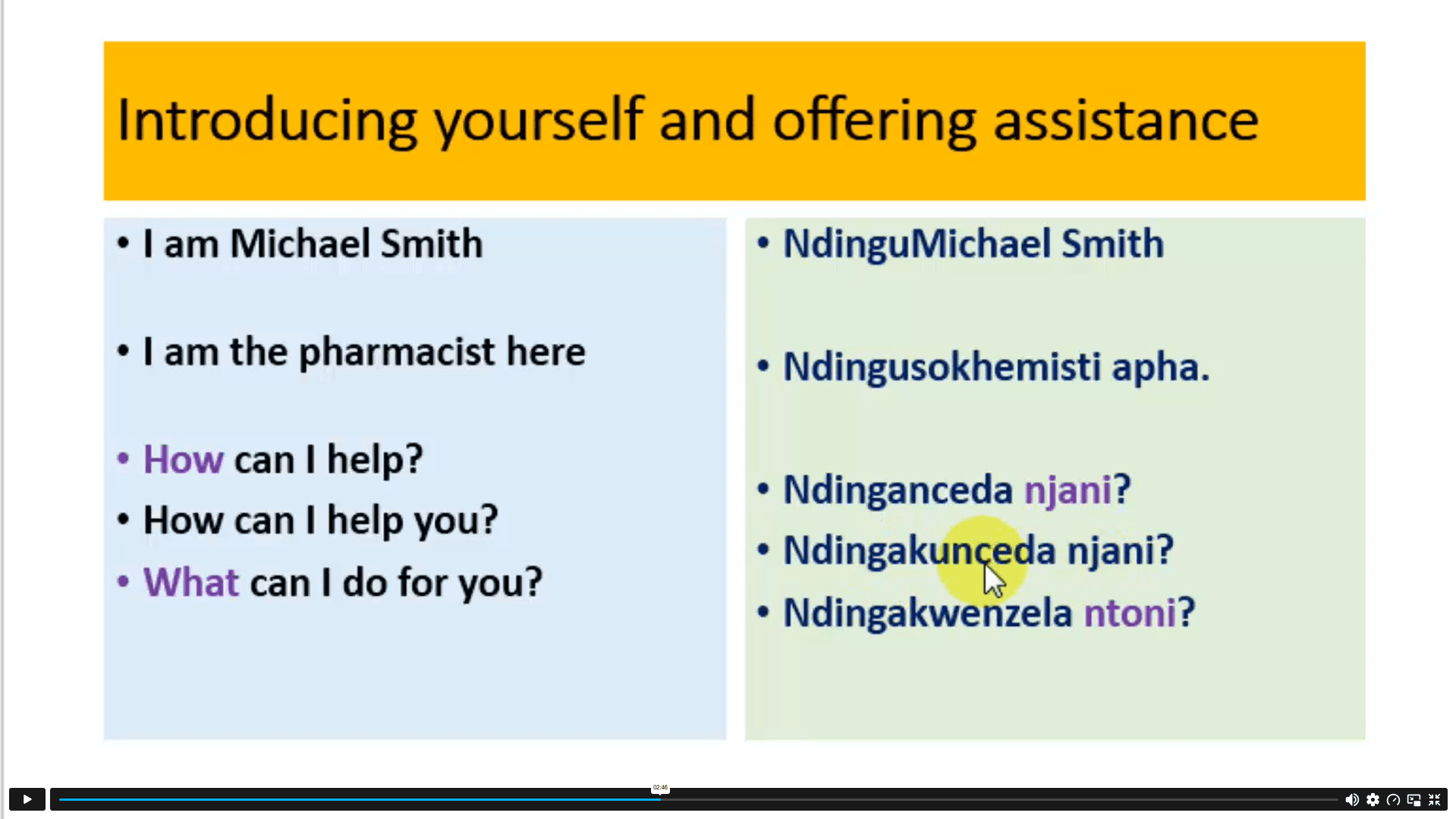
This IsiXhosa for Healthcare course helps learners build practical language awareness for pharmacy-related conversations. Furthermore, it explains how to ask simple patient questions, understand stated problems, discuss pain, check current medication and explain how medicine should be used. Learners will gain useful vocabulary for body parts, precautions, side-effects and treatment scenarios. Consequently, the course is suitable for pharmacy and healthcare learners who want to improve communication, reduce misunderstandings and support more inclusive patient interactions.

By completing this course, you will be able to:

  • Greet isiXhosa-speaking patients professionally.
  • Ask for basic personal details.
  • Understand a patient’s stated problem.
  • Ask simple pain-related questions.
  • Discuss additional health problems.
  • Ask about current medication and allergies.
  • Suggest or supply alternative medication appropriately.
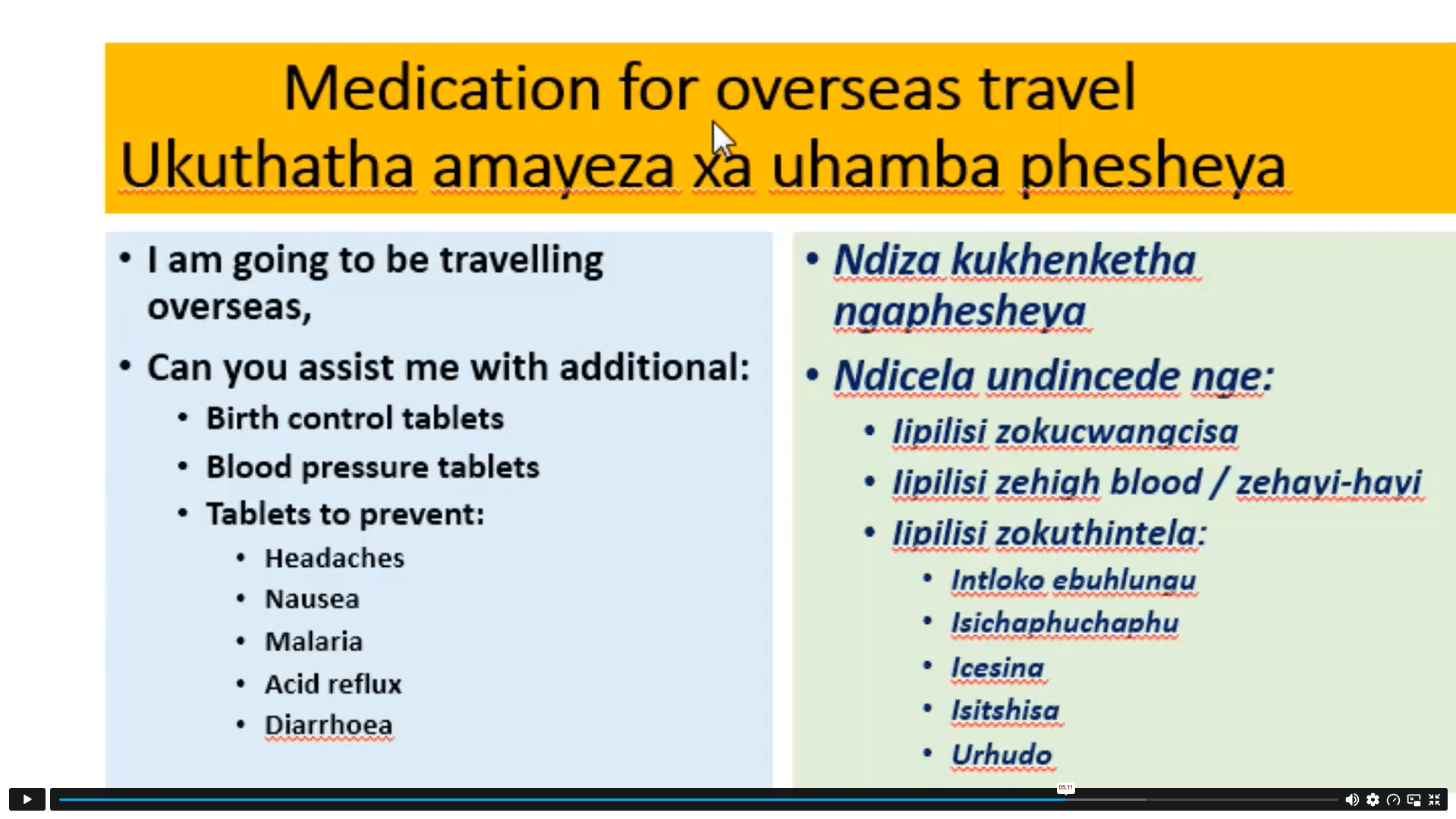
  • Explain how to take tablets and apply lotion.
  • Communicate basic side-effects and precautions.
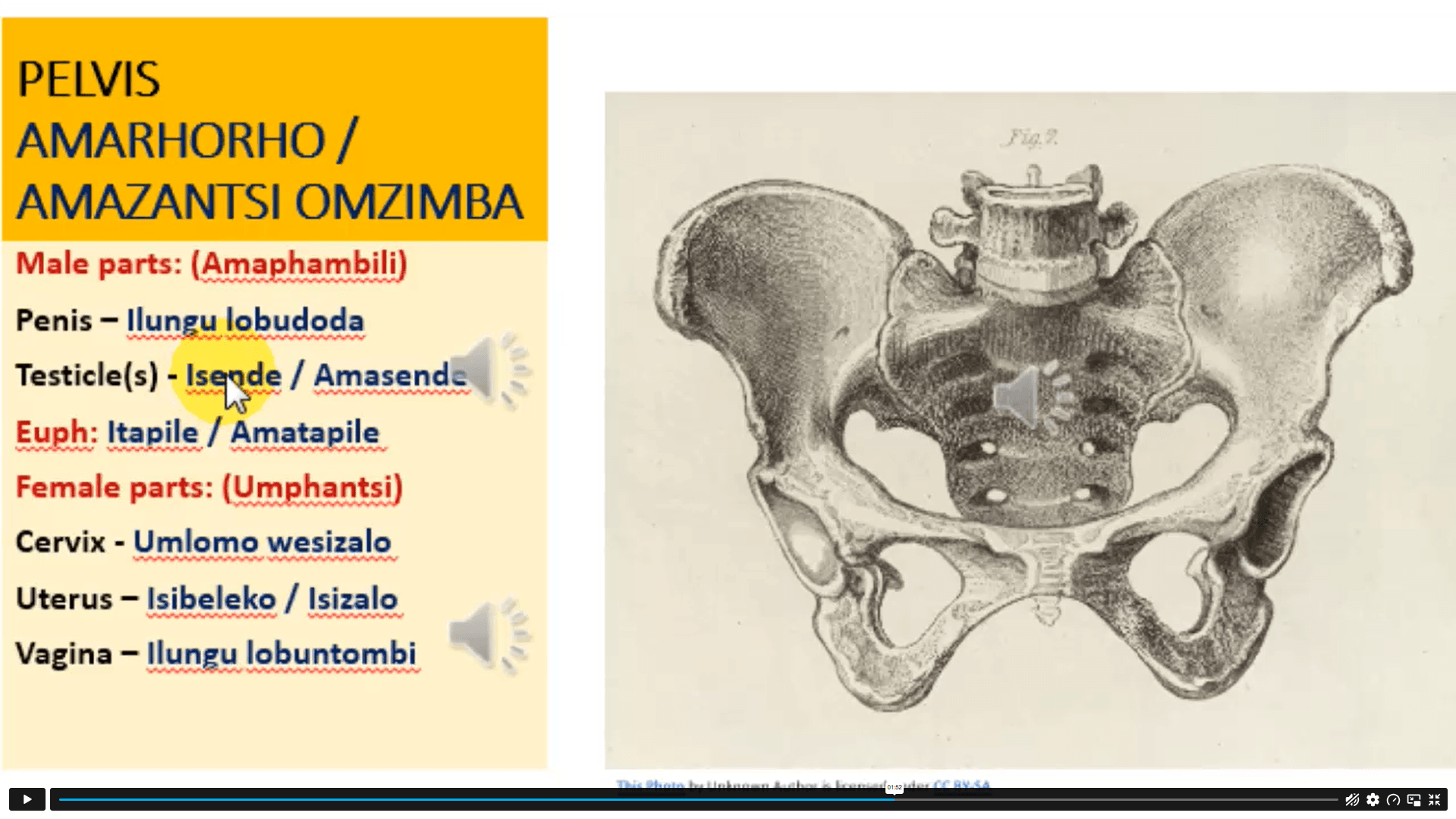
  • Use body-part vocabulary in pharmacy conversations.

Exclusive Course Glimpse

Learning Outcomes

After completing this course, learners will confidently understand essential isiXhosa healthcare communication skills.

  • Understand basic patient meeting phrases.
  • Recognise pharmacy-related isiXhosa vocabulary.
  • Ask simple questions during history taking.
  • Explain basic medicine-use instructions.
  • Build awareness of allergies and current medication.
  • Understand language for precautions and side-effects.
  • Recognise body-part terms used in healthcare.
  • Communicate more confidently in common treatment scenarios.

Why Choose This Course

This course is designed for learners who want focused, flexible and pharmacy-relevant healthcare language training.

  • Study an IsiXhosa for Healthcare course online.
  • Learn through short, structured modules.
  • Build skills for pharmacy communication.
  • Explore medication, symptoms and treatment language.
  • Improve confidence with patient-centred conversations.
  • Strengthen your CV with CPD-focused learning.
  • Suitable for pharmacy and healthcare learners.
  • Learn at your own pace from any device.

Certificate of Achievement

  • CPD Accredited Certificate
  • Digital Certificate
  • Professional Recognition
  • CV & LinkedIn Enhancement
  • Proof of Professional Skills
Nextgen Certificate

Who Is This Course For?​

  • Pharmacists improving patient communication.
  • Pharmacy technicians and assistants.
  • Healthcare assistants.
  • Medical reception and support staff.
  • Community health workers.
  • Healthcare language learners.
  • Interpreting and translation learners.
  • Anyone supporting isiXhosa-speaking patients.

Career Opportunities (UK)

This IsiXhosa for Healthcare course can support career development in pharmacy, healthcare support, patient communication and multilingual care environments. Furthermore, it provides useful language awareness for pharmacists and healthcare teams supporting isiXhosa-speaking patients. This course improves communication skills but does not qualify learners to practise as a pharmacist, pharmacy technician, interpreter or healthcare professional without the required qualifications and registration.

Pharmacist

Pharmacists supply medicines, advise patients and support safe medicine use in community, hospital and GP practice settings. IsiXhosa communication skills can help pharmacists explain medicine instructions, side-effects and precautions more clearly to isiXhosa-speaking patients.
Average UK Salary: £40,000 – £65,000 per year

Pharmacy Technician

Pharmacy technicians prepare and supply medicines under the supervision of a pharmacist. This course can support clearer communication when asking about medication, allergies, symptoms and medicine-use instructions.
Average UK Salary: £28,000 – £39,000 per year

Pharmacy Assistant

Pharmacy assistants serve customers, support pharmacy teams and help with basic medicine-related enquiries. IsiXhosa language awareness can improve patient service, especially when greeting patients and gathering simple information.
Average UK Salary: £24,000 – £31,000 per year

Dispensing Assistant

Dispensing assistants help prepare prescriptions, organise medicines and support pharmacy workflow. Pharmacy communication skills can help them understand patient needs and pass relevant information to the pharmacist.
Average UK Salary: £24,000 – £31,000 per year

Healthcare Assistant

Healthcare assistants support patients in hospitals, clinics and community settings. Basic medical IsiXhosa can help them communicate more respectfully during routine patient support and information gathering.
Average UK Salary: £25,000 – £27,000 per year

Healthcare Interpreter

Healthcare interpreters help patients and professionals communicate when language barriers exist. This course can support pharmacy vocabulary awareness, although professional interpreting work requires strong language fluency and role-specific training.
Average UK Salary: Variable depending on language demand, location and assignments.

Patient Services Advisor

Patient services advisors support patients with appointments, enquiries and healthcare information. IsiXhosa healthcare communication can help them provide a more inclusive service in multilingual settings.
Average UK Salary: £22,000 – £30,000 per year

Entry Requirements

  • No formal qualifications required.
  • Suitable for motivated beginners.
  • Basic English understanding recommended.
  • Internet and device access required.
  • Interest in isiXhosa, pharmacy or healthcare communication.
  • Pharmacy or healthcare experience may be helpful.
  • This course does not replace clinical, pharmacy or interpreting qualifications.

Order Your Certificate

To order your Certificate, we kindly invite you to visit the following link

Frequently Asked Questions -

An IsiXhosa for Healthcare course teaches learners useful isiXhosa phrases and vocabulary for healthcare conversations. This course focuses on pharmacy situations, including patient problems, medication use, allergies and side-effects. Moreover, it supports clearer communication with isiXhosa-speaking patients.

This IsiXhosa for pharmacists course is suitable for pharmacists, pharmacy technicians, pharmacy assistants and healthcare support staff. It is also useful for healthcare language learners and interpreting students. In addition, anyone working with isiXhosa-speaking patients can benefit from the course.

Yes, this course is suitable for motivated beginners. It starts with meeting the patient and personal details before moving into history taking and medication instructions. Therefore, learners do not need advanced isiXhosa knowledge to begin.

This medical IsiXhosa course covers patient greetings, personal details, symptoms, pain-related questions and current medication. Furthermore, it teaches medication instructions, body parts, side-effects, precautions and common treatment scenarios. As a result, learners build useful pharmacy communication confidence.

Yes, this course includes a CPD Accredited Certificate. This can support your CV, LinkedIn profile and professional development record. Moreover, it shows your commitment to improving healthcare communication skills.

This IsiXhosa for Healthcare course can support communication skills for pharmacy-related conversations. However, it does not qualify learners to become pharmacists or pharmacy technicians. Regulated pharmacy roles require approved education, training and registration where applicable.

Yes, this healthcare language course is delivered fully online. Learners can study flexibly using a suitable device and internet connection. Consequently, it is suitable for busy pharmacy staff, healthcare workers and independent learners.

This course can help you communicate more confidently with isiXhosa-speaking patients in pharmacy and healthcare settings. These skills can support patient service, cultural awareness and clearer medicine-related conversations. Therefore, it can strengthen professional communication and CPD development.

Course Curriculum

Section 01: Introduction
Meeting the patient 00:06:00
Meeting the patient – 2 00:06:00
Personal Details – 1 00:05:00
Personal Details – 2 00:05:00
Section 02: The Patient's Stated Problem
What is troubling you? 00:05:00
Section 03: History Taking
Pain-related questions and responses 00:06:00
Additional health problems 00:07:00
Current medication and allergies 00:06:00
Section 04: Suggesting and Supplying Alternative Medication
Suggesting and supplying alternative medication 00:07:00
Section 05: Instructions on the Taking of Medication
How to apply lotion 00:02:00
How to take tablets 00:02:00
How and when to take medication 00:02:00
The correct quantities to take 00:01:00
Where to store medication 00:01:00
Section 06: Precautions and Side-Effects When Taking Medication
Precautions when taking medication 00:03:00
Possible side-effects or problems 00:07:00
Section 07: Informing the Patient
How to use an asthma pump 00:02:00
How to use a nebuliser 00:02:00
How to use a thermometer 00:03:00
Section 08: The Parts of the Body
Parts of the body -1 00:05:00
Parts of the body -2 00:03:00
Parts of the body -3 00:04:00
Parts of the body -4 00:04:00
Section 09: Treatment Scenarios
Treating a patient with flu symptoms 00:08:00
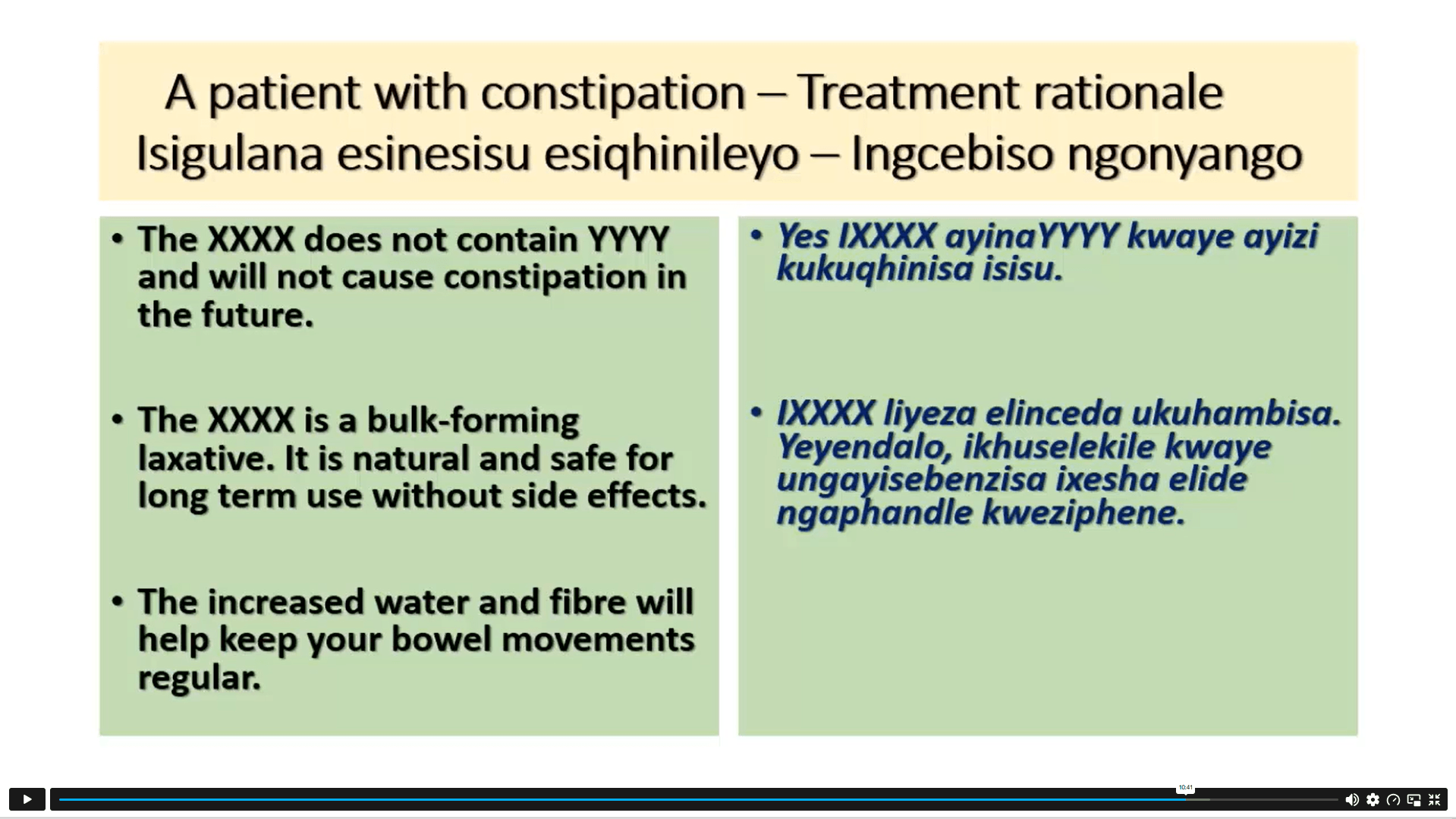
Treating a patient with constipation 00:12:00
Treating a baby with nappy rash 00:04:00
Section 10: Euphemisms
Euphemisms 00:09:00
Section 11: Resource
Resource 00:00:00
Order Your Certificate
Order Your Certificate 00:00:00

Related Courses

A product of

© 2026 NextGen Learning. All rights reserved

Home Search Cart Offers