



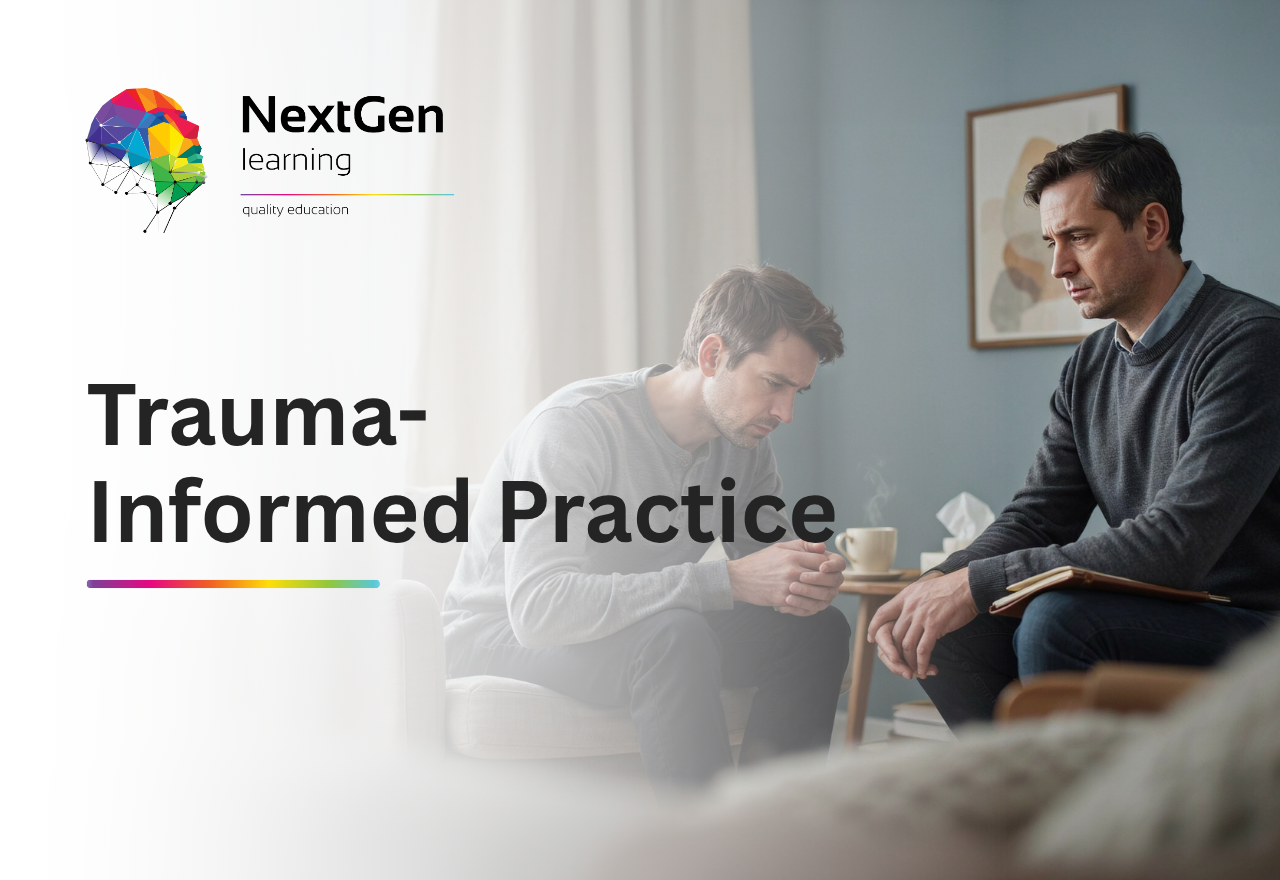



Overview of Trauma-Informed Practice
Trauma-Informed Practice is an approach that recognises how traumatic experiences can affect a person’s behaviour, emotional wellbeing, relationships and sense of safety. It focuses on understanding the potential impact of trauma and responding with empathy, respect and awareness rather than judgement.
This course introduces learners to the fundamental principles of trauma-informed practice, helping them understand the effects of trauma, recognise possible trauma responses and develop approaches that promote trust, safety and emotional wellbeing.
Across seven structured modules, learners will explore the foundations of trauma-informed practice, the psychology and impact of trauma, recognising trauma and building trust, safeguarding and UK legal responsibilities, trauma-informed approaches across diverse settings, practitioner wellbeing, organisational practice and reflective application.
The course is designed to provide foundational knowledge for individuals interested in health and social care, education, counselling support, community services, safeguarding and other people-focused professions.
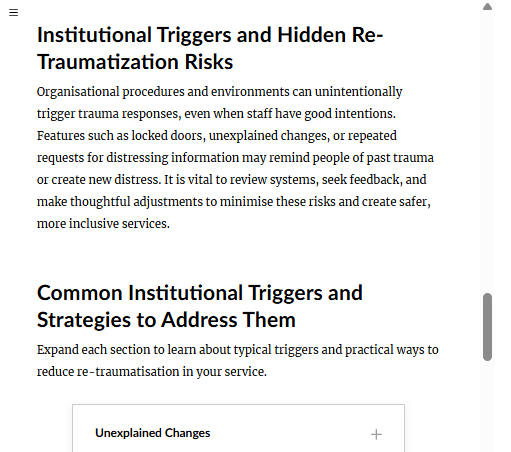
Exclusive Course Glimpse
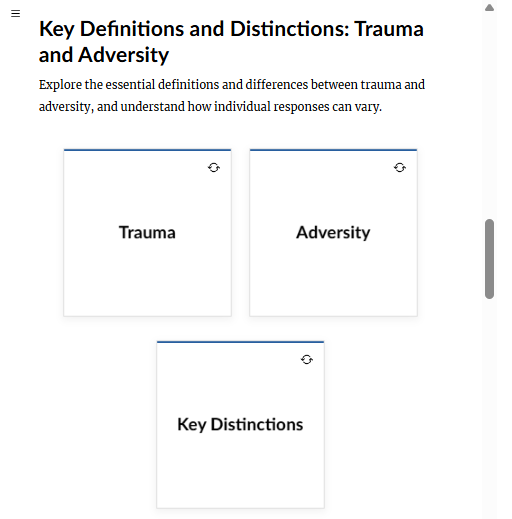
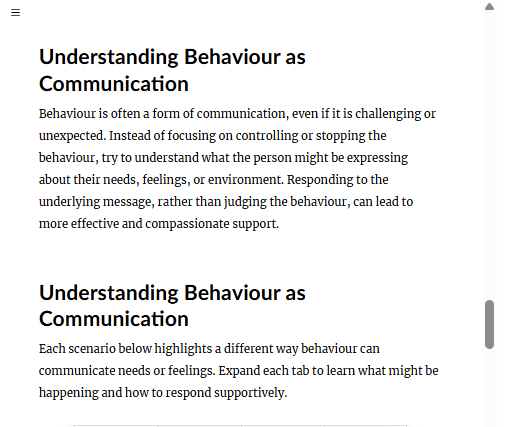
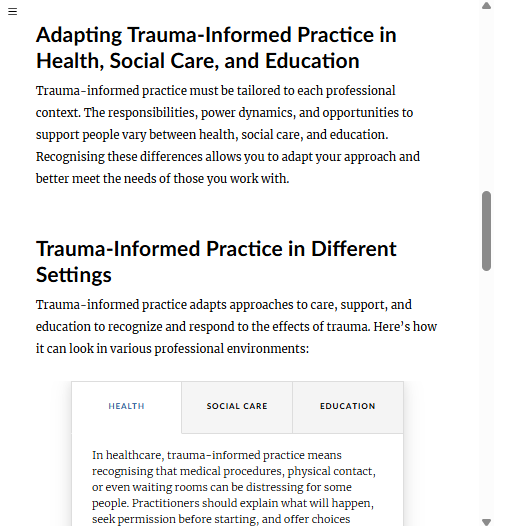
Description of the Course
Understanding Trauma-Informed Practice is essential for recognising how traumatic experiences may influence a person’s thoughts, emotions, behaviour and relationships. Awareness of trauma responses, emotional triggers and the importance of psychological safety can help individuals respond more compassionately and understand the value of appropriate support.
The course begins with Foundations of Trauma-Informed Practice, introducing the core principles of trauma-informed approaches and explaining the importance of safety, trust, choice, collaboration and empowerment when supporting individuals who may have experienced trauma.
Learners then explore The Psychology and Impact of Trauma, examining how traumatic experiences may affect emotional wellbeing, behaviour, relationships and everyday functioning. This module introduces the potential short-term and long-term effects of trauma and the importance of understanding individual experiences without making assumptions.
The course progresses to Recognising Trauma and Building Trust, helping learners understand possible signs of trauma-related distress and the importance of sensitive communication, consistent boundaries and supportive relationships. Learners will explore how trust can be developed by responding with empathy, respect and patience.
You will also examine Safeguarding, Ethics, and UK Legal Responsibilities, exploring the importance of safeguarding procedures, confidentiality, professional boundaries, ethical decision-making and relevant UK legal responsibilities when working with individuals who may be experiencing vulnerability or distress.
The course then introduces Trauma-Informed Practice Across Diverse Settings, explaining how trauma-informed principles can be applied across health and social care, education, community support and other professional environments. Learners will consider the importance of adapting communication and support to individual needs and circumstances.
In Practitioner Wellbeing and Organisational Practice, learners explore the emotional demands of supporting people affected by trauma. This includes understanding professional stress, the importance of self-care, reflective supervision, supportive workplace cultures and organisational practices that promote staff wellbeing.
Finally, Advanced Application and Reflective Practice explores how trauma-informed principles can be applied thoughtfully in everyday professional situations. Learners will consider reflective approaches, professional judgement, continuous improvement and the importance of maintaining compassionate, respectful and person-centred support.
Course Curriculum
Module 01: Foundations of Trauma-Informed Practice
Understand the core principles of trauma-informed practice and why they are important when supporting individuals who may have experienced traumatic events. Explore safety, trust, choice, collaboration and empowerment, alongside the importance of recognising individual needs and avoiding assumptions about personal experiences.
Module 02: The Psychology and Impact of Trauma
Explore how trauma may affect thoughts, emotions, behaviour, relationships and everyday functioning. Understand potential emotional, psychological and physical responses to traumatic experiences, including how the effects of trauma may vary between individuals and influence their sense of safety, trust and wellbeing.
Module 03: Recognising Trauma and Building Trust
Learn to recognise possible indicators of trauma-related distress and understand why these signs should be approached with sensitivity rather than judgement. Explore compassionate communication, active listening, consistent professional boundaries and practical approaches to building trust, promoting emotional safety and supporting individual choice.
Module 04: Safeguarding, Ethics, and UK Legal Responsibilities
Explore the importance of safeguarding procedures, ethical decision-making, confidentiality, professional boundaries and relevant UK legal responsibilities. Understand the importance of recognising safeguarding concerns, maintaining appropriate records, sharing information responsibly and following organisational policies when supporting vulnerable individuals.
Module 05: Trauma-Informed Practice Across Diverse Settings
Understand how trauma-informed principles can be applied across health and social care, education, community services and other people-focused environments. Explore the importance of adapting communication, recognising individual circumstances, promoting inclusion and creating supportive settings that prioritise dignity, safety and respect.
Module 06: Practitioner Wellbeing and Organisational Practice
Explore the emotional demands of trauma-related support work and the importance of maintaining practitioner wellbeing. Understand how stress, emotional fatigue and exposure to distressing experiences may affect professionals. Learn about self-care, reflective supervision, appropriate boundaries, teamwork and organisational practices that support a healthier working environment.
Module 07: Advanced Application and Reflective Practice
Explore how trauma-informed principles can be applied in complex and varied professional situations. Understand the value of reflective practice, professional judgement, continuous learning and reviewing the impact of support approaches. Learn how to identify opportunities for improvement while maintaining compassionate, ethical and person-centred practice.
Learning Outcomes
After completing this course, learners should be able to:
- Explain the fundamental principles of trauma-informed practice.
- Understand how traumatic experiences may affect emotional, psychological and physical wellbeing.
- Recognise possible indicators of trauma-related distress and respond sensitively.
- Understand the importance of trust, safety, choice and collaboration when supporting individuals.
- Recognise the importance of safeguarding, ethical practice and relevant UK legal responsibilities.
- Understand how trauma-informed approaches can be applied across diverse professional settings.
- Identify the importance of professional boundaries, confidentiality and responsible information sharing.
- Understand the potential emotional demands of trauma-related support work.
- Recognise strategies that promote practitioner wellbeing and supportive organisational practices.
- Apply reflective practice to improve professional awareness and decision-making.
- Understand the importance of compassionate, respectful and person-centred support.
Why Choose This Course?
- Structured seven-module curriculum covering essential aspects of trauma-informed practice.
- Foundational trauma awareness to help learners understand the potential impact of traumatic experiences.
- Improved understanding of trauma responses and the importance of sensitive, non-judgemental communication.
- Practical focus on building trust and promoting safety, dignity and individual choice.
- Safeguarding and ethical awareness covering professional responsibilities and relevant UK legal considerations.
- Flexible application across settings relevant to health and social care, education and community support.
- Practitioner wellbeing awareness exploring self-care, professional boundaries and supportive workplace practices.
- Reflective learning to encourage professional awareness and continuous improvement.
- Flexible online study, allowing learners to progress at their own pace.
- Accessible learning through a computer, tablet or smartphone with an internet connection.
Certificate of Achievement

Upon successful completion of the course and assessment, learners can obtain the relevant certificate available with the course.
If this course is being submitted or approved under your CPD Quality Standards provision, you can use your standard CPD certificate wording here once accreditation has been confirmed.
I would not copy the existing “CPD-accredited” claim into the new page until this particular new course has the appropriate approval, even if its source modules came from an accredited course.
Order Your Certificate
To order your CPD Quality Standard Certificate, please visit the following link:
Who Is This Course For?
This course may be suitable for:
- Health and social care workers.
- Care assistants and support workers.
- Teachers, teaching assistants and education support staff.
- Counselling and wellbeing support staff.
- Youth workers and community support practitioners.
- Safeguarding and pastoral support personnel.
- Residential care and community service workers.
- Team leaders and managers in people-focused environments.
- Individuals interested in understanding trauma and its potential effects.
- Professionals seeking to develop more compassionate and person-centred approaches.
- Learners considering further training in health and social care, safeguarding or related fields.
Requirements
There are no formal academic entry requirements specified for this introductory course.
Learners should have:
- Basic English reading and comprehension skills.
- An interest in trauma awareness, wellbeing or person-centred support.
- A willingness to learn about trauma, emotional responses and supportive communication.
- Access to an internet-connected computer, tablet or smartphone.
- An understanding that introductory learning does not replace specialist training, professional supervision or role-specific safeguarding guidance.
Career and Further-Learning Path
This course provides foundational knowledge of trauma-informed practice rather than a professional qualification. It can help learners strengthen their understanding of trauma, compassionate communication and person-centred support while exploring relevant areas for further learning and professional development.
Relevant areas learners may explore include:
- Trauma-informed care and support.
- Health and social care.
- Safeguarding and vulnerable-person support.
- Education and pastoral care.
- Mental health awareness.
- Counselling support and wellbeing services.
- Youth work and community support.
- Residential care and support services.
- Reflective practice and professional development.
- Practitioner wellbeing and workplace support.
- Further vocational training in care, safeguarding or related disciplines.
Completing this online course does not, by itself, qualify someone to work as a therapist, counsellor or specialist trauma practitioner. Additional training, practical experience and relevant qualifications may be required depending on the role and responsibilities involved.
Frequently Asked Questions About the Trauma-Informed Practice Course
The Trauma-Informed Practice course is an online training course designed to help learners understand how traumatic experiences may affect behaviour, emotional wellbeing and relationships. It covers trauma awareness, recognising trauma responses, building trust, safeguarding, ethical responsibilities and compassionate support.
This course may be suitable for health and social care workers, support workers, teachers, youth workers, safeguarding personnel, community practitioners and individuals interested in understanding trauma and developing more compassionate, person-centred approaches.
Yes. The course is designed for online learning, allowing you to study at your own pace using a computer, tablet or smartphone with internet access. This flexibility makes it easier to learn around work and other commitments.
No previous experience is specified as a requirement for this introductory course. An interest in trauma awareness, wellbeing and person-centred support can help learners engage with the course content.
You will learn about the foundations of trauma-informed practice, the psychology and impact of trauma, recognising trauma-related distress, building trust, safeguarding responsibilities, ethical practice, applying trauma-informed principles across different settings, practitioner wellbeing and reflective practice.
Trauma-informed practice emphasises safety, trust, choice, collaboration and empowerment. These principles help professionals create supportive environments, respect individual experiences and respond to people’s needs with empathy and understanding.
Traumatic experiences may influence a person’s emotions, thoughts, behaviour, relationships and sense of safety. Some individuals may experience anxiety, emotional distress, difficulties trusting others or changes in their usual behaviour. Responses vary from person to person, so concerns should be approached sensitively and without assumptions.
Building trust involves listening carefully, communicating respectfully, maintaining consistent professional boundaries and allowing individuals appropriate choice and control. Avoiding judgement, respecting personal boundaries and creating a sense of safety can also help establish supportive relationships.
Safeguarding helps protect individuals from abuse, neglect, exploitation and other forms of harm. Trauma-informed professionals should understand their responsibilities, follow appropriate safeguarding procedures, maintain professional boundaries and share information responsibly when concerns arise.
Yes. Trauma-informed principles can be applied across health and social care, education, community services, residential support and other people-focused environments. The approach should be adapted to the individual’s needs, circumstances and the responsibilities of the professional setting.
Supporting people affected by trauma can be emotionally demanding. Practitioner wellbeing is important because stress and emotional fatigue may affect professional judgement, communication and the quality of support. Self-care, reflective supervision, appropriate boundaries and supportive organisational practices can help professionals maintain their wellbeing.
Certificate availability depends on the course provider’s arrangements. Please refer to the course page for details of the certificate offered after successful completion of the course assessment.
This course can help you develop foundational knowledge relevant to health and social care, education, safeguarding, community support and other people-focused roles. However, it does not replace specialist training, practical experience or professional qualifications required for particular positions.
No. This introductory course provides foundational knowledge of trauma-informed practice but does not, by itself, qualify you to work as a trauma therapist or professional counsellor. Additional specialist training, recognised qualifications and relevant experience may be required.
The course includes seven modules covering the foundations of trauma-informed practice, the psychology and impact of trauma, recognising trauma and building trust, safeguarding and UK legal responsibilities, trauma-informed practice across diverse settings, practitioner wellbeing and advanced application through reflective practice.
Course Curriculum
| Trauma-Informed Practice | |||
| Module 01: Foundations of Trauma-Informed Practice | 00:20:00 | ||
| Module 02: The Psychology and Impact of Trauma | 00:20:00 | ||
| Module 03: Recognising Trauma and Building Trust | 00:20:00 | ||
| Module 04: Safeguarding, Ethics, and UK Legal Responsibilities | 00:20:00 | ||
| Module 05: Trauma-Informed Practice Across Diverse Settings | 00:20:00 | ||
| Module 06: Practitioner Wellbeing and Organisational Practice | 00:20:00 | ||
| Module 07: Advanced Application and Reflective Practice | 00:20:00 | ||
Related Courses

E-Safety for IT Support, Admins & Digital Infrastructure Roles

Fashion and Lifestyle Blogger

Symmetrical Components for Three Phase Power Analysis

Courageous Communication Strategies for Lead