





A Day in the Life of a Car Mechanic
Understanding a day in the life of a car mechanic gives valuable insight into what really happens inside a modern workshop. For many people, the role seems straightforward from the outside. However, when you explore a day in the life of a car mechanic more closely, it quickly becomes clear that the job involves far more than just fixing cars. In fact, a day in the life of a car mechanic combines technical knowledge, practical problem-solving, and real-world decision-making. Therefore, whether you are curious about working as a car mechanic, considering a career change, or thinking about enrolling in a car mechanic course, understanding the car mechanic daily routine, car mechanic duties, and essential car mechanic skills is the perfect place to start.
Table of Contents
Starting the Day Inside a Busy Workshop
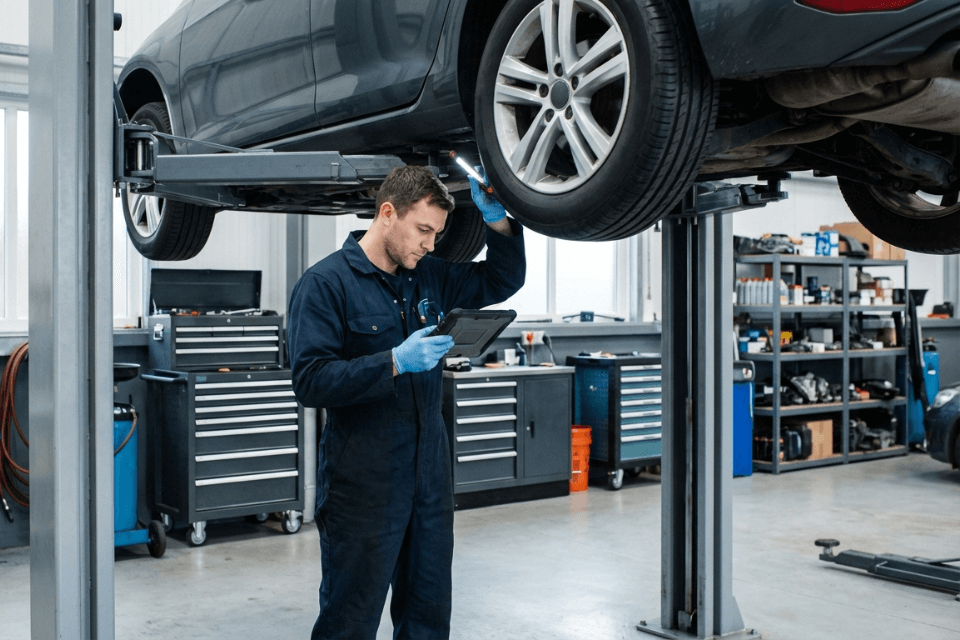
Every day in the life of a car mechanic usually begins early. Most workshops open their doors in the morning, and mechanics arrive before the first customer to prepare the workspace. At this stage of the car mechanic daily routine, organisation is essential. Tools are checked, job cards are reviewed, and the workshop is set up for the day ahead.
Meanwhile, mechanics often review the list of vehicles booked in for servicing or repairs. As a result, planning becomes a key part of car mechanic duties, ensuring each job is handled efficiently. In addition, safety checks are carried out, because maintaining a safe working environment is fundamental when working as a car mechanic.
Understanding the Car Mechanic Daily Routine

Although no two days are identical, the car mechanic daily routine follows a structured pattern. First, mechanics assess incoming vehicles. Next, they identify faults, perform inspections, and confirm the work required. Consequently, communication with customers or service advisors plays a vital role in managing expectations.
Furthermore, this routine requires flexibility. While planned tasks form the backbone of a day in the life of a car mechanic, unexpected repairs often arise. Therefore, adaptability becomes one of the most important car mechanic skills developed over time. Without proper training, handling these unpredictable situations would be far more challenging, which is why many professionals rely on a solid car mechanic course to build confidence.
Core Car Mechanic Duties Throughout the Day
The core car mechanic duties involve diagnosing problems, repairing faults, and maintaining vehicles to a high standard. During a day in the life of a car mechanic, this may include routine servicing such as oil changes, brake inspections, and tyre replacements. However, more complex repairs are also common.
For example, mechanics often deal with engine issues, suspension problems, or electrical faults. Therefore, understanding vehicle systems is essential when working as a car mechanic. Moreover, modern vehicles rely heavily on diagnostic technology, making technical knowledge just as important as hands-on ability.
As a result, structured learning through a car mechanic course helps learners understand these systems clearly, especially when transitioning into professional work.
Diagnostics and Problem-Solving in Real Time
One of the most challenging parts of a day in the life of a car mechanic is diagnosing faults accurately. Rather than replacing parts blindly, mechanics must identify the root cause of a problem. Consequently, logical thinking becomes a crucial car mechanic skill.
Using diagnostic tools, mechanics read fault codes and interpret data. However, technology alone is not enough. Experience and knowledge guide decision-making, ensuring repairs are both effective and cost-efficient. Therefore, mastering diagnostics is a key focus of many car mechanic courses, as it directly affects performance in real-world workshops.
Tools and Technology Used Every Day
Another important aspect of a day in the life of a car mechanic involves using a wide range of tools. From hand tools to advanced diagnostic equipment, each plays a role in completing daily tasks. Over time, familiarity with these tools becomes second nature when working as a car mechanic.
In addition, modern workshops increasingly work with hybrid and electric vehicles. Therefore, learning how to handle high-voltage systems safely has become part of modern car mechanic duties. This shift highlights why up-to-date training through a car mechanic course is more important than ever.
Applying Car Mechanic Skills on the Job
The practical application of car mechanic skills is what separates theory from real-world work. During a day in the life of a car mechanic, skills such as attention to detail, problem-solving, and time management are used constantly. Moreover, communication skills are equally important, especially when explaining repairs to customers.
Additionally, teamwork plays a major role. Mechanics often collaborate with colleagues to complete complex jobs efficiently. As a result, interpersonal skills become just as valuable as technical knowledge when working as a car mechanic.
Managing Time and Workflow Efficiently
Time management is another defining feature of the car mechanic daily routine. Each task must be completed accurately while keeping within allocated time slots. Therefore, prioritisation is essential.
Furthermore, unexpected delays can occur due to parts availability or additional faults discovered during inspections. Consequently, flexibility and clear communication help maintain workflow efficiency. Learning how to manage time effectively is often covered in a professional car mechanic course, preparing learners for real workshop conditions.
Challenges Faced During a Typical Day
Every day in the life of a car mechanic presents challenges. From stubborn bolts to complex electrical faults, problem-solving is constant. However, these challenges also make the job rewarding.
In addition, mechanics must stay physically active and focused throughout the day. As a result, resilience becomes an important car mechanic skill. Those considering working as a car mechanic should understand that while the role is demanding, it offers continuous learning and satisfaction.
Learning and Growth in the Workshop Environment
Professional growth is a continuous process in a day in the life of a car mechanic. With automotive technology evolving rapidly, staying updated is essential. Therefore, ongoing education plays a vital role in career progression.
Many mechanics enhance their knowledge through a structured car mechanic course, which helps them stay competitive. In addition, training provides a deeper understanding of vehicle systems, improving confidence and efficiency when handling complex repairs.
Why Training Matters for Beginners and Career Changers
For beginners, the transition into working as a car mechanic can feel overwhelming. However, structured learning simplifies this process. A comprehensive car mechanic course breaks down complex concepts into manageable steps, making learning more accessible.In the UK, car mechanics play an important role in vehicle safety and maintenance, with clear career pathways outlined by the National Careers Service.
Moreover, career changers benefit greatly from guided instruction. Understanding car mechanic duties before entering the workshop reduces mistakes and builds confidence. As a result, training bridges the gap between theory and practical experience.
How a Car Mechanic Course Fits Naturally Into the Journey
Throughout a day in the life of a car mechanic, it becomes clear that skills are developed through structured learning and hands-on practice. Therefore, enrolling in a car mechanic course is a logical step for anyone serious about this profession.
A well-designed car mechanic course provides clear lessons, simple explanations, and step-by-step guidance. Consequently, learners gain a strong understanding of vehicle systems and workshop procedures. This foundation makes working as a car mechanic more approachable and less intimidating.
Real-World Confidence Comes From Knowledge
Confidence is built through understanding. During the car mechanic daily routine, knowing why a repair is needed is just as important as knowing how to do it. Therefore, education plays a crucial role in building professional confidence.
By completing a car mechanic course, learners gain clarity and awareness of vehicle systems. As a result, they approach car mechanic duties with greater assurance and competence.
Long-Term Career Outlook for Car Mechanics
The automotive industry continues to grow, offering strong career prospects. For those committed to working as a car mechanic, opportunities exist across independent garages, dealerships, and specialist workshops.
Moreover, advancing technology ensures ongoing demand for skilled professionals. Therefore, developing strong car mechanic skills through training and experience is essential for long-term success. A recognised car mechanic course can support career progression and adaptability.
Final Thoughts on a Day in the Life of a Car Mechanic
In conclusion, a day in the life of a car mechanic is dynamic, challenging, and rewarding. From diagnostics and repairs to communication and problem-solving, the role requires a broad skill set. Understanding the car mechanic daily routine, mastering car mechanic duties, and developing essential car mechanic skills are all part of the journey.
For anyone considering working as a car mechanic, gaining structured knowledge through a car mechanic course is a natural and practical step. Ultimately, learning the fundamentals opens the door to a confident and capable career in the automotive industry.
Frequently Asked Questions
A car mechanic spends the day inspecting vehicles, diagnosing faults, and carrying out repairs and maintenance. Daily tasks often include servicing, brake repairs, tyre replacement, and using diagnostic tools. In addition, mechanics may test-drive vehicles and communicate with customers or service advisors about repair work.
Working as a car mechanic can be physically demanding and requires strong problem-solving skills. However, with proper training and experience, the work becomes more manageable. Many mechanics find the role rewarding because it involves practical tasks and clear results at the end of each job.
To become a car mechanic, you need technical knowledge of vehicle systems, attention to detail, and good problem-solving skills. Communication and time management are also important, especially when working in busy workshops and explaining repairs clearly to customers.
In the UK, qualifications are not always legally required, but most employers prefer trained mechanics. Completing a recognised course helps build essential knowledge, improves job opportunities, and prepares learners to work safely on modern vehicles.
Yes, beginners can learn car mechanics through a structured course designed for those with no prior experience. These courses explain vehicle systems step by step and help learners build confidence before moving into practical or workshop-based work.

0 responses on "A Day in the Life of a Car Mechanic"