




Assisted living offers support with daily tasks and promotes independence, while nursing homes provide 24/7 medical care for people with complex health needs.
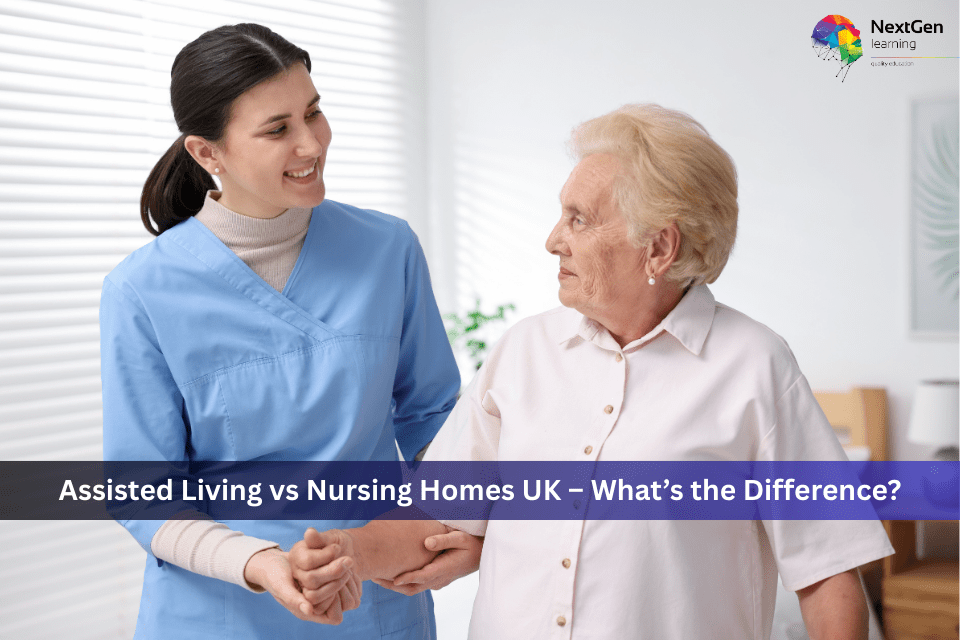
Assisted Living vs Nursing Homes UK – What’s the Difference?
Choosing the right kind of care for an elderly loved one can feel overwhelming — especially when you’re trying to balance their safety, independence, and comfort. Maybe you’re noticing they need more day-to-day help, or perhaps their medical needs are becoming harder to manage at home. That’s usually when the big question pops up: Do they need assisted living or a nursing home?
In simple terms, assisted living focuses on independence with light support, while nursing homes provide full-time medical care. Understanding these differences helps families choose the best option for their loved one’s needs.
Before you decide, here’s what this guide will help you understand:
- The key differences between assisted living and nursing homes
- Levels of care provided in each setting
- Cost expectations and what affects pricing
- Who each type of care is most suitable for
- How assisted living fits into wider elder care options UK
How nursing homes support those needing long-term care UK
Table of Contents
What Is Assisted Living in the UK?
Assisted living in the UK refers to housing and care services designed to support older adults who can live independently but need a little extra help with daily tasks. These environments offer a balance between freedom and support, allowing residents to maintain control over their routines while receiving assistance when needed.
Assisted living settings help older adults with personal care, such as bathing or dressing, while also providing meals, housekeeping, medication reminders, and social activities that keep them engaged and supported. Many of these environments — often called assisted care facilities — sit within the wider category of types of elderly care UK, offering a non-clinical, community-like lifestyle.
This option is ideal for individuals who have mild-to-moderate support needs but do not require ongoing medical supervision. Those who want a safe, social environment without giving up their independence often find assisted living a perfect fit.
What Are Nursing Homes in the UK?
Nursing homes in the UK are specialised care environments that provide 24/7 medical support from qualified nurses. Unlike assisted living, nursing homes are designed for individuals who have significant healthcare needs and require continuous monitoring or treatment.
These homes offer full nursing care, which includes medical assessments, medication administration, wound care, mobility support, and management of complex conditions. This distinction highlights the difference between residential care vs nursing care, where residential care focuses on daily living support, while nursing care addresses clinical and health-related needs.
Nursing homes are best suited for people living with chronic illnesses, mobility limitations, dementia, or long-term conditions that require specialised care. They also play a major role within long-term care UK, supporting individuals who need ongoing medical oversight and consistent clinical support.
Together, assisted living and nursing homes represent two essential yet very different parts of the UK’s elder care system — each designed to match different levels of need, independence, and medical support.
Assisted Living vs Nursing Home – Key Differences
Before diving deeper, here’s a quick comparison to help you see the essentials at a glance:
Category | Assisted Living | Nursing Home |
Level of Care | Personal care, independence support | 24/7 medical and clinical care |
Staff Qualifications | Carers, support workers | Registered nurses, specialist clinicians |
Costs | Lower due to non-medical focus | Higher because of medical staffing |
Living Environment | Home-like, social, independent | Clinical, structured, medically supervised |
Best For | Mild-to-moderate support needs | Complex medical needs, dementia, long-term conditions |
Choosing between these two can feel overwhelming, especially when every family wants to balance independence, safety, and quality of life for a loved one. Understanding the differences makes the decision clearer and far less stressful.
Level of Care Provided
The most important distinction comes down to the level of care each option provides.
Assisted living focuses on personal care and support, offering help with washing, dressing, mobility, meals, and medication reminders. Residents maintain as much independence as possible, often managing their own routines with staff available when needed.
In contrast, nursing homes provide 24-hour medical and clinical care, managed by qualified nurses. These settings support individuals with complex health conditions, frequent medical needs, or reduced mobility. Care plans are more comprehensive, often involving regular monitoring, medication administration, and specialist input — a key factor in the difference between nursing home and assisted living.
Staff Qualifications
Staff qualifications directly influence the type of care residents receive.
- Assisted living teams usually consist of carers and support workers, trained in personal care, safeguarding, and basic health support. While highly skilled in daily care, they do not perform clinical tasks.
- Nursing homes employ registered nurses, healthcare assistants with advanced training, and sometimes specialist practitioners (e.g., dementia care leads). Because of this, residents have immediate access to clinical support, medical assessments, and planned healthcare interventions.
This difference in staffing is one of the main reasons nursing homes cater to more complex health needs.
Cost Differences
Costs vary widely across the UK, but the general pattern is clear:
- Assisted living is typically more affordable, as it focuses on daily living support rather than medical treatment.
- Nursing homes cost more, reflecting the need for registered nurses, specialised equipment, and continuous health monitoring.
Families often consider cost alongside current and future care needs, especially if a loved one may eventually require long-term medical support.
Living Environment
Assisted living settings are designed to feel homely, social, and community-oriented. Residents often have private flats or rooms, access to communal lounges and gardens, and opportunities to join social events, fitness classes, and hobby clubs.
Nursing homes offer a more structured and clinically supportive environment, geared toward safety and consistent supervision. Rooms may be more hospital-like, and facilities cater to individuals who require constant care, specialised beds, and medical equipment.
The living environment often reflects the level of support residents need to stay safe and well.
Types of Residents
Assisted living is ideal for older adults who:
- Need support with daily tasks but remain mobile
- Want independence with reassurance of staff nearby
- Enjoy social activities and community living
- Do not require regular medical treatment
Nursing homes are suited to individuals who:
- Have chronic health conditions
- Need specialised dementia support
- Require help with most daily tasks
- Need access to nurses throughout the day and night
- Are recovering from a significant illness or surgery
Understanding your loved one’s physical, emotional, and medical needs is the first step in choosing the right type of care.
Care Home vs Nursing Home – Are They the Same? )
No, a care home and a nursing home are not the same — and it’s completely normal to feel confused by the terminology, especially in the UK, where the word care home is often used as a catch-all term. Many families assume that a care home and a nursing home are identical, but there’s an important distinction to understand before making a decision.
In the UK, “care home” is an umbrella term that includes two types of facilities:
- Residential care homes
- Nursing homes
A residential care home provides personal care only. This includes help with washing, dressing, meals, medication prompts, and general day-to-day support. Crucially, there are no registered nurses onsite, so these homes are not equipped to offer medical treatments or manage complex or long-term health needs.
A nursing home, however, provides everything a residential care home offers plus 24/7 onsite nursing care delivered by qualified nurses. This makes nursing homes the better option for individuals with long-term medical conditions, mobility issues, dementia, or any situation requiring continuous clinical oversight and monitoring.
Understanding this difference — the heart of the care home vs nursing home distinction — ensures you choose the level of care that best aligns with your loved one’s physical, emotional, and medical needs.
Residential Care vs Nursing Care – Understanding the Gap
When exploring elder care options in the UK, one of the biggest questions families face is whether their loved one needs residential care or nursing care. While the two may seem similar at first, the difference lies in the level of support each provides — and understanding this gap is key to choosing the right type of care.
Residential care focuses on everyday support. This includes help with washing, dressing, meals, mobility, and providing companionship. Staff assist with daily routines, promote social engagement, and ensure residents feel safe and comfortable. It’s ideal for individuals who need regular support but do not require medical supervision.
Nursing care, on the other hand, involves a higher, clinical level of support delivered by qualified nurses. This may include medication management, wound care, monitoring long-term conditions, and offering specialist dementia care. Nursing care is designed for individuals with complex health needs who require ongoing medical attention or frequent assessments.
The best way to decide between the two is to match care needs with support levels.
- If your loved one needs help with daily tasks but remains medically stable, residential care is often enough.
- If they require regular healthcare interventions, a history of falls, advanced dementia, or ongoing clinical treatment, nursing care is the safer, more suitable option.
Understanding this difference ensures families choose a care setting that truly supports both wellbeing and long-term health.
Types of Elderly Care in the UK
When choosing the right support for an older adult, it helps to understand the full range of elder care options UK. Each type offers a different level of assistance, independence, and medical involvement, making it easier to match a loved one’s needs with the right form of support. Here’s an overview of the main types of elderly care UK:
Assisted Living
Ideal for older adults who can live independently but need light assistance with daily tasks. Assisted living communities provide personal care, meals, social activities, and a safe, community-style environment.
Residential Care Homes
These homes offer help with everyday tasks such as washing, dressing, eating, and mobility. They do not provide medical care, making them suitable for individuals who need support but remain medically stable.
Nursing Homes
Designed for people with significant health needs, nursing homes provide 24/7 medical support from registered nurses. They are suitable for those with chronic illnesses, mobility issues, dementia, or long-term conditions that require continuous clinical oversight.
Home Care
Care delivered directly in a person’s own home. Carers visit to support with daily tasks, personal care, medication prompts, and sometimes companionship. This option is perfect for individuals who prefer to remain in familiar surroundings.
Dementia Care
Specialist dementia care is available both in residential settings and nursing homes. It focuses on safety, routine, cognitive support, and managing behaviours associated with dementia.
Live-In Care
A professional carer lives with the individual full-time, offering round-the-clock support. This is ideal for people who want a high level of personalised care without leaving their home.
Together, these options highlight the diverse and flexible nature of elderly care in the UK. Whether your loved one needs light support, daily assistance, or full medical supervision, there’s a care pathway tailored to their needs.
How to Choose Between Assisted Living and a Nursing Home
Deciding between assisted living and a nursing home can be one of the most emotional and challenging choices a family makes. Balancing independence, safety, cost, and long-term wellbeing isn’t easy — but breaking the decision into key considerations can help you choose confidently.
Assessing Care Needs
Start by looking closely at your loved one’s physical abilities, medical conditions, and daily living needs.
- If they need help with tasks like washing, dressing, or meals but are otherwise healthy, assisted living may be enough.
- If they require regular medical attention, monitoring, medication management, or have a complex health condition, a nursing home is the safer, more appropriate option.
Being realistic about current needs prevents unnecessary moves later on.
Budgeting and Financial Considerations
Care costs vary greatly, so it’s important to understand how funding works.
Families may need to consider:
- Self-funding (paying privately for care)
- Local council financial assessments to determine eligibility for support
- Ongoing monthly costs, which are generally higher in nursing homes due to medical staffing
Understanding the financial picture early helps narrow down sustainable long-term options.
Location and Family Accessibility
Proximity matters more than many people realise. Choosing a home that’s close to family and friends makes regular visits easier, supporting emotional wellbeing and maintaining strong connections. A convenient location also helps with emergencies, appointments, and everyday involvement in care.
Long-Term Needs
Care needs often change over time. When choosing between assisted living and a nursing home, think about potential future developments such as declining mobility, dementia progression, or increased medical needs.
For individuals likely to require long-term care UK, a nursing home may provide the stability and continuity needed for the years ahead.
If you’re exploring elder care as a career or want to better understand these care environments, training in Health & Social Care can give you the confidence, skills, and insight you need to start.
Consider courses like the Level 3 Diploma in Health & Social Care or Nursing Assistant Training to deepen your knowledge and support families more effectively.
Level 3 Diploma in Nursing Assistant Complete Training
Learn key patient care skills and prepare for essential nursing assistant jobs.
View CourseHealthcare Assistant Training
Healthcare Assistant Training – build essential care skills for patient support roles.
View CourseCare Certificate (15 Standards)
Care Certificate – complete 15 standards to validate key skills for care support roles.
View CourseMental Health Nursing
Mental Health Nursing – gain specialist skills to support mental wellbeing and recovery.
View CourseInfection and Prevention Control
Infection & Prevention Control – learn vital hygiene, PPE use and risk-management skills for care settings.
View CourseFinal Thoughts
Assisted living and nursing homes may seem similar at first glance, but they offer very different levels of support. Assisted living focuses on independence and help with everyday tasks, while nursing homes provide continuous medical care for those with more complex health needs. Understanding these differences is key to choosing the most suitable option.
By considering your loved one’s level of independence, medical requirements, and long-term wellbeing, you can make a confident and informed decision. With the right care setting, older adults can feel safe, supported, and truly looked after.
Frequently Asked Questions
In the UK, assisted living is often called extra-care housing, supported living, or assisted living facilities.
Assisted living costs less because it focuses on personal care rather than medical care, meaning no 24-hour nursing staff or clinical services are required.
The main difference is medical care: assisted living supports daily living, whereas nursing homes provide continuous nursing and medical supervision.
Yes, assisted living is generally more affordable due to the absence of clinical staff and medical services.
Mild dementia may be suitable for assisted living, but moderate to advanced dementia often requires specialised or nursing home care for safety and supervision.
Nursing home care includes medical treatment, medication management, 24/7 nursing support, mobility assistance, personal care, and specialist care such as dementia support.
Not exactly. “Care home” is a broad term covering both residential care homes (no nurses) and nursing homes (with nurses).



Level 3 Diploma in Nursing Assistant Complete Training
Certificate:
yes
Accreditation:
Level 3 CPD Certificate
Access:
Lifetime
0 responses on "Assisted Living vs Nursing Homes UK – What’s the Difference?"