





How to Become a First Aid Trainer Assessor (UK Career Guide)
Becoming a First Aid Trainer Assessor is an excellent career choice for individuals who want to teach life-saving skills while working in a flexible, respected, and in-demand profession. First aid trainers and assessors play a critical role in workplaces, schools, childcare settings, healthcare environments, and community organisations by ensuring people are properly trained to respond in emergencies.
A First Aid Trainer Assessor is qualified to deliver accredited first aid training and formally assess learners against recognised standards. This role suits professionals with experience in first aid, healthcare, education, coaching, or emergency response, as well as those looking to transition into professional training.
Interest in how to become a first aid trainer assessor has grown significantly due to:
Legal first aid requirements in UK workplaces
Increased focus on health and safety compliance
Demand for flexible, self-employed training careers
In this guide, you’ll learn:
What a First Aid Trainer Assessor does
The qualifications and experience typically required
Different routes into the role (with or without training experience)
Career benefits, flexibility, and progression opportunities
Whether your goal is to become a first aid trainer, expand into assessment, or build a long-term training career, this guide provides a clear, practical overview to help you take the next step with confidence.
Table of Contents
What Is a First Aid Trainer Assessor?

A First Aid Trainer Assessor is a qualified professional who delivers first aid training and assesses learners to ensure they meet required safety and competency standards. Unlike a general first aid instructor, a trainer assessor is authorised not only to teach but also to evaluate learner performance and award recognised first aid qualifications through approved frameworks.
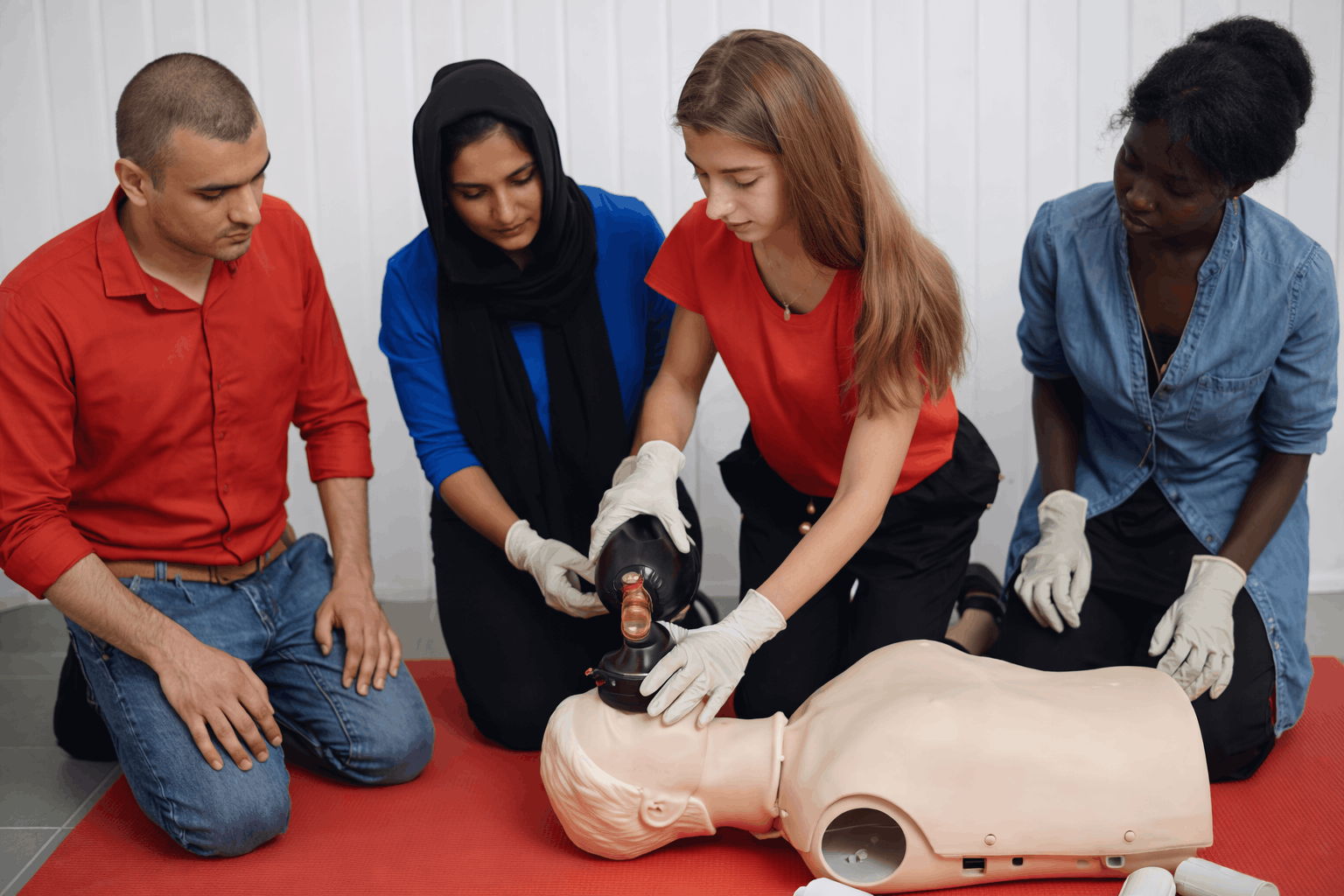
In practical terms, this role combines teaching, assessment, and quality assurance. Trainer assessors are responsible for ensuring that learners can confidently demonstrate first aid skills such as CPR, managing injuries, responding to medical emergencies, and using first aid equipment correctly.
Key Responsibilities of a First Aid Trainer Assessor
A First Aid Trainer Assessor typically:
Delivers structured first aid training sessions
Assesses learners through practical demonstrations and knowledge checks
Ensures training meets regulatory and awarding standards
Maintains accurate assessment and learner records
Keeps skills and knowledge up to date through regular CPD
Trainer assessors may work independently, through training providers, or within organisations that deliver workplace and public first aid training.
Where Do First Aid Trainer Assessors Work?
Qualified first aid trainer assessors are in demand across multiple sectors, including:
Workplace health and safety training
Education and childcare settings
Healthcare and social care organisations
Construction, manufacturing, and corporate environments
Community and voluntary organisations
Some professionals deliver training full-time, while others use it as a flexible secondary income alongside healthcare, teaching, or consultancy work.
First Aid Trainer vs First Aid Trainer Assessor
It’s important to understand the distinction:
A First Aid Trainer delivers training only
A First Aid Trainer Assessor delivers training and formally assesses learners
Most recognised first aid qualifications require assessment by a trainer assessor, which is why this role carries greater responsibility, credibility, and earning potential.
Qualifications and Prerequisites to Become a First Aid Trainer Assessor
To become a First Aid Trainer Assessor, you must meet certain professional and educational requirements. These ensure that trainers not only understand first aid principles but can also teach and assess learners safely, consistently, and to recognised standards.
While specific requirements can vary slightly depending on the awarding body or training provider, the core prerequisites across the UK are broadly the same.
1. A Valid and In-Date First Aid Qualification
You must already hold a recognised first aid qualification that demonstrates practical competence. This is essential, as trainer assessors are expected to model correct techniques and up-to-date emergency responses.
Commonly accepted first aid qualifications include:
First Aid at Work (FAW)
Emergency First Aid at Work (EFAW)
Paediatric First Aid
Advanced or specialist first aid qualifications
Your first aid certification must be current and regularly renewed in line with national guidelines.
2. A Teaching or Training Qualification
In addition to first aid expertise, you must be qualified to teach adults. Most UK training providers require a recognised education or training award, such as:
Level 3 Award in Education and Training (AET)
An equivalent teaching or instructional qualification
This ensures you can plan lessons, manage learners, deliver training effectively, and assess performance fairly.
3. Occupational Competence and Industry Experience
Trainer assessors are expected to have recent, relevant experience in first aid delivery or a closely related field. This may include:
Healthcare or clinical work
Emergency response roles
Workplace safety or compliance training
Regular first aid practice within a professional role
Industry experience strengthens credibility and helps ensure training reflects real-world scenarios.
4. Ongoing Professional Development (CPD)
First aid standards and best practices change over time. As a result, trainer assessors are expected to:
Keep first aid skills current
Stay updated with regulatory guidance
Complete ongoing CPD activities
This commitment to continuous learning is essential for maintaining approval and professional trust.
Routes to Becoming a First Aid Trainer Assessor

There is more than one route to becoming a First Aid Trainer Assessor, depending on your background and previous experience delivering first aid training. Most training frameworks recognise that some candidates are new to teaching, while others already have substantial instructional experience.
Below are the two most common routes into the role.
Route 1: New to Delivering First Aid Training
This route is suitable if you meet the qualification requirements but have not previously delivered or assessed first aid courses.
It is a structured entry pathway designed to help new trainers develop confidence and assessment skills under guidance.
Typically, this route involves:
Applying to work with an approved training provider or awarding framework
Completing an induction or trainer onboarding process
Delivering your first aid course under supervision
Having your training observed or quality-checked by an experienced assessor
Receiving feedback and support during an initial probation period
This route ensures that new trainer assessors can demonstrate competence in:
Course delivery
Learner assessment
Record keeping and compliance
Once successfully signed off, you can deliver and assess first aid courses independently.
Route 2: Experienced First Aid Trainer or Instructor
This route is for professionals who have already been delivering first aid training and can evidence recent experience.
To follow this pathway, you will usually need to demonstrate:
Recent delivery of recognised first aid courses
A minimum number of teaching hours within the last few years
Experience assessing learners against formal criteria
Up-to-date first aid and teaching qualifications
If you meet these requirements, you may be able to:
Skip supervised delivery stages.
Move directly into an approved trainer assessor role.
Begin delivering and assessing courses immediately after approval
This route recognises existing expertise while still maintaining quality and compliance standards.
Which Route Is Right for You?
If you are new to training, Route 1 offers structured support and mentoring.
If you are an experienced first aid trainer, Route 2 allows faster progression.
Both routes lead to the same outcome: becoming a fully recognised First Aid Trainer Assessor qualified to deliver accredited first aid training.
Step-by-Step Process to Become a First Aid Trainer Assessor
While exact procedures can vary between training providers, the process to become a First Aid Trainer Assessor in the UK generally follows a clear and structured pathway. Understanding these steps in advance helps you prepare and progress more efficiently.
Step 1: Confirm You Meet the Entry Requirements
Before applying, ensure you have:
A valid, in-date first aid qualification
A recognised teaching or training qualification
Recent occupational experience in first aid or a related field
If any requirement is missing, it’s best to complete this first before applying.
Step 2: Apply Through an Approved Training Provider or Framework
Trainer assessors must work through approved training providers or recognised frameworks. Applications usually involve:
Completing an online or written application form
Uploading copies of qualifications and certificates
Providing evidence of training or assessment experience (if applicable)
Some providers may also request references or a training log.
Step 3: Access Training Resources and Induction Materials
Once approved, you’ll typically receive access to:
Course delivery materials
Assessment criteria and guidance
Learner documentation and quality assurance procedures
These resources ensure consistency, compliance, and standardised delivery.
Step 4: Deliver and Assess Your First Course
New trainer assessors usually complete an initial delivery phase, which may include:
Teaching a first aid course
Assessing learners in practical and written elements
Being observed or moderated by an experienced assessor
This stage helps confirm that your delivery and assessment meet required standards.
Step 5: Quality Review and Final Approval
After successful course delivery:
Your assessments are reviewed
Feedback may be provided
Final approval is granted once standards are met
At this point, you are recognised as a fully approved First Aid Trainer Assessor and can deliver courses independently.
Career Benefits of Becoming a First Aid Trainer Assessor
Becoming a First Aid Trainer Assessor offers more than just an additional qualification. It opens the door to a flexible, respected career with strong demand across multiple industries. Whether you plan to work independently or alongside an established training provider, this role offers both professional and personal rewards.
1. Make a Meaningful Impact
First aid trainer assessors help save lives by ensuring others are properly trained to respond in emergencies. Every course delivered increases safety awareness and preparedness in workplaces and communities. For many professionals, this sense of purpose is one of the most rewarding aspects of the role.
2. Strong and Consistent Demand
UK employers are legally required to provide adequate first aid provision. This creates ongoing demand for qualified first aid trainers and assessors across sectors such as:
Construction and manufacturing
Education and childcare
Healthcare and social care
Offices, retail, and hospitality
As regulations remain in place, demand for first aid training continues year after year.
3. Flexible Working Options
Many First Aid Trainer Assessors enjoy:
Self-employed or freelance work
Part-time or full-time delivery
The ability to choose when and where they teach
This flexibility makes the role ideal for those balancing other professional commitments or seeking career autonomy.
4. Competitive Earning Potential
Qualified trainer assessors can charge per course, per learner, or through provider contracts. Earnings vary based on experience, location, and delivery model, but many professionals generate a reliable supplementary or full-time income from first aid training.
5. Career Progression and Skill Expansion
Once qualified, many trainer assessors expand into:
Advanced first aid training
Paediatric or specialist first aid
Health and safety instruction
Internal quality assurance or mentoring roles
This allows long-term career development without changing industries.
Frequently Asked Questions
The timeframe depends on your background. If you already hold a valid first aid qualification and a teaching qualification, the process can take a few weeks to a few months, depending on application reviews and initial course delivery. Those new to training may take longer due to supervised delivery or probation periods.
You do not always need prior teaching experience, but you must hold a recognised teaching or training qualification, such as a Level 3 Award in Education and Training (or equivalent). Some routes allow new trainers to gain experience under supervision before full approval.
Yes. Many First Aid Trainer Assessors work independently or on a freelance basis, delivering training for businesses, schools, and organisations. Others choose to work through approved training providers. Both options are common in the UK.
At a minimum, you will need:
A valid and in-date first aid qualification
A recognised teaching or training qualification
Relevant occupational or industry experience
Additional requirements may apply depending on the training framework you work with.
For many professionals, yes. The role offers flexible working, strong demand, competitive earnings, and the opportunity to make a meaningful impact. It is especially attractive to those with healthcare, safety, or education backgrounds.
Yes. Many trainer assessors deliver multiple types of first aid training, such as:
Emergency First Aid at Work
First Aid at Work
Paediatric First Aid
AED and CPR training
Additional approvals or experience may be required for specialist courses.
Final Thoughts – Is Becoming a First Aid Trainer Assessor Right for You?
Becoming a First Aid Trainer Assessor is a practical and rewarding career move for those who want to combine teaching with life-saving expertise. With strong demand across the UK, flexible working options, and clear progression routes, it’s a role that suits both experienced professionals and those transitioning into training.
If you already hold a first aid qualification and enjoy sharing knowledge, progressing into training and assessment allows you to:
Increase your professional credibility
Build a flexible or self-employed career
Make a measurable impact on workplace and community safety
By following the right route for your experience level and working with recognised training providers, you can establish yourself as a trusted first aid trainer assessor and develop a long-term, sustainable career.

0 responses on "How to Become a First Aid Trainer Assessor (UK Career Guide)"