



Clinical Coding Standards Course: Inside the Training
Thinking about clinical coding training but unsure what the Clinical Coding Standards Course involves? With several courses covering similar subjects, knowing which training is officially recognised and who can attend is important.
The Clinical Coding Standards Course (CCSC) provides structured training for eligible clinical coding personnel in applying national coding standards to healthcare records. It covers classifications such as ICD-10 and OPCS-4. Unlike independent introductory courses, the official CCSC has specific eligibility and delivery requirements and does not itself award the National Clinical Coding Qualification (NCCQ).
Here’s what to expect from the training, including its content, duration, assessments and next steps.
Table of Contents
What Is the Clinical Coding Standards Course?
The CCSC helps clinical coders interpret healthcare documentation and apply national classification rules consistently. It forms part of the structured training arrangements used to develop coding knowledge and accuracy.
According to NHS clinical classifications, clinical coding primarily uses two classification systems:
- ICD-10: Classifies diseases and other health conditions.
- OPCS-4: Classifies healthcare interventions and surgical procedures.
National Clinical Coding Standards provide guidance on applying these classifications accurately.
For beginners, understanding ICD-10 codes and their role in diagnosis classification is a useful foundation before studying more detailed coding standards.
The CCSC focuses on applying these rules to clinical information rather than simply memorising code descriptions.
Who Can Attend the Clinical Coding Standards Course?
The official CCSC is not generally open to unrestricted public enrolment. Eligibility depends on employment circumstances and the applicable national training arrangements.
Eligibility for NHS Clinical Coding Training
Under NHS England’s clinical coding training requirements, eligible participants include:
- Clinical coders employed within NHS trusts or independent sector treatment centres.
- Contract clinical coders who have previously passed the CCSC.
- Clinicians responsible for entering ICD-10 or OPCS-4 codes, under a specified exception.
Training must be delivered by an NHS England-approved clinical coding trainer using materials that meet the required national standards.
These are official training conditions rather than general legal requirements for everyone interested in clinical coding.
What If You Are a Complete Beginner?
You can begin developing clinical coding knowledge before becoming eligible for the CCSC.
Familiarity with anatomy, medical terminology, clinical documentation and classification systems can make future learning easier.
However, completing an introductory online course does not automatically establish eligibility for official NHS clinical coding training or guarantee employment.
For those considering this career, a sensible starting point is to explore entry-level clinical coding roles and the training arrangements offered by prospective employers.
What Actually Happens During Clinical Coding Standards Training?
Clinical coding standards training involves more than recognising medical terminology. Trainees develop their ability to interpret healthcare documentation, identify relevant information and apply recognised classification rules.
Although teaching activities vary between approved providers, the main objective is to develop accurate, consistent coding practice.
Learning ICD-10, OPCS-4 and National Coding Standards
Trainees study how diagnoses and procedures are classified within healthcare records.
ICD-10 and OPCS-4 training introduces classification conventions, code selection, sequencing and the importance of following national standards.
For example, a hospital discharge record may describe both a diagnosed condition and an operation. The diagnosis and procedure require different classification systems.
Trainees need to recognise this distinction and use the appropriate references.
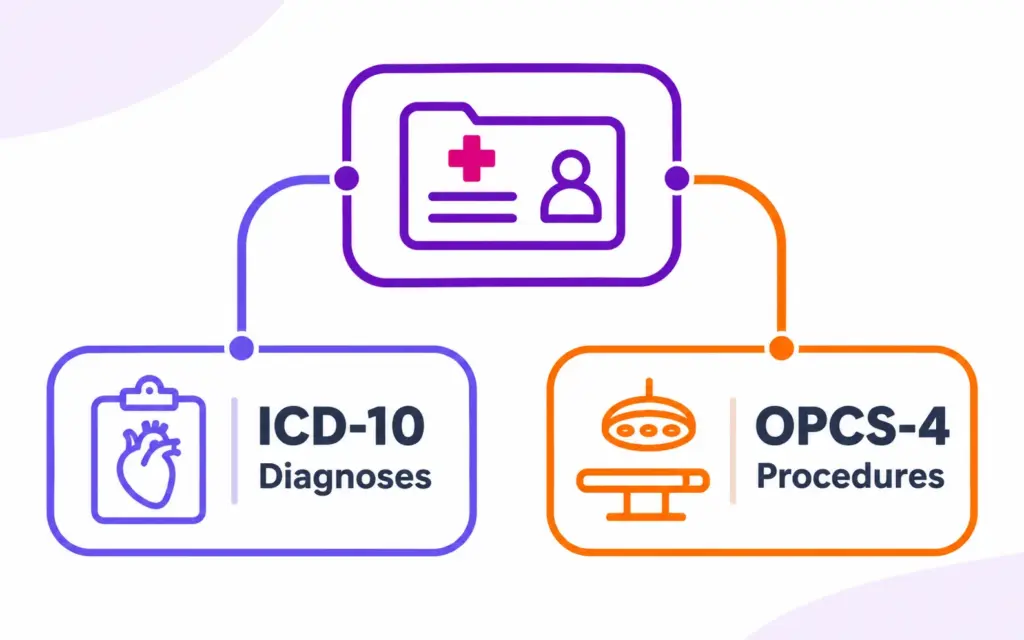
Understanding OPCS codes is particularly useful when learning how operations and other interventions are classified.
The aim is not to remember every available code. It is to understand how the classification systems work and apply their rules correctly.
Practising With Clinical Documentation and Coding Exercises
Practical exercises help trainees connect coding standards with the information recorded during patient care.
Consider an illustrative exercise involving a fictional hospital discharge record. The documentation identifies a diagnosis, treatment and a completed procedure.
A trainee might work through four stages:
- 1. Review the documentation: Read the recorded clinical information carefully.
- 2. Identify relevant details: Determine which diagnoses and procedures require classification.
- 3. Consult reference materials: Locate potential codes in the relevant classification.
- 4. Check the decision: Verify the proposed codes against applicable coding rules and documentation.

This example illustrates the learning process; it is not a confirmed exercise used by every approved CCSC provider.
A common challenge is deciding which information is relevant and how coding conventions apply. A code description may appear appropriate, but the final decision must also follow the documented clinical information and national rules.
Understanding patient documentation is therefore valuable preparation.
Nextgen Learning’s Clinical Records and Coding course introduces related concepts, including medical terminology, clinical records, confidentiality and classification systems. It provides independent foundational learning rather than replacing official CCSC training.
Using Reference Materials and Trainer Feedback
Clinical coders rely on reference materials to make accurate decisions.
The NHS Classifications Browser provides access to ICD-10, OPCS-4 and relevant national coding standards.
During training, feedback can help learners identify mistakes, revisit coding conventions and improve the consistency of their work. The precise exercises and feedback arrangements depend on the approved provider.
Learners may also encounter SNOMED CT, a structured clinical terminology system used within electronic healthcare records. Unlike ICD-10 and OPCS-4, SNOMED CT serves a different terminology function and should not be treated as an interchangeable classification system.
How Long Does the Clinical Coding Standards Course Take?
In England, the minimum CCSC duration is 23 days for an acute trust coder and three days for a mental health trust coder, according to NHS England’s published training guidance.
These are minimum training durations, not guarantees about the calendar time needed to complete every programme.
Course Duration and Delivery Formats
The course may be delivered through classroom-based or online training, provided the approved training requirements and materials are followed.
NHS England also specifies that CCSC attendance must begin within six months of commencing relevant clinical coding employment.
Actual scheduling can vary between organisations. Training delivered over several weeks may still cover the required teaching days without taking place on consecutive dates.
Arrangements are not identical across the UK.
For example, Digital Health and Care Wales provides a 24-day Clinical Coding Standards Course for eligible NHS Wales clinical coding staff.
Before arranging training, confirm the applicable national requirements and timetable with your employer or training provider.
How Is the CCSC Assessed, and Is It Difficult?
The Clinical Coding Standards Course can be challenging because trainees need to interpret healthcare documentation and apply coding rules accurately. Practical learning may involve reviewing clinical information, checking classification choices and identifying errors. However, assessment arrangements can vary between approved training providers, so learners should confirm the specific requirements with their employer or trainer.
Practical Learning and Assessment Expectations
Practical training may involve identifying diagnoses and procedures, checking classification choices and reviewing errors.
NHS England states that organisations should provide a training and assessment framework supporting clinical coders towards professional accreditation. This is presented as good practice, not an identical assessment requirement imposed on every provider.
The separate NCCQ examination should not be confused with activities completed during CCSC training.
If you are preparing for the course, three habits are worth developing:
- Review medical terminology: Become familiar with common clinical expressions, conditions and procedures.
- Use classification references: Practise navigating ICD-10 and OPCS-4 resources.
- Check your reasoning: Focus on clinical documentation and relevant coding guidance rather than guessing.
You do not need to memorise every possible code before training. Learning to interpret information carefully and use reference materials effectively is more useful.
Official CCSC vs Independent Online Clinical Coding Courses
The official CCSC and independent online courses can cover similar coding concepts, but their eligibility, purpose and outcomes differ.
| Feature | Official NHS CCSC | Independent Online Course |
|---|---|---|
| Intended Audience | Eligible clinical coding personnel | Depends on the course provider |
| Entry Requirements | Official eligibility restrictions apply | Varies by course provider |
| Training Content | Prescribed national standards training | Based on the provider’s published curriculum |
| Delivery | Approved classroom or online training | Varies by provider |
| Completion Outcome | CCSC training completion | Provider-specific certificate |
| NCCQ Equivalent? | No | No |
Independent courses may be useful for beginners who want to become familiar with clinical terminology, classifications and healthcare records.
For example, Nextgen Learning’s Clinical Coding Course Online covers clinical coding principles, medical terminology, ICD-10, OPCS-4 and related records-management concepts.
The curriculum also includes material beyond UK national coding standards, so it should not be confused with the prescribed NHS CCSC programme.
It offers an option for developing foundational knowledge, not an official qualification, a guarantee of NHS employment or a replacement for supervised professional training.
What Happens After Completing the CCSC?
Completing the CCSC supports a clinical coder’s professional development, but it does not automatically confer Accredited Clinical Coder status.
Further workplace experience, training and assessment may be required.
Working Towards NCCQ and ACC Status
The National Clinical Coding Qualification (NCCQ) is separate from the Clinical Coding Standards Course.
According to IHRIM’s NCCQ guidance, passing the NCCQ examination enables a clinical coder to use the Accredited Clinical Coder (ACC) post-nominals.
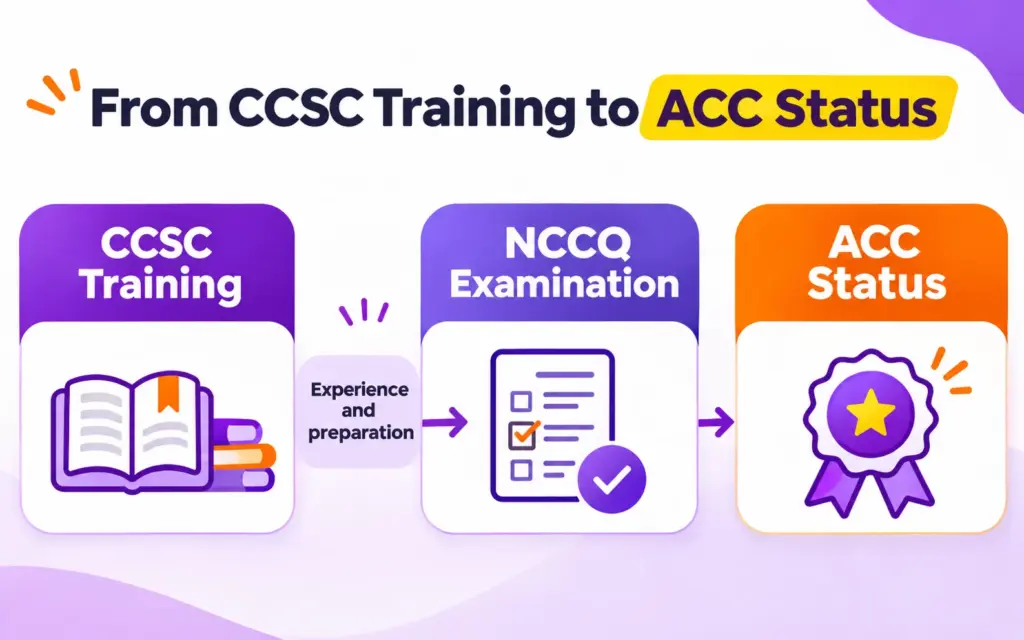
IHRIM describes a typical two-to-three-year employer-supported development pathway for novice NHS clinical coders preparing for accreditation.
NHS England also requires relevant coding staff to attend refresher training every three years. This requirement supports continued professional development, but missing refresher training does not automatically remove ACC status.
Accurate clinical coding also contributes to NHS reporting, analysis and reimbursement. Related systems, including Healthcare Resource Group (HRG) codes, help group clinical activity for reporting and payment purposes.
Conclusion
The Clinical Coding Standards Course provides structured training in applying national coding rules to healthcare documentation. Its eligibility requirements, duration and professional outcomes differ from independent introductory courses.
If you already work in clinical coding, discuss the approved training arrangements with your employer. If you are new to the field, introductory study can help you develop relevant knowledge before exploring trainee opportunities.
Frequently Asked Questions
Certain non-NHS arrangements qualify, including specified independent-sector roles and previously trained contract clinical coders. However, the NHS England training programme is not generally available through unrestricted public enrolment.
Yes. NHS England permits online delivery when the approved trainer and training-material requirements are met. Online availability does not remove eligibility restrictions.
No. Completing CCSC training does not award ACC status. Passing the separate NCCQ examination is required for that professional accreditation.