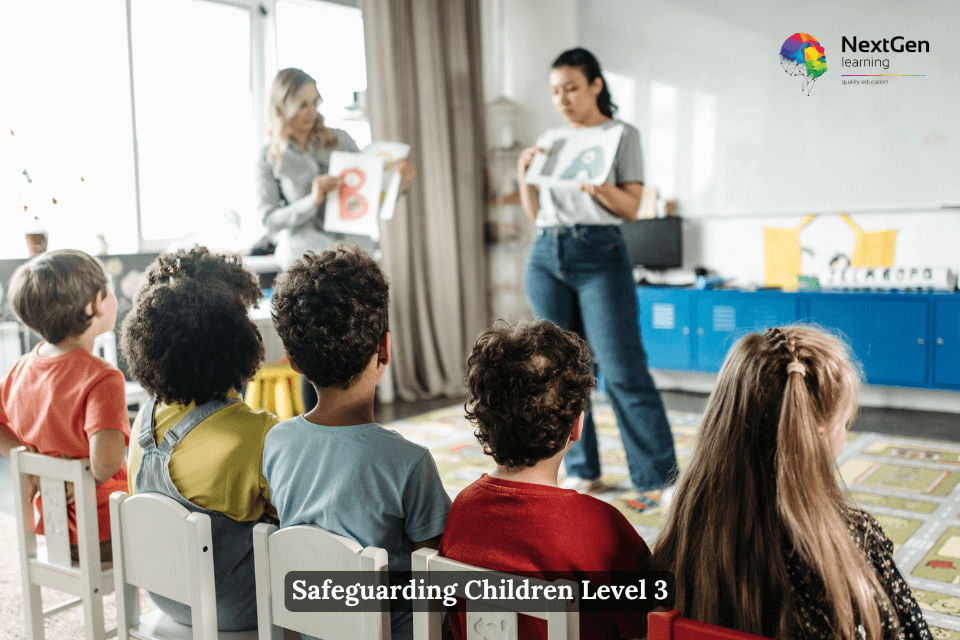


Safeguarding Children Level 3 is advanced safeguarding training designed for professionals who have responsibility for assessing risk, responding to safeguarding concerns, and taking action to protect children and young people from harm.
Safeguarding Children Level 3 Course – Advanced Child Protection Training
The Safeguarding Children Level 3 Course is designed for professionals with direct responsibility for protecting children and young people. It provides in-depth knowledge of safeguarding principles, UK legislation, and best practices to help you identify risk, respond to concerns, and take appropriate action with confidence.
This advanced course is suitable for individuals working in education, childcare, early years, health and social care, youth services, and voluntary roles where safeguarding responsibilities are an integral part of their everyday practice. It is ideal for learners who require a stronger understanding of safeguarding beyond basic awareness.
The course explores child development, infant mental health, and emotional and social well-being, helping you recognise vulnerability at different stages of childhood. You will examine key safeguarding risks, including child abuse, sexual abuse, domestic violence, trafficking, and neglect, and learn how to assess risk effectively.
Modern safeguarding challenges are also covered, including online safety, internet grooming, cyberbullying, social media risks, mobile device safety, and online addiction, enabling you to protect children in both physical and digital environments.
A strong emphasis is placed on responding to disclosures, reporting concerns, making referrals, and providing early help, ensuring that you understand your professional responsibilities and can act in line with current UK safeguarding laws and guidance.
On completion, learners will feel confident in managing safeguarding concerns, meeting compliance requirements, and contributing to safer environments for children and young people.
Sneak Peek –
What Does the Safeguarding Children Level 3 Course Cover?
By completing this Safeguarding Children Level 3 Course, you will develop the knowledge and confidence required to carry out safeguarding responsibilities at an advanced professional level. The course is designed to support informed decision-making, effective safeguarding action, and lawful practice across a range of professional settings.
By the end of this course, you will be able to:
Apply key safeguarding principles in professional practice
Recognise your safeguarding responsibilities and act in the best interests of the child
Interpret and apply UK safeguarding laws, policies, and statutory guidance
Identify signs and indicators of abuse, neglect, exploitation, and harm
Explain how child development, attachment, and emotional wellbeing influence safeguarding risk
Assess risk and respond appropriately to safeguarding concerns
Protect children affected by domestic abuse, trafficking, or exploitation
Identify and address online risks, including cyberbullying, grooming, and internet misuse
Respond appropriately to disclosures and follow safeguarding reporting procedures
Maintain accurate safeguarding records and manage post-referral responsibilities
Assess need and contribute to early help and preventative safeguarding interventions
This learning outcome-focused approach ensures you are prepared to meet Level 3 safeguarding expectations and support safe, effective, and compliant safeguarding practice.
Overview of Core Course Curriculum
This Safeguarding Children Level 3 Course provides advanced safeguarding training for professionals who are responsible for protecting children and young people from harm. The course focuses on how safeguarding is applied in practice, supporting learners to recognise concerns, assess risk, and take appropriate action in line with safeguarding policies and procedures.
The training covers a wide range of safeguarding topics, including child development, abuse and exploitation, domestic violence, online safety, and professional accountability. It also explains how safeguarding responsibilities fit within the wider UK safeguarding framework, ensuring learners understand their role within multi-agency working and information-sharing processes.
Designed for flexible online learning, this Level 3 safeguarding course allows you to study at your own pace while gaining the knowledge needed to make confident, lawful, and child-centred safeguarding decisions. The course supports both individual learners and organisations seeking to meet safeguarding training requirements.
Safeguarding children is based on clear principles that guide professional behaviour and decision-making. In this section, you will explore the fundamental safeguarding principles that underpin Level 3 safeguarding practice and understand how these principles translate into real professional responsibilities.
You will learn why the welfare of the child is paramount and how safeguarding actions must always prioritise a child’s safety, wellbeing, and rights. The course explains the importance of maintaining a child-centred approach, ensuring that a child’s voice, experiences, and circumstances are considered when identifying concerns and planning safeguarding actions.
This section also clarifies the responsibilities held by Level 3 professionals, including recognising safeguarding concerns, responding appropriately, and taking timely action in line with organisational policies and statutory guidance. You will understand when concerns must be escalated and the importance of challenging unsafe practice where a child may be at risk.
By completing this section, you will gain a clear understanding of how safeguarding principles and responsibilities work together to support ethical, lawful, and accountable safeguarding practice across a range of professional settings.
Effective safeguarding practice must be underpinned by a clear understanding of UK safeguarding laws, policies, and statutory guidance. This section explains the legal and regulatory framework that informs safeguarding responsibilities at Level 3 and how it applies across professional settings.
You will gain an overview of key safeguarding legislation and statutory guidance that govern child protection, including the legal duties placed on professionals and organisations to safeguard and promote the welfare of children. The course explains how national guidance shapes local safeguarding procedures and informs professional decision-making.
This section also highlights the importance of following organisational safeguarding policies, understanding information-sharing requirements, and working within established reporting pathways. You will learn why compliance with legal frameworks is essential for protecting children, supporting professional accountability, and ensuring safeguarding actions are defensible if concerns are reviewed or escalated.
By completing this section, you will be able to align safeguarding actions with current UK legal requirements, ensuring your practice is lawful, consistent, and focused on the best interests of the child.
Understanding child development is essential for identifying safeguarding concerns and assessing risk effectively. This section explores how a child’s emotional, social, and intellectual development can influence vulnerability and help professionals recognise when a child may be at risk of harm.
You will learn how early attachment and infant mental health can affect a child’s sense of safety, behaviour, and emotional wellbeing. The course explains how disrupted attachment or unmet developmental needs may increase safeguarding concerns and require early intervention.
This section also covers social, emotional, personality, and intellectual development, highlighting how changes in behaviour, communication, or development may signal underlying safeguarding issues. You will understand the importance of considering a child’s developmental stage when assessing concerns and responding appropriately.
By completing this section, you will be better equipped to recognise developmental indicators of risk and apply safeguarding principles in a way that supports the child’s wellbeing and long-term outcomes.
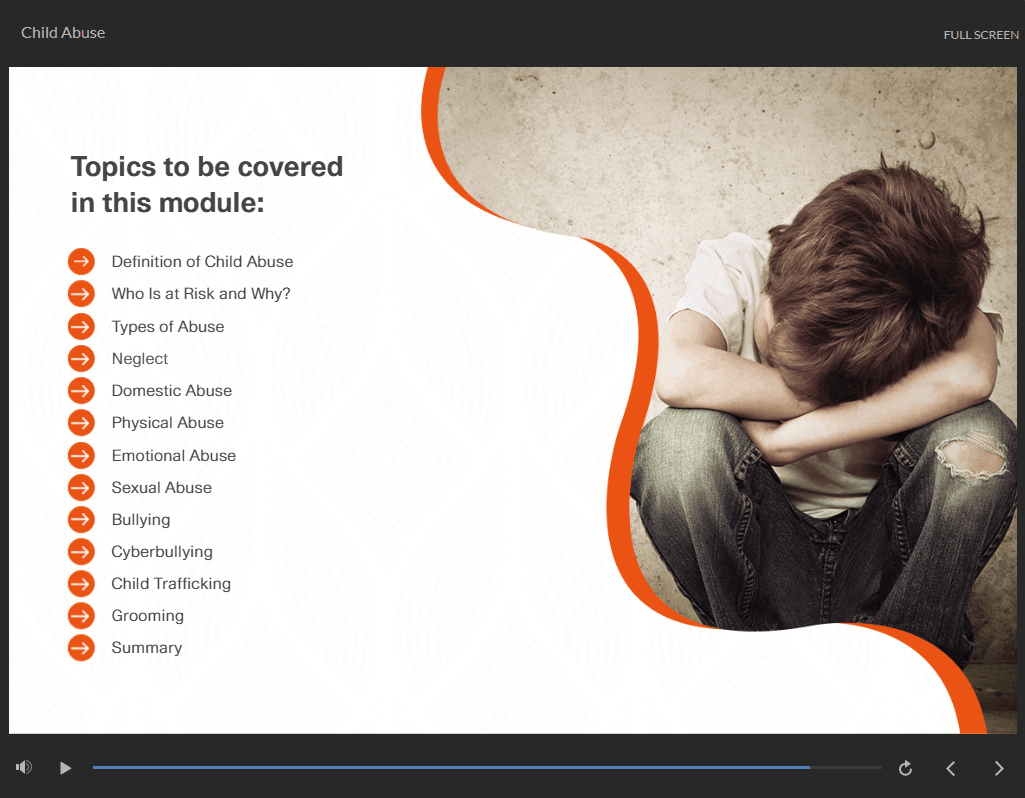
This section focuses on identifying and responding to different forms of abuse and harm that may place children at risk. Understanding how abuse presents in practice is essential for effective Level 3 safeguarding training, particularly for professionals responsible for assessment and intervention.
You will learn about the main categories of child abuse, including physical abuse, emotional abuse, neglect, and sexual abuse. The course explains common indicators and warning signs, as well as how abuse may affect a child’s behaviour, development, and emotional wellbeing.
This section also explores the impact of domestic violence and abuse on children, even when they are not the direct target. You will understand how exposure to domestic abuse can increase safeguarding risk and why timely intervention is essential to protect children from ongoing harm.
By completing this section, you will be able to recognise safeguarding concerns, understand the potential impact of abuse on children, and take appropriate action in line with safeguarding policies and child protection procedures.
Effective safeguarding relies on the ability to assess risk accurately and take action at the earliest opportunity. This section explains how risk assessment supports informed safeguarding decisions and helps prevent concerns from escalating into more serious harm.
You will learn how to identify risk factors, recognise patterns of concern, and assess the level of need using available information. The course outlines the importance of professional judgement, evidence-based decision-making, and proportionate responses when safeguarding concerns are identified.
This section also focuses on early safeguarding intervention, highlighting how timely action and early help can reduce risk and improve outcomes for children and families. You will understand when concerns can be managed through early support and when they must be escalated through formal safeguarding procedures.
By completing this section, you will be able to contribute effectively to safeguarding assessments and support early intervention that places the child’s safety and wellbeing at the centre of all actions.
Children who are trafficked or exploited are among the most vulnerable and face significant safeguarding risks. This section explains how trafficking and exploitation can affect children and outlines the safeguarding responsibilities of professionals working at Level 3.
You will learn how children may be trafficked for purposes such as criminal exploitation, sexual exploitation, labour, or domestic servitude. The course highlights common indicators of trafficking and exploitation, including changes in behaviour, restricted freedom, unexplained absences, or signs of coercion and control.
This section also explains the importance of early identification, accurate record keeping, and timely referral when trafficking concerns are suspected. You will understand how safeguarding procedures support multi-agency responses and why information sharing is critical to protecting children from further harm.
By completing this section, you will be better prepared to recognise signs of trafficking and exploitation and take appropriate safeguarding action in line with child protection procedures.
Children and young people face increasing safeguarding risks in online and digital environments. This section focuses on online safety and digital safeguarding, helping professionals understand how to protect children from harm when using the internet, social media, and digital devices.
You will learn about common online risks, including cyberbullying, online grooming, exposure to inappropriate content, and unsafe online interactions. The course explains how these risks can affect a child’s emotional wellbeing, behaviour, and safety, both online and offline.
This section also covers the safe use of social media and mobile devices, highlighting the importance of privacy, digital boundaries, and age-appropriate content. You will gain an understanding of tools and practical strategies that can support the monitoring of a child’s internet use and help prevent online harm and internet addiction.
By completing this section, you will be able to recognise online safeguarding concerns and support safer digital practices that protect children and promote responsible online behaviour..
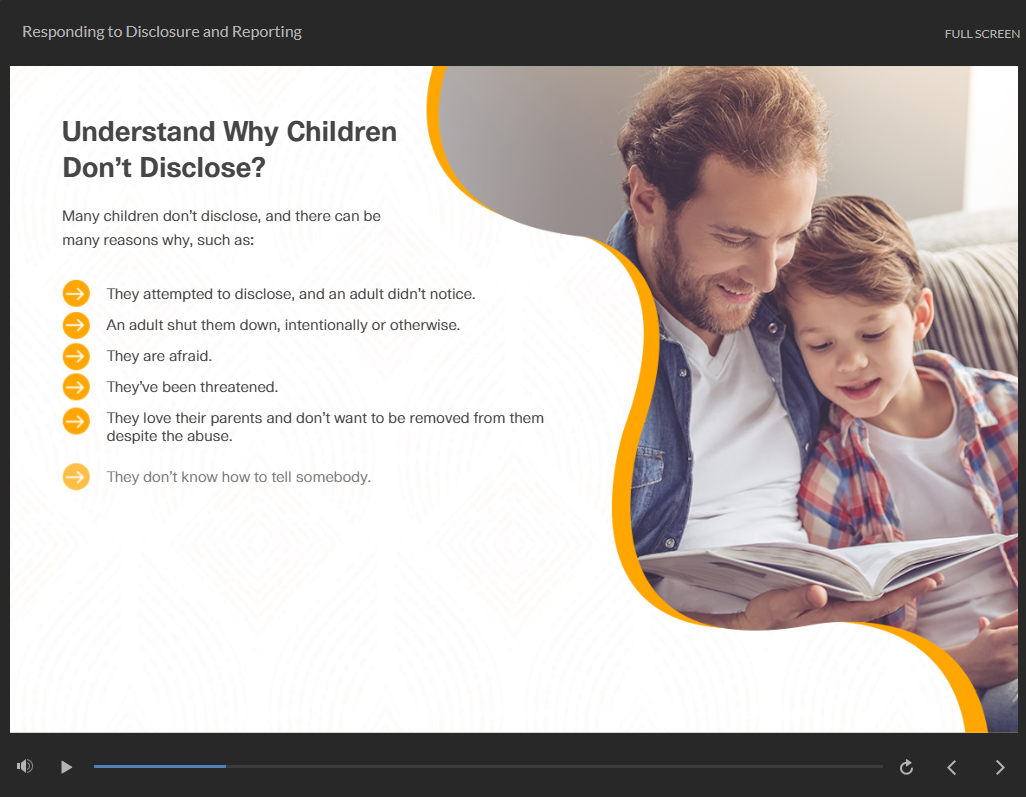
Knowing how to respond appropriately to safeguarding concerns is a key responsibility for professionals undertaking Safeguarding Children Level 3 training. This section explains the correct actions to take when a concern is identified or when a child makes a disclosure.
You will learn how to respond calmly, appropriately, and in a child-centred manner, ensuring that children feel listened to and supported. The course outlines what to do and what to avoid when a child discloses information, including the importance of not promising confidentiality and not asking leading questions.
This section also covers safeguarding reporting procedures, explaining when and how concerns must be recorded and shared with the appropriate safeguarding lead or authority. You will understand the importance of following organisational policies and escalating concerns promptly when a child may be at risk of harm.
By completing this section, you will be able to respond confidently to safeguarding concerns and take appropriate action that supports the child’s safety and wellbeing.
Assessing need and providing early help are essential parts of effective safeguarding practice. This section explains how identifying emerging concerns at an early stage can reduce risk and prevent situations from escalating into more serious safeguarding issues.
You will learn how to recognise when a child or family may benefit from early support, including indicators linked to development, behaviour, family circumstances, or environmental factors. The course outlines how professionals assess levels of need and determine the most appropriate response based on the child’s situation.
This section also highlights the importance of working collaboratively with families and other professionals to provide timely, proportionate support. You will understand how early help interventions can strengthen protective factors, support wellbeing, and promote positive outcomes for children and young people.
By completing this section, you will be able to contribute to early help processes confidently, ensuring safeguarding action is preventative, child-centred, and aligned with best practice.
Who Is This Level 3 Safeguarding Course Intended For?
This Safeguarding course is ideal for:
- Teachers and Education Staff who must uphold Child Protection and Child Welfare standards
- Healthcare Professionals who manage children’s safety and wellbeing daily
- Social Workers dedicated to Child Protection and Child Welfare responsibilities
- Youth Workers who support vulnerable children in community settings
- Childcare Providers who ensure safe environments in early years care
Who Needs Level 3 Safeguarding Training?
This Safeguarding Children Level 3 Course is suitable for professionals working across a range of sectors, including:
- Teachers, lecturers, and education professionals
- Early years practitioners and childcare staff
- Health and social care professionals
- Social workers and family support workers
- Youth workers and community support staff
- Designated Safeguarding Leads (DSLs) and deputies
- Volunteers working directly with children and young people
The course is also appropriate for professionals whose role requires advanced safeguarding knowledge to identify risk, respond to concerns, and follow safeguarding procedures confidently.
Level 3 Safeguarding Training is required for professionals who hold greater responsibility for safeguarding decisions and actions involving children and young people. This level of training is suitable for individuals who assess concerns, respond to disclosures, contribute to safeguarding plans, or take part in multi-agency safeguarding processes.
It is particularly important for those whose role involves decision-making, supervision, or leadership responsibilities in safeguarding children. Many employers and organisations require Level 3 safeguarding training to meet safeguarding policies, regulatory expectations, and inspection standards.
Completing this training helps ensure safeguarding actions are lawful, proportionate, and child-centred, supporting safer outcomes for children and young people.
Course Requirements
There are no formal entry requirements to enrol on this Safeguarding Children Level 3 Course. The training is designed to be accessible to learners from a wide range of professional backgrounds.
To take part in the course, you will need:
- Basic English language proficiency
- Basic numeracy and literacy skills
- A computer, tablet, or smartphone with a stable internet connection
No prior qualifications or previous safeguarding experience are required. This makes the course suitable for both experienced professionals and those developing their safeguarding knowledge to meet Level 3 training requirements.
The flexible online format allows you to study at your own pace, making it easy to fit safeguarding training around work and personal commitments.
How the Course Works
This Safeguarding Children Level 3 Course is delivered entirely online, allowing you to study at your own pace from any location.
- Enrol online and gain instant access to course materials
- Work through structured modules at a pace that suits you
- Complete the course from any device with an internet connection
- Finish with an assessment to demonstrate your understanding
- Receive certification upon successful completion
The flexible format makes this course suitable for both individual learners and organisations training staff to meet safeguarding requirements.
Certification and Course Recognition
On successful completion of the Safeguarding Children Level 3 Course, learners receive certification that demonstrates their commitment to safeguarding practice and professional development.
CPD Certificate of Achievement
After completing the course, you will qualify for a UK and internationally recognised CPD Certificate of Achievement. This certificate confirms successful course completion and can be used to support professional development records, training portfolios, and employer requirements.
- Digital PDF Certificate: £9.99
- Hardcopy Certificate: £19.99
Both certificate options provide formal recognition of your learning and are suitable for use across a wide range of professional sectors.
QLS Endorsed Certificate of Achievement
Learners who complete the course are also eligible to order a QLS Endorsed Hardcopy Certificate titled “Certificate in Safeguarding Children at QLS Level 3”. This certificate offers additional recognition of the course’s quality and can be a valuable addition to your CV.
- Cost: £79
- Free UK delivery included
NextGen Learning is a Compliance Central approved resale partner for Quality Licence Scheme (QLS) Endorsed courses.
About the Quality Licence Scheme (QLS)
The Quality Licence Scheme (QLS) is a UK-based organisation that sets quality standards for non-regulated training and learning. This course has been reviewed and endorsed by QLS for its high-quality, non-regulated provision, confirming that it meets established quality benchmarks.
Please note that QLS endorsement confirms the quality of the training but does not indicate that the course is a regulated qualification.
Career Path Of Safeguarding Course Level 3
Completing Safeguarding Children Level 3 training can support progression into roles that involve greater safeguarding responsibility and leadership.
Designated Safeguarding Lead (DSL)
Average UK salary: £30,000 – £45,000 per year
Designated Safeguarding Leads are responsible for overseeing safeguarding practice within organisations such as schools, colleges, and care settings. Level 3 safeguarding training is essential for managing concerns, supporting staff, and liaising with safeguarding authorities.
Social Worker / Family Support Worker
Average UK salary: £32,000 – £50,000 per year
Social workers and family support professionals work directly with children and families to assess risk, provide support, and protect children from harm. Advanced safeguarding knowledge is critical for decision-making and intervention.
Education Professional (Senior or Pastoral Role)
Average UK salary: £28,000 – £45,000 per year
Teachers, pastoral leads, and education professionals with safeguarding responsibilities play a key role in identifying concerns and supporting vulnerable pupils. Level 3 safeguarding training supports safe practice and regulatory compliance.
Health and Social Care Professional
Average UK salary: £25,000 – £40,000 per year
Professionals working in health and social care settings often encounter safeguarding concerns as part of their role. Level 3 safeguarding training supports confident reporting, risk assessment, and multi-agency working.
Youth Worker or Community Support Worker
Average UK salary: £22,000 – £35,000 per year
Youth and community workers support children and young people in a range of environments. Safeguarding training helps identify risk early and ensures appropriate safeguarding action is taken.
Why Choose Us?
- Firstly, level 3 safeguarding course is accredited by the CPD Quality Standards.
- Additionally, you get lifetime access to the whole collection of learning materials.
- Furthermore, there is an online test with immediate results.
- Moreover, enrolling in the level 3 safeguarding course has no additional cost.
- Hence, you can study and complete the course at your own pace.
- Finally, you can study for the course using any internet-connected device, such as a computer, tablet, or mobile device.
Why Level 3 Safeguarding Training Matters
Level 3 safeguarding training is designed for professionals who have a significant role in protecting children and young people. It goes beyond basic safeguarding awareness and focuses on developing the knowledge, skills, and confidence needed to manage complex safeguarding situations.
This course helps you understand how to recognise and respond to safeguarding concerns effectively. You will learn how to:
- Identify signs and indicators of abuse and neglect
- Assess risk and determine the appropriate level of response
- Respond confidently and appropriately to safeguarding disclosures
- Follow correct safeguarding procedures in line with UK law and statutory guidance
- Make safeguarding decisions that are lawful, proportionate, and child-centred
Understanding child development is a key part of Level 3 safeguarding. The course explores how children grow and develop at different stages of childhood, helping you recognise how vulnerability can present in different ways. You will learn about:
- Emotional, social, and intellectual development in children
- How safeguarding risks can change as children grow
- Identifying concerns early to prevent harm and escalation
By completing Level 3 safeguarding training, you will strengthen your ability to protect children and young people effectively while meeting your professional, organisational, and legal safeguarding responsibilities. This supports safer environments, better decision-making, and improved outcomes for children.
Enrol Now
Order Your Certificate
To order a CPD Certificate, we kindly invite you to visit the following link:
FAQs About Safeguarding Course Level 3
Level 3 safeguarding training is required for professionals who hold greater responsibility for safeguarding decisions, including teachers, childcare staff, health and social care professionals, safeguarding leads, and those involved in assessment or intervention.
Safeguarding Level 3 is not legally mandatory for all roles, but many employers and organisations require it to meet safeguarding policies, regulatory standards, and inspection requirements.
Level 2 safeguarding focuses on awareness and recognising concerns, while Level 3 safeguarding covers advanced responsibilities such as risk assessment, responding to disclosures, decision-making, and multi-agency safeguarding practice.
Yes. On successful completion, learners qualify for a UK and internationally recognised CPD Certificate of Achievement, confirming their professional development.
QLS endorsement confirms that the course has been reviewed for quality as a non-regulated training programme. It demonstrates that the training meets recognised quality standards but does not indicate a regulated qualification.
Safeguarding certificates do not usually have an expiry date. However, best practice guidance recommends renewing safeguarding training every 2 to 3 years to stay up to date with legislation and safeguarding practice.
Yes. This course is delivered fully online and can be completed at your own pace from any location using a computer, tablet, or smartphone with internet access.
QLS endorsement confirms that the course has been reviewed for quality as a non-regulated training programme. It demonstrates that the training meets recognised quality standards but does not indicate a regulated qualification.
Yes. The course includes online safeguarding topics such as internet safety, cyberbullying, online grooming, social media risks, mobile device safety, and internet addiction in children.
Yes. Level 3 safeguarding training supports career progression into roles with greater safeguarding responsibility, such as designated safeguarding leads, senior education roles, and health or social care positions.
Safeguarding Course Questions People Ask
Safeguarding courses are training programmes that teach professionals how to protect children or vulnerable individuals from harm. They cover recognising abuse, responding to concerns, reporting procedures, and understanding safeguarding responsibilities in line with legal and organisational requirements.
In a safeguarding course, learners study how to identify signs of abuse, understand safeguarding laws, respond to disclosures, assess risk, and follow correct reporting procedures. The training focuses on protecting individuals and promoting safe, lawful safeguarding practice.
Some basic safeguarding courses may be offered free by employers or organisations. However, advanced training such as Safeguarding Level 3 is usually paid and provides formal certification, structured learning, and recognised professional development.
You can obtain a safeguarding certificate by completing a recognised safeguarding course and successfully finishing the required assessment. Once completed, a certificate is issued as proof of training and can be used for professional or employer requirements.
There are no single mandatory qualifications to work in safeguarding. Most roles require relevant professional experience and appropriate safeguarding training, such as Level 2 or Level 3 safeguarding, depending on responsibility and job role.
Safeguarding can be a rewarding career in the UK, offering roles across education, health, social care, and community services. Many safeguarding roles provide stable employment, progression opportunities, and the chance to make a positive impact.
In the UK, safeguarding officer salaries typically range from £25,000 to £45,000 per year, depending on experience, sector, location, and level of responsibility. Senior or lead safeguarding roles may earn higher salaries.
The 7 golden rules of safeguarding generally focus on acting in the child’s best interests, sharing information appropriately, maintaining confidentiality, recording concerns accurately, working collaboratively, following procedures, and taking action when concerns arise.
The 3 C’s of safeguarding commonly refer to Clear information, Communication, and Collaboration. These principles support effective safeguarding by ensuring concerns are shared appropriately and acted on through joint professional working.
Course Curriculum
| Safeguarding Children | |||
| Module 01: Understanding Key Safeguarding Principles | |||
| Understanding Your Safeguarding Responsibilities | 00:22:00 | ||
| Module 02: Understanding Your Safeguarding Responsibilities | |||
| Understanding Key Safeguarding Principles | 00:19:00 | ||
| Module 03: Laws and Guidance | |||
| Laws and Guidance | 00:42:00 | ||
| Module 04: Infant Mental Health and Early Attachment | |||
| Infant Mental Health and Early Attachment | 00:29:00 | ||
| Module 05: Social and Emotional Development | |||
| Social and Emotional Development | 00:41:00 | ||
| Module 06: Personality and Intellectual Development of Children | |||
| Personality and Intellectual Development of Children | 00:32:00 | ||
| Module 07: Child Abuse | |||
| Child Abuse | 00:48:00 | ||
| Module 08: Sexual Abuse | |||
| Sexual Abuse | 00:39:00 | ||
| Module 09: The Impact of Domestic Violence and Abuse on Children | |||
| The Impact of Domestic Violence and Abuse on Children | 00:48:00 | ||
| Module 10: Risks and Risk Assessment | |||
| Risks and Risk Assessment | 00:16:00 | ||
| Module 11: Safeguarding Trafficked Children | |||
| Safeguarding Trafficked Children | 00:30:00 | ||
| Module 12: The Concept of Internet Safety for the Children | |||
| The Concept of Internet Safety for the Children | 00:48:00 | ||
| Module 13: The Concept of Privacy and Appropriate Online Content | |||
| The Concept of Privacy and Appropriate Online Content | 00:35:00 | ||
| Module 14: Cyberbullying | |||
| Cyberbullying | 00:41:00 | ||
| Module 15: Internet Grooming | |||
| Internet Grooming | 00:43:00 | ||
| Module 16: Safe Use of Social Media | |||
| Safe Use of Social Media | 00:18:00 | ||
| Module 17: Mobile Device Safety | |||
| Mobile Device Safety | 00:21:00 | ||
| Module 18: Tools and Tips for Monitoring Child's Internet Use | |||
| Tools and Tips for Monitoring Child’s Internet Use | 00:20:00 | ||
| Module 19: Identifying, Preventing and Overcoming Internet Addiction | |||
| Identifying, Preventing and Overcoming Internet Addiction | 00:21:00 | ||
| Module 20: Responding to Disclosure and Reporting | |||
| Responding to Disclosure and Reporting | 00:32:00 | ||
| Module 21: Things to Do after Referral | |||
| Things to Do after Referral | 00:22:00 | ||
| Module 22: Assessing Need and Providing Early Help | |||
| Assessing Need and Providing Early Help | 00:23:00 | ||
| Order Your Certificate | |||
| Order Your Certificate | 00:00:00 | ||
| Order Your QLS Certificate | |||
| Order Your QLS Certificate | 00:00:00 | ||

Related Courses
Level 3 Heating, Ventilation and Air Conditioning (HVAC) Technician
Sterile Services Technician Training Level 4
Level 3 Diploma in Nursing Assistant Complete Training


All Courses for £49