




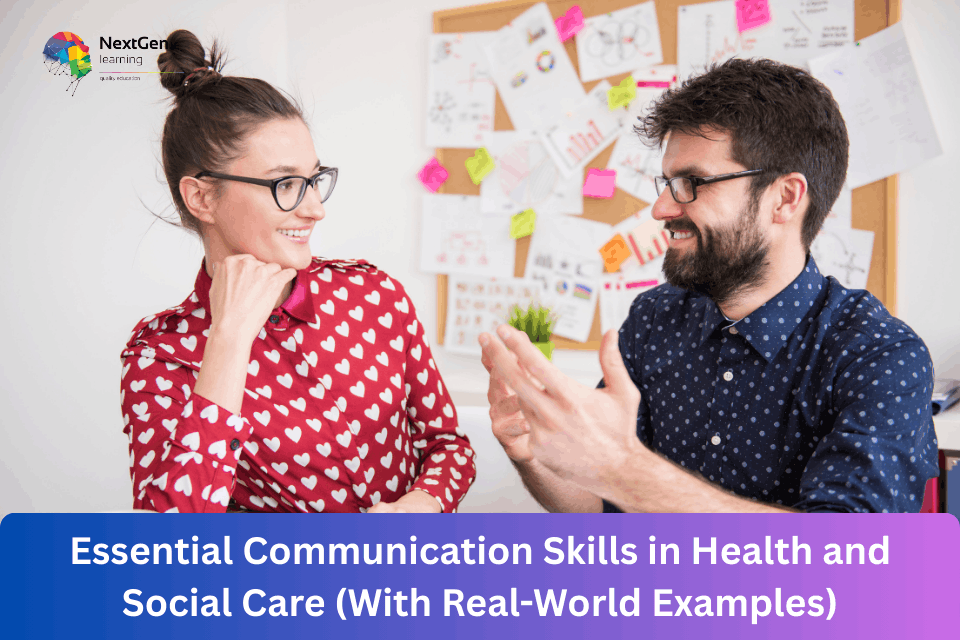
Essential Communication Skills in Health and Social Care (With Real-World Examples)
Effective communication skills in health and social care sit at the centre of safe, respectful, and person-centred practice. However, communication is not simply about exchanging information. Instead, it shapes trust, reduces risk, and directly influences outcomes for individuals who rely on care and support. Therefore, when communication breaks down, the quality of care often suffers, even when clinical knowledge is strong.
Moreover, health and social care professionals communicate in complex, high-pressure environments every day. They speak with patients, families, colleagues, and multidisciplinary teams, often while managing time constraints, emotional situations, and safeguarding responsibilities. As a result, communication must be clear, compassionate, and consistent across every interaction. When professionals develop these skills effectively, they improve understanding, strengthen relationships, and promote dignity in care.
Importantly, strong communication is not an optional soft skill. It is a core professional competence expected across health and social care roles. Regulators, employers, and service users all rely on professionals who can listen actively, speak clearly, and interpret non-verbal cues accurately. Consequently, developing communication skills supports patient safety, teamwork, and long-term professional confidence.
In this guide, we explore the essential communication skills in health and social care and explain how they apply in real-world settings. Rather than offering surface-level tips, this article focuses on practical understanding, professional responsibility, and everyday application.
In this article, you will learn:
- Why communication skills are critical in health and social care settings
- The three core communication skills every care professional needs
- How these skills improve patient experience, safety, and teamwork
- How communication skills can be developed and strengthened over time
When communication works well, care becomes safer, more effective, and more human. For this reason, understanding and improving these skills is essential for anyone working in health and social care.
Table of Contents
Why Communication Skills Matter in Health and Social Care Settings

Communication skills play a vital role in health and social care because they directly affect safety, trust, and quality of care. While clinical knowledge and technical ability are essential, professionals rely on communication to apply those skills correctly in real situations. Therefore, even small communication failures can lead to misunderstandings, distress, or serious errors.
Firstly, clear communication helps ensure accurate information sharing. Care professionals gather details about symptoms, needs, preferences, and risks through conversation and observation. If communication lacks clarity or attention, important information may be missed. As a result, care plans can become ineffective or unsafe.
Moreover, communication strongly influences how safe and respected individuals feel. Many people receiving care already experience anxiety, pain, or vulnerability. When professionals listen carefully and explain information clearly, individuals feel valued and reassured. In contrast, rushed or unclear communication can increase fear and reduce cooperation, even when intentions are good.
Importantly, communication also supports professional accountability and teamwork. Health and social care rarely involve one person working alone. Instead, care depends on accurate handovers, shared understanding, and mutual respect among teams. When communication is poor, mistakes are more likely to occur. However, when communication is consistent and structured, teams work more effectively and safely.
Strong communication skills in health and social care help professionals to:
- Build trust and rapport with patients, service users, and families
- Reduce misunderstandings and prevent avoidable errors
- Support dignity, choice, and person-centred care
- Communicate concerns clearly during safeguarding situations
- Improve collaboration across multidisciplinary teams
Additionally, communication skills reflect professional standards and expectations. Employers, regulators, and service users expect care professionals to communicate with empathy, clarity, and respect at all times. Consequently, strong communication supports not only better care outcomes but also professional confidence and career development.
For these reasons, communication skills are not optional or secondary. Instead, they form the foundation of safe, ethical, and effective practice in health and social care settings.
Communication is one part of a much wider care system. If you are still building your understanding of the sector, our What Is Health and Social Care? guide explains the meaning of health and social care, key services, professional roles, principles and career routes.
The Three Core Communication Skills Every Care Professional Needs
Effective communication in health and social care does not rely on a single ability. Instead, it depends on a combination of core skills that work together to support understanding, safety, and trust. When these skills develop together, care professionals communicate more confidently and respond more appropriately to the needs of others.
Importantly, these skills apply across all care roles and settings. Whether working in hospitals, care homes, community services, or support environments, professionals rely on the same communication foundations. Therefore, mastering these skills helps ensure consistent, high-quality interactions, even in challenging situations.
The three essential communication skills in health and social care are:
- Active listening, which ensures people feel heard and understood
- Clear and effective verbal communication, which supports accurate information sharing
- Effective non-verbal communication, which reinforces meaning and emotional awareness
Each skill supports the others. For example, active listening improves verbal responses, while positive non-verbal cues strengthen trust during conversations. As a result, communication becomes more natural, respectful, and person-centred.
In the following sections, we explore each skill in detail. We also explain how they apply in real health and social care settings and why they matter for professional practice.
Active Listening in Health and Social Care
Active listening is one of the most important communication skills in health and social care because it allows professionals to fully understand needs, concerns, and risks. However, active listening goes far beyond hearing words. Instead, it requires focused attention, empathy, and clear responses that show understanding.
Firstly, active listening helps professionals gather accurate and meaningful information. Patients and service users often share important details about symptoms, emotions, or worries in subtle ways. Therefore, when a professional listens carefully, they reduce the risk of missing critical information that could affect care decisions.
Moreover, active listening builds trust and emotional safety. Many individuals feel anxious, vulnerable, or unsure when receiving care. When professionals listen without interrupting and acknowledge feelings, people feel respected and valued. As a result, they are more likely to share concerns openly and engage with their care plan.
Importantly, active listening also supports professional judgement and teamwork. In care environments, professionals must listen carefully to colleagues during handovers, meetings, and safeguarding discussions. When listening is poor, important details can be overlooked. However, when listening is attentive and structured, teams communicate more safely and effectively.
Active listening in health and social care involves professionals actively:
- Giving full attention to the speaker without distractions
- Allowing individuals to speak without interruption
- Observing emotional cues alongside spoken words
- Acknowledging feelings with empathy and respect
- Clarifying information to avoid misunderstanding
In addition, active listening requires professionals to respond thoughtfully. Paraphrasing what someone has said and asking open-ended questions helps confirm understanding. Consequently, communication becomes clearer and more supportive, especially in sensitive situations.
When care professionals practise active listening consistently, they improve relationships, reduce conflict, and enhance care quality. For this reason, active listening forms the foundation upon which all other communication skills are built.
Clear and Effective Verbal Communication
Clear and effective verbal communication is essential in health and social care because professionals regularly share information that affects safety, understanding, and decision-making. Therefore, how something is said often matters just as much as what is said. When communication is clear, individuals feel informed and confident. However, when it is unclear, confusion and risk increase.
Firstly, effective verbal communication requires the use of simple, plain language. Many patients and service users do not understand medical or technical terms. As a result, professionals must adapt their language to suit the listener’s level of understanding. Explaining information clearly helps individuals make informed choices about their care.
Moreover, tone and pace play a critical role. Speaking calmly and at a steady pace allows people time to process information, especially when they feel anxious or overwhelmed. In contrast, rushing or using a sharp tone can increase stress and reduce comprehension. Therefore, professionals must remain mindful of how their voice influences the conversation.
Importantly, verbal communication must remain two-way. Checking understanding ensures that messages have been received correctly and gives individuals an opportunity to ask questions. Consequently, this reduces mistakes and supports shared decision-making.
Clear verbal communication in health and social care involves professionals actively:
- Using plain, respectful language instead of jargon
- Speaking clearly and at an appropriate pace
- Adapting communication to age, culture, and cognitive ability
- Encouraging questions and open discussion
- Summarising key points to confirm understanding
Additionally, verbal communication is just as important among colleagues. Accurate handovers, clear instructions, and precise updates reduce errors and improve teamwork. For example, specific information about symptoms, actions taken, and next steps supports continuity of care.
When professionals communicate verbally with clarity and intention, they improve safety, strengthen trust, and support positive care outcomes. As a result, verbal communication remains a core professional responsibility in all health and social care settings.
Effective Non-Verbal Communication in Care Settings
Non-verbal communication plays a powerful role in health and social care because it often reinforces or contradicts spoken words. Although professionals may focus on what they say, body language, facial expressions, posture, eye contact, and tone frequently communicate more than speech alone. Therefore, understanding and managing non-verbal cues is essential for effective care.
Firstly, non-verbal communication helps professionals build trust and emotional reassurance. Simple actions such as maintaining appropriate eye contact, adopting an open posture, or sitting at eye level can make individuals feel respected and safe. In contrast, crossed arms, lack of eye contact, or rushed movements may signal disinterest, even when words are polite.
Moreover, non-verbal cues allow professionals to recognise unspoken concerns. Patients and service users do not always verbalise pain, fear, or confusion. As a result, observing changes in posture, facial expression, or movement helps professionals identify when further support or clarification is needed. Consequently, care becomes more responsive and person-centred.
Importantly, non-verbal communication also affects professional relationships and teamwork. Colleagues interpret gestures, tone, and attentiveness during meetings, handovers, and training. When professionals display openness and engagement, collaboration improves. However, negative non-verbal signals can create tension or misunderstandings within teams.
Effective non-verbal communication in health and social care involves professionals actively:
- Maintaining appropriate eye contact while respecting cultural preferences
- Using open and relaxed body posture to show attentiveness
- Matching facial expressions to the emotional context
- Managing tone of voice to convey calmness and empathy
- Respecting personal space and boundaries
In addition, professionals must remain aware of their own habits. Reflecting on non-verbal behaviour and seeking feedback can highlight areas for improvement. Over time, even small adjustments can significantly improve how communication is received.
When verbal and non-verbal communication align, interactions feel genuine and supportive. For this reason, effective non-verbal communication strengthens trust, reduces anxiety, and enhances the overall quality of care.
Communication Skills in Real-World Health and Social Care Scenarios

Communication skills become most important when professionals face real-world pressure, emotional situations, and complex decision-making. While theory explains what good communication looks like, practice reveals how these skills protect safety, dignity, and trust. Therefore, applying communication skills correctly in everyday scenarios is essential.
Firstly, communication plays a critical role during safeguarding concerns. When individuals disclose abuse, neglect, or risk, professionals must listen carefully and respond calmly. Active listening helps individuals feel safe enough to share information. At the same time, clear verbal communication ensures that concerns are recorded accurately and escalated appropriately. As a result, effective communication directly supports protection and legal responsibility.
Moreover, professionals often manage distress, anxiety, or complaints. In these situations, how someone communicates can either calm or escalate emotions. Using a steady tone, acknowledging feelings, and explaining next steps clearly helps de-escalate tension. Consequently, individuals feel respected even when outcomes are difficult or decisions cannot change.
Communication also becomes vital during handover and team coordination. Care professionals regularly share information across shifts and disciplines. If details are vague or incomplete, risks increase. However, structured verbal updates and attentive listening reduce errors and support continuity of care.
In real health and social care settings, professionals use communication skills to:
- Respond sensitively to safeguarding disclosures
- Support individuals experiencing distress or confusion
- Handle complaints with professionalism and empathy
- Share accurate information during handovers and referrals
- Communicate effectively under time pressure
Additionally, communication skills support ethical and person-centred practice. Explaining choices, checking understanding, and respecting preferences empower individuals to participate in their care. Therefore, communication strengthens autonomy while maintaining professional boundaries.
When communication skills are applied effectively in real scenarios, care becomes safer, more compassionate, and more reliable. For this reason, professionals must practise and refine these skills continuously within their daily work.
Communication can become more difficult when people experience language differences, sensory needs, cultural differences, emotional distress or problems accessing services. Our Barriers in Health and Social Care guide looks at communication barriers alongside physical, cultural, financial, digital and other challenges that can affect access to care.
How Strong Communication Improves Teamwork and Patient Outcomes
Strong communication skills improve health and social care outcomes because care rarely depends on one professional alone. Instead, safe and effective care relies on shared understanding, coordinated action, and mutual trust. Therefore, when communication is clear and consistent, both teamwork and patient experiences improve significantly.
Firstly, effective communication supports accurate teamwork and collaboration. Health and social care professionals regularly exchange information during handovers, meetings, and referrals. When messages are clear and structured, team members understand their roles and responsibilities. As a result, care becomes more coordinated and efficient. In contrast, unclear communication can lead to duplicated tasks, missed actions, or preventable errors.
Moreover, communication directly affects patient safety and care quality. Patients benefit when professionals listen carefully, explain information clearly, and respond appropriately to concerns. Consequently, individuals feel more confident in their care and are more likely to follow advice or treatment plans. This improves outcomes while reducing anxiety and confusion.
Importantly, communication also strengthens professional trust within teams. When colleagues listen actively, speak respectfully, and clarify information, working relationships improve. Therefore, teams become more supportive and resilient, particularly in high-pressure environments. Strong communication also encourages staff to raise concerns early, which helps prevent small issues from escalating.
Strong communication in health and social care helps professionals to:
- Share accurate and timely information across teams
- Reduce misunderstandings and clinical errors
- Improve patient confidence and satisfaction
- Support collaborative decision-making
- Create a positive and respectful working environment
In addition, effective communication promotes continuity of care. When professionals document and communicate clearly, individuals experience smoother transitions between services. As a result, care remains consistent and person-centred, even across different settings or providers.
When communication skills are embedded into daily practice, teamwork becomes stronger and outcomes improve. For this reason, communication is not simply a personal skill but a shared professional responsibility across health and social care services.
Developing and Improving Communication Skills in Health and Social Care

Communication skills are not fixed abilities. Instead, professionals develop them through practice, reflection, and continuous learning. Because health and social care environments constantly change, professionals must actively strengthen their communication skills to remain effective and responsive.
Firstly, self-reflection plays an important role in improvement. After interactions with patients, service users, or colleagues, professionals benefit from considering what went well and what could improve. By recognising communication challenges early, individuals can adjust their approach before problems escalate. Therefore, reflective practice supports both personal growth and safer care.
Moreover, feedback helps professionals identify blind spots. Colleagues, supervisors, and mentors often notice communication habits that individuals may overlook. As a result, seeking constructive feedback encourages awareness and accountability. Over time, this leads to clearer, more confident interactions.
Importantly, ongoing learning strengthens communication competence. Training, supervision, and professional development activities allow care workers to practise skills in structured environments. Consequently, professionals build confidence when handling difficult conversations, safeguarding concerns, or emotionally charged situations.
Professionals can improve communication skills in health and social care by actively:
- Reflecting on everyday interactions and identifying improvement areas
- Seeking feedback from colleagues and supervisors
- Practising communication techniques during training or supervision
- Observing experienced professionals and learning from their approach
- Adapting communication styles to different individuals and situations
In addition, professionals should recognise that communication skills develop over time. Mistakes provide learning opportunities when addressed openly and responsibly. Therefore, maintaining a growth mindset supports long-term professional competence.
When communication skills are continuously developed, professionals improve care quality, teamwork, and confidence. For this reason, ongoing improvement in communication remains essential throughout a career in health and social care.
Using Communication Skills in a Care Career
Communication is only one part of working effectively in health and social care. If you are considering a career in the sector, our How to Become a Health and Social Care Worker in the UK guide explains entry routes, training, workplace requirements and career progression.
Final Thoughts: Communication as a Core Professional Skill
Communication sits at the heart of effective health and social care practice. While technical knowledge and procedures matter, professionals rely on communication to apply that knowledge safely and respectfully. Therefore, strong communication skills directly influence trust, dignity, and care quality.
Moreover, communication is not limited to conversations with patients alone. It shapes teamwork, safeguarding decisions, and professional accountability across care settings. When professionals listen actively, speak clearly, and remain aware of non-verbal cues, care becomes more person-centred and reliable.
Importantly, communication skills develop through continuous practice and reflection. As professionals grow in experience, refining these skills strengthens confidence and improves outcomes for individuals and teams alike. Consequently, communication remains a lifelong professional responsibility rather than a one-time learning goal.
By prioritising communication as a core professional skill, health and social care professionals create safer environments, stronger relationships, and better care experiences for everyone involved.
Where to Go Next
If you want to understand communication as part of a wider health and social care career, start with our How to Become a Health and Social Care Worker in the UK guide.
If you are already considering training but are unsure which route suits you, our Best Health and Social Care Courses UK guide compares Health and Social Care Level 3, Nursing Assistant training and Care Certificate learning.
If broader health and social care knowledge is already your priority, you can also review the curriculum and study format of our Level 3 Health and Social Care course, which includes communication as part of its health and social care learning.
Frequently Asked Questions
Communication skills are important because they ensure accurate information sharing, reduce risk, and build trust. As a result, patients and service users feel safer, more respected, and more involved in their care.
Communication skills in health and social care include active listening, clear verbal communication, and effective non-verbal communication. Together, these skills help professionals understand needs, explain information clearly, and respond appropriately.
The three core skills are:
- Active listening
- Clear and effective verbal communication
- Effective non-verbal communication
These skills work together to support person-centred and safe care.
Strong communication reduces misunderstandings, improves cooperation, and increases confidence in care decisions. Consequently, patients are more likely to follow advice and experience better overall outcomes.
Yes, communication skills can be improved through reflection, feedback, training, and practice. Therefore, ongoing development is essential throughout a health and social care career.


0 responses on "Essential Communication Skills in Health and Social Care (With Real-World Examples)"