





Heatwave Safety Tips: How to Stay Safe in Hot Weather in the UK
Hot weather can feel welcome at first. However, when temperatures stay high for several days, the risk to health and safety rises quickly. A heatwave can affect anyone, especially when the nights stay warm, and the body gets little chance to cool down.
Therefore, it helps to know what to do before the heat becomes difficult to manage. Simple choices can reduce risk. For example, drinking fluids regularly, staying out of strong sun, cooling your home, and spotting early symptoms can help prevent dehydration, heat exhaustion, and heatstroke.
This guide brings together practical heatwave safety tips for people across the UK. In addition, it explains how to protect children, older adults, outdoor workers, carers, and anyone who may be more vulnerable during hot weather. Use it as a clear starting point, then follow official advice when heat-health alerts or local emergency updates apply.
Table of Contents
Quick Heatwave Safety Checklist
When hot weather arrives, people often need fast advice before they need detailed explanations. Therefore, start with these heatwave safety tips and then read the sections below for more context.
- Drink fluids regularly, even before you feel very thirsty.
- Stay in the shade during the hottest part of the day, especially between 11am and 3pm.
- Wear loose, light-coloured clothing and a wide-brimmed hat when you go outside.
- Close curtains or blinds on sunny windows during the day.
- Open windows when the outside air feels cooler than the indoor air, often later in the evening.
- Plan exercise, dog walking, gardening, and errands for early morning or evening.
- Check on older relatives, neighbours, babies, young children, and people with long-term conditions.
- Never leave children, older adults, vulnerable people, or pets inside parked vehicles.
- Know the symptoms of heat exhaustion and heatstroke before someone becomes seriously unwell.
- Call 999 if someone shows signs of heatstroke, such as confusion, a seizure, loss of consciousness, or hot skin that is not sweating
Importantly, this checklist works best when you prepare early. Once a home becomes hot, or once a person becomes dehydrated, it can take longer to recover. As a result, prevention matters more than last-minute reaction.
What Counts as a Heatwave in the UK?
A heatwave is not just one warm afternoon. In the UK, the Met Office defines a heatwave as a period of at least three consecutive days when the daily maximum temperature meets or exceeds the local heatwave threshold. These thresholds differ by county because normal summer temperatures vary across the country.
However, you do not need to wait for an official heatwave to take safety seriously. Some people may become unwell during any spell of hot weather, especially if they live in a warm home, work outdoors, have a long-term condition, or cannot cool down easily.
In addition, the UK Health Security Agency and the Met Office operate heat-health alerts for England. These alerts help health, social care, emergency response, and community organisations prepare when high temperatures could affect wellbeing. For everyday readers, they also act as a useful reminder to check on vulnerable people and adjust daily routines.
Why Heatwaves Can Be Dangerous

Heat affects the body in several ways. Normally, the body cools itself through sweating and blood flow near the skin. However, during hot, humid, or prolonged conditions, that cooling system can struggle. Consequently, body temperature can rise, fluid levels can drop, and the heart may need to work harder.
The main health risks during a heatwave include dehydration, overheating, heat exhaustion, and heatstroke. In some people, hot weather can also worsen heart, breathing, kidney, diabetes, or mental health conditions. Therefore, heatwave safety is not only about comfort. It can become a serious health issue.
Warm nights can increase the risk because sleep becomes harder and the body has less time to recover. Moreover, homes can store heat during the day and release it slowly overnight. This is why top-floor flats, poorly ventilated rooms, and homes without shade can become uncomfortable or unsafe.
How dehydration develops
Dehydration happens when the body loses more fluid than it takes in. During hot weather, sweating increases, and people may lose fluids faster than expected. However, thirst does not always appear early enough, especially in older adults or people who are busy, unwell, or caring for others.
As a result, regular drinking matters. Water is usually a good choice. Lower-fat milk and diluted drinks can also help. However, too much alcohol can increase dehydration risk, and very sugary drinks may not help as much as people expect.
Why heat exhaustion can become heatstroke
Heat exhaustion usually develops when the body overheats and struggles to cool down. It often improves when the person rests somewhere cool, drinks fluids, removes unnecessary clothing, and cools the skin. However, if symptoms continue or worsen, heat exhaustion can lead to heatstroke.
Heatstroke is a medical emergency. Therefore, you should act quickly when someone becomes confused, loses coordination, has a seizure, loses consciousness, has very hot skin, or remains unwell after cooling efforts.
Who Is Most at Risk During a Heatwave?
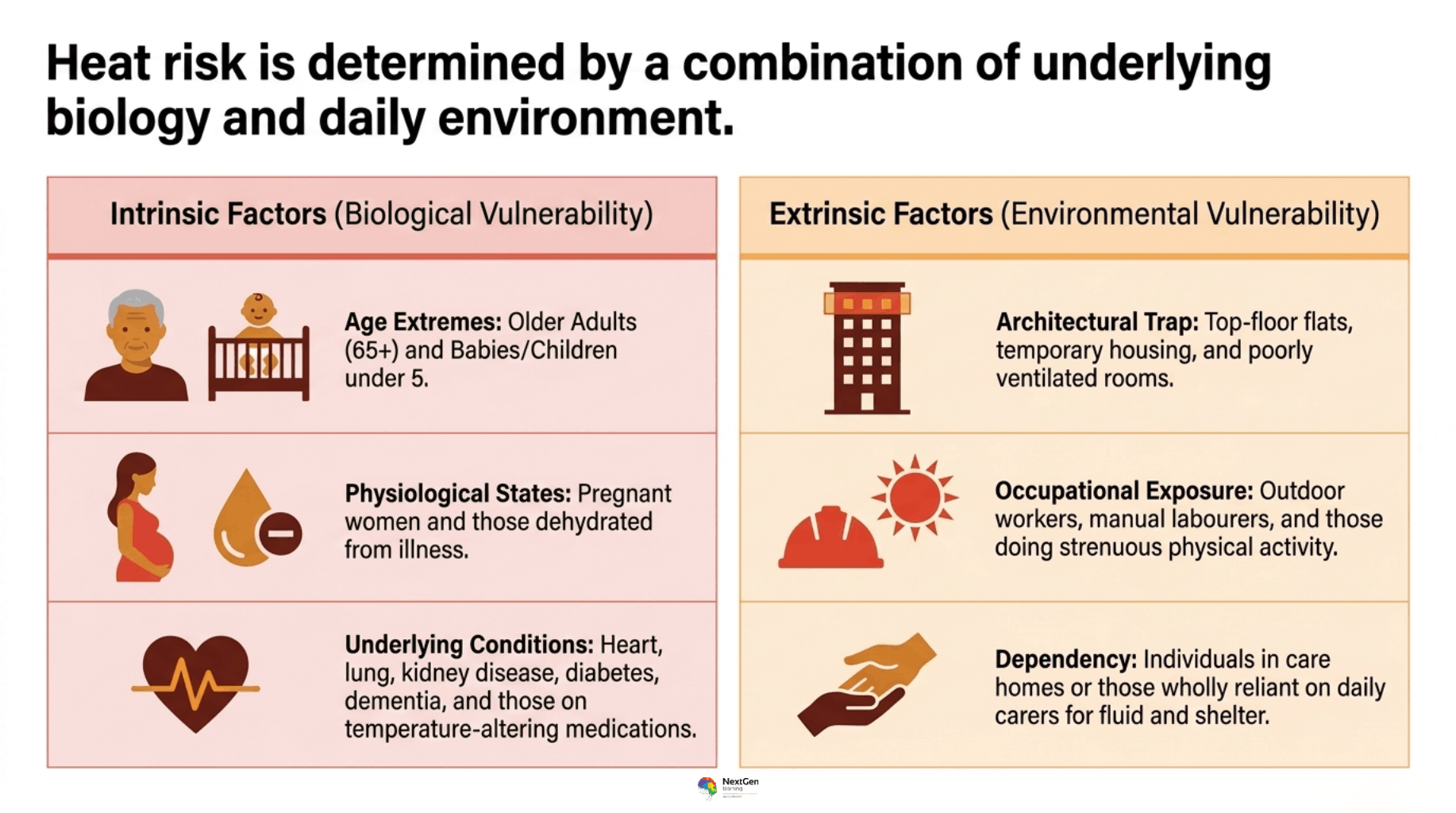
Anyone can become unwell in hot weather. However, some groups face a higher risk because their bodies may not regulate temperature as easily, they may depend on others for support, or their environment may expose them to more heat.
The following groups need extra attention during a heatwave:
- Older adults, especially people aged 65 and over or those living alone.
- Babies and children aged five and under.
- Pregnant women.
- People with heart, lung, kidney, diabetes, dementia, Parkinson’s disease, or mobility conditions.
- People taking medicines that may affect hydration, sweating, or temperature control.
- People with serious mental health conditions or substance dependence.
- People who are already dehydrated because of illness, vomiting, or diarrhoea.
- Outdoor workers, manual workers, runners, cyclists, walkers, and people doing strenuous activity.
- People living in top-floor flats, poorly ventilated homes, hostels, temporary housing, or homelessness.
- People in care homes or people who rely on others for daily support.
Therefore, heatwave planning should include more than personal comfort. It should also include phone calls, neighbour checks, workplace adjustments, and practical support for people who may not ask for help themselves.
How to Keep Yourself Cool During a Heatwave

Keeping cool during a heatwave works best when you reduce heat exposure and support your body’s cooling system. In addition, you should adjust your plans before the hottest part of the day begins.
Avoid the strongest sun
The sun is usually strongest between 11 am and 3 pm. Therefore, try to stay indoors, stay in the shade, or move essential outdoor tasks to cooler parts of the day. If you need to go outside, plan the route carefully and look for shaded paths, indoor stops, or cooler public spaces.
Choose clothing that helps your body cool down
Loose, lightweight clothing can improve airflow around the body. Light colours may also feel cooler in direct sun. In addition, a wide-brimmed hat and sunglasses can protect the face, eyes, ears, and neck.
Sunscreen matters too. However, sunscreen does not stop the body from overheating. It protects the skin from UV damage, while shade, fluids, rest, and lighter activity help reduce heat stress.
Drink before you feel very thirsty
During hot weather, drink regularly throughout the day. Moreover, take extra water when travelling, working outside, exercising, or looking after children. If your urine is dark, or you feel dizzy, tired, or very thirsty, you may need more fluids.
Some people need personalised advice about fluid intake, especially if they have heart, kidney, or other medical conditions. Therefore, they should follow advice from their healthcare professional.
Cool your skin safely
Cooling the skin can help the body lose heat. For example, you can use a cool shower, a damp cloth, a water spray, or cool packs wrapped in cloth. In addition, resting in a cooler room can help the body recover after heat exposure.
However, avoid sudden risky choices such as jumping into cold open water when overheated. Cold water can shock the body and create a drowning risk. Therefore, use safe cooling methods and follow local water-safety advice if you swim outdoors.
How to Keep Your Home Cool in Hot Weather

A hot home can make a heatwave harder to manage, especially at night. Therefore, focus on blocking heat during the day and releasing heat when outdoor air becomes cooler.
Block heat from direct sunlight
Close curtains, blinds, or shutters on windows that face the sun. This matters most during the hottest hours. In addition, keep internal doors open or closed depending on which rooms stay cooler. If one room is much cooler, use it for rest or sleep where possible.
Use windows at the right time
Many people open windows during the day because the room feels stuffy. However, if the outside air is hotter than the inside air, open windows can bring more heat in. Instead, open windows when the air outside feels cooler, often in the evening, overnight, or early morning.
Use fans carefully
Fans can improve comfort when the air temperature remains below dangerous levels. However, fans move air rather than cool it. They may also increase fluid loss if someone sits directly in front of them for long periods. Therefore, combine fans with fluids, shade, reduced activity, and cooler rooms.
Reduce indoor heat sources
Small changes can help. For example, switch off unused lights and appliances, avoid using the oven during peak heat, and prepare cold meals where possible. Moreover, move charging devices away from beds and soft furnishings to avoid unnecessary warmth and safety risks.
Find cooler places when needed
If your home becomes too hot, consider safer cooler places. These may include libraries, community centres, shaded parks, shopping centres, or the home of a trusted friend or relative. However, plan travel carefully and avoid walking far during peak heat.
Heat Exhaustion vs Heatstroke: Symptoms and What to Do
Recognising symptoms early can prevent a serious emergency. Heat exhaustion can often improve when someone cools down within about 30 minutes. However, heatstroke requires immediate medical help.
Heat exhaustion
Heatstroke
If someone loses consciousness while waiting for emergency help, follow the ambulance call handler’s advice. In addition, place them in the recovery position if appropriate and monitor breathing and pulse.
Heatwave Safety Tips for Children, Babies, and Families
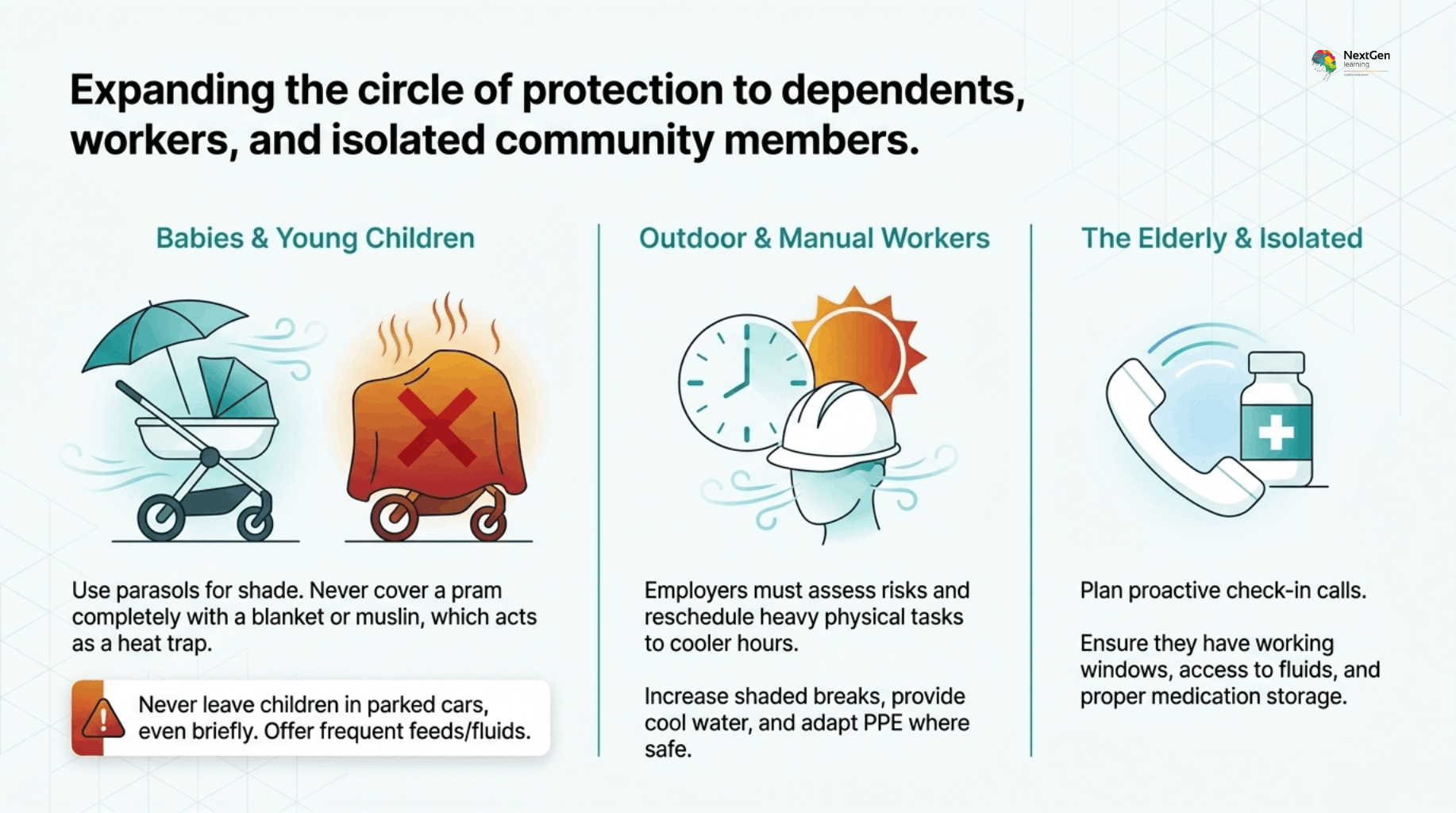
Children can become dehydrated or overheated faster than many adults. Therefore, families need clear routines during hot weather. Babies, toddlers, and young children may not explain how they feel, so adults need to watch behaviour, temperature, feeding, wet nappies, energy levels, and sleepiness.
Keep babies out of direct sun
Babies under six months should stay out of direct sunlight. Moreover, prams and pushchairs need shade and airflow. Do not cover a pram completely with a blanket or muslin because heat can build up inside. Instead, use a suitable parasol or sunshade and check the baby often.
Support hydration through the day
Offer children drinks regularly, especially after play, travel, or time outdoors. In addition, make water easy to reach by using bottles, cups, or reminders. Babies may need more frequent feeds in hot weather, and parents should follow NHS or health visitor guidance for age-appropriate fluids.
Plan safer play and travel
Outdoor play should happen during cooler parts of the day when possible. However, children still need sun protection, shade, and rest breaks. For school, nursery, or childcare settings, check whether routines, uniform rules, sports activities, or collection times have changed because of the heat.
Avoid hot cars and closed spaces
Never leave a child alone in a parked car, even for a short time. Cars and small closed spaces can become dangerously hot quickly. In addition, check rear seats before locking the vehicle, especially when routines change.
Heatwave Safety at Work and Outdoors
Workplace heat safety is a major content gap across many public heatwave pages. However, it matters for construction, agriculture, delivery, cleaning, road work, landscaping, events, kitchens, warehouses, care settings, and any role involving physical effort or hot environments.
In the UK, there is no single maximum legal temperature for all workplaces because every workplace is different. However, employers must manage health and safety risks, provide a reasonable working environment, and protect workers from heat stress where it may occur.
Actions employers and supervisors should consider
- Assess how heat affects the work activity, clothing, PPE, humidity, workload, and working location.
- Reschedule heavy tasks to cooler times of the day where possible.
- Provide cool drinking water and encourage small, regular drinks.
- Create shaded or cooler rest areas for breaks.
- Increase rest breaks when heat risk rises.
- Train workers to recognise heat stress, heat exhaustion, and heatstroke symptoms.
- Check whether new, young, pregnant, older, or medically vulnerable workers need extra controls.
- Review emergency procedures before high temperatures arrive.
Actions workers can take
Workers also play a role in heat safety. Therefore, they should report early symptoms, drink regularly, use shade during breaks, and follow site-specific procedures. Moreover, they should tell a supervisor if PPE, workload, or the working environment makes cooling down difficult.
Importantly, heat can affect concentration and decision-making. As a result, employers should consider how hot weather may increase risks around vehicles, machinery, ladders, tools, manual handling, and lone working.
Preparing Before a Heatwave Arrives
Good preparation makes hot weather easier to manage. In addition, it reduces panic when alerts arrive or services become busy. Start with your home, your health needs, and the people you support.
Check forecasts and alerts
Check local weather forecasts during warm spells. Moreover, look for heat-health alerts, air pollution forecasts, travel updates, and local council messages. These updates can help you adjust plans before conditions become uncomfortable.
Prepare your home and supplies
- Check whether curtains, blinds, windows, and fans work before hot weather peaks.
- Keep refillable water bottles ready for travel, work, and outdoor activity.
- Store medicines according to the instructions on the packet or advice from a pharmacist.
- Plan cold meals or low-heat cooking options for very hot days.
- Keep sunscreen, hats, loose clothing, and cooling cloths easy to find.
- Identify the coolest room in your home for rest or sleep.
Plan support for vulnerable people
If you care for someone, check what they need before temperatures rise. For example, ask whether they have enough fluids, working windows, medication storage, transport support, and a way to contact help. In addition, agree when you will call or visit during hot weather.
People who rely on energy, water, or medical equipment may also benefit from extra support arrangements. Therefore, eligible households can check whether supplier priority service registers apply to them.
Common Heatwave Mistakes to Avoid
Many heat-related problems start with small mistakes. However, these mistakes can build up during a long spell of hot weather. Avoiding them can make the whole day safer.
- Do not exercise hard during the hottest part of the day.
- Do not wait until severe thirst before drinking fluids.
- Do not rely on alcohol to relax in the heat because it can increase dehydration risk.
- Do not leave babies, children, older adults, vulnerable people, or pets in parked vehicles.
- Do not cover prams fully with blankets or muslins.
- Do not ignore dizziness, confusion, cramps, heavy sweating, or unusual tiredness.
- Do not assume cloudy weather means there is no sunburn risk.
- Do not keep windows open all day if hotter air is coming into the home.
- Do not delay calling 999 when someone shows signs of heatstroke.
In addition, avoid comparing your heat tolerance with someone else’s. People respond to heat differently. Age, medication, health conditions, workload, sleep, alcohol, hydration, and housing can all change personal risk.
Build Your Heat Safety Knowledge
Heatwave safety is becoming more important for families, workers, carers, supervisors, and learners. Therefore, structured awareness can help people understand what heat stress is, how heat-related illness develops, and how simple prevention steps reduce risk.
For a more structured learning option, explore NextGen Learning’s Heatwave Health and Safety Tips course. It covers heat-related risks, warning signs, hydration awareness, prevention steps, and safety measures in a short online format.
This course link should appear naturally after the main safety guidance, not before it. As a result, readers receive helpful advice first and see the course as a relevant next step rather than a sales message.
FAQs About Heatwave Safety
The safest approach is to reduce heat exposure, drink regularly, keep your home cooler, avoid strenuous activity during peak heat, and check on vulnerable people. In addition, learn the signs of heat exhaustion and heatstroke so you can act early.
Move to a cooler place, drink water, remove unnecessary clothing, and cool your skin with cool water, a damp cloth, or wrapped cold packs. However, call 999 if someone shows signs of heatstroke, such as confusion, seizure, loss of consciousness, or hot skin without sweating.
Common signs include tiredness, dizziness, headache, nausea, cramps, heavy sweating, thirst, weakness, and irritability. Therefore, move the person somewhere cool, give fluids if they can drink, and cool the skin. Get NHS 111 advice if symptoms are hard to treat or you are worried.
Call 999 if someone has signs of heatstroke. These may include a very high temperature, confusion, lack of coordination, hot skin without sweating, fast breathing, seizure, loss of consciousness, or still being unwell after around 30 minutes of cooling.
Close curtains or blinds on sunny windows during the day, reduce indoor heat from ovens and appliances, use the coolest room, and open windows when the air outside becomes cooler than indoors. In addition, use fans carefully and drink fluids regularly.
Yes, babies and young children can become dehydrated or overheated quickly. Therefore, keep them shaded, offer fluids or feeds regularly, avoid hot cars and closed spaces, and plan outdoor activity during cooler times of the day.
There is no single rule for every workplace. However, employers should assess heat risk and adjust work where needed. This may include rescheduling tasks, increasing breaks, providing shade, giving cool drinking water, and training workers to spot heat stress symptoms.
Fans can help provide comfort when conditions are not extreme. However, they do not lower air temperature. They can also contribute to dehydration if air blows directly on someone for long periods. Therefore, use fans with fluids, shade, rest, and cooler rooms.
Final Takeaway
Heatwaves can affect health, homes, work, travel, and daily routines. However, clear preparation can reduce many risks. Start by staying informed, keeping yourself cool, drinking fluids regularly, and adjusting activity before the hottest hours begin.
Most importantly, look out for people who may struggle to keep cool on their own. A short call, a bottle of water, a shaded break, or an early response to symptoms can make a real difference. Therefore, treat heatwave safety as a shared responsibility, not just a personal comfort issue.
Source and Editorial Notes
Approximate full blog word count: 3,235 words. This excludes the SEO plan, competitor positioning, and source notes.
Use these official and competitor sources as reference links in the published version. They support EEAT, transparency, and reader trust. Do not copy their wording directly.
NHS: Heatwave: how to cope in hot weather: https://www.nhs.uk/live-well/seasonal-health/heatwave-how-to-cope-in-hot-weather/
NHS: Heat exhaustion and heatstroke: https://www.nhs.uk/conditions/heat-exhaustion-heatstroke/
GOV.UK / UKHSA: Beat the heat: staying safe in hot weather: https://www.gov.uk/government/publications/beat-the-heat-hot-weather-advice/beat-the-heat-staying-safe-in-hot-weather
Met Office: What is a heatwave?: https://weather.metoffice.gov.uk/learn-about/weather/types-of-weather/temperature/heatwave
Met Office: Heat-health Alert service: https://weather.metoffice.gov.uk/warnings-and-advice/seasonal-advice/heat-health-alert-service
HSE: Temperature in the workplace – heat stress: https://www.hse.gov.uk/temperature/employer/heat-stress.htm
HSE: Temperature in the workplace – outdoor working: https://www.hse.gov.uk/temperature/employer/outdoor-working.htm
British Red Cross: Heatwave advice and tips: https://www.redcross.org.uk/get-help/prepare-for-emergencies/heatwaves-uk/advice-and-tips
Save the Children UK: Keeping children safe during a heatwave: https://www.savethechildren.org.uk/blogs/2022/10-tips-for-keeping-children-safe-during-a-heatwave
West Berkshire Council: Preparing for Hot Weather: https://www.westberks.gov.uk/article/40628/Preparing-for-Hot-Weather
Norfolk Resilience Forum: Heatwaves and hot weather: https://www.norfolkprepared.gov.uk/article/63775/Heatwaves-and-hot-weather
Choice Forum PDF: Heatwave advice for care home managers and staff: https://www.choiceforum.org/docs/heatwaveadvice.pdf
NextGen Learning: Heatwave Health and Safety Tips course: https://nextgenlearning.org.uk/course/heatwave-health-and-safety-tips/


0 responses on "Heatwave Safety Tips: How to Stay Safe in Hot Weather in the UK"