




How Domestic Abuse Affects Children: Safeguarding Guide
Domestic abuse can leave children living in constant fear, even when they are never physically attacked. Domestic abuse involves threatening, controlling, coercive or violent behaviour between personally connected people aged 16 or over. For children, its effects can disrupt emotional security, learning, relationships and healthy development. Recognising these risks is essential for anyone responsible for their safety. In this blog, you will learn how domestic abuse affects children, the warning signs to recognise and the safeguarding steps professionals should take.
Key Takeaways
- Children can experience serious harm from domestic abuse without being physically assaulted.
- Anxiety, withdrawal, aggression and learning difficulties may indicate exposure to abuse.
- Babies, school-aged children and teenagers can respond differently to unsafe home environments.
- Teachers and safeguarding professionals must recognise, record and report concerns promptly.
- UK safeguarding legislation recognises the harm domestic abuse can cause children.
- Early intervention, stable relationships and specialist support can help children recover.
Table of Contents
What Is Domestic Abuse and How Does It Affect Children?
Domestic abuse includes physical violence, emotional manipulation, sexual abuse, economic abuse and coercive control. It can occur between partners, former partners or family members.
Children may hear threats, witness violence or experience the consequences through fear, disrupted routines and family instability.
Under the Domestic Abuse Act 2021, children who see, hear or experience the effects of abuse are recognised as victims in their own right when the Act’s conditions are met. This recognition applies in England and Wales.
Understanding how domestic abuse affects children helps professionals identify risks before further harm occurs.
What Are the Effects of Domestic Abuse on Children?
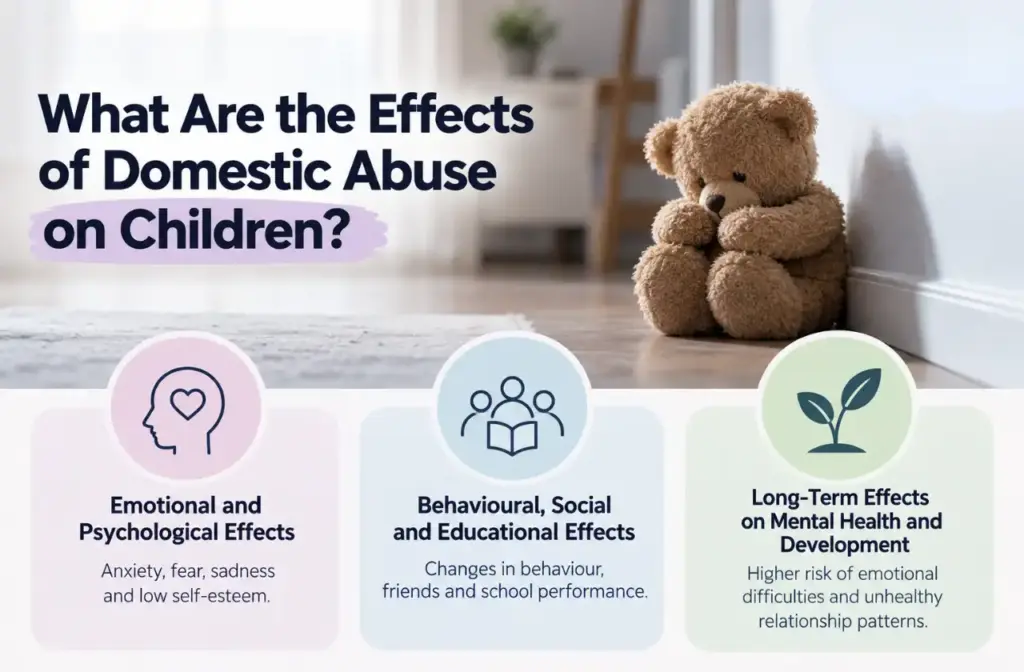
Domestic abuse affects children differently depending on their age, experiences and available support.
Emotional and Psychological Effects
Children exposed to repeated conflict or threatening behaviour may develop anxiety, persistent fear, sadness or low self-esteem. Some become unusually alert to changes in adults’ moods because they cannot predict when another frightening incident might occur.
Behavioural, Social and Educational Effects
Domestic abuse may affect friendships, classroom behaviour and concentration. A previously engaged pupil might become withdrawn, miss school regularly or struggle to complete assignments.
Others may demonstrate aggression, irritability or difficulty trusting adults.
Long-Term Effects on Mental Health and Development
Prolonged exposure can increase vulnerability to emotional difficulties and unhealthy relationship patterns later in life.
However, these outcomes are not inevitable. The NSPCC’s domestic abuse guidance explains the potential effects on children’s wellbeing and behaviour, alongside the importance of safety and support.
How Does Domestic Abuse Affect Children at Different Ages?
Children’s responses often reflect their developmental stage.
| Age Group | Possible Effects |
|---|---|
| Babies and toddlers | Sleep difficulties, distress, disrupted attachment |
| Primary school children | Anxiety, behavioural changes, concentration problems |
| Teenagers | Withdrawal, emotional distress, risk-taking or relationship difficulties |
How Can Professionals Safeguard Children Affected by Domestic Abuse?
Effective safeguarding begins with recognising concerns and responding without unnecessary delay.
Recognising, Recording and Reporting Safeguarding Concerns
Teachers should document relevant observations, disclosures and actions accurately. Records should distinguish what the child said from the professional’s interpretation.
School staff should understand their designated safeguarding lead roles and responsibilities and report concerns through established procedures.
Child Protection Referrals and Multi-Agency Support
Where significant harm is suspected, children’s social care may need to assess the situation. Professionals should understand what happens after a safeguarding referral, including further information sharing and monitoring.
England’s Working Together to Safeguard Children 2026 sets expectations for coordinated safeguarding responses.
Develop your safeguarding knowledge: Explore Designated Safeguarding Lead (DSL) Training to strengthen your understanding of child protection procedures and professional responsibilities.
What Should You Do If a Child Discloses Domestic Abuse?
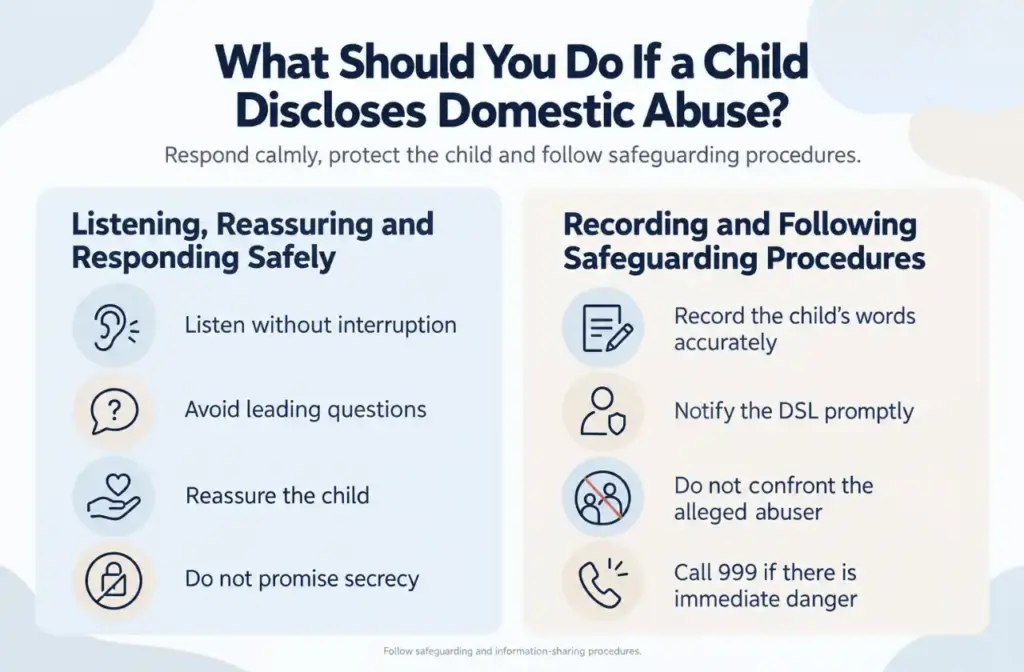
A child’s disclosure requires a calm response that prioritises safety.
Listening, Reassuring and Responding Safely
Listen without interruption, avoid leading questions and reassure the child that speaking up was appropriate. Never promise secrecy or confront the alleged abuser.
Recording Disclosures and Following Safeguarding Procedures
Record the child’s words accurately and notify the DSL promptly. If a child faces immediate danger, call 999.
The Department for Education’s information-sharing guidance explains safeguarding-related information responsibilities in England.
What UK Laws Protect Children From Domestic Abuse?
Domestic Abuse Act 2021 and Children Act 1989
The Domestic Abuse Act 2021 recognises qualifying children as victims of domestic abuse. The Children Act 1989 establishes important duties concerning children’s welfare and protection in England and Wales.
Learning about the key safeguarding laws in the UK helps professionals understand their responsibilities.
Working Together to Safeguard Children and School Guidance
In England, Keeping Children Safe in Education 2026 outlines safeguarding expectations for schools and colleges. Staff must act promptly when concerns arise.
Professionals can strengthen their knowledge through understanding child protection for designated safeguarding leads. Scotland, Wales and Northern Ireland have their own safeguarding arrangements, so local guidance must also be followed.
How Can Children Recover From the Effects of Domestic Abuse?
Recovery becomes more achievable when children experience safety, stability and supportive relationships.
Schools can provide predictable routines, trusted adults and access to appropriate pastoral support. Specialist services may offer counselling or trauma-informed interventions suited to individual needs.
Children can also contact Childline for confidential support.
Importantly, protection involves addressing ongoing risks, not simply helping children cope with distress.
Conclusion
Domestic abuse can affect children’s emotional wellbeing, education, behaviour and relationships. Recognising warning signs and responding appropriately can prevent concerns from escalating.
This safeguarding guide highlights why professionals must listen carefully, document concerns and work with relevant services to protect children.
Strengthen your child protection skills: Explore NextGen Learning’s Designated Safeguarding Lead (DSL) Training course to develop your safeguarding awareness.
Frequently Asked Questions
It can contribute to anxiety, depression, fear, low self-esteem and trauma-related difficulties.
Possible signs include withdrawal, aggression, sleep problems, unexplained injuries and sudden changes in school performance.
Yes. Experiencing domestic abuse can constitute child abuse. In England and Wales, qualifying children are also recognised as victims under the Domestic Abuse Act 2021.
Children may struggle with concentration, friendships, emotional regulation, attendance or classroom participation.
Listen calmly, record the disclosure accurately and report it promptly under safeguarding procedures. Contact emergency services if immediate danger exists.

0 responses on "How Domestic Abuse Affects Children: Safeguarding Guide"